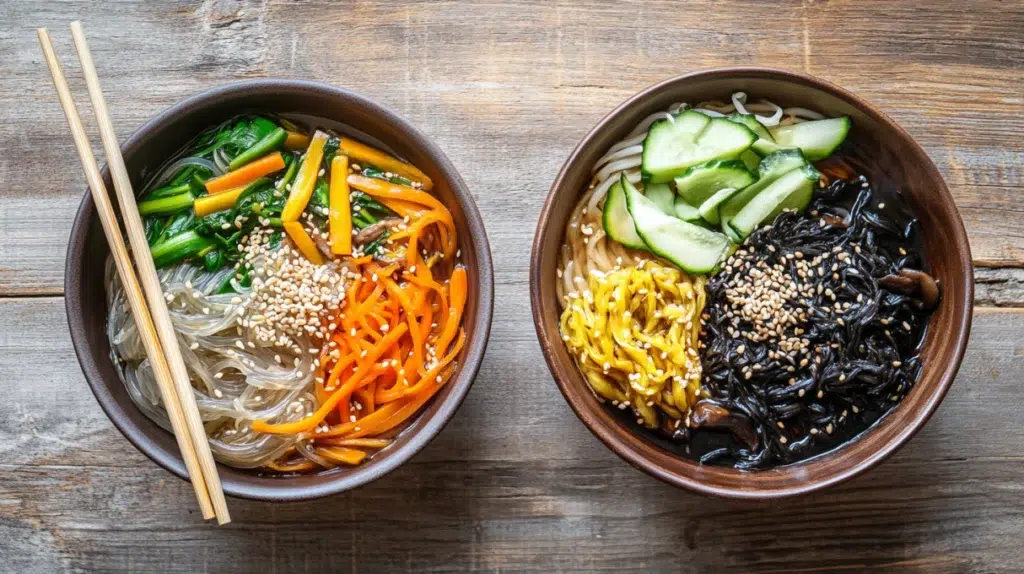
Korean noodle recipes are some of the most satisfying, most varied, and most completely different from each other of any noodle tradition in the world and most Americans have barely scratched the surface of what is available.
Most people who have eaten Korean food know japchae, the glass noodle dish that appears at every celebration and maybe ramyeon, the instant noodle that has become a global phenomenon. But Korean noodle culture goes so much deeper than that. Cold buckwheat noodles in icy broth on a summer day. Thick wheat noodles in a black soybean paste sauce that looks alarming and tastes extraordinary. Spicy seafood noodle soup that warms you from the inside in a completely specific way. Hand-torn pasta in anchovy broth that is the Korean equivalent of a grandmother’s hug in bowl form.
Noodles have been part of Korean culinary tradition since the Goryeo Dynasty, over a thousand years of noodle culture that has produced a variety and sophistication that deserves far more attention than it receives in American food media.
This is part of my Korean recipes collection and this is the section I want more people to explore. The kimchi gets the headlines. The Korean BBQ gets the restaurants. The noodles are where Korean home cooking is at its most inventive, its most comforting, and its most surprising.
Let’s go through all seven.
1. Japchae: The Celebration Noodle
Japchae is the most beloved noodle dish in Korea, served at birthdays, weddings, New Year celebrations, and any occasion important enough to deserve something special. And once you’ve made it properly, you will understand completely why it occupies that place.
Glass noodles, dangmyeon, made from sweet potato starch, are stir-fried with a colorful combination of vegetables (spinach, carrots, mushrooms, onion, bell pepper) and thin strips of beef, all tossed in a sweet soy sauce seasoned with sesame oil and garlic. The noodles themselves are translucent, silky, and slightly chewy in a way that is completely unlike any other noodle texture. The sauce soaks into them as they sit, making leftovers even better than the fresh version.
The technique requires cooking each component separately before combining the vegetables in stages by cooking time, the beef quickly in a hot pan, the noodles blanched and tossed in sauce. It sounds laborious and it is slightly laborious. But the result, that glossy, colorful, fragrant pile of noodles is worth every moment.
Key ingredients: dangmyeon glass noodles, beef sirloin, spinach, carrots, shiitake mushrooms, bell pepper, soy sauce, sesame oil, sugar, garlic Time: 45 minutes | Difficulty: Medium Note: Dangmyeon glass noodles are available at H Mart, any Korean or Asian grocery store, and online. Do not substitute with mung bean glass noodles, different texture and cooking behavior.
2. Jajangmyeon: The Black Sauce Noodle
Jajangmyeon was introduced to Korea by Chinese immigrants who settled in Incheon’s Chinatown in the late 19th century and what happened next is one of the great culinary transformation stories. Korean cooks took the Chinese black bean paste dish, adapted it to Korean ingredients and Korean palates over generations, and created something that is now so thoroughly Korean that most Koreans do not think of it as having Chinese origins at all.
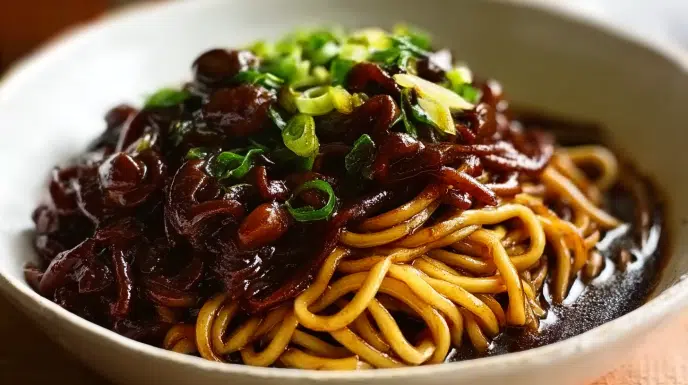
The dish is thick wheat noodles, chewy, substantial, nothing delicate about them, topped with a rich black sauce made from chunjang (fermented black soybean paste) stir-fried with pork and vegetables until glossy and deeply savory. The color is alarming, genuinely black, and the flavor is… extraordinary. Rich, savory, slightly sweet, with that specific depth that only fermented soybean paste produces.
It is Korean comfort food at its most unapologetic. The dish that Korean children grow up eating when they want something that feels like home. The dish that Korean adults order when they are homesick, hungover, or in need of something that asks nothing of them and delivers everything.
Chunjang (black bean paste) is available at H Mart and Korean grocery stores. This is a non-negotiable ingredient, there is no substitute that replicates the specific fermented black bean flavor. Find it once and it keeps for months.
Key ingredients: fresh thick wheat noodles (or udon as substitute), chunjang black bean paste, pork belly or shoulder, zucchini, onion, potato, sesame oil Time: 35 minutes | Difficulty: Easy once you have chunjang
3. Naengmyeon: Cold Buckwheat Noodles
Naengmyeon is the dish that surprises people most because the concept of cold noodles in cold broth with ice floating in the bowl sounds wrong until you eat it on a hot day and understand immediately why Koreans have been doing this for centuries.
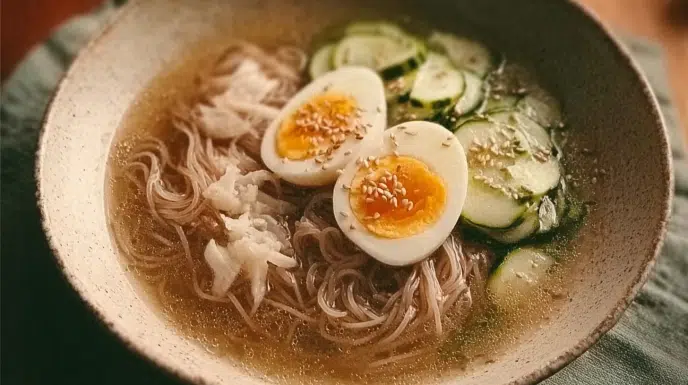
There are two main varieties. Mul naengmyeon, cold buckwheat noodles in an icy, tangy beef broth, topped with thin slices of beef, cucumber, Asian pear, and a soft-boiled egg. And bibim naengmyeon, the same noodles but dressed in a spicy gochujang sauce rather than broth, tossed cold. Both are extraordinary. The noodles themselves are slightly chewy and nutty from the buckwheat flour, a completely different texture from any warm noodle dish.
Naengmyeon is a dish with genuine seasonal logic, it is specifically summer food in Korea, eaten to cool down rather than warm up. Making it at home requires buckwheat noodles (available at Korean grocery stores), and for mul naengmyeon, a good beef broth that has been chilled until very cold. The assembly is more important than the cooking, the beautiful arrangement of toppings on cold noodles is part of the experience.
Key ingredients: buckwheat naengmyeon noodles, cold beef broth, cucumber, Asian pear, soft-boiled egg, mustard, rice vinegar Time: 30 minutes (plus chilling time for broth) | Difficulty: Easy
4. Ramyeon: Korean Instant Noodles, Done Right
Ramyeon is Korean instant noodle culture, and it deserves more respect than the word “instant” implies.
Korean ramyeon is not ramen. Japanese ramen is a slow, craft-focused dish of specific broths, fresh noodles, and carefully chosen toppings. Korean ramyeon is a fast, bold, unapologetically spicy noodle soup that has developed its own sophisticated culture around which brands are best, which add-ins elevate it, and how to cook the noodles to the perfect consistency.
The most famous brand is Shin Ramyeon by Nongshim, a spicy beef broth ramyeon that is genuinely excellent and available at most major grocery stores in America now. But what separates a bowl of ramyeon eaten carelessly from a bowl of ramyeon eaten properly is what goes in it.
The Korean upgrades that turn a good bowl into a great one: one egg cracked in during the last minute of cooking. A slice or two of processed cheese melted on top, this sounds deeply wrong and is deeply right, the cheese softens the spice and adds richness. A few slices of spam or hot dog fried separately in sesame oil. A spoonful of kimchi on the side. A handful of gochujang stirred into the broth for more depth.
Ramyeon is the Korean midnight snack, the hangover cure, the thing you make at 11pm on a Tuesday when you need something hot and spicy and fast. There is no shame in doing it well.
Key ingredients: Shin Ramyeon or similar Korean instant noodles, egg, cheese slice, kimchi Time: 5 minutes | Difficulty: Difficult to mess up
5. Kalguksu: Korean Hand-Cut Noodles
Kalguksu means “knife noodles”, wheat noodles cut by hand with a knife rather than extruded through a machine and it is one of the most comforting things Korean cooking produces. Thick, chewy, slightly irregular noodles served in a clear anchovy-kelp broth with zucchini, onion, and sometimes clams or chicken.
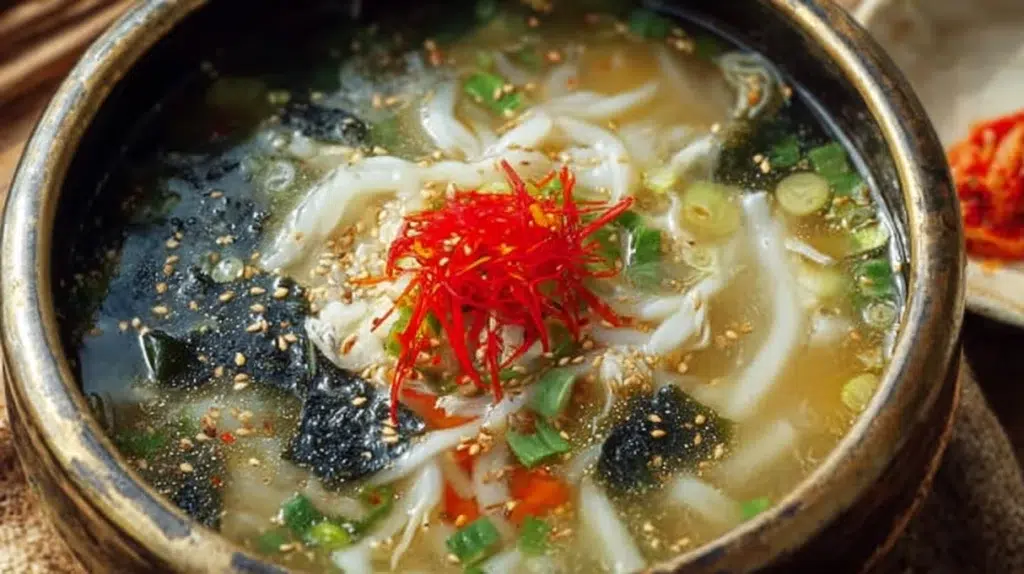
The broth, made from dried anchovies (myeolchi) and kelp (dasima) has a clean, deep, oceanic flavor that is different from any other stock base. It is the Korean equivalent of the French fond, the foundational broth from which enormous cooking complexity is possible.
Making kalguksu from scratch means making the dough (flour, salt, water), resting it, rolling it thin, and cutting it into rough noodles with a knife. The irregularity is not a mistake, the slight unevenness in thickness means some parts are chewier, some softer, producing more textural interest than uniform machine-cut noodles. This is a weekend project dish. Profoundly comforting. The kind of thing that makes you understand why someone’s grandmother’s version always tastes different from the restaurant version.
Key ingredients: all-purpose flour, dried anchovies, kelp (dasima), zucchini, onion, garlic, soy sauce Time: 1 hour | Difficulty: Medium — the dough takes practice
6. Bibim Guksu: Spicy Cold Noodles
Bibim guksu is the simplest dish on this list and one of the most satisfying, thin wheat noodles (somyeon) tossed cold in a bright, spicy, slightly sweet gochujang sauce with cucumber, kimchi, and a soft-boiled egg on top.
It is a summer dish, a quick lunch dish, a dish that takes 15 minutes from start to finish and tastes like you spent considerably more time on it. The sauce gochujang, rice vinegar, sesame oil, sugar, garlic, is sharp and bright and makes the noodles glisten red and irresistible.
The key technique is rinsing the cooked noodles under very cold water immediately after cooking, until they are completely cold and slightly slippery. This cold rinse stops cooking, removes excess starch, and gives the noodles the slightly firm, bouncy texture that makes bibim guksu feel refreshing rather than heavy. Do not skip it.
Key ingredients: thin wheat noodles (somyeon), gochujang, rice vinegar, sesame oil, cucumber, kimchi, soft-boiled egg Time: 15 minutes | Difficulty: Very easy
7. Tteokbokki: Spicy Rice Cakes (Technically Not Noodles, But Close Enough)
Tteokbokki is not technically a noodle dish, it is made from garaetteok, cylindrical rice cakes but it belongs in this list because it occupies the same cultural and culinary space as Korean noodle dishes, and because it is arguably the most popular Korean street food in existence.
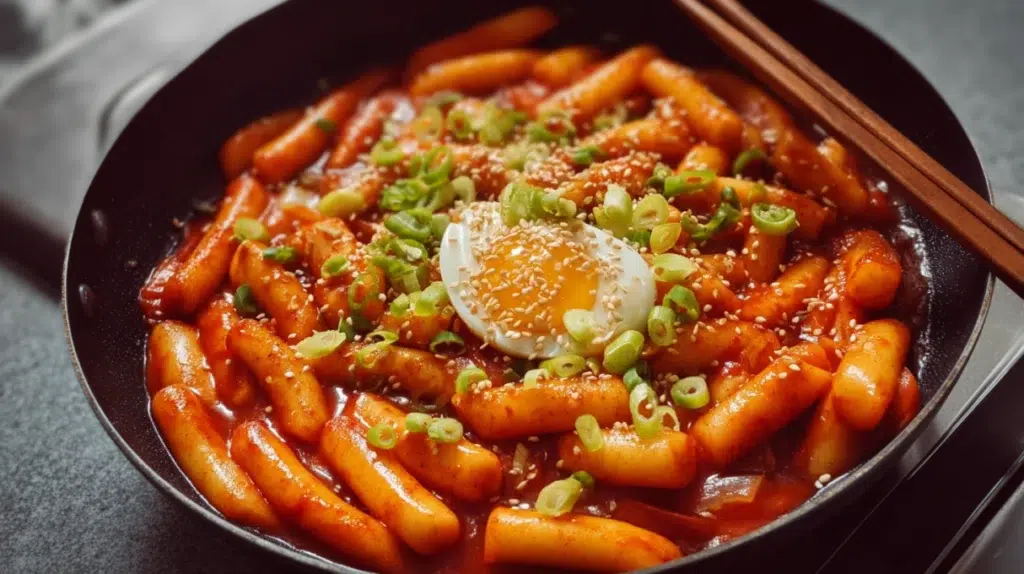
Thick, chewy rice cakes simmered in a spicy-sweet gochujang sauce with fish cakes, green onion, and sesame seeds, tteokbokki is bold, slightly sweet, intensely satisfying, and completely addictive. Street stalls selling tteokbokki are found on practically every corner in Korean cities. It is the food Koreans eat after school, after work, on cold days, whenever they want something that is unambiguously good.
The rice cakes are available at Korean grocery stores, fresh or frozen. The sauce is straightforward: gochujang, gochugaru, soy sauce, sugar, and anchovy broth as the base. The whole thing comes together in 15 minutes. It is one of those dishes that seems too simple and delivers far more than expected.
Key ingredients: garaetteok rice cakes, gochujang, gochugaru, fish cakes, green onion, anchovy broth or water Time: 15 minutes | Difficulty: Very easy
The Korean Noodle Pantry: What You Need
Most of these recipes draw from the same pantry foundation. Stock these and you can make at least five of the seven dishes above:
Dangmyeon glass noodles, japchae. Available at H Mart, Asian grocery stores, Amazon. Somyeon thin wheat noodles, bibim guksu. Same sourcing. Shin Ramyeon or similar Korean instant noodles, every grocery store. Gochujang, whole Foods, Trader Joe’s, H Mart. Sesame oil, every grocery store. Soy sauce, every grocery store. Rice vinegar every grocery store. Dried anchovies and kelp H Mart or online, for kalguksu broth.
For the complete ingredient breakdown and sourcing guide, see the full Korean pantry essentials guide.
Start With Japchae
If you are new to Korean noodle cooking, start with japchae. It is the most celebrated, the most visually impressive, the one most likely to make everyone at your table immediately ask what it is and where you learned to make it.
Then make jajangmyeon, because the first time you eat black noodles and realize they are one of the great comfort foods in the world is a genuinely memorable experience.
Then try ramyeon done properly, because sometimes the most honest cooking is the fastest cooking done with real attention and good ingredients.
Head back to the complete Korean recipes collection for everything else, the kimchi, the Korean BBQ, the fried chicken that will change how you think about frying. It is a big cuisine. There is a lot to discover. Start anywhere. Keep going.