This authentic hummus recipe is the one that made me throw away every shortcut I had ever taken with this dish, and start completely over.
I had been making hummus for years before I went to Lebanon. I thought I knew how to make it. I used canned chickpeas because it was faster. I used whatever tahini was at the grocery store because it was convenient. I blended it until it seemed smooth enough. The result was, fine. People ate it. Nobody complained.
Then I sat in a kitchen in Beirut and watched a Lebanese woman make hummus the way her family had been making it for three generations. Dried chickpeas soaked overnight. Cooked for over an hour until they were soft beyond what I thought chickpeas could be. Blended with an extraordinary amount of excellent tahini and ice water, ice water, she explained, was what made the texture silky rather than grainy, until the result was completely, almost impossibly smooth. Warm. Drizzled with the best olive oil I had ever tasted. Scattered with paprika and a few whole chickpeas.
It did not taste like the hummus I had been making. It tasted like a completely different food.
That is the recipe you are reading right now. Every detail included. Every shortcut identified and honestly assessed. This is part of my Lebanese recipes collection, the cuisine I learned in the Bekaa Valley and Beirut and fell completely in love with. Start here. Everything else follows.
Why Most Hummus Fails, And How This Recipe Fixes It
Before we get into the method I want to be honest about why hummus so often disappoints at home, because understanding the failures is the fastest way to get to the success.
Problem 1: Canned chickpeas
Canned chickpeas are cooked to a specific firmness that is designed for eating whole, not for blending into a completely smooth paste. They contain more starch on the surface, they have a slightly metallic edge from the can, and they simply do not blend as smoothly as chickpeas cooked from dried at home until genuinely very soft.
Dried chickpeas soaked overnight and cooked until they are almost falling apart, this is what produces silky hummus. The difference is significant. Not subtle. Significant.
Can you use canned chickpeas? Yes. Will the result be good? Yes, genuinely good. Will it be the same as the Lebanese method? No. Not even close. Make this decision with open eyes.
Problem 2: Bad tahini
Generic grocery store tahini is often bitter, thick, and dry, made from lower quality sesame seeds with less care in the roasting process. Good tahini is runny enough to pour, slightly bitter in a pleasant way, deeply nutty, and smooth. It transforms hummus from decent to extraordinary.
Brands worth seeking out: Soom (widely available at Whole Foods and online, genuinely excellent), Al Nakhil (Lebanese brand, available at Middle Eastern grocery stores), or any Lebanese or Palestinian brand you can find. The investment is worth it for any recipe where tahini is a primary ingredient.
Problem 3: Not enough lemon and garlic
Lebanese hummus has a noticeable lemon brightness and a real garlic presence, not overwhelming, but present. Many hummus recipes under-season because they are trying to appeal to the widest possible palate. This recipe is calibrated for flavor, not for timidity.
Problem 4: Not blending long enough
Hummus needs to be blended for significantly longer than most people expect, at least 4-5 minutes in a food processor, scraping down the sides regularly, adding ice water gradually until the texture becomes genuinely silky. Stopping when it looks smooth is stopping too early. Keep going.
Ingredients
Serves 6-8 as part of mezze | Active time: 20 minutes | Total time: 1 hour 30 minutes (plus overnight soak)
For the chickpeas:
- 250g (about 1¼ cups) dried chickpeas, soaked overnight in cold water with 1 teaspoon baking soda
- 1 teaspoon baking soda, added to the soaking water and to the cooking water. Alkaline environment softens the chickpea skins dramatically and speeds cooking.
- Cold water for soaking, fresh water for cooking
Chickpeas have been cultivated in the Middle East for over ten thousand years, making them one of the oldest cultivated legumes in the world and a foundational ingredient in Lebanese and broader Levantine cooking. Buy the best quality dried chickpeas you can find, they make a genuine difference.
For the hummus:
- All the cooked chickpeas from above, reserve 1 cup of the cooking liquid
- 120ml (½ cup) excellent tahini
- Juice of 1½ lemons, fresh only, never bottled. About 4-5 tablespoons.
- 2 cloves garlic, small cloves. Lebanese hummus has garlic presence but not garlic dominance.
- 1 teaspoon salt, adjust to taste
- 4-6 tablespoons ice water, this is the technique secret. Cold water added while blending produces a lighter, silkier texture.
To serve:
- Good extra-virgin olive oil, drizzled generously, this is not optional
- Sweet paprika, a light dusting
- A few whole cooked chickpeas reserved from the batch
- Fresh flat-leaf parsley, very finely chopped
- Warm Lebanese flatbread or good pita, to eat alongside
How to Make Authentic Hummus Recipe
Step 1: Soak the Chickpeas (overnight)
The night before, or at least 8 hours before you plan to make the hummus, place the dried chickpeas in a large bowl, cover with cold water by at least 5cm (they will expand significantly), and add 1 teaspoon of baking soda. Stir briefly. Leave overnight at room temperature or in the fridge.
The next morning the chickpeas will have roughly doubled in size. Drain them, rinse thoroughly under cold water, and they are ready to cook.
Why the baking soda? It raises the pH of the water, which weakens the pectin in the chickpea skins, allowing them to soften more quickly and more completely during cooking. The result is chickpeas that are softer inside and have thinner, more tender skins, both important for the final hummus texture.
Step 2: Cook the Chickpeas Until Very Soft (50-70 minutes)
Place the soaked, drained chickpeas in a large pot. Cover with fresh cold water by about 5cm. Add another teaspoon of baking soda to the cooking water. Bring to a boil, skim off any foam that rises to the surface, then reduce to a steady simmer.
Cook for 50-70 minutes, tasting every 10 minutes from the 40-minute mark, until the chickpeas are completely soft. Not just cooked, completely soft. They should crush easily between two fingers with almost no pressure. If they still have any resistance, keep cooking.
The chickpeas need to be genuinely very soft for the hummus to blend to the right texture. Under-cooked chickpeas, even slightly produce grainy hummus. When in doubt, cook them for another 10 minutes.
Before draining, reserve 1 cup of the hot cooking liquid. Drain the rest. While the chickpeas are still hot, remove the skins. This is the most tedious step and the most important one. Place a handful of hot chickpeas in a clean kitchen towel, fold the towel over, and rub gently, the skins come away easily. Or rub them between your palms over a bowl of water and the skins float to the top. This skinning step produces hummus that is significantly smoother and lighter in color.
Reserve a small handful of the best-looking whole chickpeas for the garnish.
Step 3: Blend, This Is Where the Magic Happens (5-6 minutes)
Place the peeled, warm chickpeas in your food processor. Blend for 1 minute until broken down into a rough paste.
Add the tahini, lemon juice, garlic, and salt. Blend for another 2 minutes, scraping down the sides regularly.
Now start adding the ice water, one tablespoon at a time, with the food processor running. Watch the texture change as you add water. The hummus will go from rough and thick to creamy and smooth. Keep adding water and keep blending until it is genuinely silky, lighter in color, smooth enough that it flows slowly off a spoon rather than dropping in chunks.
This blending stage takes 4-5 minutes minimum. Keep going past the point where it seems smooth enough. That extra minute of blending makes a real difference.
Taste. Adjust lemon juice for brightness, it should be noticeably lemony. Adjust salt. Adjust garlic if needed, raw garlic will mellow as the hummus rests.
If the hummus is thicker than you want, add more ice water one tablespoon at a time and blend again. The ideal consistency is thick enough to hold a shape when scooped but soft enough to spread easily.
Step 4: Serve Properly
This step matters more than most people realize.
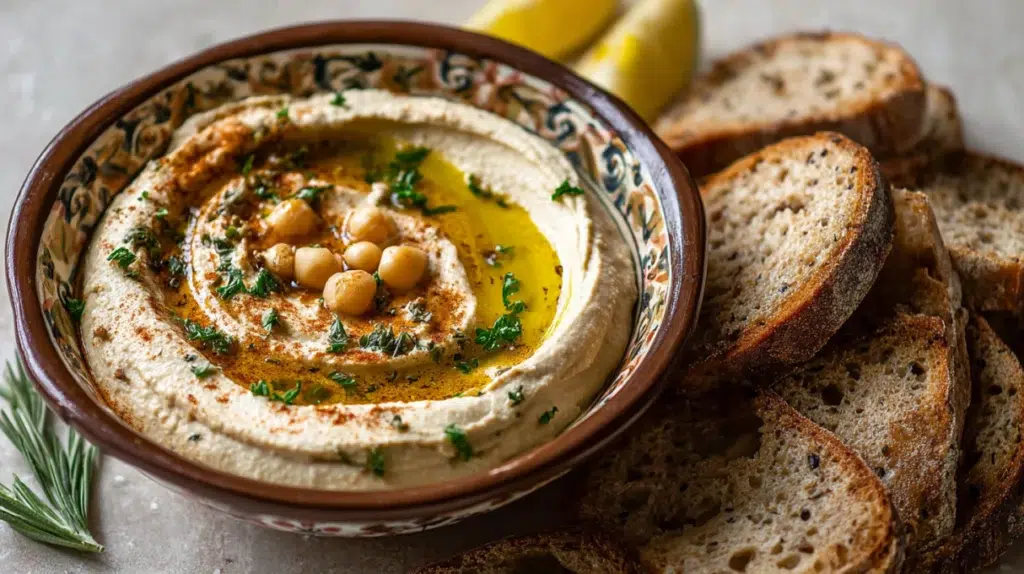
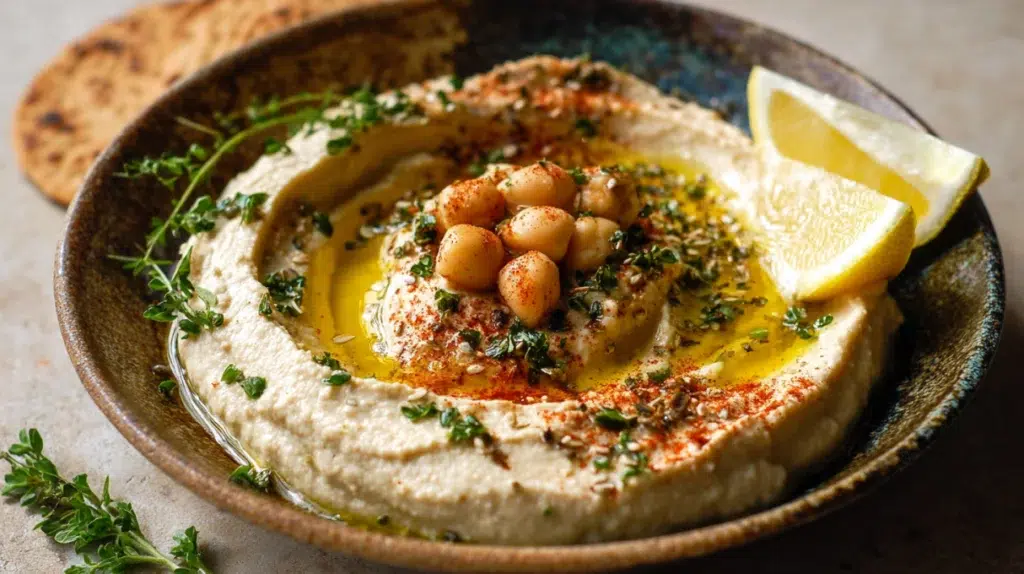
Spoon the hummus generously onto a wide, shallow plate or bowl, not a small bowl, a wide plate. Use the back of a spoon to spread it in a circular motion, creating a shallow well in the center. Drizzle a generous amount of excellent olive oil into the well and over the surface. Dust lightly with sweet paprika. Scatter the reserved whole chickpeas. Add the finely chopped parsley.
The wide plate matters because it creates more surface area for the olive oil, which is not a garnish, it is part of the dish. The well in the center collects the oil and makes each bite of hummus naturally oily, lemony, and complete.
Serve immediately while warm, or at room temperature. Never cold from the fridge. Cold hummus loses its silkiness and its olive oil becomes solid. If you have made the hummus ahead, reheat gently in a pan with a splash of water and a drizzle of olive oil before serving.
Claire’s Notes: What I Learned Making This
On the baking soda: Some traditional Lebanese cooks do not use it and produce excellent hummus. I use it because it makes the process more reliable and produces a more consistently smooth result in my Nashville kitchen on a weeknight. Use it.
On the tahini quantity: The amount in this recipe seems like a lot. It is a lot. It is also correct. Lebanese hummus is tahini-forward, that is what gives it the deep nuttiness that differentiates it from every other version. Do not reduce the tahini.
On the garlic: Raw garlic in hummus becomes more pungent as it sits. If you are making the hummus more than an hour ahead, reduce to one small clove or rub the food processor bowl with a cut garlic clove rather than adding garlic directly. The flavor will be there without the sharpness.
On making ahead: Hummus keeps well in the fridge for 4-5 days, covered. The olive oil solidifies when cold, bring to room temperature for at least 30 minutes before serving, add a fresh drizzle of olive oil, and it will be nearly as good as fresh.
On the canned chickpea version: Drain and rinse two 400g cans of chickpeas. Warm them in a pan with the reserved liquid if possible, or use warm water. Proceed from Step 3. The result is genuinely good, a weeknight hummus that is far better than store-bought. Just not the full Lebanese method.
How to Serve Hummus the Lebanese Way
In Lebanon, hummus is rarely eaten as a dip the way Americans use it, with crackers or crudités at a party. It is a dish. Part of a mezze spread, eaten at the beginning of a meal with fresh warm bread, alongside other small dishes.
If you want to build a complete Lebanese mezze experience around this hummus, see the full guide to Lebanese mezze dishes which covers twelve dishes including baba ghanoush, tabbouleh, kibbeh, and stuffed vine leaves that complete the table. Alongside some Lebanese chicken dishes, shawarma or kafta, you have a complete Lebanese feast that will make your guests feel genuinely celebrated.
And if you want to understand the spices that go into the other dishes on the table, the seven spice, the sumac, the za’atar, the complete Lebanese spices guide covers everything.
Frequently Asked Questions
Can I use a blender instead of a food processor?
Yes, a high-powered blender (Vitamix or similar) actually produces even smoother hummus than a food processor. Use the tamper to keep things moving. A regular blender works but may struggle with the thick paste, add more ice water to help it blend.
Why is my hummus grainy?
Either the chickpeas were not cooked soft enough, or you did not blend long enough, or both. Cook the chickpeas until they crush with almost no pressure between two fingers. Blend for a minimum of 4-5 minutes with regular scraping.
Why does my hummus taste bitter?
Almost always the tahini. Bitter hummus means bitter tahini, either poor quality or old. Buy fresh tahini from a quality brand. Taste it before using, it should be pleasantly nutty with mild bitterness, not sharp or rancid.
Can I freeze hummus?
Yes, freeze in portions, defrost overnight in the fridge, stir well and add a drizzle of fresh olive oil before serving. Texture changes slightly after freezing but it is still very good.
Is hummus Lebanese or Israeli?
Hummus, made from chickpeas and tahini, has ancient roots across the entire Levant region, which includes modern Lebanon, Israel, Palestine, Syria, and Jordan. The dish predates modern national borders by centuries and is genuinely shared across this region. The debate about ownership is political, not culinary. What matters is that this version is made the Lebanese way, with the specific proportions, the dried chickpeas, the tahini quantity, and the serving tradition that Lebanese cooks have used for generations.
More From the Lebanese Recipes Collection:
- Lebanese Mezze: 12 Essential Dishes for the Perfect Spread
- Lebanese Spices Guide: Seven Spice, Sumac and Everything Else
- Lebanese Chicken Recipes: Shawarma, Kafta and More
- Lebanese vs Syrian Food: The Real Differences Explained
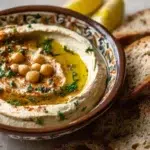
Authentic Hummus
- Total Time: 90 minutes
- Yield: 6–8 servings 1x
- Diet: Vegan
Description
A traditional Lebanese hummus recipe that delivers a silky, smooth texture and rich flavor using dried chickpeas and excellent tahini.
Ingredients
- 250g (about 1¼ cups) dried chickpeas, soaked overnight
- 1 teaspoon baking soda
- Cold water for soaking
- Fresh water for cooking
- 120ml (½ cup) excellent tahini
- Juice of 1½ lemons (about 4–5 tablespoons)
- 2 cloves garlic
- 1 teaspoon salt, adjust to taste
- 4–6 tablespoons ice water
- Good extra-virgin olive oil, for drizzling
- Sweet paprika, for dusting
- A few whole cooked chickpeas, for garnish
- Fresh flat-leaf parsley, finely chopped
- Warm Lebanese flatbread or pita, for serving
Instructions
- Soak the chickpeas overnight in a large bowl covered with cold water and 1 teaspoon of baking soda.
- Cook the soaked chickpeas until very soft (50-70 minutes), adding 1 teaspoon baking soda to the cooking water.
- Blend the warm, peeled chickpeas in a food processor for 1 minute until broken down.
- Add tahini, lemon juice, garlic, and salt; blend for 2 minutes, scraping down the sides regularly.
- Add ice water gradually while blending until the texture is silky and smooth (4-5 minutes).
- Serve by spooning hummus onto a wide plate, creating a well in the center, drizzle with olive oil, dust with paprika, garnish with whole chickpeas and parsley.
Notes
Use high-quality tahini for the best flavor. Avoid serving cold to preserve the silkiness and flavor.
- Prep Time: 20 minutes
- Cook Time: 70 minutes
- Category: Appetizer
- Method: Blending
- Cuisine: Lebanese
Nutrition
- Serving Size: 1 serving
- Calories: 200
- Sugar: 2g
- Sodium: 250mg
- Fat: 9g
- Saturated Fat: 1g
- Unsaturated Fat: 8g
- Trans Fat: 0g
- Carbohydrates: 25g
- Fiber: 7g
- Protein: 7g
- Cholesterol: 0mg