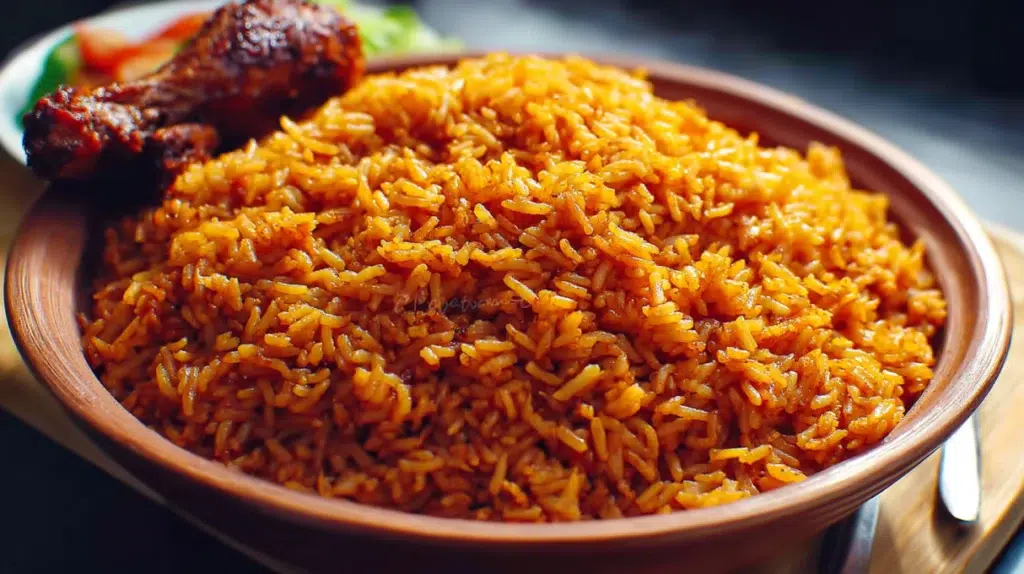
Nigerian jollof rice is the dish that starts arguments, inspires loyalty and tastes, when made correctly, like nothing else in the world of rice cooking.
The recipe itself is not complicated. A blended pepper base cooked down until sweet and deeply concentrated. Parboiled rice coated in that base and cooked sealed and covered until the bottom develops a slightly charred, smoky crust that perfumes the entire pot. It is one of those dishes where technique matters more than effort, the difference between adequate jollof and extraordinary jollof comes down to three things: the pepper base, the rice choice, and the patience to let the bottom char without burning it completely.
This is part of the Nigerian recipes collection, the dish that has made Nigeria famous at every food table it has appeared at.
Where Jollof Rice Comes From And Why Nigeria Claims It So Hard
Jollof rice first appeared in the 14th-century Wolof empire of West Africa, spreading across the continent as the empire expanded, with the dish named after the dominant Jolof state. By the time jollof reached Nigeria, traveling through Senegal, Guinea, Côte d’Ivoire and Ghana across several centuries, it had been transformed, regionalized and made entirely Nigerian. The tomatoes and peppers that define contemporary jollof were introduced from the Americas long after the dish’s 14th-century origin. The jollof rice that Nigerians make today is the product of centuries of accumulated adaptation and refinement.
This history matters for one reason: it explains why the dish means so much. Jollof rice is not just a recipe. It is a cultural identity. Nigerian jollof at a celebration is a statement, this is who we are, this is how we cook, and yes, ours is the best. The jollof wars, the decades-long argument between Nigerians and Ghanaians about which country’s version is superior, are fought with genuine passion because jollof carries genuine cultural weight.
The full comparison of both versions is in the Nigerian vs Ghanaian jollof article. This article is about making Nigerian jollof correctly.
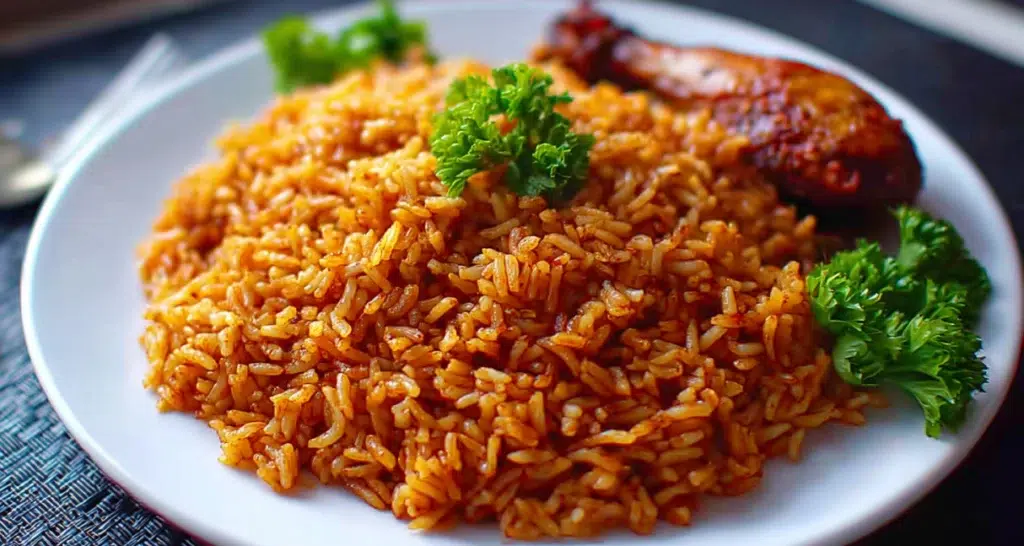
The Three Non-Negotiables
Before the recipe, three things that separate Nigerian jollof from everything else:
1. Parboiled long-grain rice Nigerian jollof uses parboiled rice, rice that has been partially boiled in the husk before milling. Parboiled rice is firmer than regular long-grain, holds its shape during long cooking, absorbs flavor deeply without turning mushy, and produces the individual, separate grains that are the hallmark of good jollof. Uncle Ben’s converted rice and Carolino parboiled rice are both correct. Regular jasmine rice is softer and will produce a mushier result. Regular long-grain basmati works but lacks the specific texture. Parboiled is the correct choice.
2. The blended pepper base, cooked properly The blended pepper base (tomatoes, scotch bonnet peppers, red bell peppers, onions) must be cooked until it loses its raw taste completely, reduces significantly, and begins to darken and smell sweet and savory rather than sour and tomato-raw. This step takes 20-25 minutes of active frying and is the most commonly skipped step in bad jollof. Underdeveloped pepper base = sour, flat jollof. Properly fried pepper base = deep, complex, sweet jollof.
3. Sealed cooking with a foil-and-lid seal Nigerian jollof is cooked covered, the lid sealed with foil underneath it to trap steam completely. This creates a sealed environment where the rice cooks in the steam from the broth below while the bottom develops the smoky, slightly charred crust. Without the seal, steam escapes, the rice dries out unevenly, and the bottom burns rather than charring gently.
Party Jollof vs Everyday Jollof: The Difference
Food is a central part of Nigerian life, with celebrations defined by the quality and abundance of the food served to guests. Party jollof is the celebration version, cooked in large quantities over live wood or charcoal fire (or recreated on a home stove over high heat), which infuses the rice with a specific smokiness that ordinary gas burner jollof cannot fully replicate.
The difference is the bottom crust, called the “bottom pot” in Nigerian cooking. At a Nigerian party, the mai jollof (the person in charge of the jollof pot) is respected and watched carefully. The question “how is the bottom?” is asked with genuine urgency. The ideal bottom pot is deeply golden, slightly charred, almost caramelized — it smells of wood smoke and scorched tomato and rice, and the people who get it are considered lucky.
At home: You can approximate party jollof in a home kitchen by doing two things the recipe instructs below, cooking over higher heat for the final 10 minutes with a foil seal, and using a heavy iron or stainless steel pot rather than non-stick. Non-stick pans cannot develop the right bottom. Cast iron or heavy stainless steel is correct.
The Complete Nigerian Jollof Rice Recipe
Ingredients (serves 6-8)
For the blended pepper base:
- 4 medium plum tomatoes (or 400g / 14oz canned whole tomatoes, drained)
- 3 scotch bonnet peppers, reduce to 1-2 if sensitive to heat, but do not omit entirely. The flavor of scotch bonnet is as important as the heat.
- 2 red bell peppers, deseeded and roughly chopped
- 1 large onion, roughly chopped
For the jollof:
- 500g (2½ cups) parboiled long-grain rice, Uncle Ben’s, Carolina Gold parboiled, or any parboiled variety
- 100ml (7 tablespoons) vegetable oil, not olive oil, not palm oil for this recipe. Vegetable oil is correct for jollof.
- 1 medium onion, finely diced
- 3 tablespoons tomato paste
- 500ml (2 cups) chicken stock, good quality, well-seasoned
- 1 teaspoon curry powder, Nigerian curry powder is mild and slightly sweet. Regular mild curry powder works.
- 1 teaspoon dried thyme
- 2 bay leaves
- 1 stock cube (Maggi or Knorr, these are the standard Nigerian flavoring cubes)
- Salt to taste
Optional for deeper flavor:
- 1 tablespoon ground crayfish, adds the specific Nigerian umami depth. Buy at African grocery stores.
To serve alongside:
- Fried plantains (dodo)
- Fried or grilled chicken
- Nigerian coleslaw
- Moi moi (steamed bean pudding)
Method:
Step 1: Make the blended pepper base (20-25 minutes)
Blend the plum tomatoes, scotch bonnets, red bell peppers and roughly chopped onion together until completely smooth. This is the pepper blend. It should be a bright orange-red liquid at this stage.
Heat the vegetable oil in a large, heavy-bottomed pot, cast iron or thick stainless steel, over medium-high heat. Add the finely diced onion and fry 5 minutes until softened and beginning to turn golden.
Add the tomato paste and stir into the oil. Fry 3 minutes, the tomato paste will darken slightly and smell sweet.
Pour in the blended pepper mixture. It will sputter dramatically in the hot oil. Stir immediately and reduce heat to medium. Add the curry powder, thyme and bay leaves.
Cook, stirring every 3-4 minutes, for 20-25 minutes. This is the critical step. The pepper base must reduce by roughly half, lose all its raw tomato sourness, and reach a thick, concentrated, deeply colored paste that slides around the pot rather than sitting in liquid. When oil begins to pool at the edges and the mixture smells sweet and caramelized rather than sharp and acidic, it is ready. This stage is called “frying the tomatoes” and it is the heart of the recipe.
Step 2: Add stock and season (5 minutes)
Add the chicken stock and crumbled stock cube to the fried pepper base. Stir well. Add the ground crayfish if using. Taste, it should be well-seasoned, slightly salty and deeply savory. Adjust with salt.
Bring to a simmer over medium heat.
Step 3: Wash the rice
While the base simmers, rinse the parboiled rice under cold water briefly, just once, unlike Asian rice which needs multiple rinses. Parboiled rice does not need the starch removed, a light rinse to clean the surface is sufficient.
Step 4: Add the rice and cook sealed (30-35 minutes)
Add the rinsed rice to the pot and stir to coat every grain in the pepper base. The liquid should just cover the rice, if the pot seems dry, add a small splash more stock or water.
Cover the pot with a large sheet of foil, pressing it down over the top of the pot. Place the lid on top of the foil. This double seal is essential, it traps all the steam inside and ensures the rice cooks evenly.
Reduce heat to low-medium and cook 20 minutes without lifting the lid. Do not open it. Do not check it. Trust the process.
After 20 minutes, lift the lid and foil carefully, steam will rush out. Check the rice: it should be nearly cooked, with most of the liquid absorbed. Taste a grain, if it is still quite hard, replace the seal and cook 5 more minutes.
Step 5: The party jollof finish (10 minutes)
This is the step that makes it party jollof. Once the rice is nearly cooked:
Remove the foil seal. Stir the rice once from the bottom to distribute any remaining liquid. Replace the foil seal and lid. Increase the heat to medium-high for exactly 8-10 minutes. You will hear the bottom of the pot beginning to sizzle. This is correct. This is the bottom developing.
After 8-10 minutes, reduce heat immediately to the lowest setting. Rest 5 minutes without opening.
Open the pot. The rice should be perfectly cooked, each grain separate and lightly coated in the deep red pepper base. Tip the pot slightly to one side, if you can see a thin layer of caramelized, slightly charred rice at the bottom that has pulled away from the edges, you have party jollof. Scrape this carefully and serve it with pride. That bottom is the most sought-after part.
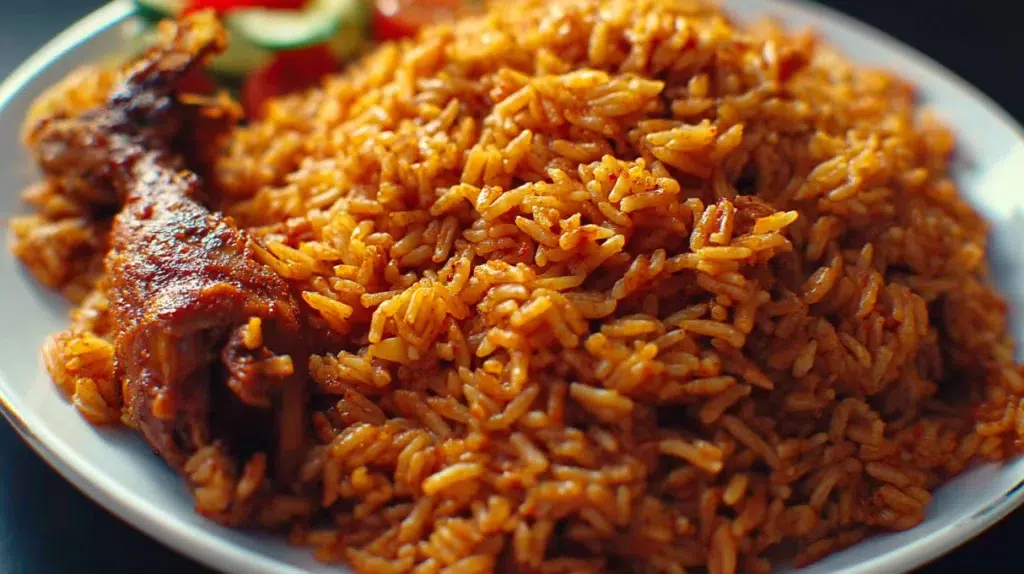
What To Serve With Nigerian Jollof Rice
Dodo (fried plantain): ripe plantains, yellow with black spots, sliced diagonally and shallow-fried in vegetable oil until golden and caramelized. The sweetness of ripe fried plantain is the perfect contrast to savory jollof. These are the most common side dish at every Nigerian celebration.
Fried chicken: Nigerian-style fried chicken is first simmered in a seasoned stock until cooked through, then coated lightly and fried to a golden exterior. The pre-cooking ensures the chicken is fully cooked and seasoned all the way through, not just on the surface.
Moi moi: steamed black-eyed pea pudding, seasoned with peppers and crayfish and steamed in foil parcels or banana leaves. Soft, savory, deeply flavored. The essential companion to party jollof.
Nigerian coleslaw: a creamed coleslaw made with mayonnaise, tinned sweetcorn and sometimes carrots, much richer and creamier than American coleslaw. A cooling contrast to the heat of the jollof.
Troubleshooting: The Most Common Problems
My jollof is sour and flat-tasting: The pepper base was not cooked long enough. The raw tomato sourness did not cook out. Next time, cook the pepper base for the full 20-25 minutes until the oil pools at the edges and the mixture smells sweet. There is no shortcut for this step.
My rice is mushy: Either the wrong rice was used (jasmine and basmati go soft during long jollof cooking) or too much liquid was added. Use parboiled rice and be conservative with liquid, you can always add a splash more, you cannot remove it.
My bottom burned but the rice is still hard: The heat was too high from the start. Jollof rice needs low-medium heat for the main cooking period. Only increase the heat at the final stage when the rice is almost cooked. Starting on high heat burns the bottom before the top rice cooks.
My jollof has no color, it looks pale: The tomato paste was not fried long enough, or not enough of it was used. Tomato paste fried in hot oil until it darkens is what gives jollof its deep red-orange color. Use a full 3 tablespoons and fry it properly before adding the blended pepper.
There is no smoky flavor: A non-stick pan was used, or the final high-heat step was skipped. Non-stick surfaces cannot develop the bottom crust that creates the smoky flavor. Use a heavy stainless steel or cast iron pot and do the final high-heat step without fail.
Frequently Asked Questions
Can I make Nigerian jollof rice in a rice cooker?
No, the sealed stovetop method and the high-heat bottom-development step are what make Nigerian jollof what it is. A rice cooker produces a different texture and cannot create the party jollof bottom. Use a heavy stovetop pot.
Can I use tomato puree instead of fresh blended tomatoes?
Yes, replace the fresh blended tomatoes with 200ml (¾ cup) tomato passata plus the 3 tablespoons of tomato paste already in the recipe. The flavor will be slightly different, less fresh, more concentrated, but acceptable when fresh tomatoes are not available.
How much scotch bonnet should I use if I don’t like very spicy food?
Start with half a scotch bonnet deseeded. The seeds carry most of the heat. Even half a scotch bonnet will give the distinctive fruity flavor that defines Nigerian jollof without overwhelming heat. Do not omit it entirely, the flavor changes significantly.
Can Nigerian jollof be made vegetarian?
Yes, replace the chicken stock with a rich vegetable stock. Omit the ground crayfish or substitute with a tablespoon of soy sauce for umami depth. The result is very good. The character changes slightly but the essential jollof remains.
How do I reheat leftover jollof?
Add a small splash of water to the pot and reheat over low heat, covered. The rice will rehydrate and the flavors will re-emerge. Avoid microwave reheating if possible, the rice becomes dry and uneven. Left to rest overnight, Nigerian jollof often tastes even better the next day.
Planning your week? Add Nigerian jollof rice to your weekly meal planner, it reheats beautifully and serves a crowd from one pot.
More From the Nigerian Recipes Collection:
- Nigerian Recipes: The Complete Guide
- Egusi Soup Recipe: The Two Methods Explained
- Nigerian Suya: The Yaji Spice Blend and the Technique
- Nigerian Snack Recipes: Puff Puff, Akara and Chin Chin
Nigerian Jollof Rice
- Total Time: 70 minutes
- Yield: 6–8 servings 1x
Description
Nigerian jollof rice is a beloved dish with a blend of tomatoes, peppers, and spices, known for its rich flavor and distinctive smoky bottom crust.
Ingredients
- 4 medium plum tomatoes (or 400g canned whole tomatoes, drained)
- 3 scotch bonnet peppers (reduce to 1–2 if sensitive to heat)
- 2 red bell peppers, deseeded and roughly chopped
- 1 large onion, roughly chopped
- 500g parboiled long-grain rice
- 100ml vegetable oil
- 1 medium onion, finely diced
- 3 tablespoons tomato paste
- 500ml chicken stock
- 1 teaspoon curry powder
- 1 teaspoon dried thyme
- 2 bay leaves
- 1 stock cube (Maggi or Knorr)
- Salt to taste
- 1 tablespoon ground crayfish (optional)
- Fried plantains (to serve)
- Fried or grilled chicken (to serve)
- Nigerian coleslaw (to serve)
- Moi moi (to serve)
Instructions
- Blend the plum tomatoes, scotch bonnets, red bell peppers, and roughly chopped onion until completely smooth.
- Heat the vegetable oil in a heavy-bottomed pot over medium-high heat. Add the finely diced onion and fry until softened.
- Stir in the tomato paste and fry until it darkens slightly.
- Pour in the blended pepper mixture and stir immediately. Add the curry powder, thyme, and bay leaves.
- Cook, stirring occasionally, for 20-25 minutes until thickened.
- Add the chicken stock and crumbled stock cube to the pepper base. Stir well and bring to a simmer.
- Rinse the parboiled rice under cold water.
- Stir the rinsed rice into the pot, ensuring it is coated in the pepper mix.
- Cover the pot with foil and lid, sealing tightly. Cook on low-medium heat for 20 minutes without lifting the lid.
- Check the rice, and if necessary, cook for an additional 5 minutes.
- Remove the foil seal and stir the rice once before replacing it. Cook on medium-high heat for the final 8-10 minutes.
- Rest without opening for 5 minutes before serving.
Notes
Use parboiled rice for the best texture. The double sealing is crucial to develop the bottom crust.
- Prep Time: 25 minutes
- Cook Time: 45 minutes
- Category: Main Course
- Method: Stovetop
- Cuisine: Nigerian
Nutrition
- Serving Size: 1 serving
- Calories: 400
- Sugar: 6g
- Sodium: 600mg
- Fat: 14g
- Saturated Fat: 2g
- Unsaturated Fat: 12g
- Trans Fat: 0g
- Carbohydrates: 58g
- Fiber: 4g
- Protein: 10g
- Cholesterol: 0mg