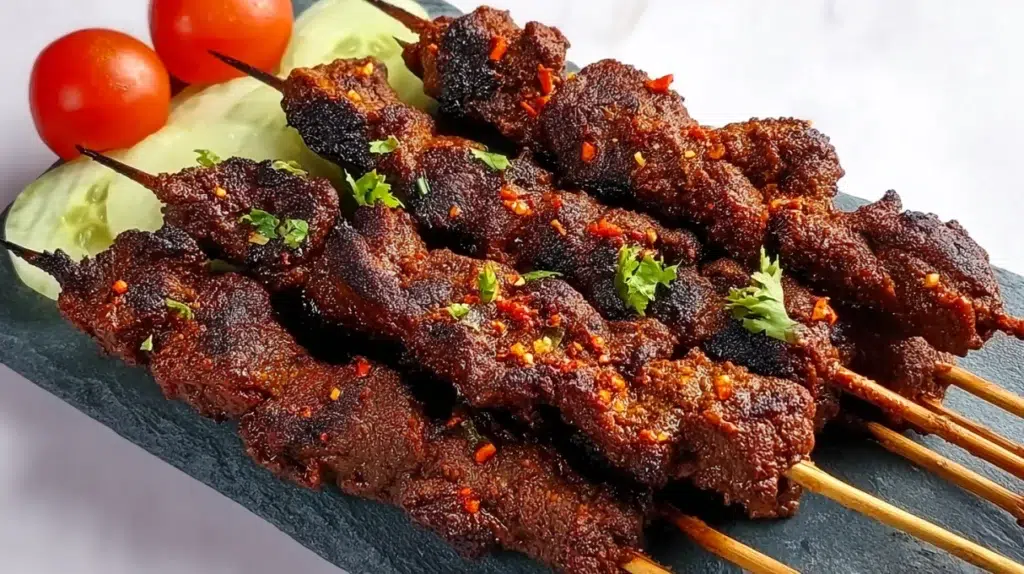
Nigerian suya recipe is one of the most searched African street food recipes in the world, and one of the most frequently made badly outside Nigeria, because most recipes that claim to be suya are missing the thing that makes it suya: the yaji.
Yaji is the dry spice blend that coats every suya skewer. Ground peanut, ginger, paprika, garlic, onion, ground crayfish, ground black pepper and a proprietary combination that varies by the mai suya (the suya man) and is sometimes guarded with genuine secrecy. The yaji is not a marinade. It is a dry coating applied directly to the beef before skewering and grilling, and then dusted over the finished skewers at the table. It is simultaneously the seasoning, the crust, and the serving condiment, a flavor system that operates at every stage of eating.
This is part of the Nigerian recipes collection, the street food that has made Nigerian night markets famous.
Where Suya Comes From
The Fulani people of northern Nigeria are the primary cattle herders of West Africa, nomadic pastoralists whose White Fulani cattle produce the beef at the heart of the northern Nigerian food tradition that gave rise to suya. Suya is a Hausa-Fulani dish, rooted in the cattle culture of northern Nigeria where the finest beef in the country has been raised and traded for centuries.
The original suya was made from thinly sliced beef, coated in a simple spice and ground peanut mixture and grilled over charcoal. That fundamental formula has not changed. What has changed is its geographic reach, from a northern Nigerian street food available only in Kano, Kaduna and Maiduguri, suya has traveled south to Lagos, east to Enugu, and across the Nigerian diaspora worldwide. Every Nigerian city has its suya spots. Every Nigerian neighborhood abroad has someone making it at home.
Food is an important part of Nigerian life, in the north grains such as millet and wheat are a large part of the diet alongside the grilled meat traditions of the Hausa-Fulani people. Suya is the most celebrated expression of that grilled meat tradition, eaten late at night, wrapped in newspaper, standing at a roadside stall in the dark with the smell of charcoal and spiced beef hanging in the hot air.
The Four Principles of Good Suya
Before the recipe, four things that separate genuine suya from a spiced kebab that happens to have peanut in it.
1. The beef cut, thin, flat, specific Real suya uses thinly sliced beef, not cubes, not chunks. The meat is cut into flat, palm-sized pieces approximately 5-6mm thick, threaded onto flat metal skewers in a way that maximizes the surface area in contact with the heat. More surface area means more charred, spiced crust per bite. Beef sirloin, flank steak or beef tenderloin are the correct cuts, lean enough to char without excessive fat flare-ups but with enough flavor to hold their own against the yaji.
2. The yaji, dry, not wet Yaji is applied dry. Not as a marinade, not mixed into a paste, not used as a sauce. The dry spice blend is pressed firmly onto the surface of the beef before it hits the grill. This creates a crust as it cooks, the peanut base toasts, the spices char at the edges, and the result is a dry, intensely flavored exterior against the juicy beef within. Wet marinade produces a different (and inferior) result.
3. Charcoal heat, high, direct, fast Suya is a high-heat, fast-cook street food. The charcoal must be genuinely hot, white-hot coals with actual flame reduced to embers, and the skewers cook directly over it for 3-4 minutes per side at most. Suya cooked slowly over low heat loses its specific charred character and becomes dry. The speed of cooking is what keeps the beef juicy while the exterior develops its crust.
4. Dual application of yaji Yaji is applied twice, once before grilling (to season and crust the meat) and once after (dusted over the finished skewers at the table). This second application provides fresh, uncooked spice intensity that contrasts with the toasted, grilled flavor of the first application. Serve the remaining yaji at the table for people to add as they eat.
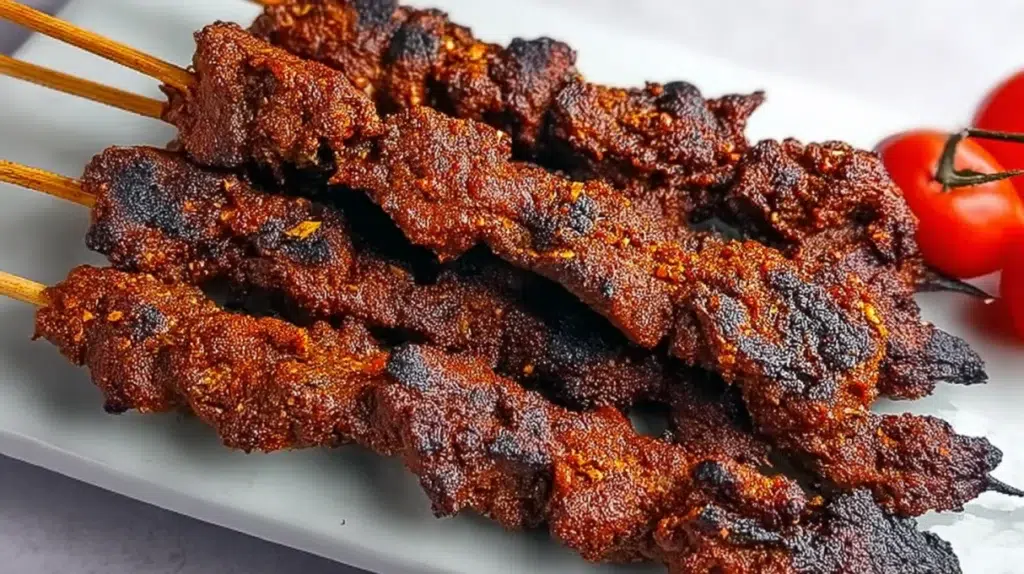
The Yaji Spice Blend: Complete Recipe
This is the foundation of the entire dish. Take your time with it. Taste it and adjust before it ever touches the beef.
Yaji Ingredients (makes enough for 8-10 skewers, with extra for the table)
- 100g (¾ cup) roasted unsalted peanuts, ground to a coarse powder in a food processor or blender. Not peanut butter, ground peanut with visible texture. The peanut is the bulk and the base of yaji, providing richness and fuel for the charring crust.
- 2 tablespoons paprika, standard sweet paprika. Smoked paprika approximates the charcoal flavor but is not traditional.
- 1 tablespoon ground ginger, this is what gives suya its specific warm heat that is different from chili heat. Use more if you like warmth.
- 1 tablespoon garlic powder
- 1 tablespoon onion powder
- 1 teaspoon ground black pepper
- 1 teaspoon ground white pepper
- 1 teaspoon ground cayenne, or ground chili powder. Adjust to your heat preference. Traditional suya is genuinely spicy.
- 1 teaspoon ground crayfish, optional but highly recommended. Adds the specific Nigerian umami depth that makes this taste authentically Nigerian rather than generically spiced. Buy at African grocery stores.
- 1 teaspoon ground bouillon (Maggi or Knorr powder), optional but used widely by Nigerian mai suya for its MSG-forward savory punch
- ½ teaspoon salt
Mix all ingredients thoroughly. Taste the yaji directly, it should be nutty, warming, slightly spicy, and deeply savory. Adjust at this stage. More ginger for more heat. More cayenne for fire. More salt if it tastes flat. Once the yaji is right, the suya will be right.
The Complete Nigerian Suya Recipe
Ingredients (serves 4: approximately 10-12 skewers)
- 600g (1.3 lbs) beef sirloin, flank steak or beef tenderloin
- Full batch of yaji (recipe above)
- 2 tablespoons vegetable oil, for brushing the grill grate and lightly coating the beef before the yaji
Equipment:
- Flat metal skewers traditional suya uses flat metal skewers, not round ones. The flat profile prevents the meat from rotating when you turn the skewer. If only round skewers are available, use two parallel skewers per piece of meat.
- Charcoal grill, strongly preferred. Gas grill works. Cast iron griddle pan on a high gas flame is the acceptable indoor option. Each produces progressively less authentic results but all produce good suya.
Method:
Step 1: Slice the beef
Place the beef in the freezer for 20 minutes, just enough to firm it slightly, making clean thin slicing easier. Slice against the grain into flat pieces approximately 5-6mm thick and 8-10cm long. The pieces should be roughly palm-sized, flat and even in thickness throughout. Uneven thickness means some parts will be overcooked before others are done.
Step 2: Apply the first yaji coat
Lay the beef slices flat on a board or plate. Brush each piece very lightly with vegetable oil, just enough to help the yaji adhere. Sprinkle yaji generously over both sides of each piece and press it firmly onto the meat with your fingers. It should coat the surface completely, no bare patches visible. The coating should be thick enough to feel solid when pressed.
Thread each piece onto a flat metal skewer lengthwise, keeping the meat as flat as possible rather than bunching it up. Set aside for 15 minutes while the grill heats.
Step 3: Grill the suya
Light the charcoal well in advance, you want white-hot coals with most of the flame died down before the beef goes on. The grill should be so hot you cannot hold your hand over it for more than 2 seconds at a height of 15cm.
Brush the grill grate with a little oil just before laying the skewers down. Place the skewers on the grill with the meat flat against the grate. Do not move them for the first 90 seconds, let the yaji form its crust without disturbance. After 90 seconds, lift the edge of one skewer gently, if the meat releases cleanly and has a deep golden-brown to dark crust on the underside, it is ready to turn. If it sticks, wait another 30 seconds.
Turn and cook the second side 2-3 minutes until the meat is cooked through and both sides show the characteristic charred yaji crust. The beef should be cooked through but still have some give, not rigid and dry.
Remove from the heat. Dust immediately with a fresh sprinkle of yaji while the skewers are still hot. This second application blooms the spices against the heat of the just-cooked meat.
Step 4: The table service
Real suya is served immediately, still on the skewer or slid off onto newspaper or foil. Alongside:
- Raw sliced onion, essential. The sharpness cuts through the richness of the yaji.
- Fresh tomato, sliced
- More yaji in a small dish for dipping or sprinkling
- Sliced scotch bonnet or fresh chili for those who want more heat
Do not let suya sit and cool before eating. It is a dish of immediacy, the crust softens as it cools and the contrast between charred exterior and juicy interior disappears within 10 minutes. Eat it standing up if you have to.
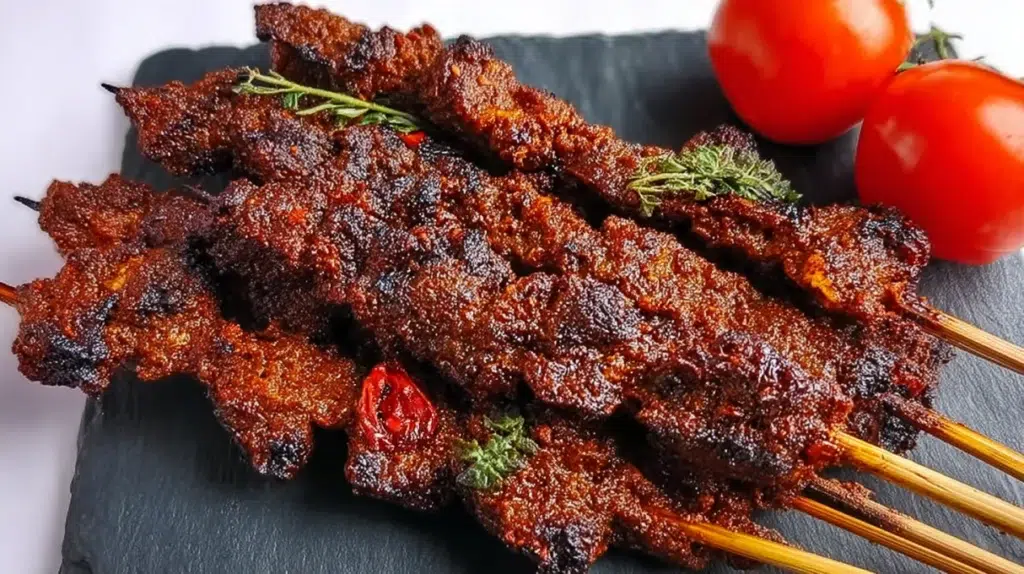
Suya Variations, Beyond Beef
Traditional mai suya skewer almost exclusively beef. In practice across Nigeria, suya is made from other proteins too:
Chicken suya (tsire): chicken thighs or breast cut thin, treated exactly like beef. Chicken cooks faster, 2-3 minutes per side maximum. Watch carefully as chicken dries out if overcooked.
Ram suya: thinly sliced ram (mutton) is common in the north during Eid celebrations. The slightly gamey richness of mutton pairs exceptionally well with the yaji.
Kidney suya: beef kidney, sliced thin, skewered and grilled. More assertive in flavor, deeply savory, a specific delicacy among suya regulars who know what to ask for.
Gizzard suya: chicken gizzard, split and flattened, coated in yaji and grilled hard until chewy and charred. The texture is different, firm, almost resilient, but the flavor is extraordinary.
Indoor Suya: When You Don’t Have a Charcoal Grill
A cast iron griddle pan heated to its highest possible temperature over a gas flame produces the best indoor result. Heat the pan until it is visibly smoking. No oil in the pan, the oil on the beef is sufficient. Press the yaji-coated skewers flat against the hot surface and cook 2-3 minutes per side without moving. Open windows. Smoke is expected and correct.
The result lacks the smoke depth of charcoal but retains the charred crust and the yaji intensity. It is genuinely good suya, not a compromise version.
Frequently Asked Questions
Can yaji be made ahead?
Yes, yaji keeps in an airtight jar for up to 3 months without losing quality. Make a large batch and use it on everything. It is excellent on roast chicken, grilled fish, scrambled eggs, roasted vegetables and as a dipping spice for bread. Once you have yaji in the house you will find reasons to use it constantly.
What is the difference between suya and kebab?
Both are skewered and grilled meats. Suya is specifically Hausa-Fulani in origin, uses a dry peanut-based spice coating rather than a liquid marinade, is cut and skewered flat rather than in cubes, and is eaten with raw onion and tomato rather than the yogurt-based sauces typical of Middle Eastern kebab traditions. The flavor profiles are completely different.
Is suya always spicy?
Traditional suya is genuinely hot, scotch bonnet or chili is present in the yaji. The heat can be adjusted by reducing or omitting the cayenne from the blend, but some warmth from the ginger should remain regardless. A completely mild suya loses part of what makes it suya.
Why does my suya taste like just peanuts?
The other spices were under-measured relative to the peanut. Peanut is the bulk of yaji but the ginger, paprika, garlic and crayfish are what make it complex. Measure each spice carefully on first attempt and taste the yaji blend before it touches the meat, that tasting step catches problems before they become a bad batch of suya.
Planning your week? Add suya to your weekly meal planner, the yaji takes 5 minutes to make and keeps for months.
More From the Nigerian Recipes Collection:
- Nigerian Recipes: The Complete Guide
- Nigerian Jollof Rice: The Party Method and Smoky Bottom
- Egusi Soup Recipe: The Two Methods Explained
- Nigerian Snack Recipes: Puff Puff, Akara and Chin Chin
- Nigerian vs Ghanaian jollof
Nigerian Suya
- Total Time: 23 minutes
- Yield: 4 servings 1x
- Diet: None
Description
Nigerian suya is a popular street food made with thinly sliced beef coated in a spicy dry peanut blend known as yaji, then grilled to perfection.
Ingredients
- 600g (1.3 lbs) beef sirloin, flank steak or beef tenderloin
- Full batch of yaji (recipe below)
- 2 tablespoons vegetable oil
Instructions
- Slice the beef into flat pieces approximately 5-6mm thick.
- Apply the first yaji coat on both sides of the beef slices.
- Thread each piece onto a flat metal skewer and set aside.
- Grill the skewers over white-hot charcoal for 3-4 minutes per side.
- Dust with fresh yaji immediately after removing from heat.
- Serve with raw onions, tomatoes, and chili on the side.
Notes
Suya is best served immediately and eaten while still hot. Adjust the heat level of the yaji to your preference.
- Prep Time: 15 minutes
- Cook Time: 8 minutes
- Category: Main Course
- Method: Grilling
- Cuisine: African
Nutrition
- Serving Size: 1 skewer
- Calories: 350
- Sugar: 5g
- Sodium: 400mg
- Fat: 12g
- Saturated Fat: 4g
- Unsaturated Fat: 6g
- Trans Fat: 0g
- Carbohydrates: 45g
- Fiber: 3g
- Protein: 15g
- Cholesterol: 30mg