Nigerian snack recipes are the easiest entry point into West African home cooking, and the most immediately, unapologetically satisfying.
Puff puff, akara, chin chin. Three completely different preparations, three different techniques, three different flavor profiles. What they share: all are deep-fried, all appear at every Nigerian celebration, all are sold from street stalls and market tables throughout Nigeria, and all produce a specific kind of happiness in people who eat them that is difficult to explain and very easy to recognize.
None of them is difficult. Puff puff requires yeast, flour, sugar, water and a hot pan of oil. Akara requires soaked black-eyed peas, an onion, a pepper, and a blender. Chin chin requires flour, butter, sugar and an egg. The technique matters, especially for akara, where the blending of the peas to the right consistency is what separates light, crispy fritters from dense, heavy ones. But none of these demands anything beyond patience and attention.
This is part of the Nigerian recipes collection, the snacks that appear alongside Nigerian jollof rice, egusi soup and suya at every celebration worth attending.
Table of Contents
1. Puff Puff: Nigeria’s Beloved Fried Dough Ball
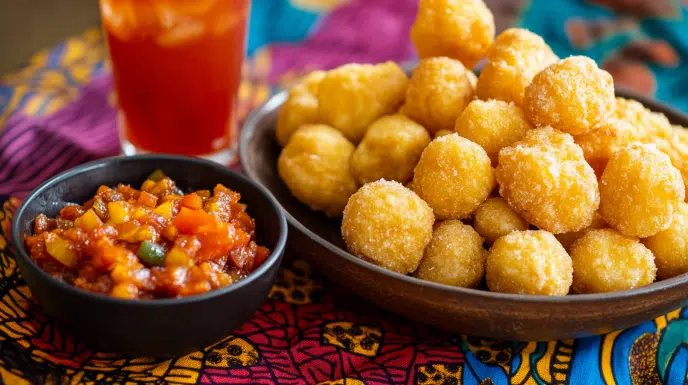
Puff puff is the Nigerian answer to a doughnut, a beignet and a loukoumade all at once, a small, round, deep-fried yeast dough ball that is sweet, fluffy and addictive in a way that is difficult to moderate. They are made everywhere: at parties, at street stalls, at school gate vendors, by grandmothers who have been making them the same way for decades without ever consulting a recipe.
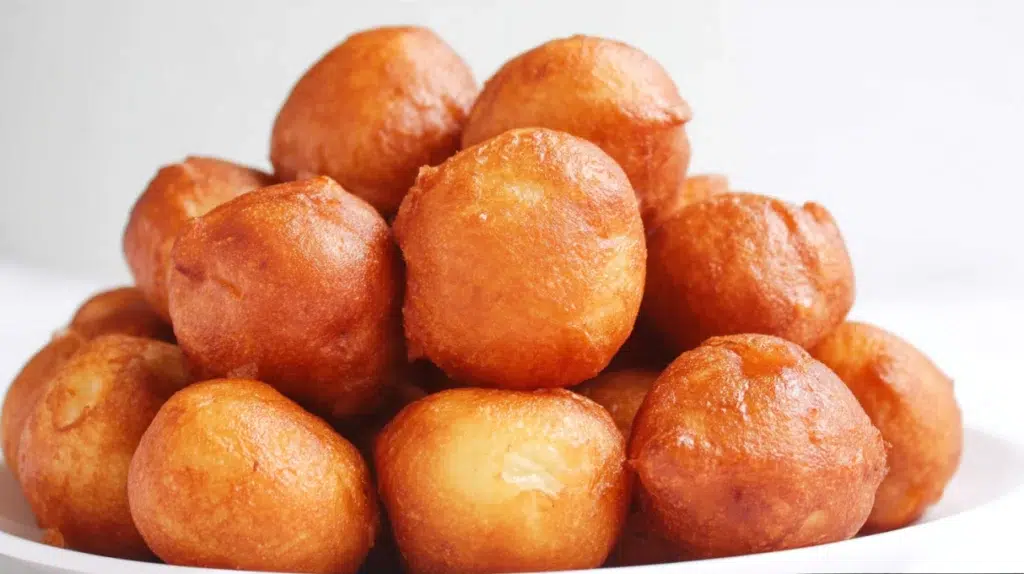
The texture is what makes them. The outside is golden and slightly crisp from the frying. The inside is soft, airy and slightly chewy from the yeast, not the dense, bready interior of a doughnut but something lighter, with tiny air pockets throughout. They are best eaten warm, seconds after they come out of the oil. They are also perfectly good at room temperature, which is how they are usually served at parties, piled high on a plate, disappearing faster than they can be replaced.
Puff Puff Recipe
Ingredients (makes approximately 20-24 puff puff)
- 250g (2 cups) plain flour, all-purpose flour
- 1 teaspoon instant yeast
- 80g (6 tablespoons) sugar, Nigerian puff puff is distinctly sweet. Reduce to 50g for a less sweet result.
- ¼ teaspoon salt
- ½ teaspoon ground nutmeg, the defining spice of Nigerian puff puff. Do not omit.
- 200ml (¾ cup) warm water, not hot, not cold. Warm enough to activate the yeast but not hot enough to kill it: 38-40°C / 100-104°F, or comfortable on the inside of your wrist.
- Vegetable oil for frying, enough for at least 5cm depth in the pan
Method:
Combine the flour, yeast, sugar, salt and nutmeg in a large bowl. Make a well in the center and pour in the warm water. Mix with a wooden spoon or your hand until a smooth, thick batter forms, thicker than pancake batter, thinner than bread dough. It should fall slowly from a spoon in a thick ribbon.
Cover the bowl with cling film or a clean kitchen towel. Leave in a warm place for 45-60 minutes until the batter has risen noticeably and looks puffy and bubbly on the surface. This rise is what gives puff puff its light interior, do not skip or rush it.
Heat the vegetable oil in a deep pan or wok to 170°C / 340°F. Test with a small drop of batter, it should rise immediately to the surface and begin frying within 2-3 seconds. If it sinks and sits, the oil is not hot enough. If it browns immediately, the oil is too hot.
Using a tablespoon or a small ice cream scoop dipped in water to prevent sticking, scoop portions of batter and drop carefully into the hot oil. The batter balls should be approximately golf-ball sized. Do not crowd the pan, fry in batches of 6-8 maximum.
The puff puff will rotate in the oil as they cook, the heavier uncooked side naturally sinks while the cooked side rises. After about 3 minutes, gently turn them with a slotted spoon to ensure even browning. Cook 4-5 minutes total until deep golden brown all over.
Remove to a wire rack or paper towels. Serve warm, dusted with powdered sugar if desired, though many Nigerians eat them plain.
The nutmeg note: Nutmeg is what makes Nigerian puff puff taste like puff puff rather than a generic fried dough ball. It is subtle but unmistakable. Use freshly grated nutmeg if you have it, the difference from pre-ground is significant. A quarter teaspoon is the correct amount for this recipe.
2. Akara: Black-Eyed Pea Fritters
Accara, black-eyed pea fritters made from pureed black-eyed peas, onion and pepper fried in oil, are a common street food across West Africa, known as akara in Nigeria. In Nigeria, akara has been a Yoruba breakfast and street food tradition for generations, sold by women frying them fresh each morning at roadside stalls, ladled hot from large cauldrons of palm oil into newspaper cones, eaten with ogi (pap, a fermented corn porridge) for breakfast or as a stand-alone snack at any time.
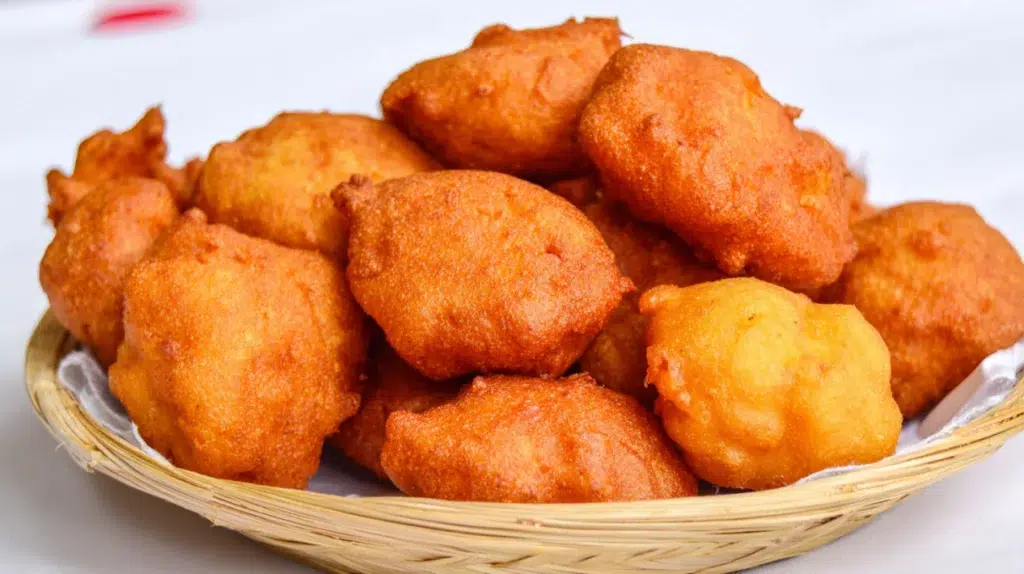
Cowpeas, the black-eyed peas used in akara, are native to West Africa and have been cultivated there as a protein-rich food crop for centuries. Akara is therefore not just a street food, it is a direct expression of one of West Africa’s oldest and most important crop traditions, transformed into something that is simultaneously nutritious, cheap, and extraordinarily delicious when made correctly.
The critical technique is the blending and the aeration. Soaked black-eyed peas, blended with onion and a small amount of water until very smooth and almost fluffy, produce a light batter that puffs and crisps in hot oil. Under-blended peas produce a dense, heavy fritter. Over-watered batter produces flat, greasy akara that does not hold its shape. The consistency you are looking for is thick, smooth and airy, like a very thick whipped hummus that holds its shape when spooned but is not stiff.
Akara Recipe
Ingredients (makes 15-18 akara)
- 400g (2 cups) dried black-eyed peas, soaked overnight in cold water
- 1 small onion, roughly chopped
- 1 scotch bonnet pepper, or half for less heat. The pepper is flavor as much as heat.
- ½ teaspoon salt
- Vegetable oil or palm oil for frying, palm oil is traditional and adds flavor. Vegetable oil is perfectly acceptable.
The critical first step, removing the skins:
After soaking, the black-eyed peas need their skins removed. This is the step most recipes skip and the reason most homemade akara is dense. The skin does not blend smoothly and creates a coarse, heavy texture.
Method 1 (traditional): Rub handfuls of soaked peas between your palms vigorously under running water. The skins will slip off. Continue until most skins are removed, 5-7 minutes of active rubbing. They do not need to be perfect, 80% skin removal is sufficient.
Method 2 (faster): Put the soaked peas in a blender, add just enough water to cover, pulse 3-4 times. The skins will separate and float, pour off the water and skins, refill, pulse again. Repeat 3-4 times. Less thorough than hand-rubbing but acceptable.
Method:
Place the de-skinned peas, chopped onion, scotch bonnet and salt in a blender. Add 3-4 tablespoons of water, just enough to get the blender moving, not enough to thin the batter. Blend on high until very smooth, 2-3 minutes of sustained blending. The batter should be thick, pale cream-colored and almost fluffy. Stop and scrape down the sides several times.
Transfer to a bowl. Beat the batter vigorously with a wooden spoon or whisk for 2 minutes, this incorporates air and is what makes akara light rather than dense. The batter should lighten slightly in color and feel airy when stirred.
Heat oil to 170°C / 340°F in a deep pan, at least 5cm of oil depth. Using two tablespoons, scoop the batter with one spoon and use the second to push it off into the oil, aim for rounded, oval shapes. Fry 3-4 at a time maximum.
Cook 3-4 minutes per side until golden brown and cooked through. The akara should puff slightly in the oil and hold its shape. Remove to a wire rack.
Serve hot with a fresh tomato and onion sauce: dice 2 tomatoes, 1 onion, half a scotch bonnet. Toss with a pinch of salt. Spoon over the akara or serve alongside for dipping.
Why akara sinks and won’t hold shape: The batter is too wet. Next time reduce water in the blender. If this batch is already made, stir in one tablespoon of plain flour to thicken the batter before frying.
3. Chin Chin: The Crunchy Fried Dough Snack
Chin chin is the Nigerian snack that nobody intends to eat a lot of and everyone always does. Small, roughly cut pieces of enriched dough, flour, butter or margarine, sugar, egg, milk, a pinch of nutmeg, deep-fried until completely crunchy throughout. The texture is the defining characteristic: fully crunchy from outside to center, with a slightly rich, slightly sweet, slightly nutty flavor that makes them impossible to stop eating once you start.
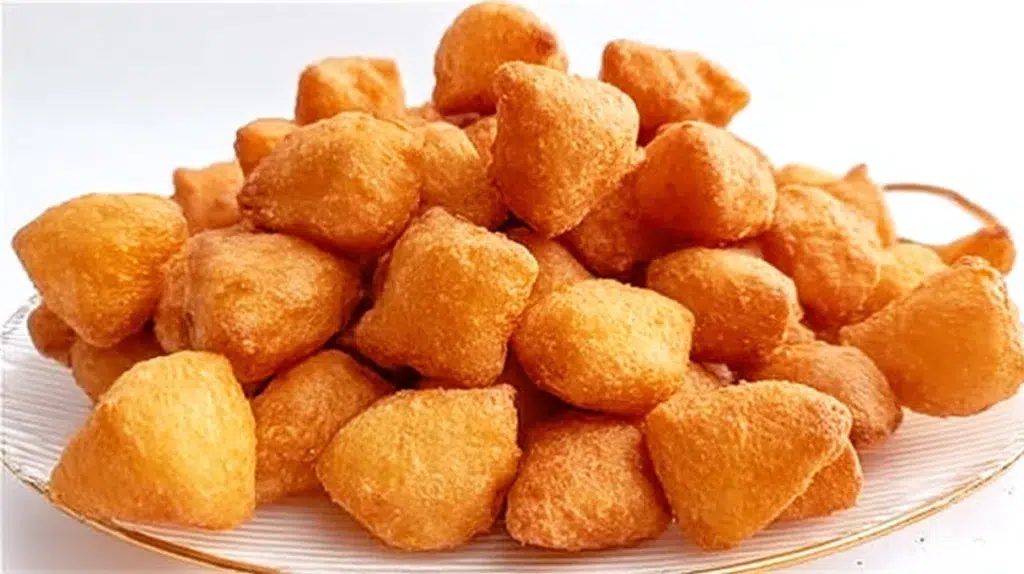
Unlike puff puff (which is soft and fluffy) and akara (which is crispy outside and soft within), chin chin is crunchy all the way through. This requires rolling the dough thin, 3-4mm maximum, and frying at a lower temperature for longer, so the heat penetrates to the center before the outside burns.
Chin chin is made in enormous batches and stored in jars or tins, it keeps for weeks in an airtight container and is produced in large quantities before celebrations so there is always something to offer guests.
Chin Chin Recipe
Ingredients (makes a large jar, approximately 500g)
- 400g (3¼ cups) plain flour
- 80g (6 tablespoons) sugar
- 60g (4 tablespoons) unsalted butter, softened, or margarine, which is more commonly used in Nigeria for a slightly different but equally good result
- 1 large egg
- 60ml (4 tablespoons) evaporated milk or whole milk
- ¼ teaspoon ground nutmeg
- ½ teaspoon baking powder
- Pinch of salt
- Vegetable oil for frying
Method:
Combine flour, sugar, baking powder, salt and nutmeg in a large bowl. Rub the softened butter into the flour mixture with your fingertips until it resembles breadcrumbs, the same technique as making pastry.
Beat the egg with the milk and add to the flour mixture. Mix until a smooth, firm dough forms, similar to shortcrust pastry in texture. If the dough feels sticky, add a tablespoon of flour. If it feels dry, add a teaspoon of milk. The dough should be pliable but not soft.
Divide the dough into four portions. On a lightly floured surface, roll each portion to 3-4mm thickness, no thicker. Chin chin rolled too thick will be soft and doughy in the center rather than uniformly crunchy.
Cut the rolled dough into small pieces. Traditional shapes: thin strips cut with a knife and twisted into loose spirals, or small squares, or short 2cm lengths cut from thin ropes. None of these requires special equipment, a sharp knife and a ruler are sufficient. Consistency of size matters more than elegance of shape, even pieces fry evenly.
Heat oil to 150°C / 300°F, deliberately lower than puff puff and akara. The lower temperature allows the chin chin to cook through to the center before browning too fast on the outside. This is the most important temperature distinction in the recipe.
Fry in small batches, a loose handful at a time, stirring gently with a slotted spoon to prevent sticking together. Cook 6-8 minutes until evenly golden, pale gold rather than deep brown. Remove to a wire rack and cool completely before storing.
The chin chin will crisp further as they cool. Do not test their final crunchiness while still warm, they always feel slightly soft until completely cool.
Storage: Airtight container at room temperature. Keeps 3-4 weeks without quality loss.
The Party Snack Table: Serving All Three Together
At a Nigerian celebration, naming ceremony, birthday, wedding, the snack table is assembled before the main meal and refreshed throughout the event. The combination of puff puff (soft and sweet), akara (savory and crispy-outside-soft-inside) and chin chin (uniformly crunchy) covers every snacking desire simultaneously and keeps guests happy for hours while the Nigerian jollof rice finishes cooking.
Add moi moi (steamed black-eyed pea pudding in foil parcels, savory, dense and deeply flavored), fried plantain, and small pieces of fried chicken and you have the complete Nigerian celebration snack table. Nothing from a catering company. Everything made from scratch. Everything better than anything bought.
FAQ About Nigerian Snack Recipes
Why is my puff puff dense and not fluffy?
The yeast did not activate properly, or the batter did not rise long enough. Check that your yeast is fresh, stir it into warm (not hot) water with a pinch of sugar and it should foam within 10 minutes. If it does not foam, the yeast is dead. Ensure the batter rests for the full 45-60 minutes in a warm place before frying.
Can I make akara without removing the skins?
You can, but the result will be noticeably heavier and the texture will be coarser. Skin removal is the step that separates light, professional akara from acceptable home-cook akara. It takes 7 minutes. It is worth doing.
My chin chin came out soft, not crunchy, what went wrong?
Either the dough was rolled too thick (over 4mm), the oil was too hot (which browns the outside before the inside cooks through), or they were not cooled completely before testing. Roll thinner, fry at 150°C, and wait for full cooling before judging the texture.
Can puff puff be made without yeast?
A yeast-free version using baking powder as the leavening agent exists and is sometimes made for speed. The result is acceptable but different, denser, without the specific fermented flavor that yeast provides. For the real puff puff experience, use yeast.
How do I stop akara from absorbing too much oil?
Two causes: the oil temperature is too low (akara absorbs oil when frying in cool oil rather than crisping immediately) and the batter is too wet. Keep the oil at 170°C and ensure the batter is thick enough to hold its shape when dropped from a spoon.
Planning your week? Add chin chin to your weekly meal planner, make a batch on Sunday and it keeps for weeks in a jar on the counter.
More From the Nigerian Recipes Collection:
- Nigerian Recipes: The Complete Guide
- Nigerian Jollof Rice: The Party Method and Smoky Bottom
- Egusi Soup Recipe: The Two Methods Explained
- Nigerian Suya: The Yaji Spice Blend and the Technique