⏱ Prep: 10 min 🔥Cook: 20 min 👤 Serves: 4 🌿Diet: Gluten-free, Vegan
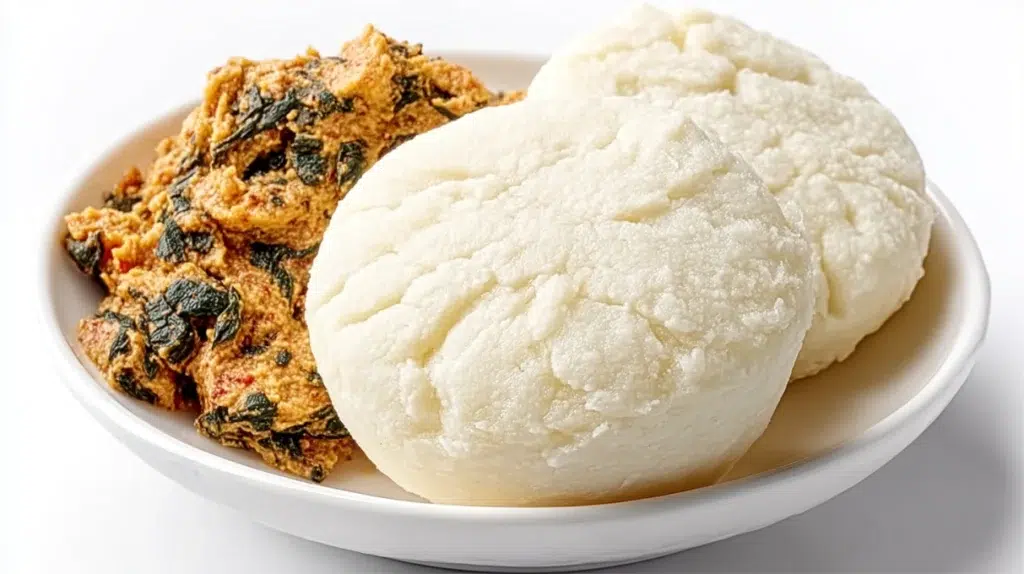
Fufu recipe, West Africa’s most beloved swallow food, is the dish that turns any soup or stew into a complete, deeply satisfying meal. Smooth, stretchy, dense and mild, made from boiled cassava and green plantains blended into a soft dough and shaped into balls. You tear off a small piece, make a small indentation with your thumb, scoop up some soup and swallow. No chewing. That is not a mistake, that is the point.
I had never eaten anything like it before Nigeria. The first time someone passed me a ball of fufu and a bowl of egusi soup and said just swallow, I hesitated for a full thirty seconds. By the second piece I understood completely why people describe it as comfort food in the most literal sense.
What you need for Fufu Recipe
- 1 lb (450g) fresh cassava root, peeled, or use frozen pre-peeled cassava from African or Latin grocery stores which saves significant prep time
- 1 lb (450g) green plantains, 2 medium plantains. Green, not yellow, green plantains are starchier and produce the correct stretchy texture. Yellow plantains are too ripe and too sweet.
- 1 cup (240ml) water, plus more as needed during blending
- ½ teaspoon salt, optional. Fufu is traditionally unseasoned, it is the soup that provides all the flavor.
Note: cassava flour shortcut, if fresh cassava is unavailable, use 2 cups (240g) cassava flour (not tapioca starch) mixed with hot water and stirred vigorously on the stovetop. The texture will be slightly different but the result is excellent and much faster.
Step-by-step
- Prep the cassava. Peel the cassava root, cut off both ends, score the skin lengthwise and peel away. The inner flesh should be white and firm. Cut into 2-inch (5cm) chunks. Remove the woody fibrous core running down the center of each piece, it does not soften during cooking.Fresh cassava has a thin purple-brown skin and a waxy white interior. If the interior has grey or black streaks throughout, it has oxidized and should not be used. Frozen pre-peeled cassava eliminates this issue entirely.
- Prep the plantains. Cut off both ends of each plantain. Score the skin lengthwise and peel away. Cut into 2-inch (5cm) pieces.
- Boil together. Place the cassava and plantain pieces in a large saucepan. Cover with cold water by at least 2 inches (5cm). Bring to a boil over high heat, then reduce to a steady simmer. Cook for 15–20 minutes until both are completely tender, a fork should slide through with zero resistance. Drain, reserving ½ cup (120ml) of the cooking water.Test the cassava specifically, it takes longer than the plantain. If the plantain is soft but the cassava still has any firmness, give everything another 5 minutes. Undercooked cassava produces lumpy, gritty fufu that cannot be corrected after blending.
- Blend. Transfer the drained cassava and plantain to a food processor or high-powered blender. Add ¼ cup (60ml) of the reserved cooking water. Blend on high, stopping to scrape down the sides every 30 seconds. Add more water one tablespoon at a time, only enough to keep the blender moving. The mixture should be very thick, smooth and beginning to pull away from the sides of the bowl in one mass.Less water always. You can add more water but you cannot take it out. The finished fufu should be stiff enough to shape into a ball that holds without flattening. If it is too wet, cook it in a pot on the stovetop (see step 5).
- Cook on the stovetop (if needed). If the blended mixture is too soft or wet, transfer to a heavy-bottomed pot over medium heat. Stir constantly and vigorously with a wooden spoon for 3–5 minutes until the fufu thickens, becomes glossy and pulls away from the sides of the pot cleanly. This stovetop finish is the traditional method and always produces the most consistent texture.
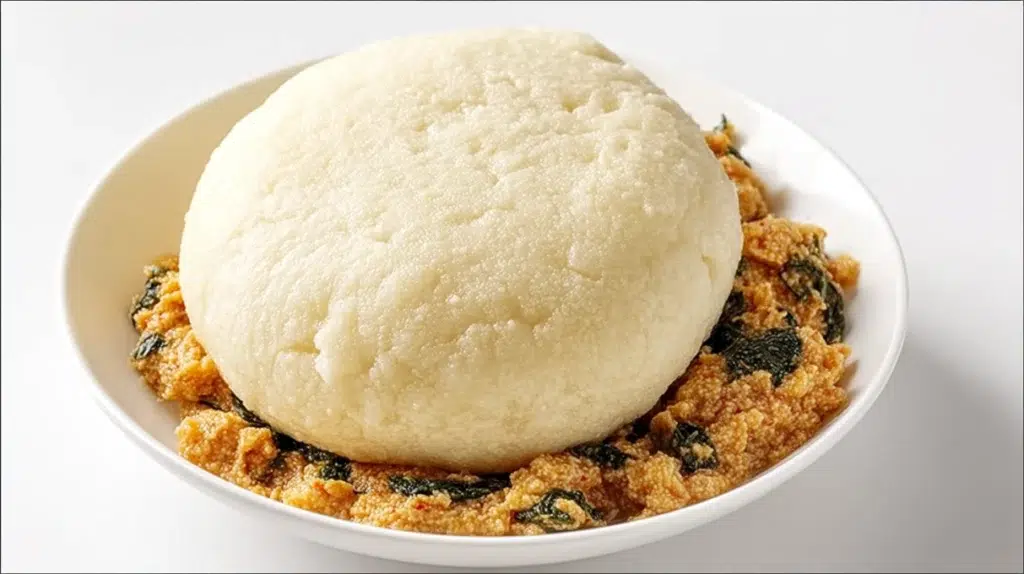
- Shape into balls. Wet your hands with cold water, this prevents sticking. Scoop out a serving-sized portion (roughly the size of a baseball) and roll between wet palms in a circular motion until smooth and round. The smooth side should face up when placed in the bowl. Repeat for each serving.Work quickly, fufu forms a crust on the surface as it cools. Keep unused portions covered with plastic wrap while shaping the rest.
- Serve immediately in individual bowls alongside the soup of your choice. Place one ball of fufu per bowl. The soup is served separately or poured directly around the fufu.
Make it ahead
Claire’s note: Fufu can be made ahead and stored, wrap each ball individually in plastic wrap while still warm, which locks in the moisture and prevents a crust from forming. Refrigerate for up to 4 days. To reheat: unwrap, place in a microwave-safe bowl with a small splash of water, cover and microwave for 2–3 minutes, then stir with a wooden spoon until smooth again. It comes back almost perfectly. For longer storage, freeze individually wrapped balls for up to 3 monthsn defrost overnight in the fridge before reheating.
What to eat alongside
Fufu is never eaten alone, it is always the vehicle for a soup or stew, never the destination. The classic pairings are egusi soup, ground melon seed stew with palm oil and leafy greens and okra soup, though fufu works with virtually any rich West African stew. The mild, slightly starchy flavor of fufu is specifically designed to complement heavily seasoned soups, it is a blank canvas that lets the soup be the star. The full collection of soups and stews that pair with fufu is in the African food guide.
Add fufu to your weekly meal planner alongside a soup, make a large batch of fufu on Sunday and it keeps for four days ready to pair with any stew you make during the week.
Before you start
Where do I find cassava and green plantains in the US?
African grocery stores, Caribbean grocery stores, Latin supermarkets and H Mart all carry both. Fresh cassava is typically sold whole. Frozen pre-peeled cassava is available at African and Caribbean stores and is an excellent time-saving alternative with identical results.
Can I make fufu with only cassava and no plantains?
Yes, use 2 lbs (900g) of cassava and follow the same method. The result is slightly stickier and more elastic than the cassava-plantain combination. The plantain adds a mild sweetness and helps cut the stickiness. Both versions are traditional in different regions of West Africa.
Why is fufu swallowed and not chewed?
Fufu is a swallow food by design, the smooth, doughy texture is specifically made to slide down easily without chewing. This allows the eater to experience the full flavor of the soup with each swallow. It is a cultural practice, not a mistake. With practice the swallowing technique becomes completely natural.
And for more recipes, follow us on Pinterest.
Print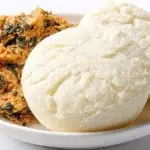
Fufu Recipe: Authentic West African Cassava and Plantain Fufu
- Total Time: 30 minutes
- Yield: 4 1x
Description
This fufu recipe is West Africa’s most iconic swallow food, smooth, stretchy and impossibly satisfying. Made from just cassava and green plantains, it is gluten-free, vegan and easier to make at home than you think. Pair it with egusi soup, okra soup or any rich West African stew and you will understand immediately why this is the comfort food millions of people across the continent eat every single day.
Ingredients
- 1 lb (450g) fresh cassava root, peeled, or use frozen pre-peeled cassava
- 1 lb (450g) green plantains, about 2 medium, green not yellow
- 1 cup (240ml) water, plus more as needed during blending
- ½ teaspoon salt, optional
Instructions
- Peel the cassava, cut off both ends, score the skin lengthwise and peel away. Cut into 2-inch chunks. Remove the woody center core from each piece.
- Peel the plantains, score the skin lengthwise and peel away. Cut into 2-inch pieces.
- Place cassava and plantain in a large saucepan. Cover with cold water by at least 2 inches. Bring to a boil then reduce to a steady simmer. Cook for 15–20 minutes until completely tender, a fork should slide through with zero resistance. Drain and reserve ½ cup of the cooking water.
- Transfer to a food processor or blender. Add ¼ cup of the reserved cooking water. Blend on high, stopping to scrape down the sides every 30 seconds. Add more water one tablespoon at a time — only enough to keep the blender moving. The mixture should be very thick, smooth and pulling away from the sides in one mass.
- If the mixture is too soft, transfer to a heavy-bottomed pot over medium heat. Stir constantly for 3–5 minutes until thick, glossy and pulling away from the pot cleanly.
- Wet hands with cold water. Scoop out a baseball-sized portion and roll between wet palms until smooth and round. Repeat for each serving. Keep unused portions covered with plastic wrap while shaping.
- Serve immediately in individual bowls alongside egusi soup, okra soup or any West African stew.
Notes
Less water always when blending, you can add more but cannot remove it. The fufu should be stiff enough to hold its ball shape without flattening.
Make ahead: wrap each ball individually in plastic wrap while still warm. Refrigerate up to 4 days.
Reheat in the microwave with a splash of water for 2–3 minutes then stir until smooth.
Freeze individually wrapped balls for up to 3 months. Defrost overnight in the fridge before reheating.
- Prep Time: 10 minutes
- Cook Time: 20 minutes
- Category: Side Dish
- Cuisine: West African
Nutrition
- Serving Size: per serving
- Calories: 160 kcal
- Sugar: 9g
- Sodium: 10mg
- Fat: 1g
- Carbohydrates: 40g
- Fiber: 2g
- Protein: 2g