⏱ Soak: 12–24 hours 🔥Cook: 20 min 👤Makes: 20–24 falafel 🌿Diet: Vegan, Gluten-free option
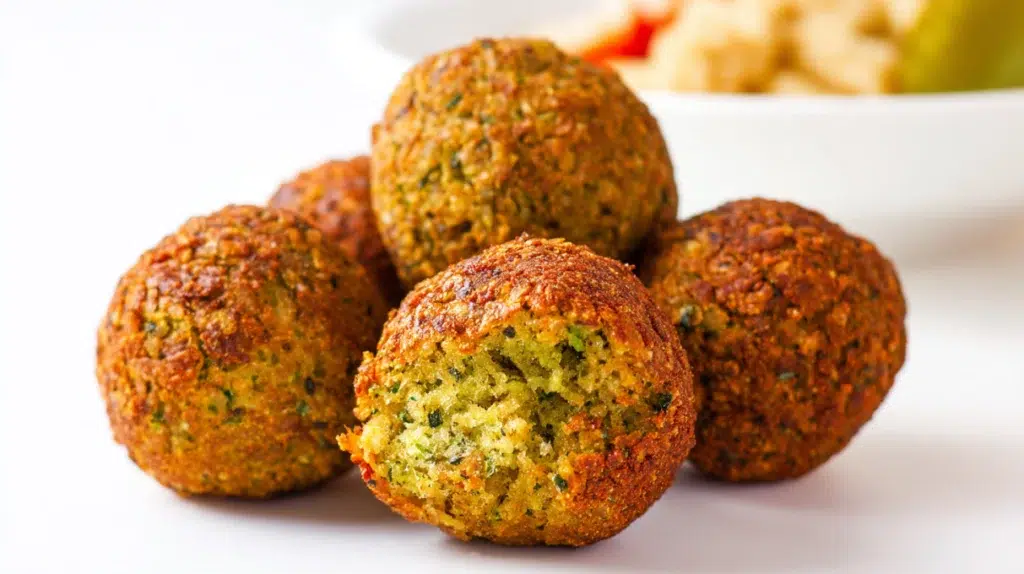
Falafel recipe, real falafel, the kind with a shattering golden crust that gives way to a tender, vivid green interior packed with herbs and warm spice, is one of those dishes that is simultaneously simple in concept and genuinely different from anything you can buy pre-made. Dried chickpeas soaked overnight, blended raw with parsley, cilantro, dill, onion, garlic, cumin, coriander and cardamom into a coarse, fragrant mixture, then fried in hot oil for three minutes per batch. The overnight soak is the only planning required. Everything after that is 30 minutes of active work.
The one rule stated now, before anything else is this: dried chickpeas only. Not canned. Not cooked. Dried, soaked, raw. Every single failure in falafel-making traces back to using canned chickpeas. The water content is too high, the mixture goes soft, the falafel falls apart in the oil. There is no workaround. Dried chickpeas, soaked overnight.
Ingredients
The falafel mixture
- 1½ cups (270g) dried chickpeas, this produces approximately 3 cups after soaking. Do not use canned, see the introduction above. Dried chickpeas are available at every grocery store, Middle Eastern grocery stores and online.
- ½ teaspoon baking soda, added to the soaking water only, not to the mixture. Helps soften the chickpeas during the overnight soak.
- 1 cup fresh flat-leaf parsley, leaves and tender stems, tightly packed. Thick stems removed.
- ½ cup fresh cilantro, leaves and tender stems. If you strongly dislike cilantro, replace with additional parsley, the falafel will be slightly less complex but still excellent.
- ¼ cup fresh dill, optional but traditional in Lebanese and Egyptian versions. Adds a light herby sweetness that is worth including.
- 1 small yellow onion, roughly quartered or white onion. Red onion also works.
- 5 cloves garlic
- 1½ teaspoons ground cumin
- 1 teaspoon ground coriander
- ¼ teaspoon ground cardamom, small amount but distinctive, adds the specific warm, floral note that separates authentic falafel from generic chickpea fritters
- ¼ teaspoon cayenne pepper, adjust to heat preference
- 1 teaspoon salt
- ½ teaspoon black pepper
- 1 teaspoon baking powder, stirred into the mixture after chilling, just before shaping. This is what gives falafel its airy, light interior rather than a dense, heavy result. Do not add it earlier.
- 2 tablespoons toasted sesame seeds, optional but traditional. Pressed onto the outside of each falafel before frying.
For frying
- Vegetable oil or any neutral oil, enough for 3 inches depth in a heavy pot. Approximately 4–5 cups.
Step by step
- Soak the chickpeas. Place the dried chickpeas in a large bowl. Add the baking soda and cover with cold water by at least 3 inches, the chickpeas will triple in size as they soak. Leave at room temperature for 12–24 hours. After soaking, drain completely and pat thoroughly dry with paper towels or spin in a salad spinner. The drier the chickpeas at this stage the better the mixture holds together.Check the chickpeas after 12 hours, they should feel soft enough to break easily between your fingers but should not be mushy. If they still feel hard, give them another 4–6 hours.
- Make the mixture. Add the soaked, drained chickpeas to a food processor. Pulse 8–10 times until broken into small, pebble-sized pieces. Add the parsley, cilantro, dill, quartered onion, garlic, cumin, coriander, cardamom, cayenne, salt and black pepper. Pulse in 5-second bursts, stopping to scrape down the sides, until the mixture is finely ground and resembles coarse, slightly damp sand. It should hold its shape when pressed in your palm without crumbling.Do not over-process. The moment the mixture starts looking smooth or paste-like, stop. Falafel made from over-processed mixture is dense and heavy inside. Coarse ground = light and airy inside. Smooth = heavy and dense.
- Chill the mixture. Transfer the mixture to a bowl. Cover tightly and refrigerate for at least 1 hour, overnight is even better. The chilling firms up the mixture, makes shaping significantly easier and allows the flavors to deepen and combine.Do not skip the chill. Unchilled mixture is loose and difficult to shape without falling apart. The refrigerator rest is not optional.
- Add baking powder and shape. Remove the mixture from the fridge. Sprinkle the baking powder over the surface and stir through completely. Shape the falafel immediately after adding the baking powder, it begins activating from the moment it contacts the moisture in the mixture. Use a falafel scoop, a small ice cream scoop or two tablespoons to portion the mixture. Roll each portion between your palms into a ball or flatten slightly into a thick disc. Press sesame seeds onto the outside if using. Place on a parchment-lined tray.If the mixture is crumbling and not holding its shape: pulse for 5–10 more seconds in the food processor. If it is too wet and sticky: add 1 tablespoon of chickpea flour or all-purpose flour and mix through.
- Heat the oil. Pour neutral oil into a heavy pot or Dutch oven to a depth of 3 inches (7.5cm). Heat over medium-high heat to 350°F (175°C). Test without a thermometer: drop a small piece of the mixture into the oil, it should rise immediately to the surface and begin sizzling actively within 2 seconds. If it sinks and sits still, the oil is not hot enough. If it browns immediately, the oil is too hot.
- Fry in batches. Carefully lower 5–6 falafel at a time into the hot oil using a slotted spoon, do not crowd the pot. Fry for 3–4 minutes, turning once at the 2-minute mark, until deep golden brown on all sides. Remove with a slotted spoon and drain on paper towels. Check the oil temperature between batches and adjust the heat as needed, the temperature drops with each batch.The first falafel of each batch is always a test piece. If it browns before 3 minutes, reduce the heat. If it is still pale after 3 minutes, increase it. Get it right on the test piece before committing the rest of the batch.
- Serve immediately. Falafel is at its absolute best within 5 minutes of leaving the oil, the crust is shattering, the interior is warm and soft. Break one open before serving to check the interior is cooked through and vivid green throughout. Serve with warm pita, tahini sauce, hummus, fresh tomato, cucumber and pickled vegetables.
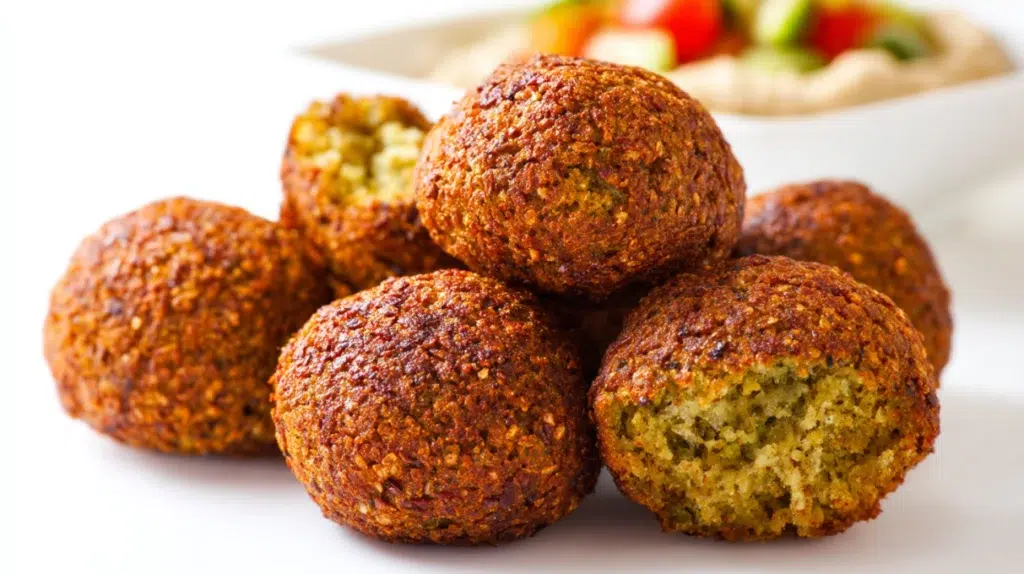
What I learned making Falafel recipe
Every falafel failure I have ever had and there were several before I got this right, came from one of three mistakes. Using canned chickpeas (the mixture is too wet, the falafel falls apart in the oil, there is no fix, start with dried). Over-processing the mixture into a paste (the interior bakes into a dense, heavy disk rather than the light, airy interior that makes falafel worth making pulse, do not blend). Skipping the refrigerator rest (the unchilled mixture crumbles when you try to shape it one hour minimum, overnight is better). Get these three things right and everything else is straightforward. The actual frying is the easiest part.
If something goes wrong
Claire’s note
Falafel falling apart in the oil means the mixture is too wet or was not processed enough. Two fixes: return the shaped falafel to the fridge for 20 minutes before frying, the cold firms everything up. Or process the mixture for 5 more seconds and reshape. If the interior is coming out dense and heavy: the mixture was over-processed. Nothing fixes over-processed falafel, but this batch will still taste good even if the texture is not quite right. Next batch, pulse less. If the exterior is burning before the interior is cooked: the oil is too hot. Drop the temperature to 340°F (170°C) and give each batch 4 minutes instead of 3.
Serve with
Falafel is at its most complete stuffed into warm pita with tahini sauce, sliced tomato, cucumber, red onion, fresh parsley and pickled turnips, the specific combination of fresh vegetables, creamy tahini and crispy falafel is the whole point. It also works on a full Lebanese mezze spread alongside muhammara and hummus. For everything else on a Lebanese table, the spreads, the salads, the breads, the complete Lebanese recipes collection have it all.
Add falafel to your weekly meal planner, soak the chickpeas Friday night, make the mixture Saturday morning and fry fresh for lunch. Leftovers reheat in a 375°F (190°C) oven for 8 minutes and come back almost exactly to where they were.
And for more recipes, follow us on Pinterest.
Print
Authentic Falafel
- Total Time: 95 minutes
- Yield: 20–24 falafel 1x
- Diet: Vegan, Gluten-free available
Description
Crispy on the outside, tender on the inside, this authentic falafel is made with dried chickpeas and a mix of fresh herbs and spices.
Ingredients
- 1½ cups (270g) dried chickpeas
- ½ teaspoon baking soda
- 1 cup fresh flat-leaf parsley, tightly packed
- ½ cup fresh cilantro
- ¼ cup fresh dill (optional)
- 1 small yellow onion, roughly quartered
- 5 cloves garlic
- 1½ teaspoons ground cumin
- 1 teaspoon ground coriander
- ¼ teaspoon ground cardamom
- ¼ teaspoon cayenne pepper
- 1 teaspoon salt
- ½ teaspoon black pepper
- 1 teaspoon baking powder
- 2 tablespoons toasted sesame seeds (optional)
- Vegetable oil for frying
Instructions
- Soak the chickpeas by placing them in a large bowl, adding baking soda, and covering with water. Leave for 12-24 hours.
- Make the mixture by pulsing soaked chickpeas in a food processor until broken into small pieces. Add herbs and spices, pulse until coarse.
- Chill the mixture for at least 1 hour.
- Add baking powder, stir, and shape falafel.
- Heat oil in a pot until 350°F (175°C).
- Fry falafel in batches for 3-4 minutes until golden brown.
- Serve immediately with pita and toppings of choice.
Notes
Use dried chickpeas only for best results. Do not skip the chilling step to firm up the mixture.
- Prep Time: 75 minutes
- Cook Time: 20 minutes
- Category: Main Course
- Method: Frying
- Cuisine: Middle Eastern
Nutrition
- Serving Size: 1 serving
- Calories: 350
- Sugar: 2g
- Sodium: 600mg
- Fat: 18g
- Saturated Fat: 2g
- Unsaturated Fat: 15g
- Trans Fat: 0g
- Carbohydrates: 42g
- Fiber: 10g
- Protein: 14g
- Cholesterol: 0mg