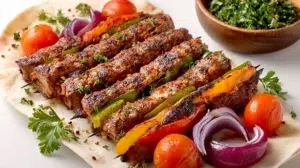
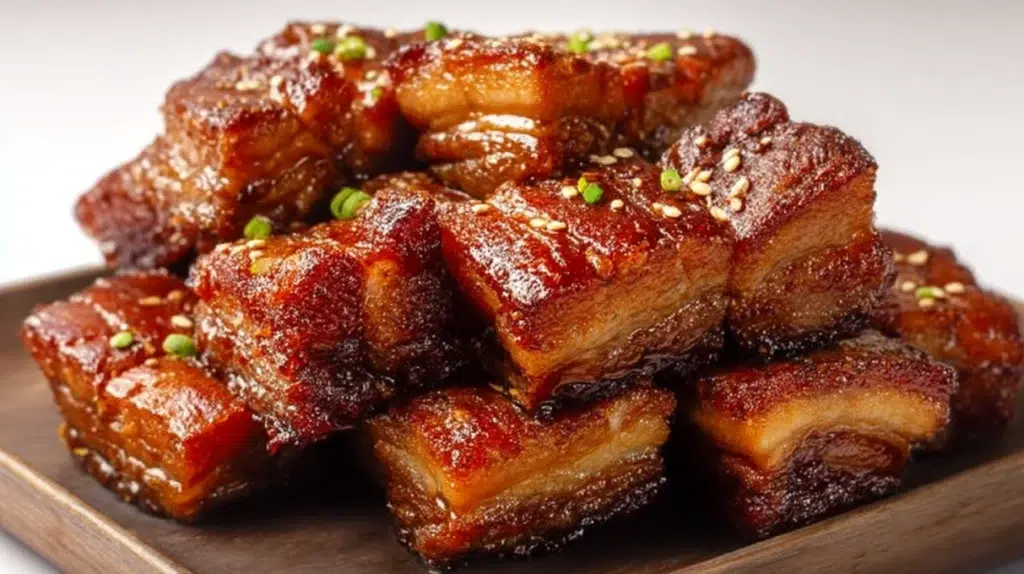
⏱ Prep:15 min 🔥Cook: 15 min 👤Serves: 4 🌶Heat: Adjustable
Korean pork belly recipe, samgyeopsal, is the most social meal in Korean food culture and the easiest to recreate at home. Thick slices of pork belly grilled in a cast iron pan until the fat renders into crispy, caramelized layers, snipped into bite-sized pieces with kitchen scissors, then wrapped in a fresh lettuce leaf with a smear of ssamjang, a sliver of raw garlic, a piece of kimchi and a spoonful of rice. One bite. Everything at once. This is what Korean BBQ restaurants have been serving for decades and it takes thirty minutes at your own stove.
Samgyeopsal means three-layer meat, sam is three, gyeop is layer, referring to the alternating bands of fat and meat visible in each slice of pork belly. The name is the description. The description is the whole point.
The shopping list
For the pork belly
- 1½ lbs (680g) pork belly, sliced ¼–⅓ inch thick (6–8mm). Ask your butcher to slice it, or buy pre-sliced at H Mart or Korean grocery stores. Thick-cut bacon is a widely available substitute, it will work but lacks the specific fat layering of true samgyeopsal.
- 1 tablespoon cooking wine or sake, for the light marinade. Helps tenderize and removes any rawness from the pork.
- 1 teaspoon fresh ginger, finely grated, for the light marinade
- Salt and black pepper to taste
For the ssamjang (dipping sauce)
- 2 tablespoons doenjang, Korean fermented soybean paste. Available at H Mart and Asian grocery stores. Substitute: Japanese white miso in equal amounts, milder but acceptable.
- 1 tablespoon gochujang, Korean fermented chili paste. Adjust for heat preference.
- 1 tablespoon toasted sesame oil
- 1 teaspoon toasted sesame seeds
- 1 teaspoon sugar, or maesil cheong (plum syrup) for a more authentic sweetness
- 2 cloves garlic, finely minced
- 1 tablespoon green onion, finely sliced
- 1 tablespoon mirin, or 1 teaspoon honey
For the sesame oil dipping sauce
- 2 tablespoons toasted sesame oil
- ¼ teaspoon sea salt, good quality sea salt only, not table salt or rock salt
- ¼ teaspoon black pepper
For the green onion salad (pa muchim)
- 4 green onions, cut into 4-inch sections then sliced as finely as possible
- 1 teaspoon fish sauce, or soy sauce for a vegetarian version
- 1 teaspoon gochugaru (Korean chili flakes), or ½ teaspoon red pepper flakes
- 1 teaspoon sugar
- 1 teaspoon toasted sesame oil
To wrap and serve
- 1 head butter lettuce or red leaf lettuce, leaves separated, washed and kept cold and crisp
- Perilla leaves (kkaenip), optional but traditional. Available at Korean grocery stores. Their anise-like fragrance is extraordinary against the fatty pork.
- 8–10 cloves garlic, thinly sliced, for grilling alongside the pork or eating raw in the wraps
- 2 jalapeño or green chili peppers, sliced, for the wraps
- Kimchi, for grilling alongside and for the wraps
- Steamed short-grain white rice
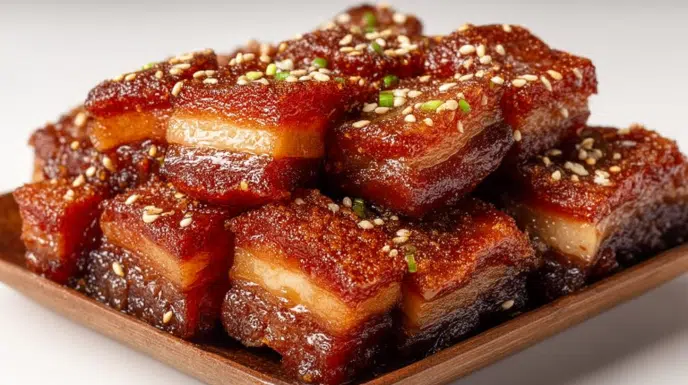
How to make Korean pork belly
- Make the ssamjang first. Combine doenjang, gochujang, sesame oil, sesame seeds, sugar, minced garlic, green onion and mirin in a small bowl. Stir until completely smooth. Taste, it should be savory, slightly spicy, nutty and deeply fermented. Cover and refrigerate. Ssamjang improves after 30 minutes as the flavors combine. It keeps 1 week refrigerated.Make it first so it is cold and ready when the hot pork belly hits the table. The contrast of hot fatty pork and cold savory ssamjang inside a crisp lettuce leaf is the whole meal.
- Make the sesame oil dipping sauce. Stir together toasted sesame oil, sea salt and black pepper in a small individual bowl, one per person at the table. This is the purist dip, the clean flavor of quality pork belly with just salt and sesame. Many people prefer it over ssamjang. Serve both.
- Make the green onion salad. Slice green onions as finely as possible. Soak in cold water for 5 minutes, this removes the raw harshness and makes them crisp. Drain and pat completely dry. Toss with fish sauce, gochugaru, sugar and sesame oil. Set aside.
- Score and lightly marinate the pork belly. Using a sharp knife, score both sides of each pork belly slice in a crosshatch pattern, cuts about ⅛ inch deep. This helps the fat render faster and allows the marinade to penetrate. Rub each slice with the cooking wine, grated ginger, a pinch of salt and black pepper. Leave for 15–30 minutes at room temperature while you prepare everything else.Scoring is optional but worth doing, it prevents the pork belly from curling up at the edges on a hot pan and ensures the fat renders evenly across the whole slice.
- Set the table first. Arrange lettuce leaves, perilla leaves, sliced garlic, jalapeño, kimchi, rice, ssamjang and sesame oil sauce on the table before you start cooking. Samgyeopsal is eaten hot, directly from the pan. Once the pork starts cooking it goes fast, everything needs to be ready.This is the most Korean thing about samgyeopsal, the preparation of the table is as important as the cooking. The meal is the whole table together, not just the meat.
- Grill the pork belly. Heat a cast iron skillet or Korean BBQ grill pan over medium-high heat until very hot. No oil needed, the pork belly renders its own fat immediately. Place the pork belly slices in a single layer work in batches, do not crowd. Cook 3–4 minutes per side until deeply golden brown and caramelized with crispy edges. The fat should be translucent and rendered, not white and soft.Add sliced garlic to the pan alongside the pork belly during the last 2 minutes, it caramelizes in the pork fat and becomes sweet and golden. Essential.
- Snip and serve. Using kitchen scissors, snip the cooked pork belly directly in the pan into bite-sized pieces, this is the traditional Korean method, not slicing with a knife. The scissors cut cleanly through the layers of fat and meat. Serve directly from the pan while sizzling hot.Also grill kimchi in the same pan after the pork belly, add it to the pan with any remaining pork fat and cook 2–3 minutes until it caramelizes slightly. Grilled kimchi alongside samgyeopsal is one of the most satisfying things in Korean cooking.
- Build the wrap. Place a lettuce leaf in your palm. Add a perilla leaf on top if using. Lay 2–3 pieces of pork belly in the center. Add a smear of ssamjang, a slice of grilled garlic, a piece of grilled kimchi, a spoonful of green onion salad and a small bite of rice. Fold the lettuce over and eat in one bite. One shot. Do not bite it in half, it will fall apart.
The honest note
Samgyeopsal does not need a marinade. The traditional version, plain pork belly, no seasoning beyond salt, dipped in sesame oil sauce is the most honest expression of the dish and what most Korean restaurants actually serve. The marinated versions with gochujang or garlic pastes are delicious but they are variations, not the original. If you have genuinely good pork belly, fresh, well-marbled, properly thick, cook it plain and dip it in the sesame oil and salt sauce. You will understand immediately why this dish has been served exactly this way for decades without anyone feeling the need to improve it. The marinade is for when the pork belly needs help. Good pork belly does not need help.
Make it ahead
Claire’s note
Everything except the pork belly itself can be made ahead. Ssamjang: up to 1 week refrigerated, improves daily. Green onion salad: up to 2 days but best fresh. Sesame oil sauce: mix at the table in 30 seconds. The pork belly can be scored and lightly marinated overnight in the refrigerator, take it out 30 minutes before cooking. The only thing that must happen fresh is the grilling. Samgyeopsal waits for no one, it is eaten the moment it comes off the pan. Plan accordingly: have everything on the table, everyone seated, before the first slice goes into the pan.
Complete the meal
Samgyeopsal is the centerpiece of a Korean BBQ table, never a standalone dish. The essential accompaniments are kimchi, steamed rice and ssamjang. The optional but deeply recommended additions: homemade kimchi for grilling alongside, doenjang jjigae (soybean paste stew) as a warm side, and cold soju or Korean beer. For the full picture of Korean cooking at home, the pantry, the techniques and the full collection, the Korean recipes collection have everything.
Add samgyeopsal to your weekly meal planner as a Friday night table meal, set up the table, call everyone in, and let the pan do the work. And for more recipes, follow us on Pinterest.
Print
Korean Pork Belly (Samgyeopsal)
- Total Time: 30 minutes
- Yield: 4 servings 1x
- Diet: Non-Vegetarian
Description
A social and traditional Korean dish featuring grilled pork belly served with fresh lettuce and savory dipping sauces.
Ingredients
- 1½ lbs (680g) pork belly, sliced ¼–⅓ inch thick
- 1 tablespoon cooking wine or sake
- 1 teaspoon fresh ginger, finely grated
- Salt and black pepper to taste
- 2 tablespoons doenjang, Korean fermented soybean paste
- 1 tablespoon gochujang, Korean fermented chili paste
- 1 tablespoon toasted sesame oil
- 1 teaspoon toasted sesame seeds
- 1 teaspoon sugar or maesil cheong (plum syrup)
- 2 cloves garlic, finely minced
- 1 tablespoon green onion, finely sliced
- 1 tablespoon mirin or 1 teaspoon honey
- 2 tablespoons toasted sesame oil for sesame oil sauce
- ¼ teaspoon sea salt
- ¼ teaspoon black pepper
- 4 green onions, cut into 4-inch sections
- 1 teaspoon fish sauce or soy sauce
- 1 teaspoon gochugaru (Korean chili flakes)
- 1 head butter lettuce or red leaf lettuce
- Perilla leaves (kkaenip), optional
- 8–10 cloves garlic, thinly sliced
- 2 jalapeño or green chili peppers, sliced
- Kimchi
- Steamed short-grain white rice
Instructions
- Make the ssamjang first by combining doenjang, gochujang, sesame oil, sesame seeds, sugar, minced garlic, green onion, and mirin in a small bowl. Stir until smooth and refrigerate.
- Make the sesame oil dipping sauce by stirring together toasted sesame oil, sea salt, and black pepper in a small bowl.
- Prepare the green onion salad by slicing green onions finely, soaking them in cold water for 5 minutes, then tossing with fish sauce, gochugaru, sugar, and sesame oil.
- Score the pork belly slices and lightly marinate using cooking wine, grated ginger, salt, and black pepper for 15–30 minutes.
- Set the table with lettuce leaves, perilla leaves, sliced garlic, jalapeño, kimchi, rice, ssamjang, and sesame oil sauce.
- Grill the pork belly in a hot cast iron skillet for 3–4 minutes per side until golden brown.
- Snip the cooked pork belly into bite-sized pieces and serve hot.
- Build the wrap by placing a lettuce leaf in your palm, adding pork belly, ssamjang, grilled garlic, kimchi, green onion salad, and rice, folding it over, and eating in one bite.
Notes
Samgyeopsal is best enjoyed hot off the grill with fresh accompaniments and can be adjusted for spice preference with gochujang.
- Prep Time: 15 minutes
- Cook Time: 15 minutes
- Category: Main Course
- Method: Grilling
- Cuisine: Korean
Nutrition
- Serving Size: 1 wrap
- Calories: 400
- Sugar: 6g
- Sodium: 600mg
- Fat: 25g
- Saturated Fat: 10g
- Unsaturated Fat: 10g
- Trans Fat: 0g
- Carbohydrates: 30g
- Fiber: 2g
- Protein: 20g
- Cholesterol: 70mg