⏱ Prep: 5 min 🔥Cook: 15 min 👤Serves: 4 💰Cost: Under $12
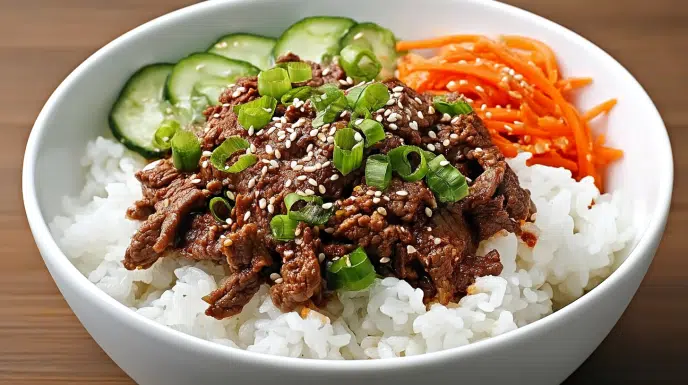
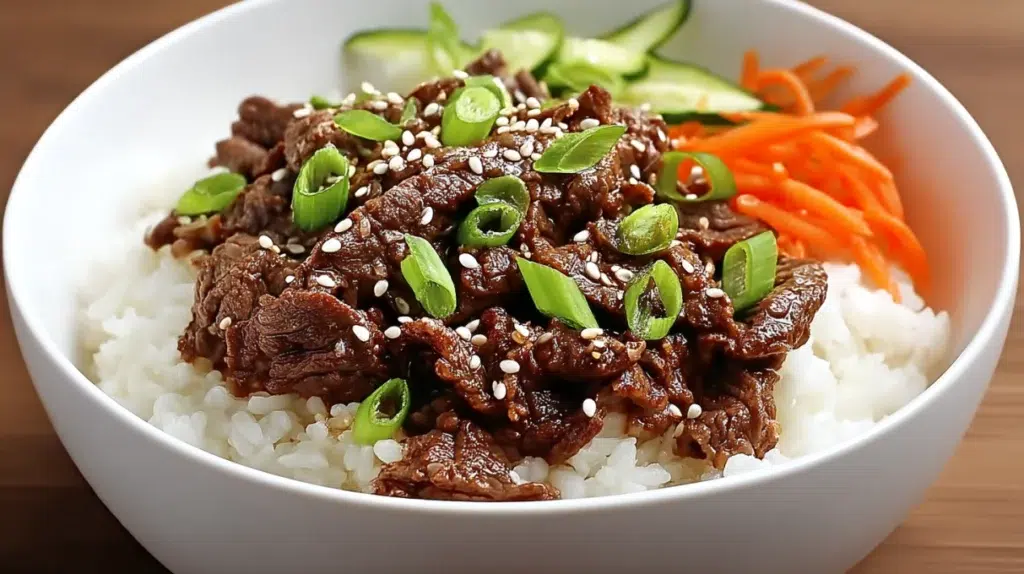
Korean beef bowl recipe is the weeknight dinner that every home cook eventually discovers and then makes on permanent rotation. Ground beef cooked in a sauce of soy sauce, gochujang, brown sugar, sesame oil, garlic, ginger and rice vinegar, sweet, spicy, savory and deeply umami all at once, served over steaming jasmine rice with a quick pickled cucumber salad, a fried egg on top and a scatter of sesame seeds and spring onion. Twenty minutes. One pan. Under twelve dollars for four people.
What you need:
For the Korean beef sauce
- 3 tablespoons low-sodium soy sauce, low-sodium only. Regular soy sauce makes the dish too salty once it reduces in the pan.
- 2 tablespoons gochujang, Korean fermented chili paste, the ingredient that makes this bowl taste Korean rather than just Asian-inspired. Available at H Mart, Whole Foods and most grocery stores in the international aisle. Adjust amount for heat preference, start with 1 tablespoon if you are sensitive to spice.
- 2 tablespoons brown sugar, light or dark. Balances the saltiness of the soy and the heat of the gochujang. Do not reduce, the caramelization from the sugar is what creates the glossy coating on the beef.
- 1 tablespoon toasted sesame oil, toasted, not plain. Added off the heat to preserve its nutty fragrance.
- 1 tablespoon rice vinegar, adds the acid that brightens and balances all the other flavors. Do not substitute with rice wine, completely different ingredient.
- 2 tablespoons water
- 4 cloves garlic, finely minced or grated
- 1 teaspoon fresh ginger, finely grated, or ½ teaspoon ground ginger. Fresh is significantly better.
- ½ teaspoon gochugaru (Korean chili flakes), optional but adds a fruity heat distinct from the gochujang
- ¼ teaspoon white pepper, or black pepper
For the beef and bowl
- 1 lb (450g) lean ground beef, 90–93% lean. Leaner beef means less fat to drain and more sauce contact with the meat. Do not use 80/20, the excess fat dilutes the sauce.
- 1 tablespoon vegetable or avocado oil
- 4 spring onions, white parts for cooking, green parts sliced for garnish
- 2 cups jasmine rice, cooked and kept warm. Or brown rice, cauliflower rice or soba noodles.
For the quick pickled cucumber salad
- 1 English cucumber, thinly sliced
- 1 medium carrot, julienned or grated
- 2 tablespoons rice vinegar
- 1 teaspoon sesame oil
- ½ teaspoon sugar
- ½ teaspoon salt
To finish and serve
- 4 eggs, fried sunny side up or soft-boiled. The runny yolk mixes into the bowl and becomes part of the sauce. Transformative. Do not skip.
- 2 tablespoons toasted sesame seeds
- Sliced spring onion greens
- Extra gochujang for heat lovers
- Kimchi, optional but deeply recommended alongside
Let’s cook
- Make the quick pickle first. Combine sliced cucumber and julienned carrot in a bowl. Add rice vinegar, sesame oil, sugar and salt. Toss well. Leave to sit while you cook the beef, even 10 minutes of pickling makes a significant difference. The vegetables will soften slightly and turn lightly tangy and bright. This is the contrast that makes the bowl complete.The cucumber salad is not optional garnish, it is the structural balance of the bowl. The acid and crunch cut directly through the rich sweet-spicy beef. Without it the bowl is one-dimensional.
- Mix the sauce. Combine soy sauce, gochujang, brown sugar, rice vinegar, water, minced garlic, grated ginger, gochugaru and white pepper in a small bowl. Whisk until the brown sugar dissolves completely. Taste, it should be bold, sweet, spicy and deeply savory. This is the moment to adjust more gochujang for heat, more sugar if it tastes too sharp. Set aside.
- Brown the beef. Heat oil in a large skillet or wok over high heat until very hot. Add the ground beef and the white parts of the spring onion. Break the beef into small crumbles using a wooden spoon. Cook for 4–5 minutes without stirring too often, let it sit in contact with the hot pan long enough to develop golden-brown color. Drain any excess fat if needed.High heat is essential. Medium heat produces grey, steamed ground beef. High heat produces golden-brown crumbles with caramelized edges. The color difference is the flavor difference.
- Add the sauce. Pour the sauce over the browned beef. Stir to coat every piece. Reduce heat to medium-low and simmer for 3–5 minutes until the sauce reduces, thickens and clings to the beef in a glossy coating. The sauce should have almost entirely coated the beef, if there is still liquid pooling at the bottom of the pan, give it 2 more minutes.
- Finish off the heat. Remove the pan from the heat. Stir in the toasted sesame oil. Adding it off the heat preserves its fragrance, high heat turns sesame oil bitter and flat. Taste and adjust salt one final time.
- Fry the eggs. In a separate small pan, fry eggs sunny side up in a small amount of oil, 2 minutes over medium heat. The white should be set, the yolk still runny. Season with a pinch of salt.
- Build the bowl. Scoop cooked jasmine rice into four bowls. Top with a generous portion of the Korean beef. Add a heap of the pickled cucumber salad alongside. Place one fried egg on top of each bowl. Scatter sesame seeds and spring onion greens. Add a small spoonful of extra gochujang on the side for heat lovers. Serve immediately, the egg yolk breaks into the bowl as it is eaten and becomes part of the sauce.
Why Korean beef bowl works
The five-flavor balance of Korean cooking, salty, sweet, spicy, bitter and umami is what makes this bowl taste so much more complex than its ingredient list suggests. What makes Korean cuisine so distinctive is its perfect harmony of five key flavor elements: salty from soy sauce, sweet from brown sugar, spicy from gochujang, bitter from sesame and umami from the fermented gochujang and beef. Every ingredient in the sauce contributes to one of those five dimensions. The soy provides salt and umami simultaneously. The brown sugar caramelizes against the hot pan.
The gochujang delivers heat with a fermented depth that sriracha cannot replicate. The sesame oil adds the bitter-nutty note that rounds the whole sauce. The rice vinegar is the brightness that stops the bowl tasting heavy. Remove any one of these and the balance shifts noticeably. This is why the sauce tastes disproportionately good for something that takes ninety seconds to mix.
Make it ahead
Claire’s note
Korean beef bowl is one of the best meal-prep recipes in this collection. The beef keeps refrigerated for 4 days and reheats in 2 minutes in a pan with a splash of water. The pickled cucumber improves significantly overnight, make a large batch Sunday and it is better by Tuesday. Cook a large batch of jasmine rice and refrigerate, it reheats perfectly in the microwave with a damp paper towel on top for 90 seconds. The egg is the only thing that must be cooked fresh. Everything else assembled cold from the fridge plus one fresh fried egg is genuinely a 5-minute meal. For variety through the week: serve the same beef over noodles, in lettuce wraps with kimchi, or stuffed into a flour tortilla with gochujang mayo same batch, four different meals.
Keep going
Korean beef bowl is the entry point into Korean cooking for most American home cooks and the right entry point, because it uses ingredients from any regular grocery store. Once you have gochujang in your pantry the next step is homemade kimchi, then Korean BBQ at home, then the gochujang grilled chicken skewers that use the same pantry in a completely different direction. The full collection of Korean techniques and pantry knowledge is in the Korean recipes guide.
Add Korean beef bowl to your weekly meal planner, make a double batch of the beef on Sunday and eat it four different ways before Friday. And for more recipes, follow us on Pinterest.
Print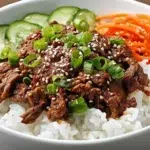
Korean Beef Bowl
- Total Time: 20 minutes
- Yield: 4 servings 1x
- Diet: Paleo
Description
A quick and delicious Korean beef bowl featuring ground beef cooked in a savory sauce and served over jasmine rice with pickled cucumbers and a fried egg.
Ingredients
- 3 tablespoons low-sodium soy sauce
- 2 tablespoons gochujang
- 2 tablespoons brown sugar
- 1 tablespoon toasted sesame oil
- 1 tablespoon rice vinegar
- 2 tablespoons water
- 4 cloves garlic, finely minced
- 1 teaspoon fresh ginger, finely grated
- ½ teaspoon gochugaru (optional)
- ¼ teaspoon white pepper
- 1 lb (450g) lean ground beef
- 1 tablespoon vegetable or avocado oil
- 4 spring onions (white parts for cooking, green parts for garnish)
- 2 cups jasmine rice, cooked and kept warm
- 1 English cucumber, thinly sliced
- 1 medium carrot, julienned
- 2 tablespoons rice vinegar (for salad)
- 1 teaspoon sesame oil (for salad)
- ½ teaspoon sugar (for salad)
- ½ teaspoon salt (for salad)
- 4 eggs, fried sunny side up or soft-boiled
- 2 tablespoons toasted sesame seeds
- Sliced spring onion greens
- Extra gochujang for serving
- Kimchi (optional)
Instructions
- Make the quick pickle first. Combine sliced cucumber and julienned carrot in a bowl. Add rice vinegar, sesame oil, sugar, and salt. Toss well and let sit.
- Mix the sauce by combining soy sauce, gochujang, brown sugar, rice vinegar, water, minced garlic, grated ginger, gochugaru, and white pepper in a bowl. Whisk until smooth.
- Brown the beef in a hot skillet with oil and white parts of spring onion for 4-5 minutes.
- Add the sauce to the browned beef and simmer until thickened for 3-5 minutes.
- Finish by stirring in toasted sesame oil off the heat.
- Fry the eggs in a separate pan until the white is set and yolk is runny.
- Build the bowl with jasmine rice, beef, pickled salad, and fried egg. Garnish with sesame seeds and spring onion greens.
Notes
For meal prep, the beef can be stored in the fridge for 4 days and reheated quickly. The pickled cucumber improves with time.
- Prep Time: 5 minutes
- Cook Time: 15 minutes
- Category: Main Course
- Method: Stovetop
- Cuisine: Korean
Nutrition
- Serving Size: 1 bowl
- Calories: 500
- Sugar: 10g
- Sodium: 750mg
- Fat: 18g
- Saturated Fat: 5g
- Unsaturated Fat: 10g
- Trans Fat: 0g
- Carbohydrates: 52g
- Fiber: 3g
- Protein: 30g
- Cholesterol: 180mg