⏱ Prep: 5 min 🔥Cook: 15 min 👤Serves: 2 🌶Heat: Adjustable
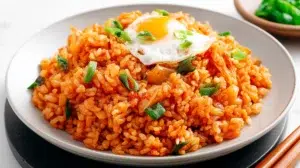
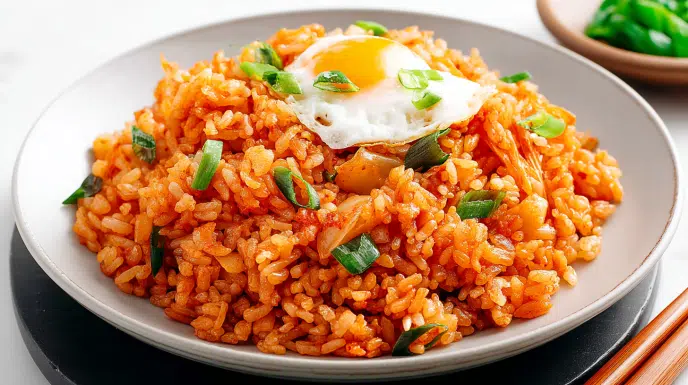
Kimchi fried rice, kimchi bokkeumbap, is a staple in every Korean household, a typical way to use up leftover rice and kimchi while still delivering big flavours that belie its humble nature. Day-old rice stir-fried at high heat with aged kimchi and its brine, gochujang, garlic, a tablespoon of butter stirred in at the end, finished with sesame oil and crowned with a fried egg whose broken yolk becomes a rich, creamy sauce over everything. Twenty minutes. The meal that tastes like someone spent an hour on it.
Ingredients
- 2 cups (320g) day-old cooked short-grain rice, cold from the fridge, broken up with your fingers before cooking. Day-old cold rice is the single most important ingredient in fried rice, the overnight refrigeration dries out the individual grains so they fry separately and develop a slight crispy char instead of clumping into a wet, steamed mass. Fresh warm rice makes soggy fried rice. If you only have fresh rice: spread it on a tray and refrigerate for 30 minutes before using.
- 1 cup (150g) well-fermented kimchi, aged kimchi, the kind that has been in the fridge for 2–4 weeks, is far better than fresh kimchi for this recipe. The more fermented and sour the kimchi, the deeper and more complex the final flavour. Drain the kimchi over a bowl and squeeze out the juice, reserve the juice for the sauce. Chop the kimchi into rough 1-inch pieces.
- 3 tablespoons kimchi juice, squeezed from the kimchi. The fermented brine is the sauce base of the dish, it carries all the garlic, ginger and gochugaru from the kimchi into the rice. RecipeTin Eats confirms: don’t skip the gochujang, it would be like making Chinese fried rice without soy sauce. The kimchi juice is equally essential.
- 1 tablespoon gochujang, Korean fermented chili paste. Adds heat, depth and a specific sticky, slightly sweet savory quality that gochugaru alone cannot replicate. Adjust for heat preference, 2 tablespoons for genuinely spicy.
- 1 tablespoon soy sauce
- 3 cloves garlic, finely minced
- ½ small yellow onion, finely diced, optional but adds sweetness and body
- 1 tablespoon neutral oil, for stir-frying
- 1 tablespoon unsalted butter, added at the very end, off the heat. The butter finish is the restaurant technique that elevates kimchi fried rice from good to extraordinary, it rounds the sharp edges of the kimchi and gochujang and adds a richness that oil alone cannot produce.
- 1 teaspoon toasted sesame oil, added off the heat with the butter. The finishing fragrance that completes every Korean dish.
- Salt to taste
For the fried egg and garnish
- 2 large eggs, fried in a separate pan. The fried egg is not optional garnish, the runny yolk broken over the hot rice acts as a rich, creamy sauce that ties everything together. A good yolk-to-rice ratio on the first bite is the point.
- 1 tablespoon butter, for frying the eggs
- 2 scallions, thinly sliced
- 1 tablespoon toasted sesame seeds
- 2 sheets roasted nori (gim), cut into thin strips, optional but traditional and very good
- Extra gochujang for serving
Step by step
- Prep everything before the wok heats. Break up the cold rice with your fingers until no clumps remain. Squeeze the kimchi over a bowl to collect the juice, measure out 3 tablespoons. Chop the kimchi into 1-inch pieces. Mix kimchi juice, gochujang and soy sauce together in a small bowl. Set everything beside the stove, kimchi fried rice is a 10-minute cook once the wok is hot.
- Stir-fry the aromatics and kimchi. Heat a wok or wide cast iron skillet over high heat for 2 minutes until very hot. Add the neutral oil. Add the garlic and onion, stir-fry 30 seconds until golden and fragrant. Add the chopped kimchi. Stir-fry for 1–2 minutes until the kimchi heats through and smells deeply savoury, the edges should begin to caramelise slightly.Stir-frying the kimchi until it caramelises slightly is what separates great kimchi fried rice from acceptable kimchi fried rice. Raw cold kimchi added straight to rice produces a brash, sharp result. Briefly cooked kimchi develops a rounded, deeper flavour that integrates beautifully with the rice.
- Add the rice. Add the cold rice to the wok. Break up any remaining clumps immediately using a spatula or wooden spoon. Stir-fry vigorously for 2–3 minutes, pressing the rice against the hot wok surface in between stirs to encourage light toasting and separation of the grains.The pressing technique, flattening the rice against the hot wok surface and leaving it for 15–20 seconds before stirring, creates the slightly toasted, lightly crispy grains at the bottom that distinguish restaurant-quality fried rice from home versions. This is the wok hei technique adapted for home stoves.
- Add the sauce. Pour the kimchi juice, gochujang and soy sauce mixture over the rice. Toss vigorously until every grain of rice is coated in the deep red sauce and no white rice is visible, 1–2 minutes. The rice should look evenly coloured a deep reddish-orange throughout.
- Finish off the heat. Remove the wok from heat. Add the butter and sesame oil. Toss until the butter melts completely into the rice, about 30 seconds of tossing. Taste and adjust salt. The rice should taste intensely savoury, tangy, slightly spicy and richly buttery. Divide between two bowls.Adding butter off the heat is the technique used at every Korean restaurant, it preserves the butter’s flavour and richness rather than burning it at wok heat. The sesame oil added at the same moment layers a final nutty fragrance over the whole bowl.
- Fry the eggs and serve. Melt 1 tablespoon of butter in a small non-stick pan over medium heat. Fry the eggs sunny-side up until the whites are just set and the yolks are still completely runny. Place one egg on top of each bowl of rice. Scatter scallions, sesame seeds and nori strips over the top. Serve immediately with extra gochujang on the side.
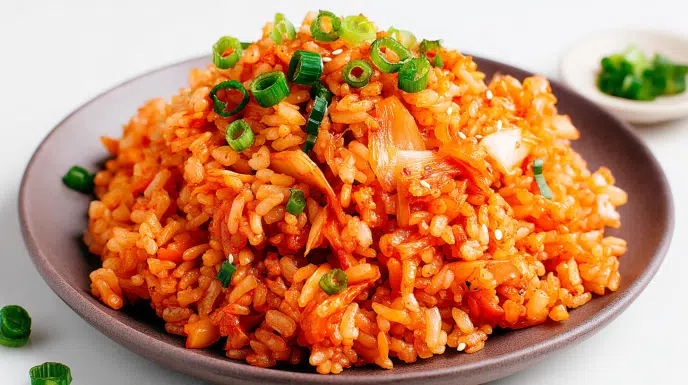
The five things that matter
Day-old cold rice, never fresh warm rice. Fresh rice is too moist and clumps into a wet mass. Cold rice fries as separate grains.
Aged, well-fermented kimchi, not fresh kimchi. The more sour the kimchi, the better the fried rice. Fresh kimchi lacks the depth that 2–4 weeks of fermentation produces.
Keep the kimchi juice, it is the sauce. Do not discard it.
The butter finish off the heat, this is the restaurant technique. Butter in a screaming hot wok burns. Butter stirred in off the heat produces richness.
A runny fried egg, not optional. The yolk is the sauce.
Make it a meal
Claire’s note
Kimchi fried rice is complete as written but takes additions well. Spam, the Korean version of a Western luncheon meat, is the most traditional protein addition, diced and fried first until the edges caramelise. Bacon strips fried and chopped through the rice is the second most common. Leftover pulled pork, shredded chicken or thinly sliced beef all work. For a vegetarian version with more substance: add a handful of enoki mushrooms with the kimchi in step 2. The dish keeps refrigerated for 4 days and reheats perfectly in a hot wok with a splash of water, always add a fresh fried egg at serving. Do not freeze, the rice texture degrades on thawing.
Serve with
Kimchi fried rice is a complete standalone meal, the egg, the rice, the kimchi and the sauce are everything. For the full Korean table alongside, the homemade kimchi to make your own fermented kimchi for this recipe, the Korean beef bowl and the complete Korean recipes collection have it all.
Add kimchi fried rice to your weekly meal planner, keep leftover rice and aged kimchi in the fridge and this is a 20-minute meal any night of the week. And for more recipes, follow us on Pinterest.
Print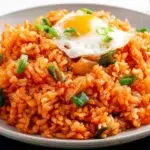
Kimchi Fried Rice (Kimchi Bokkeumbap)
- Total Time: 20 minutes
- Yield: 2 servings 1x
- Diet: Vegetarian
Description
A quick and flavorful kimchi fried rice dish that utilizes day-old rice and fermented kimchi for a delicious meal.
Ingredients
- 2 cups (320g) day-old cooked short-grain rice
- 1 cup (150g) well-fermented kimchi, chopped
- 3 tablespoons kimchi juice
- 1 tablespoon gochujang
- 1 tablespoon soy sauce
- 3 cloves garlic, finely minced
- ½ small yellow onion, finely diced (optional)
- 1 tablespoon neutral oil
- 1 tablespoon unsalted butter
- 1 teaspoon toasted sesame oil
- Salt to taste
- 2 large eggs, fried
- 1 tablespoon butter (for frying the eggs)
- 2 scallions, thinly sliced
- 1 tablespoon toasted sesame seeds
- 2 sheets roasted nori (gim), cut into strips (optional)
- Extra gochujang for serving
Instructions
- Prep everything before the wok heats. Break up the cold rice. Squeeze the kimchi over a bowl to collect the juice, measure out 3 tablespoons, and chop the kimchi.
- Heat a wok over high heat for 2 minutes. Add the neutral oil and sauté the garlic and onion until golden and fragrant.
- Add the chopped kimchi and stir-fry for 1–2 minutes until it heats through and begins to caramelize.
- Add the cold rice to the wok, breaking up clumps and stir-frying vigorously for 2–3 minutes.
- Pour the kimchi juice, gochujang, and soy sauce mixture over the rice. Toss until thoroughly mixed.
- Remove from heat. Add the butter and sesame oil, tossing until melted and incorporated.
- Fry the eggs separately in butter until runny. Serve each egg on top of the rice.
- Garnish with scallions, sesame seeds, and nori strips, if desired. Serve with extra gochujang.
Notes
Use day-old rice for the best texture. Kimchi fried rice is versatile, and can include proteins like spam or bacon. Best enjoyed fresh.
- Prep Time: 5 minutes
- Cook Time: 15 minutes
- Category: Main Course
- Method: Stir-frying
- Cuisine: Korean
Nutrition
- Serving Size: 1 serving
- Calories: 400
- Sugar: 4g
- Sodium: 800mg
- Fat: 20g
- Saturated Fat: 6g
- Unsaturated Fat: 12g
- Trans Fat: 0g
- Carbohydrates: 45g
- Fiber: 3g
- Protein: 10g
- Cholesterol: 220mg