
⏱ Prep: 20 min 🔥Cook: 1.5–2 hrs 👤Serves: 4–6 🌍Origin: Southeastern Nigeria, Igbo
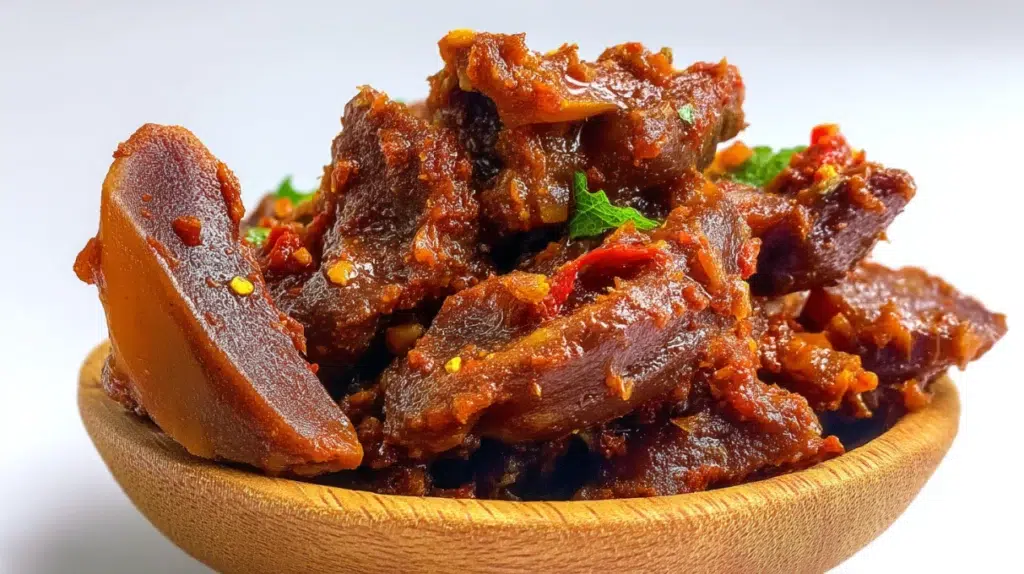
Nkwobi spicy cow foot is one of the most loved delicacies to come out of southeastern Nigeria, a dish so tied to evenings with friends and cold drinks that it’s become a fixture on the menu of beer parlors and upscale restaurants alike. Cow foot simmered until tender, mixed into a rich palm oil sauce that’s been curdled with potash until it turns thick and golden, seasoned with crayfish, calabash nutmeg and scotch bonnet, finished with sliced onion and bitter utazi leaves. Traditionally piled into a wooden bowl and shared at the center of the table.
Ingredients
- 2 lbs cow foot, cut into chunks, washed thoroughly before cooking
- 1 small onion
- 2 seasoning cubes
- Salt to taste
- ½ cup red palm oil, use good quality, fresh palm oil for the best color and flavor
- 1 teaspoon edible potash (akanwu), dissolved in ¼ cup warm water and strained, or substitute an equal amount of baking soda dissolved in water
- 2 tablespoons ground crayfish
- 1–2 teaspoons ground calabash nutmeg (ehuru), this cannot be substituted with regular nutmeg, they taste nothing alike. If unavailable, the dish is still made without it.
- 1–2 scotch bonnet peppers, blended or finely chopped, adjust to taste
- ½ cup ugba (oil bean seeds), washed, optional but traditional, adds a distinct fermented depth
- Utazi leaves, thinly sliced, for garnish, substitute spinach or bitter leaf if utazi isn’t available
- 1 small onion, sliced into rings, for garnish
Step by step
- Cook the cow foot. Wash the cow foot chunks well. Place in a pot with the onion, seasoning cubes and salt. Cover with water and boil until very tender, about 1.5 to 2 hours, or significantly less in a pressure cooker. Check the water level periodically and top up as needed. Once tender, cook off any remaining liquid so the pot is dry. Discard the onion.
- Prepare the potash. Dissolve the potash in warm water and strain through a fine sieve, discarding any sediment at the bottom.Some sandy residue is normal and should be left behind, only the strained liquid goes into the sauce. Using too much potash makes the sauce bitter, so start with less than you think you need.
- Make the palm oil sauce. Pour the palm oil into a clean, dry pot over medium heat. Gradually add the strained potash water while stirring constantly with a wooden spoon. The oil will begin to curdle and change color from deep red to a thick, pale yellow.This color change is the entire point of the potash, it transforms the oil into the thick, paste-like sauce that defines nkwobi. Stop adding potash water once the sauce thickens properly; too much makes it bitter rather than richer.
- Season the sauce. Stir in the ground crayfish, calabash nutmeg and scotch bonnet. Mix until fully combined. If using ugba, stir it in now.
- Combine and heat through. Add the cooked cow foot to the palm oil sauce. Stir thoroughly until every piece is well coated. Return to low heat and warm through for a few minutes, stirring constantly to prevent burning.
- Garnish and serve. Transfer to a wooden bowl if you have one, or any serving dish. Top with sliced onion rings and thinly sliced utazi leaves. Serve warm.
What potash actually does
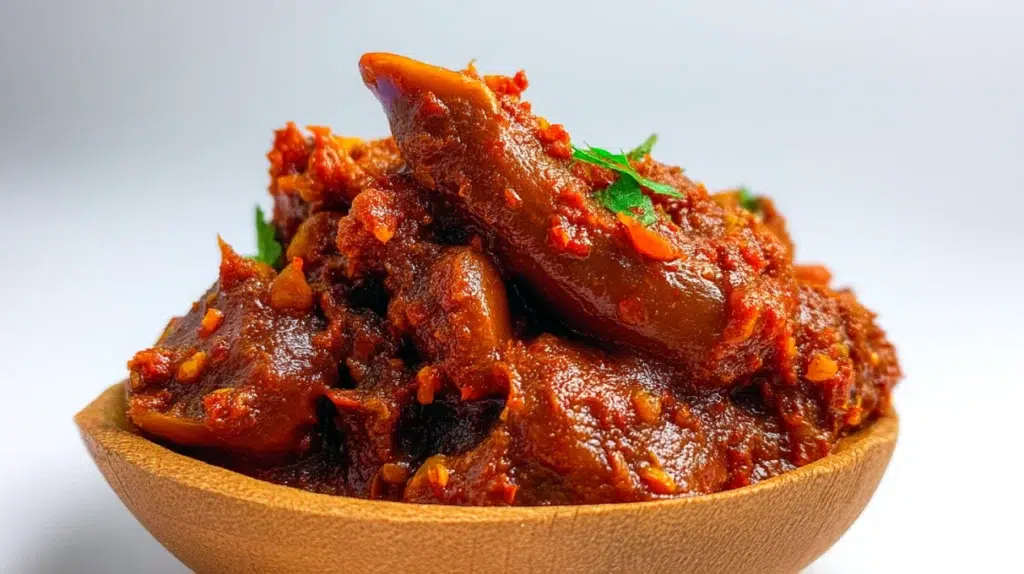
Potash is the ingredient most people outside Nigeria have never encountered, and it’s doing real chemical work here, when mixed into palm oil, it causes the oil to curdle and thicken into a rich, creamy paste rather than staying loose and liquid. That thick, golden sauce is nkwobi’s defining texture. Baking soda dissolved in water works as a close substitute and many home cooks use it without anyone noticing the difference.
Make it your own
Claire’s note
Goat leg or even cow skin (kpomo) can stand in for cow foot using the same method. Ugba is optional, the dish is completely traditional without it, just slightly less complex in flavor. If utazi leaves aren’t available, bitter leaf or even kale gives a similar contrast against the rich sauce, though the bitterness level varies between each. Nkwobi keeps refrigerated for up to 3 days; reheat it gently over low heat, stirring, so the texture doesn’t change too much.
Serve with
Nkwobi is traditionally enjoyed on its own as an evening delicacy, best alongside chilled palm wine, beer, or a cold soft drink. For more from the Nigerian collection the complete Nigerian recipes guide and the African food collection have it all.
Add nkwobi spicy cow foot to your weekly meal planner as the centerpiece for your next gathering with friends. And for more recipes, follow us on Pinterest.
Print
Nkwobi Spicy Cow Foot
- Total Time: 140 minutes
- Yield: 4–6 servings 1x
- Diet: Paleo
Description
A beloved delicacy from southeastern Nigeria made with tender cow foot in a rich palm oil sauce, perfect for sharing with friends.
Ingredients
- 2 lbs cow foot, cut into chunks, washed thoroughly
- 1 small onion
- 2 seasoning cubes
- Salt to taste
- ½ cup red palm oil
- 1 teaspoon edible potash (akanwu), dissolved in ¼ cup warm water and strained
- 2 tablespoons ground crayfish
- 1–2 teaspoons ground calabash nutmeg
- 1–2 scotch bonnet peppers, blended or finely chopped
- ½ cup ugba (oil bean seeds), washed (optional)
- Utazi leaves, thinly sliced, for garnish
- 1 small onion, sliced into rings, for garnish
Instructions
- Cook the cow foot: Wash the cow foot chunks well. Place in a pot with the onion, seasoning cubes, and salt. Cover with water and boil until very tender, about 90 to 120 minutes. Discard the onion.
- Prepare the potash: Dissolve the potash in warm water and strain through a fine sieve, discarding any sediment. Only the strained liquid goes into the sauce.
- Make the palm oil sauce: Pour the palm oil into a clean pot over medium heat. Gradually add the strained potash water while stirring constantly. Stop adding potash water once the sauce thickens.
- Season the sauce: Stir in the ground crayfish, calabash nutmeg, and scotch bonnet. Mix until fully combined.
- Combine and heat through: Add the cooked cow foot to the palm oil sauce and stir thoroughly. Return to low heat and warm through for a few minutes, stirring constantly.
- Garnish and serve: Transfer to a wooden bowl or serving dish. Top with sliced onion rings and thinly sliced utazi leaves. Serve warm.
Notes
Ugba is optional; the dish is traditional without it. If utazi leaves aren’t available, bitter leaf or kale can substitute. Nkwobi keeps refrigerated for up to 3 days; reheat gently.
- Prep Time: 20 minutes
- Cook Time: 120 minutes
- Category: Main Course
- Method: Boiling
- Cuisine: Nigerian
Nutrition
- Serving Size: 1 serving
- Calories: 450
- Sugar: 2g
- Sodium: 600mg
- Fat: 30g
- Saturated Fat: 6g
- Unsaturated Fat: 12g
- Trans Fat: 0g
- Carbohydrates: 10g
- Fiber: 2g
- Protein: 30g
- Cholesterol: 60mg