⏱ Prep: 20 min 🔥Cook: 40 min 👤Serves: 4–6 🌍Origin: West Africa, Nigeria
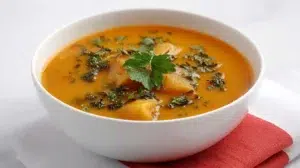
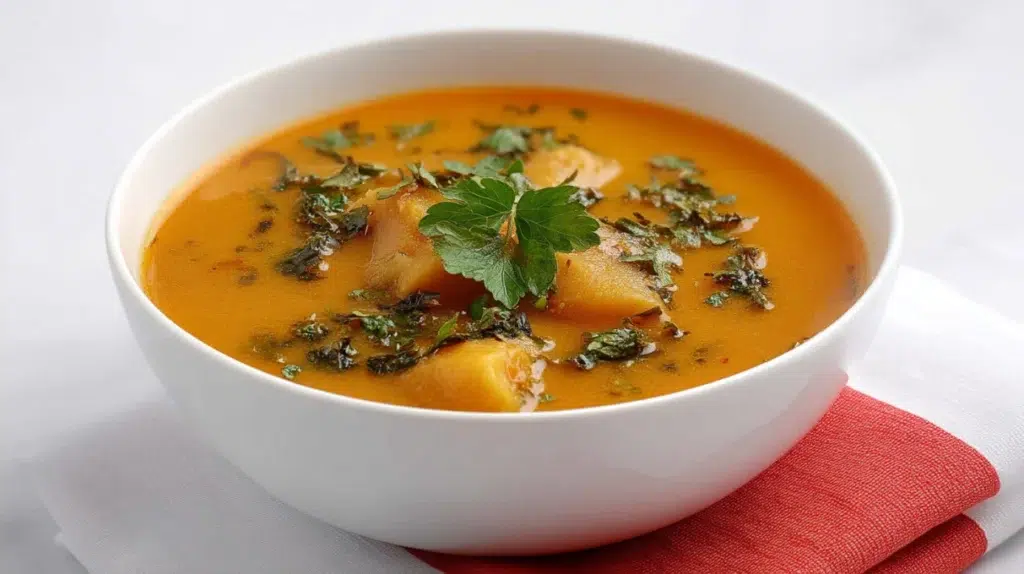
Cocoyam soup is one of those West African dishes that looks simple until you taste it and realise the simplicity was always the point. Cocoyam, also known as taro or eddo, a starchy root vegetable deeply embedded in West African and Caribbean cooking, cut into chunks and simmered in a rich palm oil and pepper broth with meat or fish until tender, the natural starch of the root thickening the broth from within as it cooks, finished with leafy greens stirred in at the end. One pot. An hour at most.
The kind of quietly satisfying bowl that shows up at family tables and Sunday lunches across Nigeria, Ghana and beyond.
Ingredients
- 1 kg cocoyam (taro or eddoes), peeled and cut into chunks, the edible variety with white or cream-colored flesh. Available at African, Caribbean and Asian grocery stores. Look for firm, unblemished corms with no soft spots. Peel under running water, the sap can be slightly irritating to skin.
- 500g beef, chicken, goat or smoked fish, or a combination. Bone-in pieces add more flavor to the broth.
- 3 tablespoons red palm oil
- 3 medium tomatoes, roughly blended
- 2 scotch bonnet peppers, blended, adjust to taste
- 1 medium onion, half blended with the tomatoes, half sliced for sautéing
- 2 tablespoons ground crayfish, adds deep savory umami; available at African grocery stores. Substitute with a good fish sauce splash if unavailable, though the flavor differs.
- 2 seasoning cubes
- Salt to taste
- 2 cups water or broth, plus more as needed; the cocoyam will thicken the soup naturally so start with less liquid than you think you need
- 2 large handfuls ugwu (fluted pumpkin leaves) or bitter leaf, washed and roughly chopped. Substitute with kale, spinach or collard greens if unavailable, use the same quantity.
Step by step
- Season and cook the meat. Season the meat with salt, half the seasoning cubes and a little onion. Place in a pot with enough water to just cover and cook until tender, about 20–30 minutes for chicken or beef, longer for tougher cuts like goat. If using smoked fish, rinse and pick through for bones, then set aside to add later. Reserve the meat stock.
- Prepare the cocoyam. Peel the cocoyam, a potato peeler or knife both work, though the sap can be sticky; rinse hands with cold water if they feel irritated. Cut into roughly equal chunks about 1.5 inches, even sizing means even cooking. Rinse well and set aside. Don’t cut the cocoyam too small, it softens significantly as it cooks and pieces that are too small will dissolve completely into the broth rather than staying as tender, identifiable chunks. Aim for generous bite-sized pieces.
- Build the base. Heat the palm oil in a large pot over medium heat. Add the sliced onion half and sauté for 3–4 minutes until softened. Pour in the blended tomatoes, pepper and onion mixture. Cook over medium heat, stirring occasionally, for 8–10 minutes until the pepper sauce reduces and darkens and the oil floats to the surface. Cook the pepper base until the raw tomato smell is completely gone and the oil separates to the surface, this takes patience but is what gives the broth its depth. Undercooked pepper sauce tastes sharp and tinny.
- Add the cocoyam and broth. Add the cocoyam chunks to the pot and stir to coat in the pepper base. Pour in the reserved meat stock and enough additional water to just cover the cocoyam. Add the ground crayfish, remaining seasoning cube and salt. Stir to combine.
- Simmer until the cocoyam is tender. Bring to a boil, then reduce to a steady simmer. Cook uncovered for 20–25 minutes, stirring occasionally, until the cocoyam is completely tender when pierced with a fork and beginning to break down at the edges, this natural breakdown thickens the broth. Add the cooked meat or smoked fish and stir gently. The broth thickens naturally as the cocoyam releases its starch, this is why you start with less water than seems necessary. If the soup is too thick at any point, add a splash of water. If too thin, cook uncovered for a few more minutes to reduce.
- Add the greens and finish. Add the washed, chopped ugwu or bitter leaf. Stir gently and cook for 3–5 minutes only, just until the leaves are wilted but still bright green. Taste and adjust salt and seasoning. Serve immediately.
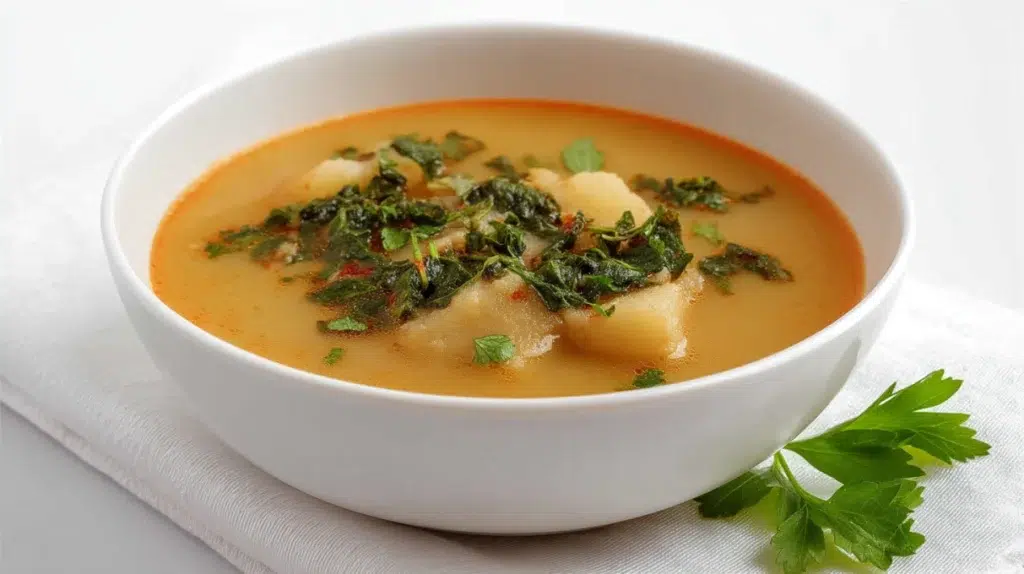
Cocoyam vs cocoyam paste, two different dishes
If you have made ofe onugbu or oha soup from this site, you already know cocoyam from a different angle in those dishes it is boiled separately and pounded into a smooth paste that dissolves completely into the broth as a thickener. In cocoyam soup, the cocoyam is the star, not the support, it stays in recognizable chunks throughout the cooking, softens to a creamy, slightly waxy tenderness, and thickens the broth naturally through its own starch rather than being pounded out of existence.
Two different dishes, same ingredient, completely different results.
Make it your own
Claire’s note
Cocoyam soup is very adaptable, the base method stays the same and what varies between households is primarily the protein and the leaf. Smoked mackerel or stockfish alongside fresh beef is a common combination that adds layers of flavor the fresh meat alone doesn’t have. For a vegetarian version, use vegetable broth, omit the meat entirely, double the crayfish or add a tablespoon of ogiri for the fermented depth the meat would have provided. Leftovers keep refrigerated for 3 days, the soup thickens further as it sits; add a splash of water when reheating and stir gently to bring it back.
Serve with
Cocoyam soup is traditionally served over steamed white rice or alongside pounded yam, eba or fufu, the thick broth absorbs into the swallow in the way it was always meant to. For more from the Nigerian and West African collection the complete Nigerian recipes guide and the African food collection have it all.
Add cocoyam soup to your weekly meal planner as a reliable one-pot comfort meal, it comes together in under an hour and feeds the family generously. And for more recipes, follow us on Pinterest.
Print
Cocoyam Soup
- Total Time: 60 minutes
- Yield: 4–6 servings 1x
- Diet: Meat
Description
A comforting West African dish featuring cocoyam simmered in a rich palm oil and pepper broth with meat or fish, finished with leafy greens.
Ingredients
- 1 kg cocoyam (taro or eddoes), peeled and cut into chunks
- 500g beef, chicken, goat, or smoked fish
- 3 tablespoons red palm oil
- 3 medium tomatoes, roughly blended
- 2 scotch bonnet peppers, blended
- 1 medium onion, half blended with the tomatoes, half sliced for sautéing
- 2 tablespoons ground crayfish
- 2 seasoning cubes
- Salt to taste
- 2 cups water or broth
- 2 large handfuls ugwu (fluted pumpkin leaves) or bitter leaf, washed and roughly chopped
Instructions
- Season and cook the meat with salt, half the seasoning cubes, and a little onion in a pot with water until tender, about 20–30 minutes.
- Prepare the cocoyam by peeling and cutting into 1.5-inch chunks. Rinse well and set aside.
- Heat the palm oil in a large pot over medium heat, add sliced onion, and sauté for 3–4 minutes.
- Pour in the blended tomato, pepper, and onion mixture. Cook for 8–10 minutes until reduced.
- Add the cocoyam chunks and stir to coat. Pour in reserved meat stock and additional water to cover.
- Bring to a boil, then reduce to a simmer for 20–25 minutes until cocoyam is tender.
- Add cooked meat or smoked fish to the pot.
- Add the washed, chopped ugwu or bitter leaf and cook for 3–5 minutes.
Notes
Cocoyam soup is very adaptable; feel free to change the protein and leafy greens used. Serve with rice or traditional swallows like pounded yam or fufu.
- Prep Time: 20 minutes
- Cook Time: 40 minutes
- Category: Main Course
- Method: Simmering
- Cuisine: West African
Nutrition
- Serving Size: 1 serving
- Calories: 450
- Sugar: 4g
- Sodium: 600mg
- Fat: 20g
- Saturated Fat: 5g
- Unsaturated Fat: 10g
- Trans Fat: 0g
- Carbohydrates: 50g
- Fiber: 6g
- Protein: 25g
- Cholesterol: 70mg