
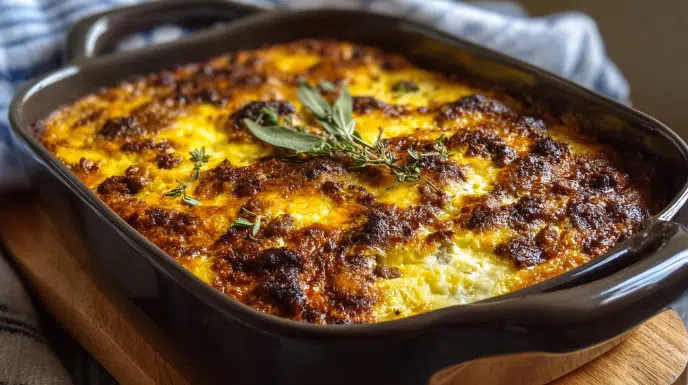
This bobotie recipe is the one I put on the table when I want to change how someone thinks about African food in about twelve minutes.
Not exaggerating. The dish comes out of the oven golden and fragrant, warm spices, dried fruit, something custard-like on top and people circle it before they understand what they are looking at. First bite produces a silence. Then the questions start. What is in this. Where does it come from. How have I never eaten this before.
That reaction, every time, is why bobotie is the recipe I start with when I want to introduce someone to South African cuisine. It is accessible, every ingredient available at any major grocery store. It is genuinely, deeply delicious. And it carries a history that makes it taste better once you understand it.
What Is Bobotie? And Why Is It South Africa’s National Dish
Bobotie is widely recognized as South Africa’s national dish, a designation that tells you something important not just about the food but about the country that claims it.
South Africa has eleven official languages, an extraordinary history of cultural collision and separation, and a food culture that reflects all of that complexity. For a single dish to be claimed as the national dish of a country that diverse, it has to be something that crosses cultural boundaries. And bobotie does. It is claimed and loved across Afrikaner, English, Cape Malay, and broader South African communities in a way that almost no other dish manages.
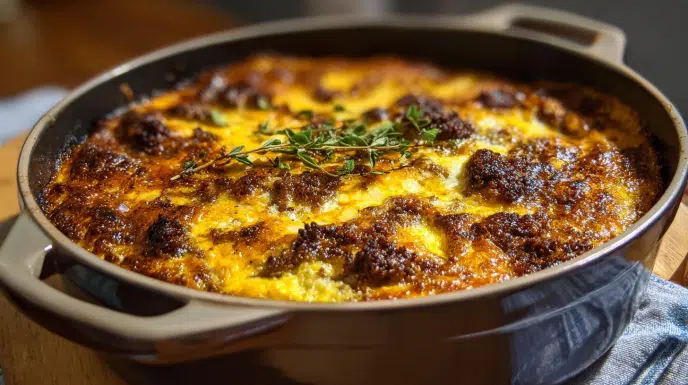
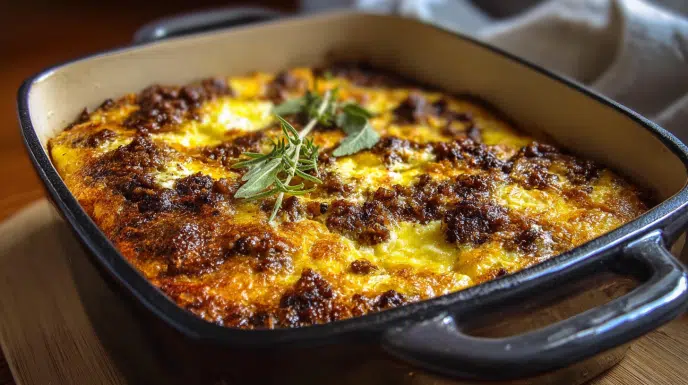
The dish is a spiced minced meat base, beef or lamb, cooked with onion, garlic, curry powder, apricot jam, raisins, chutney, and a small amount of bread soaked in milk, spread in a baking dish, topped with a custard of eggs and milk flavored with bay leaves, and baked until the custard is set and golden. Served with yellow turmeric rice, a simple fresh salad, and Mrs Balls chutney on the side.
The combination of flavors, warm curry spices against the sweetness of dried fruit and jam, the savory depth of the meat, the gentle richness of the egg custard on top is unlike anything in American cooking. It is specifically, recognizably South African.
Where Bobotie Comes From: The Cape Malay Story
Cape Malay cooking developed from the culinary traditions of enslaved people brought to South Africa from Southeast Asia, primarily from Indonesia, Malaysia, and other parts of Asia, beginning in the 17th century when the Dutch East India Company established the Cape Colony.
These enslaved people brought with them the cooking traditions of their home regions, the spices, the sweet-savory combinations, the curry techniques, the rice dishes and adapted them to local ingredients over generations. Cape Malay cooking is the direct result of that adaptation and survival. It is one of the oldest continuously practiced food traditions in South Africa and one of the most distinctive regional cuisines anywhere in the world.
Bobotie specifically appears in Dutch Cape Colony records as early as 1609, a dish of spiced minced meat, clearly descended from Indonesian and Malay spiced meat dishes, adapted with local ingredients and Dutch colonial cooking methods. It has been evolving and refining ever since.
Knowing this changes how you cook it. When you make bobotie you are cooking a dish that has been passed down and refined across four centuries and multiple cultures. That deserves respect and it also explains why every detail matters.
Ingredients
Serves 6 | Active time: 30 minutes | Total time: 1 hour 15 minutes
For the meat filling:
- 1kg (2.2 lbs) lean beef mince or lamb mince, or a mix of both
- 2 tablespoons vegetable oil
- 2 large onions, finely diced
- 4 cloves garlic, minced
- 1 tablespoon fresh ginger, grated
- 2 tablespoons mild curry powder, Rajah brand if you can find it, otherwise any mild curry powder
- 1 teaspoon ground turmeric
- 1 teaspoon ground coriander
- 1 teaspoon ground cumin
- 1 teaspoon salt
- 1 teaspoon black pepper
- 2 slices white bread, crusts removed
- 125ml (½ cup) full-cream milk, for soaking the bread
- 2 tablespoons apricot jam
- 1 tablespoon Mrs Balls chutney, or any fruit chutney
- 80g (about ½ cup) raisins
- 80g (about ½ cup) dried apricots, roughly chopped
- 2 tablespoons white wine vinegar
- 1 tablespoon Worcestershire sauce
- 30g (¼ cup) flaked almonds, optional but traditional
For the egg custard topping:
- 3 large eggs
- 250ml (1 cup) full-cream milk
- ½ teaspoon salt
- ¼ teaspoon turmeric, for color
- 4-6 fresh bay leaves, pressed into the custard before baking
For the yellow rice:
- 300g (1½ cups) long-grain white rice
- 600ml (2½ cups) water
- 1 teaspoon turmeric
- 1 teaspoon salt
- 1 teaspoon sugar
- 30g (2 tablespoons) butter
- Small handful of raisins, optional, traditional in Cape Malay rice
To serve:
- Mrs Balls chutney, or peach chutney
- Fresh tomato and cucumber salad
- Banana slices, sounds unusual, genuinely traditional and correct alongside bobotie
How to Make Bobotie Recipe: Step by Step
Step 1: Soak the Bread
Tear the bread slices into rough pieces and place in a small bowl. Pour the ½ cup of milk over and leave to soak for 10 minutes while you prepare everything else. The bread will absorb the milk and become soft. Squeeze it gently, keeping the milk and set both aside separately. The bread goes into the meat mixture. The soaking milk goes into the custard.
This step is not optional. The soaked bread gives the bobotie filling its specific texture, somewhere between a meat pie filling and a loose meatloaf that distinguishes it from any other spiced meat dish. Without it the filling is too firm and too dry.
Step 2: Cook the Meat Filling (20 minutes)
Heat the oil in a large heavy pan over medium-high heat. Add the onions and cook until completely soft and starting to turn golden, about 8 minutes. Do not rush this. Soft, sweet onions are the flavor foundation of the whole dish.
Add the garlic and ginger, cook 2 minutes. Add all the dry spices, curry powder, turmeric, coriander, cumin and cook for 1 full minute, stirring constantly. The spices will bloom in the oil and the kitchen will smell extraordinary. This is correct. Keep going.
Add the mince. Break it up thoroughly with a wooden spoon and cook until no pink remains, about 8 minutes. Drain off any excess fat if the meat was particularly fatty.
Add the apricot jam, chutney, raisins, dried apricots, vinegar, Worcestershire sauce, salt, and pepper. Stir to combine. Now add the squeezed bread pieces, breaking them up into the meat as you stir. Taste. The filling should be warmly spiced, slightly sweet, deeply savory. Adjust salt if needed. Add the almonds if using.
Step 3: Assemble and Bake (40-45 minutes)
Preheat your oven to 180°C / 350°F.
Spoon the meat filling into a deep baking dish, a 30x20cm (12×8 inch) dish or similar. Press it down evenly with the back of a spoon into a compact, level layer.
In a bowl, whisk together the eggs, the cup of fresh milk, the reserved bread-soaking milk, salt, and turmeric until completely combined. Pour this custard mixture carefully and evenly over the meat filling. Press the bay leaves gently into the surface of the custard, they should be partly submerged, partly visible.
Place the baking dish in the oven. Bake for 40-45 minutes until the custard is completely set, it should not wobble when you gently shake the dish and golden on top. The surface will puff slightly during baking and settle as it cools.
Rest for 5-10 minutes before serving. The resting time lets the custard firm up slightly so it cuts cleanly.
Step 4: The Yellow Rice (starts while bobotie bakes)
Combine rice, water, turmeric, salt, sugar, and butter in a saucepan. Bring to the boil, stir once, cover tightly, and reduce to the lowest possible heat. Cook for 18 minutes, do not lift the lid. After 18 minutes remove from heat, still covered, and rest 5 minutes. Fluff with a fork and add raisins if using.
The yellow color from the turmeric is not optional, it is the visual companion to the golden bobotie and it signals specifically Cape Malay cooking. White rice alongside bobotie is technically correct but aesthetically wrong.
How to Serve Bobotie
Serve the bobotie directly from the baking dish at the table, it is a communal dish, not plated individually. Each person takes a portion of the custard topping with the meat beneath, alongside the yellow rice, a spoonful of chutney, a simple fresh salad of tomato and cucumber, and if you are serving it authentically a few slices of fresh banana.
The banana alongside bobotie sounds strange to anyone who has not eaten it this way. Try it before you dismiss it. The cool, slightly sweet banana against the warm spiced meat is one of those flavor combinations that makes no rational sense and tastes completely right.
Bobotie is magnificent after a full South African braai, serve it the following day when the fire is out and everyone wants something warm and spiced. Follow it with malva pudding for the full Cape Malay dessert experience, a warm, caramel-soaked pudding that is the natural conclusion to bobotie’s warm spice notes.
Claire’s Notes
On the curry powder: The dish should taste warmly spiced, not aggressively hot. South African bobotie uses mild curry powder, the goal is aromatic complexity, not heat. If your curry powder is particularly strong, start with 1½ tablespoons and taste as you go.
On the dried fruit: Do not reduce or omit the dried apricots and raisins. The sweet-savory combination is what makes bobotie specifically South African and specifically Cape Malay. If it seems like too much sweetness before baking, trust the process. The savory depth of the meat and spices balances it completely in the final dish.
On Mrs Balls chutney: If you can source it, do. It is available at South African specialty stores and online. It has a specific fruity sweetness that no other chutney quite replicates. Major Grey’s mango chutney is the best widely available substitute.
On leftovers: Bobotie improves overnight. The spices deepen, the custard firms, and the flavors integrate in a way that makes the second-day version eaten cold, directly from the fridge, in thick slices with bread, one of the best things you can eat at 11pm standing in a kitchen. This is not a recipe note. This is a lifestyle recommendation.
On making it ahead: The entire meat filling can be made 2 days ahead and refrigerated. Assemble with the custard topping and bake on the day of serving. The rice should always be made fresh.
Frequently Asked Questions
Can I make bobotie with chicken?
You can, ground chicken produces a lighter, less richly flavored version that still works well with the spice and fruit combination. The traditional version is always beef or lamb. Ground turkey is a reasonable substitute if that is what you have.
Is bobotie spicy?
No, it is warmly spiced rather than hot-spiced. The curry powder provides aromatic depth without significant heat. It is accessible for everyone at your table including those who do not like spicy food.
Can I freeze bobotie?
Yes, freeze the cooked meat filling without the custard topping. Defrost overnight in the fridge, add fresh custard topping, and bake as directed. The texture is very slightly different but still excellent.
What does bobotie taste like?
This is impossible to answer adequately. Imagine spiced minced meat with the warmth of curry and the sweetness of dried fruit all held together by a gentle egg custard. There is nothing quite like it in American cooking. The closest cultural reference is a very distant cousin of moussaka, but that does not really capture it. You need to make it to understand it.
How do I know when the custard is set?
Gently shake the baking dish. The custard should not wobble at all, it should move as one solid piece, or not at all. If it is still liquid in the center, return to the oven for another 5-10 minutes.
More From the South African Recipes Collection: