This corn tortillas recipe is the most important recipe in my entire Mexican collection. Not the most impressive, not the most dramatic, the most important.
Here is why I say that. Corn tortillas have been a dietary staple in Mesoamerica for thousands of years, longer than most civilizations have existed, longer than wheat bread has been eaten in Europe, longer than almost any food tradition in the Western world. When you make corn tortillas from scratch, you are not just making a flatbread. You are participating in one of the oldest continuous food traditions on the planet.
That might sound heavy for a Tuesday night dinner. But I think it changes how you approach the process, with a little more patience, a little more attention, a little more respect for what you’re actually doing.
And practically speaking, fresh homemade corn tortillas taste completely, fundamentally, almost embarrassingly different from the packaged kind. Once you’ve tasted one fresh off a hot comal, still warm and pliable and smelling of toasted corn, you will understand immediately why this is the foundation of Mexican cuisine rather than just an accessory to it.
Let’s make them.
What You Actually Need: Keeping It Simple
Before we get into the method, I want to address something that trips people up before they even start. Making corn tortillas from scratch sounds complicated. It is not. You need three ingredients, one piece of equipment that costs $20, and about 30 minutes. That is genuinely all.
The three ingredients:
- Masa harina: the specific corn flour that makes this possible
- Warm water
- Salt
That’s it. Three ingredients. If a recipe for corn tortillas lists more than this, added fat, baking powder, milk, what you’re looking at is a flour tortilla hybrid or a recipe designed to compensate for technique problems. Real corn tortillas need nothing else.
The one piece of equipment: A tortilla press. Cast iron or heavy-duty aluminum, available on Amazon for $20-25. You can use a rolling pin and two pieces of plastic instead, it works, I’ve done it, it’s slower and the tortillas are slightly less even. But a tortilla press is one of the best $20 you’ll spend if you’re going to cook Mexican food regularly.
Helpful but not essential: A comal, the traditional flat griddle used in Mexico, or a cast iron skillet. Any flat heavy pan works. A non-stick pan works in a pinch but gives you less color and less of that slightly charred, toasty quality that makes fresh tortillas so good.
Masa Harina: The Only Ingredient That Actually Matters
Everything about this recipe depends on using the right flour, and the right flour is masa harina. Not cornmeal. Not corn flour. Not polenta. Masa harina specifically.
The difference is fundamental and comes down to a process called nixtamalization, the ancient indigenous technology that makes masa possible. In nixtamalization, dried corn kernels are soaked and cooked in an alkaline solution, traditionally wood ash lye, now typically calcium hydroxide (slaked lime), which transforms the corn at a chemical level. The process releases niacin that would otherwise be nutritionally inaccessible, changes the flavor from raw corn to something deeper and more complex, and alters the protein structure in a way that makes the masa pliable and workable.
Regular cornmeal has not been through this process. It will not hold together into a dough. It will not taste right. It is a completely different ingredient despite being made from the same grain.
Masa harina is cornmeal that has been nixtamalized and then dried and ground. Add water back and you have masa, fresh corn dough, that presses and cooks and tastes exactly right.
Which brand to buy:
Maseca is the most widely available brand in the US and is at basically every Kroger, Walmart, and major grocery store in the Mexican foods aisle. It is reliable and consistent and makes excellent tortillas. Bob’s Red Mill makes a masa harina that is slightly coarser and nuttier in flavor, good if you can find it. For the absolute best tortillas, seek out freshly nixtamalized masa from a Latin grocery store if you have one nearby, it makes an extraordinary difference and needs no water added, just pressing and cooking.
See the full Mexican pantry guide for where to find masa harina and every other Mexican pantry staple in the US.
Ingredients
Makes 16 tortillas | Prep time: 10 minutes | Rest time: 10 minutes | Cook time: 20 minutes | Total: ~40 minutes
- 2 cups (240g) masa harina: Maseca brand or similar
- 1½ cups (360ml) warm water: you may need a little more
- ½ teaspoon fine salt
That is everything. Three ingredients.
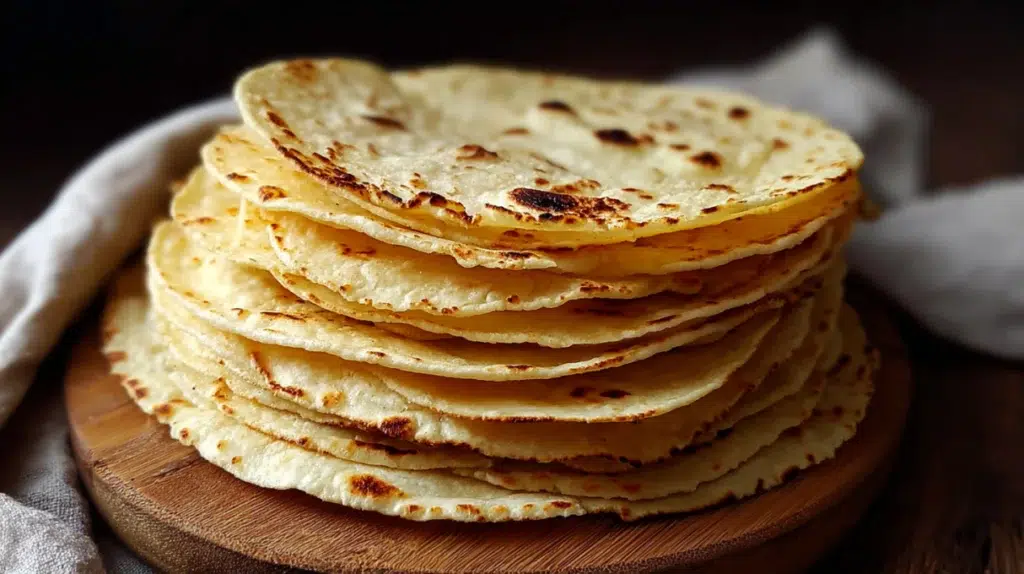
How to Make Corn Tortillas Recipe
Step 1: Make the Masa Dough (5 minutes + 10 minutes rest)
In a large bowl, combine the masa harina and salt. Add the warm water gradually, start with 1¼ cups and add more as needed, mixing with your hands as you go. Work the dough for about 2 minutes until it comes together into a smooth, pliable ball.
Now here is the test that tells you if the consistency is right, and this is the most important thing in the entire recipe, so pay attention. Take a small piece of dough and press it between your palms. It should be smooth and slightly tacky but not sticky. It should hold its shape without cracking at the edges.
If the edges crack when you press, too dry. Add water a tablespoon at a time, kneading between additions, until the cracks disappear.
If the dough sticks to your hands and feels wet, too wet. Add masa harina a tablespoon at a time until it pulls away cleanly.
Cover the bowl with a damp kitchen towel and let the dough rest for 10 minutes. This rest is not optional, it allows the masa harina to fully hydrate and makes the dough significantly more pliable and easier to work with. Skip it and your tortillas will be harder to press and more likely to crack.
Step 2: Divide and Press (10 minutes)
Divide the dough into 16 equal balls, each about the size of a golf ball, roughly 30g each. Keep them covered with the damp towel as you work so they don’t dry out. Even 5 minutes of air exposure will start to dry the surface and make pressing harder.
Cut two circles from a zip-lock bag or use two pieces of plastic wrap, these go on either side of the dough ball in the tortilla press to prevent sticking.
Place one piece of plastic on the bottom plate of the tortilla press. Put a dough ball slightly off-center toward the hinge side, not in the exact center. Place the second piece of plastic over the top. Close the press and push the handle down firmly. Open, rotate the tortilla 180 degrees, close and press again. This two-press rotation gives you a more even thickness.
The tortilla should be about 15-16cm (6 inches) in diameter and about 2mm thick. Even thickness matters, thin spots will burn before the thick spots are cooked through.
If you’re using a rolling pin instead of a press: place the dough ball between two pieces of plastic and roll from the center outward, rotating the plastic as you go, until you reach the right size and thickness.
Step 3: Cook (20 minutes)
Heat your comal, cast iron skillet, or heaviest flat pan over medium-high heat until very hot, a drop of water should evaporate immediately on contact. Do not add oil. Corn tortillas are cooked dry.
Peel the top plastic from the pressed tortilla. Flip it onto your hand, peel off the bottom plastic, and lay the tortilla onto the hot surface in one confident motion. Don’t hesitate, a hesitant placement folds the tortilla.
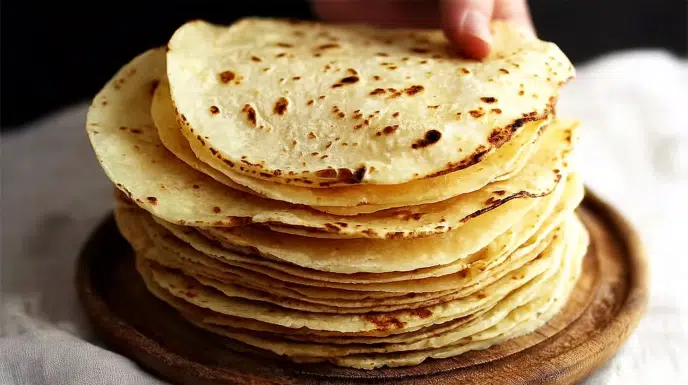
Cook for exactly 30-45 seconds on the first side, until the edges just begin to look dry and the tortilla releases cleanly from the surface without sticking. Flip. Cook for 60 seconds on the second side, you should see light golden spots appearing. Flip back to the first side for a final 30 seconds.
The finished tortilla will puff slightly, sometimes dramatically, during the third cooking phase. This puffing is a sign of good masa and good heat. It means the interior is steaming, which gives the tortilla that soft, pliable quality that makes it perfect for folding.
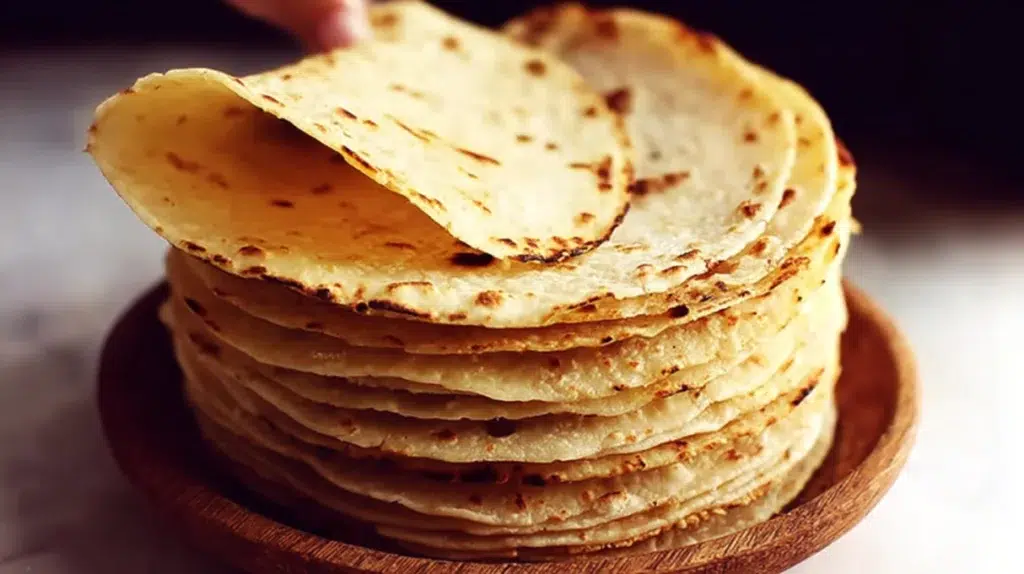
Stack the cooked tortillas in a clean kitchen towel or a tortilla warmer, folding the cloth over the top to trap steam. The steam keeps them pliable. Cold tortillas crack when you fold them, a warm, steamy stack stays perfectly flexible.
Step 4: Serve Immediately
Fresh corn tortillas are best within 20-30 minutes of cooking while they are still warm and pliable. Serve them with anything, though the most natural pairings are the simplest. Good salsa. Refried beans. Whatever you’re serving from the Mexican street food collection.
Or alongside a bowl of mole negro, which is how I first ate a fresh corn tortilla in Oaxaca and which remains my favorite way to eat them.
Claire’s Notes: What I Learned Making These Every Week
On water temperature: Warm water, not hot, not cold. Hot water can start cooking the masa and changes the texture. Cold water doesn’t hydrate the masa properly. Warm, like comfortable bath water.
On the dough drying out: This is the most common problem. Masa harina absorbs moisture aggressively and the dough will dry out as you work. Keep the unused dough balls covered with a damp towel at all times. If a ball starts cracking when pressed, wet your hands slightly and work the moisture into the dough before pressing.
On the color of the spots: Light golden spots on the cooked surface are correct and desirable. Dark brown spots are slightly overdone but still delicious. Black spots mean your pan is too hot. No spots at all means your pan is too cool and the tortilla will taste doughy.
On reheating leftover tortillas: Wrap in a damp paper towel and microwave for 20-30 seconds. Or reheat directly on a dry skillet for 30 seconds per side. Never reheat in a toaster, they’ll dry out and crack.
On flour tortillas: They’re a different recipe entirely, made with wheat flour, fat, and a different technique. If you want flour tortillas, I’ll publish that recipe separately. This recipe is specifically and only for corn tortillas.
On making a larger batch: The recipe doubles and triples perfectly. Make a big batch on Sunday and refrigerate, stored in a zip-lock bag in the fridge they keep for 5 days and reheat perfectly. Having a stack of homemade tortillas in the fridge during the week genuinely changes your cooking.
Why Fresh Corn Tortillas Taste Different: The Real Reason
I want to explain something that took me a while to understand properly.
Packaged corn tortillas are made, cooked, packaged, shipped, and sit in a store before you buy them. They are then stored in your fridge for days or weeks. By the time you eat them they are, at minimum, days old and have been refrigerated, which changes the starch structure of the masa in a way that makes them stiffer and less flavorful.
Fresh corn tortillas go from dough to comal to your plate in 40 minutes. The masa is at the peak of its hydration and flavor. The tortilla is warm. The starch hasn’t had time to retrograde and stiffen.
It is not a subtle difference. It is, and I want to be clear about this, not even really the same food. Same ingredients, completely different experience.
Make them once. You’ll understand immediately.
Frequently Asked Questions
Can I make corn tortillas without a tortilla press?
Yes. Use a rolling pin and two pieces of plastic or parchment paper. It takes longer and requires more practice to get even thickness, but the result is the same. A tortilla press just makes the process faster and more consistent.
Why are my corn tortillas cracking when I fold them?
Either the dough was too dry when you pressed them, or they cooled down too much before you’re trying to fold them. Keep pressed tortillas covered and serve them warm. If they’re cracking straight off the comal, add a tablespoon more water to your remaining dough.
Can I use regular cornmeal instead of masa harina?
No. This is the most common corn tortilla mistake and it does not work. Regular cornmeal has not been nixtamalized and will not bind into a proper dough. Use masa harina, Maseca brand at any major grocery store.
How do I store leftover corn tortillas?
Stack them, let them cool completely, place in a zip-lock bag and refrigerate for up to 5 days. Reheat as described in Claire’s Notes above.
Can I freeze them?
Yes, beautifully. Stack with parchment between each tortilla, freeze flat, then transfer to a zip-lock bag. Reheat from frozen directly in a dry skillet, 1 minute per side.
More From the Mexican Recipes Collection
Corn tortillas are just the beginning. Head back to the complete Mexican recipes guide for everything else, including the ambitious mole negro recipe that these tortillas were made to accompany.