
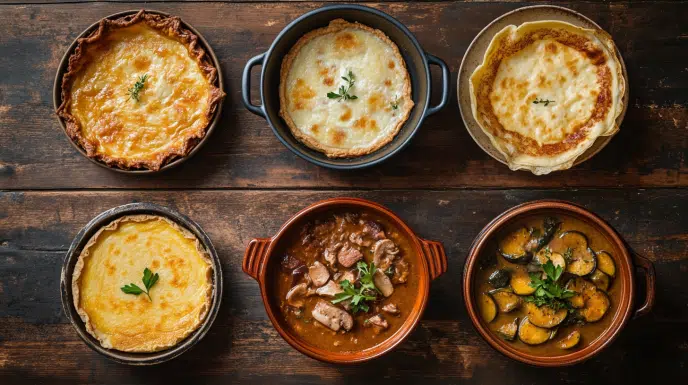
French classic recipes are among the most searched and the most misunderstood category in home cooking. They carry a reputation for difficulty that is only partially deserved, and a reputation for sophistication that is entirely earned.
The truth is more nuanced than either side of that debate. Some classic French recipes are technically demanding and genuinely require skill, a perfect hollandaise, an exact soufflé, a properly executed consommé. Others are among the most forgiving and most rewarding dishes in any cuisine, a coq au vin that improves with neglect, a ratatouille that asks almost nothing of you and gives back a great deal, a soupe à l’oignon that fills the kitchen with a smell so specific and so good that everyone who walks in immediately wants to stay for dinner.
This guide covers the six French classic recipes that most reward a home cook’s effort. Not the most technically challenging, the most meaningful. The ones that teach you something essential about French cooking with every batch you make.
This is part of the French recipes collection on RecipesWorldly.
Table of Contents
1. Coq au Vin: The Burgundian Classic
Coq au vin is a classic dish from Burgundy, chicken braised in red wine with onions, bacon and mushrooms. This one sentence contains everything you need to understand about the dish and its logic. It comes from a wine region. The wine does the work. The chicken is the vehicle.
The name means rooster in wine, coq is rooster, vin is wine, and the original dish was made with old roosters that were too tough to roast but became tender and deeply flavored after hours of braising in the local red wine. Modern home cooks use chicken pieces, which cook faster and more reliably, but the principle is identical: the wine acid breaks down the protein, the slow heat collapses the collagen, and what you end up with after an hour and a half of gentle simmering is chicken so tender it falls from the bone in a sauce so rich and complex it tastes like it took considerably more effort than it did.
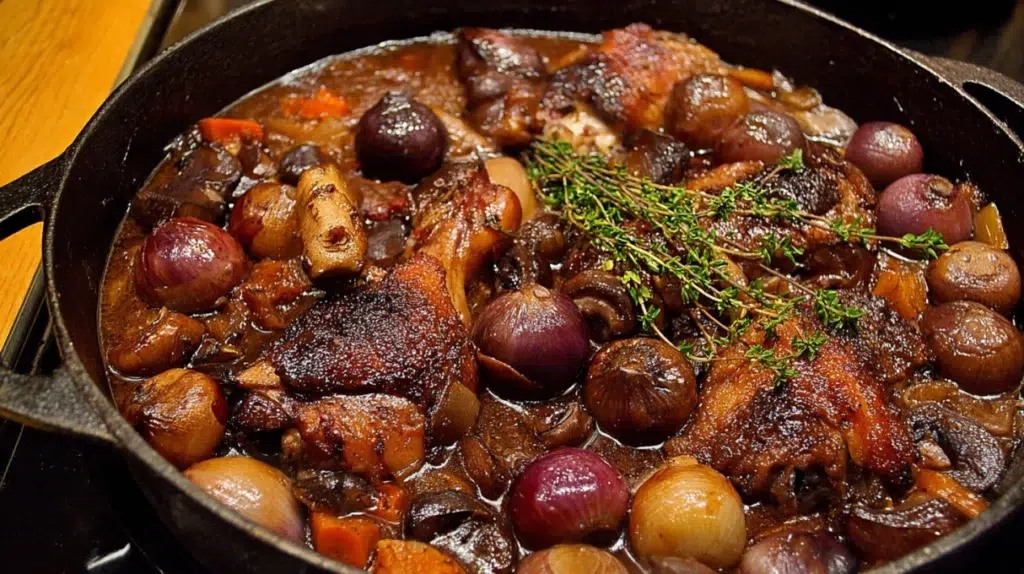
The two most common mistakes: using bad wine and rushing the braise. Use a wine you would drink, not expensive, but not unpleasant. Burgundy (Pinot Noir) is traditional and excellent; any good-quality dry red works. And do not turn up the heat to finish faster. Low and slow is the entire method.
Ingredients (serves 4)
- 1 whole chicken, jointed into 8 pieces, or 4 bone-in, skin-on thighs and 4 drumsticks
- 750ml (1 bottle) dry red wine, Burgundy, Côtes du Rhône, or any good Pinot Noir
- 200g (7 oz) lardons or thick-cut bacon, cut into cubes
- 250g (9 oz) cremini mushrooms, quartered
- 1 large onion, finely diced
- 3 shallots, finely diced
- 3 cloves garlic, minced
- 2 tablespoons tomato paste
- 2 tablespoons plain flour
- 250ml (1 cup) good chicken stock
- 2 tablespoons butter
- Fresh thyme, bay leaves, flat-leaf parsley
- Salt, black pepper
Method:
The day before (optional but strongly recommended): Season the chicken pieces and marinate overnight in the wine with thyme, bay leaves, and garlic. This step deepens the flavor significantly. Skip it if pressed for time, the dish still works, just with less depth.
Day of cooking: Remove the chicken from the marinade and pat completely dry. Reserve the wine. In a heavy Dutch oven, render the lardons over medium heat until crispy and the fat runs. Remove and set aside. In the lardon fat, brown the chicken pieces deeply on all sides, 4-5 minutes per side, in batches without crowding. This browning is not optional. Set the browned chicken aside.
In the same pot, cook the onion and shallots 8 minutes until soft. Add garlic and tomato paste, cook 2 minutes. Sprinkle the flour over and stir to coat. Add the reserved wine and the stock. Scrape all the browned bits from the bottom. Return the chicken and lardons to the pot. Add thyme and bay leaves. Bring to a bare simmer, cover, and cook over very low heat for 1 hour to 1 hour 15 minutes until the chicken is completely tender.
While the chicken cooks, sauté the mushrooms in butter in a separate pan over high heat until golden, 5-6 minutes. Add to the pot for the final 15 minutes of cooking.
Remove the chicken. Taste the sauce, it should be rich, glossy, and deeply wine-flavored. If too thin, reduce briefly over high heat until it coats a spoon. Return chicken to the sauce. Scatter chopped parsley and serve.
Serve with: Creamy mashed potato or buttered egg noodles. A green salad. A glass of the same wine you cooked with.
Best the next day: Coq au vin is one of those dishes that genuinely improves overnight. Make it ahead without regret.
2. Boeuf Bourguignon: Burgundy’s Other Great Braise
Boeuf bourguignon follows the same Burgundian logic as coq au vin, this time with beef chuck braised low and slow in red wine until it breaks down into tender, wine-saturated pieces surrounded by pearl onions, lardons, and mushrooms in a sauce so deeply flavored it could be its own course.
This is the dish that Julia Child introduced to American home cooks in the 1960s and that has never lost its place in the French home cooking repertoire since. It takes three hours. It requires almost no active attention for two of those three hours. The result is genuinely extraordinary, the kind of dish that makes people ask what restaurant you ordered from.
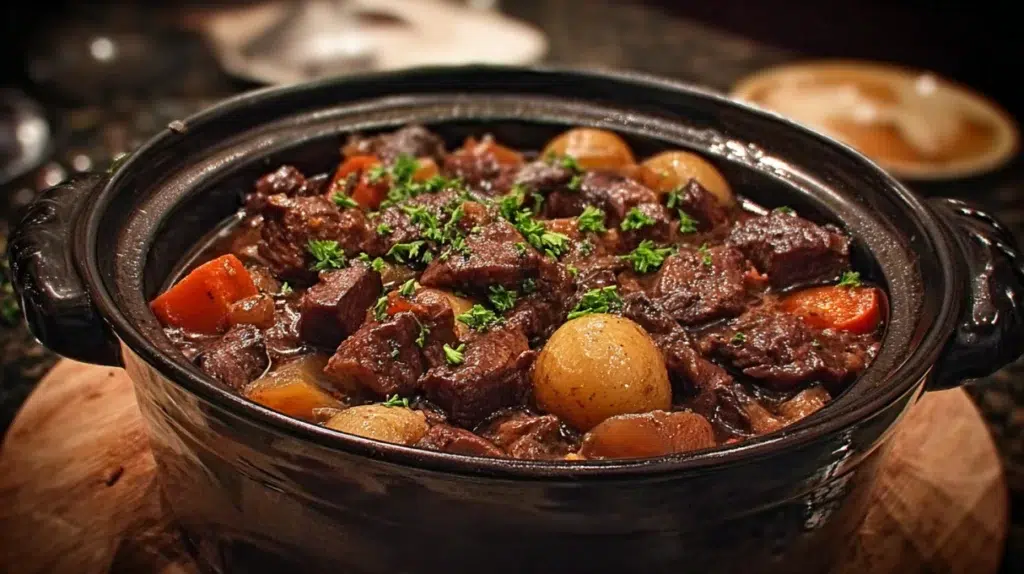
Key technique, the beef: Use beef chuck (braising steak), cut into large 4-5cm cubes. Do not use lean cuts, they dry out during the long braise. The fat and collagen in chuck dissolves into the sauce and creates its characteristic richness. Cut the pieces larger than you think necessary, they shrink during cooking.
The pearl onion technique: The glazed pearl onions that garnish the finished dish are cooked separately in butter and a small amount of sugar until lightly caramelized and glossy. This separate cooking preserves their shape and sweetness, if cooked in the braise they turn to mush.
Ingredients (serves 6)
- 1.5kg (3.3 lbs) beef chuck, cut into 4-5cm cubes
- 750ml (1 bottle) Burgundy or Pinot Noir
- 200g (7 oz) lardons
- 300g (10 oz) cremini mushrooms, quartered
- 200g (7 oz) pearl onions, peeled
- 2 large carrots, cut into large pieces
- 1 large onion, diced
- 3 cloves garlic
- 2 tablespoons tomato paste
- 2 tablespoons flour
- 300ml (1¼ cups) beef stock
- Bouquet garni, thyme, bay leaves, parsley stems tied together
- 2 tablespoons butter, for the pearl onions and mushrooms
- 1 teaspoon sugar, for glazing the pearl onions
- Salt, pepper, olive oil
Method overview: Marinate the beef overnight in wine with aromatics. Pat dry, brown deeply in batches in a Dutch oven. Remove. Brown the lardons. Cook the onion and carrot in the fat. Add garlic and tomato paste. Flour. Add the reserved wine and stock. Return the beef and bouquet garni. Braise covered in a 160°C / 325°F oven for 2.5-3 hours until the beef yields completely to a fork.
Separately: glaze the pearl onions in butter and sugar until golden. Sauté the mushrooms in butter over high heat. Add both to the finished braise for the last 20 minutes.
Rest 20 minutes before serving. Serve in the cooking vessel at the table if possible, the presentation from a heavy cast iron pot is part of the experience.
3. Ratatouille: Provence’s Vegetable Masterpiece
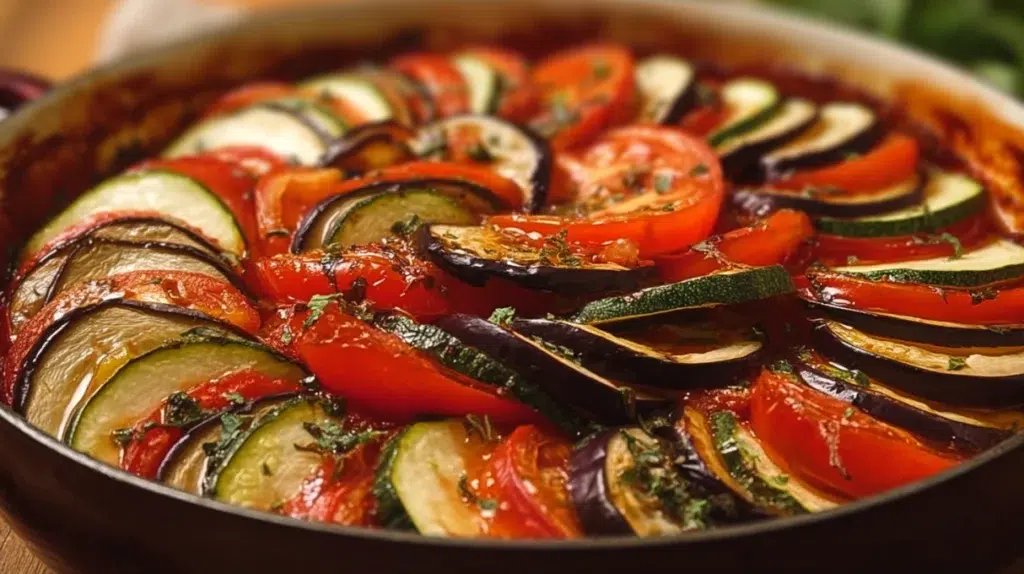
Ratatouille is the simplest dish in this collection and the one most frequently made badly. The bad version is a grey, mushy vegetable stew where everything has cooked together for too long and lost its individual character. The good version, cooked properly, with each vegetable given its own time and its own pan, is vivid, fragrant, and completely different from the bad version in both appearance and flavor.
The key is cooking each vegetable separately before combining them. Eggplant, zucchini, bell peppers, and tomatoes all have different moisture contents and different cooking times. Thrown into the same pan together they steam each other and become uniformly soft. Cooked separately, eggplant in olive oil until golden, zucchini until just tender, peppers until soft and sweet, tomatoes until concentrated, and then combined briefly, each component retains its character and the dish has layers.
Ingredients (serves 4-6)
- 2 medium eggplants, cubed 2cm
- 3 medium zucchini, cubed 2cm
- 2 red bell peppers, deseeded and cut into 2cm pieces
- 4 ripe tomatoes, or 400g canned San Marzano, roughly chopped
- 1 large onion, diced
- 4 cloves garlic, sliced
- 6 tablespoons excellent olive oil, this is a Provençal dish, olive oil is the flavor
- Fresh thyme, fresh basil
- Salt, black pepper
Method: Salt the eggplant cubes generously and leave 20 minutes to draw out moisture. Pat dry. Cook each vegetable separately in olive oil in a wide pan, eggplant first (10 minutes), then zucchini (5 minutes), then peppers (8 minutes). In the same pan, cook the onion until soft, add garlic, then the tomatoes and cook 10 minutes until concentrated. Combine all the cooked vegetables in the pan. Add thyme. Cook together gently for 15 minutes only. Finish with torn fresh basil. Serve warm or at room temperature.
Ratatouille is one of the rare dishes that is better at room temperature than hot, the flavors settle and deepen. Make it the morning of the day you want to serve it.
4. Soupe à l’Oignon: The Caramelized Onion Soup That Takes Time and Is Worth Every Minute
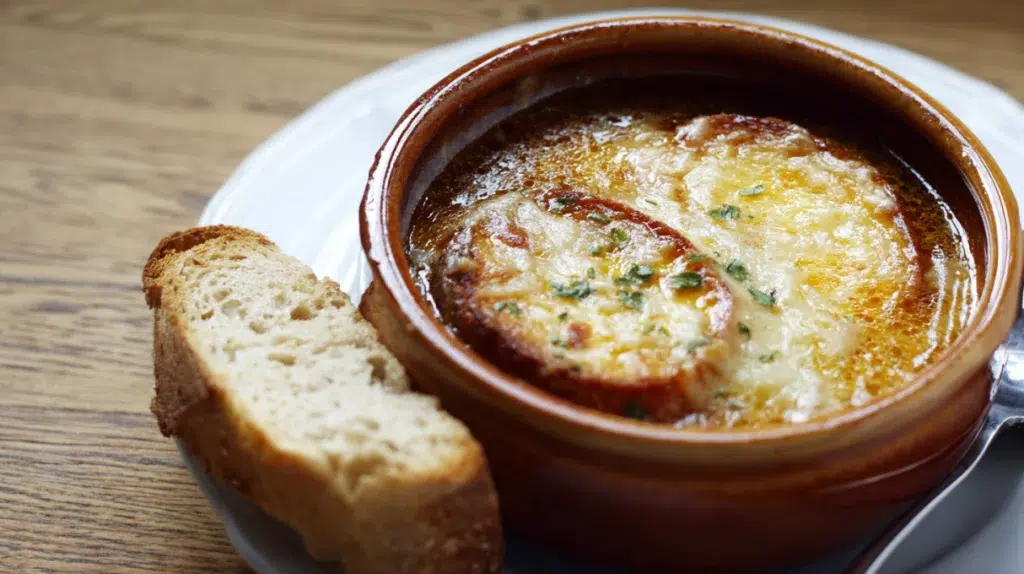
French onion soup is built entirely on one technique done correctly: caramelizing onions slowly until they are deep golden-brown, sweet, and completely transformed from their raw state. This takes 45-60 minutes of low, patient heat and occasional stirring. It cannot be rushed. It cannot be faked with added sugar or high heat. The color and sweetness must come from the sugars in the onion itself, developed slowly through the Maillard reaction.
The soup that results from this patience, enriched with dry white wine and good beef stock, ladled into an oven-proof bowl, topped with a thick slice of day-old baguette and enough Gruyère to form a properly gratinéed crust, is one of the most satisfying things French cooking produces. It costs almost nothing. It takes the better part of an afternoon. It is the kind of dish that makes you understand why French bistro cooking has survived unchanged for two centuries.
Ingredients (serves 4)
- 1kg (2.2 lbs) yellow onions, about 6 medium, thinly sliced
- 60g (4 tablespoons) butter
- 1 tablespoon olive oil
- 200ml (¾ cup) dry white wine
- 1 litre (4 cups) good quality beef stock, homemade or best purchased
- 1 tablespoon plain flour
- Fresh thyme, bay leaf
- Salt, black pepper
- 4 thick slices day-old baguette, toasted
- 150g (5 oz) Gruyère, coarsely grated, Comté works equally well
Method: Melt butter and olive oil in a large heavy pot. Add the sliced onions with a pinch of salt. Cook over the lowest possible heat for 45-60 minutes, stirring every 5-10 minutes, until deeply caramelized, genuinely dark golden-brown, sweet-smelling, and reduced to about a quarter of their original volume. Do not rush this step.
Add the flour and stir to coat. Add the wine and let it bubble for 2 minutes. Add the stock and herbs. Simmer 20 minutes. Taste and season.
Ladle into oven-proof bowls. Place a toasted baguette slice on top. Cover generously with grated Gruyère. Place under the broiler for 3-4 minutes until the cheese is bubbling, spotted golden-brown, and starting to pull away slightly from the bowl edges. Serve immediately, the cheese should still be molten when the bowl reaches the table.
5. Quiche Lorraine: The Alsatian Classic Done Right
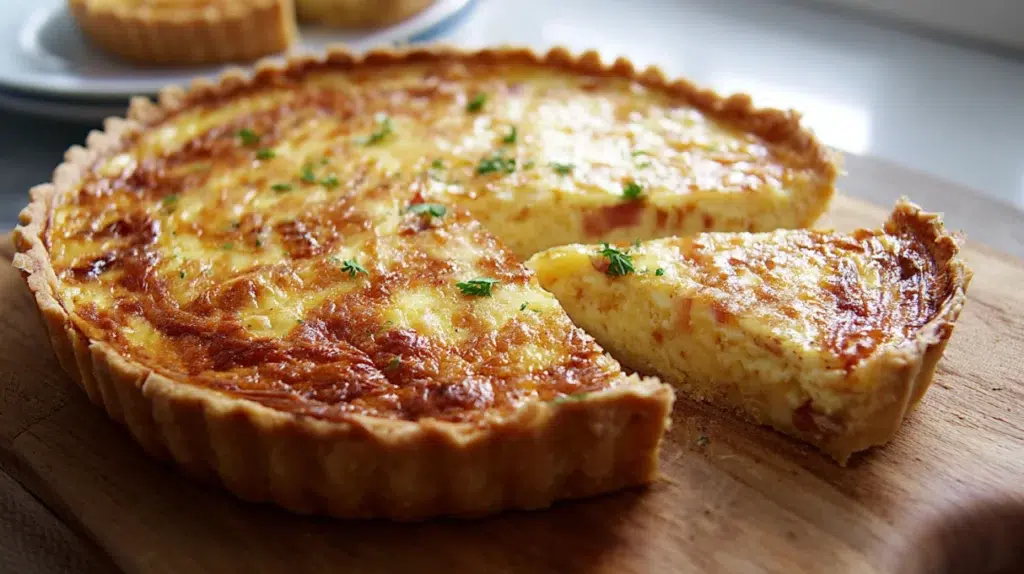
Real quiche Lorraine contains three things: a buttery shortcrust pastry, lardons, and a savory egg and cream custard (called a migaine). It does not contain cheese, that is a modern addition that has become so common most people assume it is traditional. It does not contain vegetables. It is lardons, eggs, cream, and pastry. Nothing else.
The custard ratio matters: 3 large eggs to 300ml (1¼ cups) double cream produces the silky, barely-set, trembling custard that distinguishes real quiche from a dense egg pie. The custard should wobble gently in the center when you remove it from the oven and set fully as it cools.
Ingredients (serves 6)
For the pastry:
- 200g (1⅔ cups) plain flour
- 100g (7 tablespoons) cold unsalted butter, cubed
- Pinch of salt
- 3-4 tablespoons ice cold water
For the filling:
- 200g (7 oz) lardons or thick-cut bacon cut into small pieces
- 3 large eggs
- 300ml (1¼ cups) double cream, full fat, no substitutes
- Salt, white pepper, pinch of nutmeg
Method: Make the pastry by rubbing the cold butter into the flour until it resembles breadcrumbs. Add cold water a tablespoon at a time until the dough just comes together. Wrap and refrigerate 30 minutes. Roll thin, line a 23cm tart tin, blind bake at 190°C / 375°F for 15 minutes with baking beans, then 5 minutes without until pale gold.
Fry the lardons until just colored, not crispy, still slightly soft. Beat eggs with cream, season with salt, white pepper and nutmeg. Scatter the lardons over the blind-baked pastry case. Pour the custard over slowly. Bake at 180°C / 350°F for 25-30 minutes until the custard is just set with a slight wobble in the center.
Rest 10 minutes before cutting. Quiche Lorraine served warm with a simple green salad is one of the great simple lunches.
6. Crêpes: The Simplest and the Most Versatile
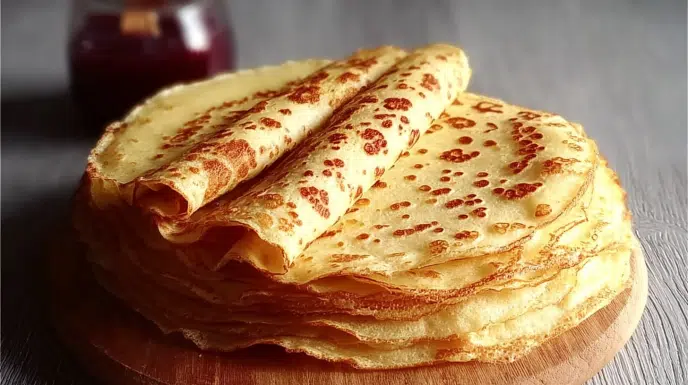
Every French household makes crêpes. The batter has five ingredients, flour, eggs, milk, butter, salt, takes 5 minutes to mix, requires 30 minutes of resting, and then produces the thinnest, most delicate pancakes in any food culture. Eaten for lunch with a savory filling (ham and cheese, spinach and egg, mushroom and crème fraîche). Eaten for dessert with butter and sugar, or with Nutella, or with lemon and powdered sugar, or flambéed with orange butter in the grand tradition of Crêpes Suzette.
The 30-minute rest is the only non-negotiable step, the flour absorbs the liquid and the gluten relaxes, producing a batter that spreads thin without tearing. Batter that goes straight from mixing to the pan produces thick, slightly rubbery crêpes. Rested batter produces tissue-thin, lacy-edged, perfectly flexible crêpes.
Ingredients (makes 12 crêpes)
- 125g (1 cup) plain flour
- 2 large eggs
- 300ml (1¼ cups) whole milk
- 1 tablespoon melted butter, plus extra for cooking
- Pinch of salt
Method: Whisk the flour and salt. Make a well, add the eggs, whisk to incorporate. Gradually whisk in the milk to form a smooth, very thin batter. Add the melted butter. Rest 30 minutes covered. The batter should be the consistency of thin cream, add a splash more milk if needed.
Heat a 20-22cm non-stick pan over medium-high heat. Add a tiny knob of butter. Pour in just enough batter to coat the pan thinly, about 3-4 tablespoons, swirling the pan immediately to spread it. Cook 60-90 seconds until the edges look dry and slightly lacy. Flip with a spatula and cook 30 seconds on the second side. The first crêpe is always a test, adjust the heat and batter amount for the second.
The French Table: A Few Things Worth Knowing
France has more than 300 recognized cheese varieties, a culinary tradition built over centuries of regional specialization, and the French cheese course, served after the main dish and before dessert, is one of the most specifically French elements of the French meal structure. Three cheeses are the traditional minimum: one soft (Brie or Camembert), one firm (Comté or Gruyère), one strong (Roquefort or a washed-rind Époisses). Served at room temperature, never cold from the refrigerator, with good bread and a glass of wine.
This cheese course structure is part of what distinguishes French meal culture from Italian, which uses cheese primarily as a cooking ingredient rather than a dedicated course.
FAQ About French Classic Recipes
Can I use chicken breast for coq au vin?
Technically yes, practically no. Breast meat dries out in a braise before it has time to develop flavor. Bone-in thighs and drumsticks are the correct cut. They stay moist through the full cooking time and contribute collagen to the sauce.
What wine for boeuf bourguignon if I don’t want to use Burgundy?
Any good-quality dry red wine works, Côtes du Rhône, a basic Bordeaux, or even a decent Merlot. The rule is simple: if you would not drink it, do not cook with it. The wine flavor concentrates during the braise and bad wine produces a noticeably bad sauce.
Why does my ratatouille always turn to mush?
The vegetables were cooked together from the start. Each vegetable must be cooked separately first. This is the single non-negotiable step in ratatouille.
Can quiche Lorraine be made ahead?
Yes, it reheats excellently at 160°C / 320°F for 15 minutes. Make it the day before, refrigerate, reheat uncovered. The pastry stays crisp and the custard firms to an even better texture after overnight refrigeration.
Planning your week? Add coq au vin or boeuf bourguignon to your weekly meal planner alongside your everyday staples.