
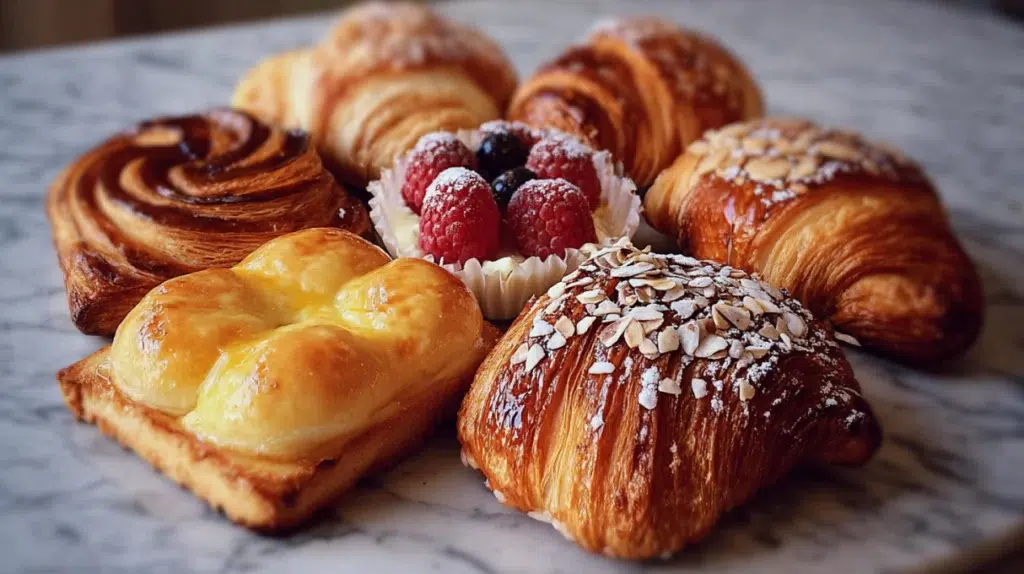
French pastry recipes are simultaneously some of the most searched and most intimidating in the world of home baking, and understanding which parts of that intimidation are justified and which are not is the starting point for making French pastry work in your kitchen.
Some French pastry is genuinely difficult and genuinely requires practice. Croissants made properly from laminated dough, with the correct butter to dough ratio and the correct folding sequence, are one of the most demanding things in baking, not because the technique is complex to understand, but because the margin for error is narrow and the only teacher is repetition. Most people’s first batch of croissants is not very good. Most people’s fifth is excellent.
Other French pastry, tarte tatin, madeleines, crème brûlée, chocolate fondant, requires almost no skill, a specific technique understood properly, and good ingredients. These are accessible to anyone who can follow a recipe and pay attention to one or two critical moments.
This guide maps the territory clearly: what each French pastry is, which category it belongs to, and exactly how to approach it.
Marie-Antoine Carême began his career in a Parisian pâtisserie and went on to write Le Pâtissier royal parisien, the foundational text of French pastry. French pastry has been a dedicated, serious art form since the 19th century, the French pâtisserie is one of the most specific cultural institutions in the food world. Understanding what it contains is part of understanding what French recipes are.
Table of Contents
The Three French Pastry Doughs: What Separates Everything
French pastry is built on three foundational doughs. Every French pastry you can name comes from one of these three foundations. Understanding which dough a pastry uses tells you immediately how difficult it is and what technique it requires.
Pâte feuilletée, puff pastry Laminated dough made by folding butter repeatedly into a dough base to create hundreds of paper-thin layers that separate and puff when heated. Time-consuming to make from scratch (multiple resting periods over several hours). Purchased all-butter puff pastry is excellent and removes this barrier entirely. Use it for: tarte tatin, mille-feuille, palmiers, galette des rois.
Pâte à choux, choux pastry A cooked dough made on the stovetop by combining water, butter, flour and eggs into a paste that is piped into shapes and baked until hollow and crispy. No lamination, no resting, no precision equipment needed. The hollow interior is filled after baking. Use it for: éclairs, profiteroles, gougères, Paris-Brest, religieuse.
Pâte brisée / pâte sucrée, shortcrust The standard French tart pastry. Pâte brisée is the plain version (for savory tarts and quiche). Pâte sucrée adds sugar and egg yolk for a richer, more cookie-like dough (for dessert tarts). Both are straightforward to make. Use it for: quiche Lorraine, tarte au citron, tarte aux fraises, fruit tarts.
1. Croissants: The Most Ambitious Home Bake
The croissant is made from a yeast-based dough rolled and layered to incorporate butter, the first recipe for the modern croissant appeared only in 1906. The fact that this icon of French breakfast culture is a relatively recent invention in its current form surprises most people. What does not surprise anyone who has made croissants at home is that they are difficult, genuinely, specifically, correctly difficult, and worth the effort of learning properly.
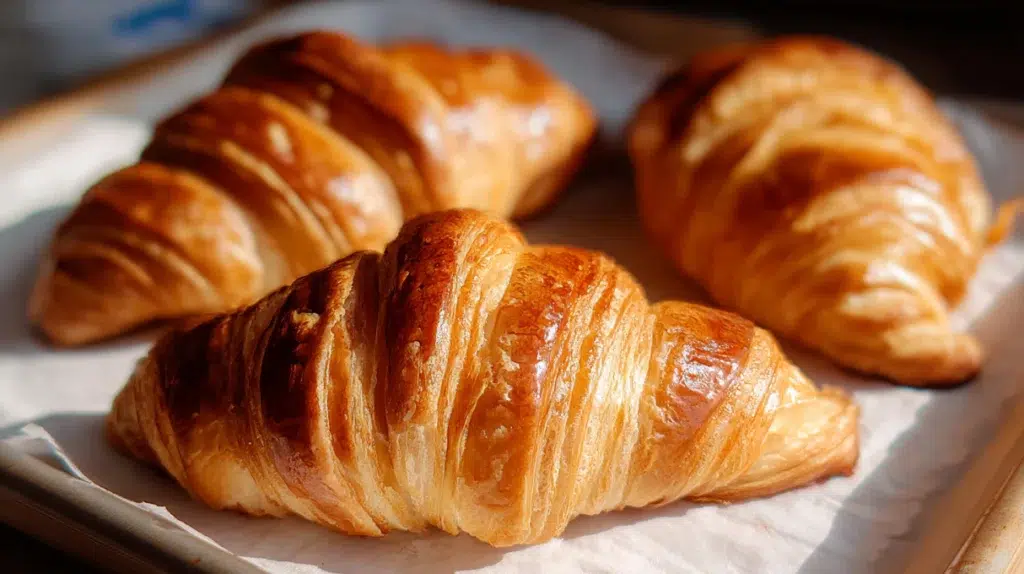
The technique is called lamination. Cold butter is incorporated between layers of yeasted dough through a sequence of rolling and folding, a book fold, a letter fold, repeated with resting periods in between to keep the butter cold and separate from the dough. When the croissant goes into a hot oven, the water in the butter turns to steam, the layers separate, and the characteristic honeycomb interior forms.
The non-negotiables:
- The butter must be cold throughout the entire process, never allowed to soften into the dough
- The resting periods between folds (minimum 30 minutes in the refrigerator each time) cannot be shortened
- The dough must be at the correct hydration, too wet and the layers collapse, too dry and the dough tears during rolling
- The egg wash before baking must be applied carefully, not on the cut edges, where it seals the layers and prevents the rise
Ingredients (makes 12 croissants, start 2 days before)
For the dough (détrempe):
- 500g (4 cups) strong white bread flour
- 10g (2 teaspoons) fine sea salt
- 60g (5 tablespoons) sugar
- 7g (2¼ teaspoons) instant yeast
- 300ml (1¼ cups) whole milk, cold
- 30g (2 tablespoons) butter, softened
For the butter block (beurrage):
- 250g (18 tablespoons) European-style unsalted butter, 84% fat content minimum. The higher fat content matters, standard American butter has too much water and produces a heavier result.
Method overview:
Day 1: Mix dough ingredients to a smooth, not over-developed dough. Refrigerate overnight. Flatten the butter into a thin square between two sheets of parchment, approximately 18cm square. Refrigerate until the butter is firm but still pliable.
Day 2: Roll the cold dough to a rectangle approximately twice the size of the butter block. Place the butter in the center, fold the dough over it. Roll and fold three times (letter folds), resting 30 minutes in the refrigerator between each fold. After the final fold, rest 1 hour.
Shaping: Roll to a large rectangle approximately 4-5mm thick. Cut into long triangles. Roll each triangle from the base to the tip, stretching very slightly as you roll. Place on lined baking trays, curve into the classic crescent.
Final proof: Leave at room temperature 2-3 hours until visibly puffed and wobbly when the tray is shaken. Brush with egg wash. Bake at 200°C / 400°F for 16-18 minutes until deep golden brown.
The first batch teaches you more than any recipe can. Make notes. Adjust. The second batch is always better.
2. Tarte Tatin: The Accidental Masterpiece
Tarte tatin is the French pastry that most rewards the home cook in proportion to the effort invested, which is to say, not very much effort at all produces something extraordinary.
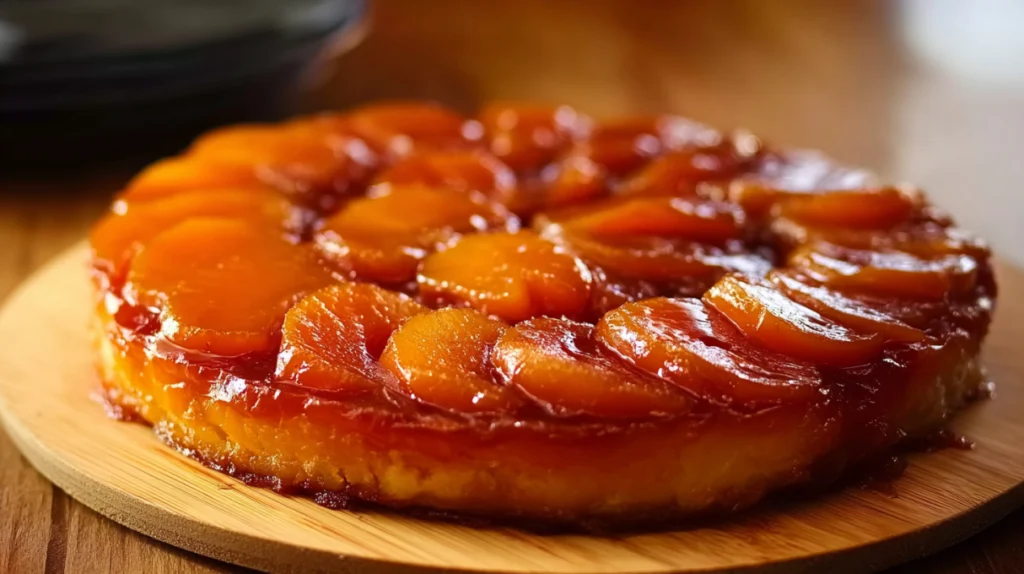
The origin story is one of the great accidents in culinary history: the Tatin sisters, running a hotel in Lamotte-Beuvron in the Loire Valley in the late 19th century, apparently placed their apple tart in the oven without the pastry base. Whether the story is true or invented by a later enthusiast is debated, but the resulting technique, caramelized apples baked under a pastry lid and then inverted to reveal the glossy, burnished fruit on top, is one of the most beautiful presentations in French baking.
The technique in one sentence: Make caramel in a cast iron or oven-proof pan, add butter-coated apple quarters tightly packed, cover with puff pastry, bake, invert.
The two things that go wrong:
- The caramel is too pale, underdeveloped, sweet without depth. The caramel should reach a deep amber, genuinely dark, before the apples go in.
- The apples release too much liquid during baking, making the base soggy. Cook the apples in the caramel on the stovetop for 10 minutes before the pastry goes on, evaporating excess moisture.
Ingredients (serves 6-8)
- 1.2kg (about 6 medium) Golden Delicious or Granny Smith apples, firm varieties that hold their shape. Avoid soft apples like Red Delicious which turn mushy.
- 150g (¾ cup) sugar
- 80g (6 tablespoons) unsalted butter, cut into cubes
- Pinch of salt
- 1 sheet good all-butter puff pastry, thawed if frozen, approximately 320g
Method:
Peel, core and quarter the apples. In a 26-28cm oven-proof cast iron or stainless skillet, heat the sugar over medium heat without stirring until it begins to melt at the edges. Swirl the pan gently, do not stir, until the caramel is a deep amber color. Add the butter and a pinch of salt, it will bubble vigorously. Stir to combine.
Arrange the apple quarters tightly in the caramel, standing upright on their sides in concentric circles, they will shrink during cooking so pack them as tightly as possible. Cook on the stovetop over medium heat for 10-12 minutes until the apples begin to soften and the caramel reduces slightly.
Roll the puff pastry to a circle slightly larger than the pan. Lay it over the apples and tuck the edges down inside the rim of the pan. Pierce the pastry several times with a fork. Bake at 200°C / 400°F for 25-30 minutes until the pastry is deeply golden.
Remove from the oven and rest 5 minutes, not longer. Place a large plate over the pan and invert quickly and decisively. The caramelized apples are now on top. Serve warm with crème fraîche or vanilla ice cream.
3. Choux Pastry: The Hollow Dough
Choux pastry is the French baking technique with the best effort-to-result ratio in the entire repertoire. The dough cooks on the stovetop in 5 minutes, pipes easily, and bakes into hollow, crispy shells that can be filled with anything.
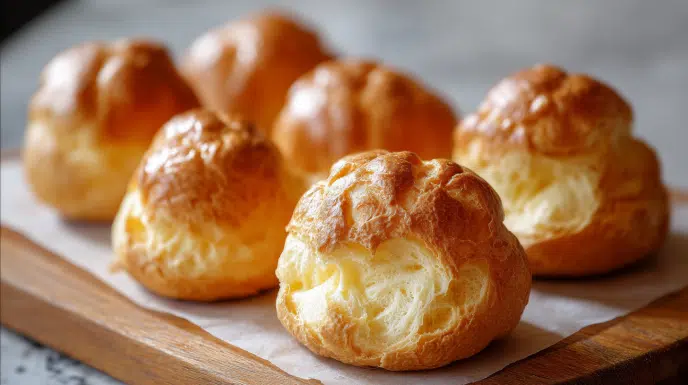
The method: Bring water (or milk) and butter to a boil. Add flour all at once and stir vigorously over the heat until the dough comes together into a smooth ball and pulls away from the sides of the pan, about 2 minutes. Remove from heat. Add eggs one at a time, beating well after each, until the dough is smooth, glossy, and falls from a spoon in a thick ribbon. Pipe into shapes on lined trays. Bake at 200°C / 400°F until golden and completely dry.
The critical test: the choux must be completely dry when it comes out of the oven. If the shells feel soft or damp, return to the oven for 5 more minutes. Underbaked choux collapses as it cools.
Three essential choux applications:
Éclairs: Pipe into 10-12cm logs. Fill with crème pâtissière (pastry cream, milk, eggs, sugar, flour, vanilla, cooked to a thick custard). Glaze the top with chocolate fondant or dark chocolate ganache.
Profiteroles: Pipe into small rounds. Fill with vanilla ice cream or whipped cream. Serve with warm chocolate sauce poured over at the table.
Gougères: Add 100g finely grated Gruyère to the choux dough before piping. Bake as small rounds. Serve warm as an appetizer, the quintessential French cocktail party bite.
Crème pâtissière (the universal French pastry cream, makes enough for 12 éclairs):
- 500ml whole milk
- 4 egg yolks
- 100g (½ cup) sugar
- 40g (5 tablespoons) plain flour or cornflour
- 1 teaspoon vanilla extract
- 20g (1½ tablespoons) butter
Whisk the yolks with sugar and flour until pale. Heat the milk to just below boiling. Pour the hot milk slowly over the egg mixture, whisking constantly. Return to the saucepan over medium heat, whisking constantly until the cream thickens and bubbles. Cook 1 more minute. Remove from heat, whisk in butter and vanilla. Press cling film directly onto the surface and refrigerate until cold and set.
4. Madeleines: The Shell-Shaped Memory
Madeleines are small, shell-shaped sponge cakes flavored with brown butter and lemon zest, baked in a specific scallop-shell mold, and eaten warm from the oven with coffee or tea. They require a madeleine pan, available at kitchen stores and online for a few dollars, and almost no skill.
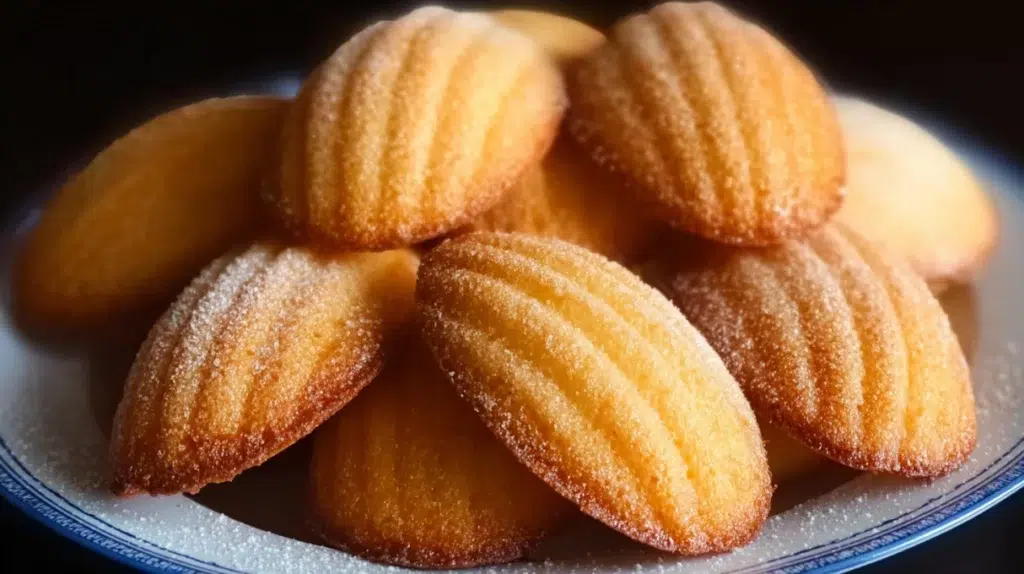
The characteristic hump on the back of a properly made madeleine, the bump that rises in the center during baking, is created by resting the cold batter in the refrigerator before baking. The cold batter hitting the hot pan creates a rapid rise in the center. Without the rest, the madeleines bake flat.
Ingredients (makes 12 madeleines)
- 130g (1 cup plus 1 tablespoon) plain flour
- 130g (9 tablespoons) unsalted butter, browned until nutty and golden (beurre noisette)
- 130g (⅔ cup) sugar
- 2 large eggs
- 1 teaspoon baking powder
- Zest of 1 lemon
- Pinch of salt
Method: Brown the butter in a small pan until it smells nutty and turns golden. Cool. Whisk eggs and sugar until pale and slightly thickened. Fold in the flour, baking powder, salt and lemon zest. Fold in the cooled brown butter. Refrigerate the batter for at least 1 hour, overnight is even better.
Butter and flour the madeleine molds. Fill each mold two-thirds full with the cold batter. Bake at 200°C / 400°F for 11-12 minutes until the edges are golden and the hump is fully risen. Eat warm, madeleines are significantly better in the first 20 minutes after baking.
5. Crème Brûlée: The Custard with the Crack
Crème brûlée is the French dessert that most impresses guests in proportion to its actual difficulty, which is low. A rich vanilla custard baked in a bain-marie, chilled, and then finished with a caramelized sugar crust using a kitchen blowtorch. The satisfying crack of the sugar is its own reward.
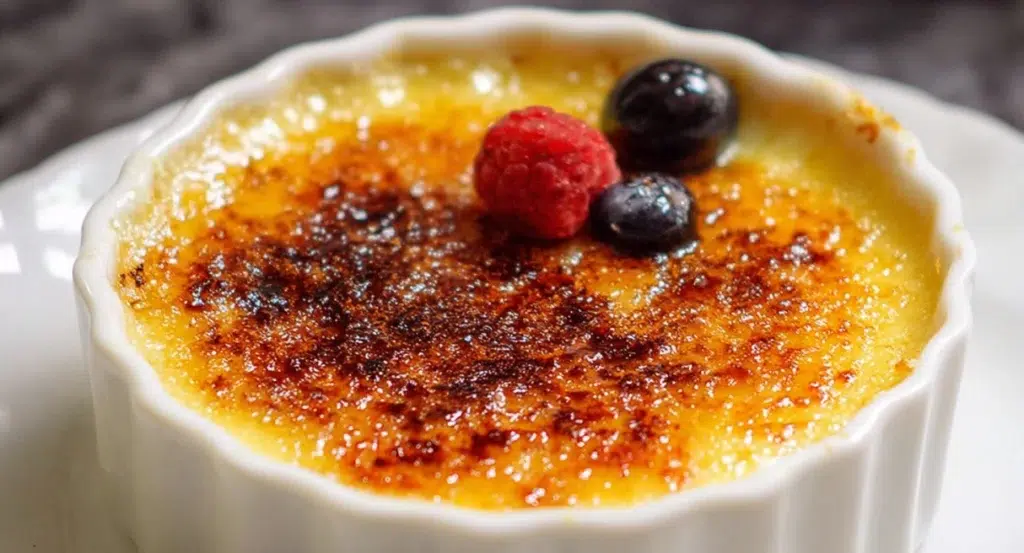
The custard ratio: 500ml double cream to 5 egg yolks to 80g sugar to 1 vanilla pod. This ratio produces a custard that is just set, trembling slightly when the ramekin is moved, fully set when cold. More yolks = richer. Less cream = firmer. The ratio above is the correct balance for the classic result.
The bain-marie: The ramekins are placed in a deep baking tray filled with hot water to halfway up their sides. This water bath ensures the custard heats gently and evenly, direct oven heat would scramble the eggs on the outside before the center sets.
The sugar top: After chilling overnight, scatter a thin, even layer of fine caster sugar over each ramekin, about 1½ teaspoons per ramekin. Use a kitchen blowtorch in slow, even passes until the sugar melts and caramelizes to a deep amber. Wait 1 minute before serving, the sugar hardens as it cools.
Without a blowtorch, use the broiler, place the ramekins close to the element for 2-3 minutes watching carefully. The results are less even but entirely acceptable.
The French Pastry Pantry: What You Need
European-style butter (84% fat): The higher fat content is specifically important for croissants and laminated pastry. For everything else, standard unsalted butter works perfectly.
Plain flour (all-purpose) for most pastry. Bread flour only for croissant dough, the higher protein content provides the structure the laminated dough needs.
Vanilla pods: French pastry uses real vanilla extensively. The seeds scraped from a split pod are the correct approach. Vanilla extract is an acceptable substitute for everything except crème brûlée, where the visual effect of the black seeds in the cream is part of the presentation.
Fine caster sugar: Dissolves more readily than granulated in egg mixtures and creams.
A kitchen thermometer: For caramel work, knowing when you have reached the correct temperature removes the guesswork. Dark caramel is 175-180°C / 350°F. Soft-ball stage for sugar work is 115-118°C / 240°F.
FAQ About French Pastry Recipes
Can I make croissants without a stand mixer?
Yes, the dough can be made by hand. The lamination process requires hand work regardless of how the dough is initially mixed. The dough should not be over-developed during mixing, light, brief mixing is correct. Over-mixing makes the dough tough and difficult to laminate.
Why does my tarte tatin have a soggy base?
The apples released too much moisture during baking. Either the caramel was not dark enough (more moisture cooks off in a darker caramel) or the apples were not pre-cooked on the stovetop before the pastry went on. Solve both and the base will be crisp.
Can choux pastry be made ahead?
The baked choux shells can be stored for 24 hours in an airtight container or frozen for up to a month. Fill just before serving, filled choux softens within a few hours.
Why did my crème brûlée not set?
The oven temperature was too high, the custard scrambled around the edges before the center cooked through. Or the bain-marie ran dry during baking. Both produce a grainy or curdled texture. Start with the water level at exactly halfway up the ramekins and check once during baking.
Planning your week? Add a French dessert night to your weekly meal planner alongside your everyday staples.