
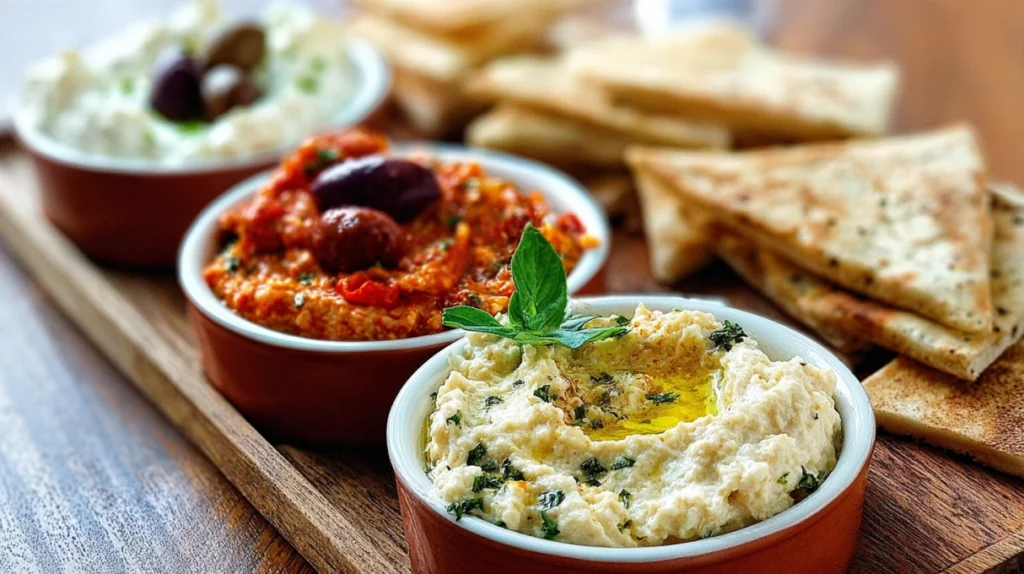
Greek dips recipes are where most people first encounter the real depth of Greek cooking and where most people also encounter the biggest gap between what they have eaten and what they are capable of making.
Store-bought tzatziki exists. Most of it is fine. None of it tastes like tzatziki made at home the right way, with full-fat strained yogurt, cucumber squeezed to the point of exhaustion, fresh dill, real garlic, and excellent olive oil. The difference is significant. Not subtle. The kind of difference that makes people ask what you put in it.
This guide covers the three Greek dips that every home cook who wants to understand the cuisine should be able to make tzatziki, taramosalata, and skordalia. Three completely different flavor profiles. Three different techniques. All essential to a complete Greek mezze table.
The Mediterranean diet, built substantially on olive oil, yogurt, legumes and fresh vegetables, is one of the most thoroughly studied healthy dietary patterns in the world and these three dips sit squarely within it. They are not party food as an afterthought. They are the nutritional and cultural foundation of how Greeks eat at the table, present at almost every meal, eaten with bread and vegetables and used to accompany everything from simple grilled fish to roasted lamb.
This is part of the Greek recipes collection. Make all three and put them on the table together. Watch what happens.
1. Tzatziki: The Essential, the Non-Negotiable, the One Everyone Gets Wrong
Tzatziki is the Greek dip most people think they know. Most people are wrong, not about what it is, but about how it should taste when made correctly.
The three things that most store-bought tzatziki and most home versions get wrong: the yogurt is too thin, the cucumber is not squeezed nearly enough, and the garlic is either too much or added too early and becomes sharp and aggressive rather than present and pleasant.
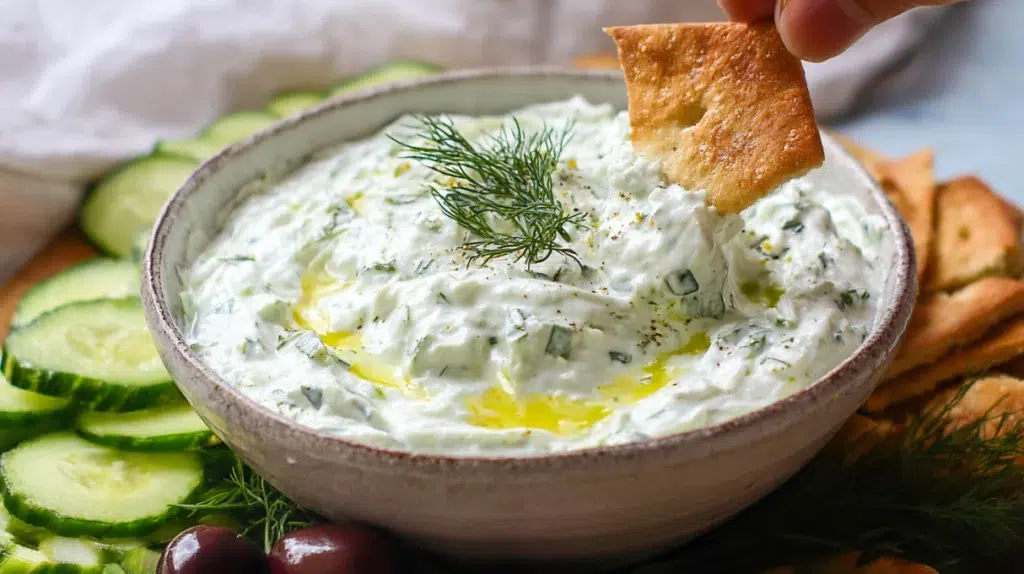
Authentic Greek tzatziki is made from thick strained yogurt, traditionally sheep’s or goat’s milk yogurt in Greece, full-fat FAGE Total in the US with cucumber grated and squeezed until the towel barely picks up any moisture, fresh dill, garlic, olive oil, and a small amount of white wine vinegar. The result is thick enough to hold its shape when scooped, cool and clean-tasting, with the dill clearly present and the garlic there but not dominating.
It is the essential companion to souvlaki and every Greek lamb dish. It is the first thing to go at any Greek table. It is almost impossible to make too much of.
Tzatziki Recipe:
Makes about 400ml | Prep time: 20 minutes + 1 hour chilling
- 400g (about 14 oz) full-fat Greek yogurt, FAGE Total or similar thick strained yogurt. Do not use low-fat or regular yogurt. The fat content is what gives tzatziki its characteristic richness and texture.
- 1 medium cucumber, about 250g before preparation
- 2 cloves garlic, small to medium cloves
- 2 tablespoons fresh dill, finely chopped, fresh only. Dried dill produces a muted, dusty result that is noticeably inferior.
- 2 tablespoons excellent extra-virgin olive oil, plus extra for drizzling to serve
- 1 tablespoon white wine vinegar, or a small squeeze of lemon juice
- ½ teaspoon salt
Method:
The cucumber step, do not rush this: Grate the cucumber on the large holes of a box grater, skin included if using Persian cucumbers, partially peeled if using English cucumber. Place the grated cucumber in a clean kitchen towel, gather the corners, and squeeze firmly over the sink. Squeeze, rest, squeeze again. Squeeze until what comes out of the towel is almost nothing. The cucumber should feel dense and almost dry in the towel.
This step takes 3-4 minutes of actual squeezing. Do it properly. Inadequately squeezed cucumber produces watery tzatziki that pools liquid at the bottom of the bowl within minutes of sitting.
The garlic: Mince the garlic very fine, or use a microplane grater for a paste-like consistency that distributes more evenly. Add to the yogurt and stir through. The garlic should be present but not aggressive. If you find the sharpness of raw garlic unpleasant, reduce to one small clove.
Combine: Add the squeezed cucumber, dill, olive oil, vinegar, and salt to the yogurt. Stir to combine. Taste, adjust salt, vinegar, and garlic.
Refrigerate for at least 1 hour before serving. The resting period is important, it allows the flavors to integrate and the garlic to mellow slightly.
To serve: Spoon into a shallow bowl. Use the back of the spoon to create a slight well in the center. Drizzle with olive oil. Add a small sprig of fresh dill if you have it. The presentation is part of the experience.
2. Taramosalata: The Pink Dip Most People Don’t Know How to Make Well
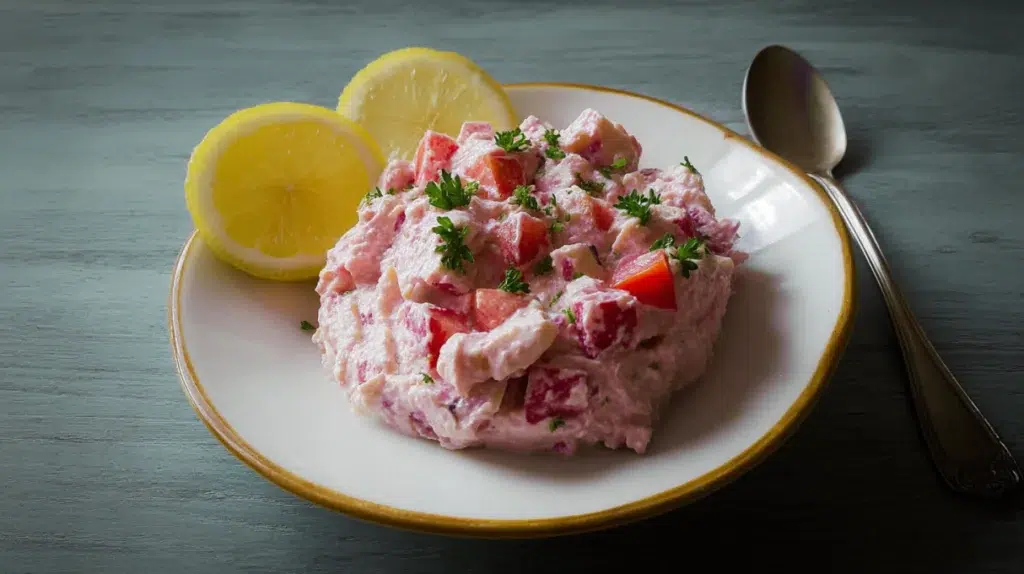
Taramosalata is one of the great underrated dishes in Greek cuisine, a pale pink dip made from tarama (cured fish roe), white bread, olive oil, and lemon juice, blended until smooth and surprisingly light.
The problem is that most versions served outside Greece are either too salty, too heavy, too fishy, or an alarming hot pink color from food coloring added to cheap tarama. Real taramosalata made properly is a delicate, subtle, creamy thing, pale pink, slightly tangy, nutty from the roe, lightened by the bread, with a clean finish from the lemon.
What is tarama? Tarama is the salted and cured roe of cod or carp, traditionally available at Greek grocery stores, Middle Eastern markets, and online. It comes in small jars and ranges from pale beige (cod roe, which is more delicate) to a deeper pink (carp roe, which is more assertive). Buy the palest version you can find for the most refined result. Avoid anything labeled “tarama spread” which usually contains fillers and artificial color.
Taramosalata Recipe:
Makes about 300ml | Prep time: 15 minutes
- 100g (3.5 oz) tarama, cod roe preferred for the most delicate flavor
- 3 slices white bread, crusts removed, about 75g. The bread gives the dip its light, airy texture.
- 125ml (½ cup) neutral oil, light olive oil or a mixture of olive oil and vegetable oil. Pure extra-virgin olive oil is too assertive here, it overwhelms the delicate roe.
- Juice of 1 lemon, about 3 tablespoons
- 1 small onion or 3 spring onions, very finely grated or minced
- Cold water if needed to adjust consistency
Method:
Soak the bread slices in cold water for 2 minutes, then squeeze completely dry, as firmly as you squeezed the tzatziki cucumber. The bread should be barely damp, not wet.
In a food processor, combine the tarama and the squeezed bread. Process until smooth and pale, about 2 minutes. With the machine running, add the oil in the thinnest possible stream, drop by drop at first, exactly like making mayonnaise. The emulsification happens slowly. If you rush the oil addition the mixture will break and become oily rather than creamy.
Once all the oil is incorporated, add the lemon juice and the grated onion. Process again briefly to combine. Taste, it should be pleasantly salty from the roe, bright from the lemon, with a creamy smoothness from the bread emulsification. Add cold water one tablespoon at a time if it is too thick.
Chill for at least 30 minutes. Serve drizzled with olive oil, with a single olive on top, and plenty of bread.
3. Skordalia: The Greek Garlic Dip That Is Not for the Timid
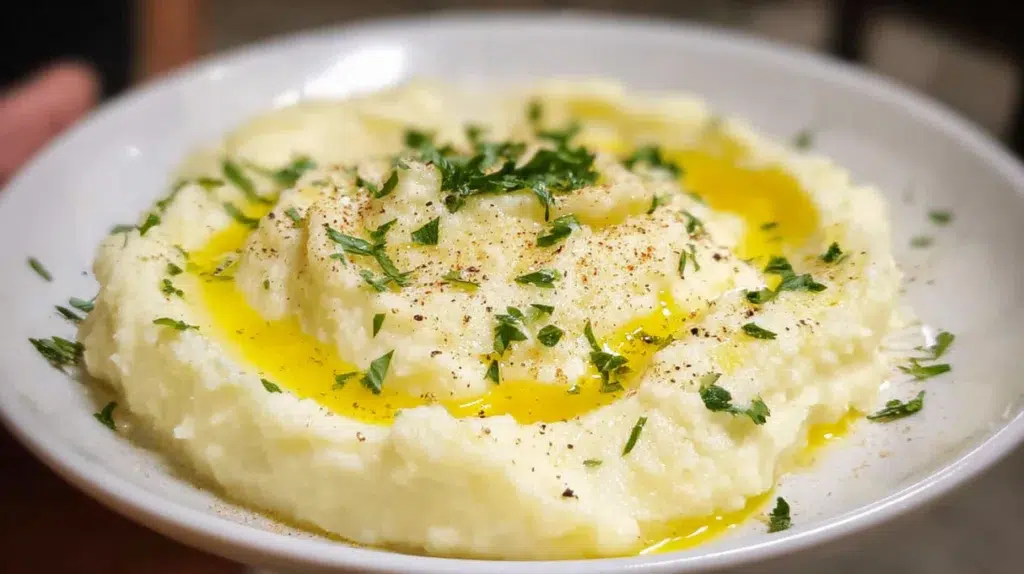
Skordalia is Greece’s answer to the question “what if garlic were a dip rather than an ingredient?” It is not subtle. It is not meant to be subtle. It is a dip of mashed potatoes (or soaked white bread) blended with an enormous amount of raw garlic, olive oil, and white wine vinegar until creamy, smooth, and pungently, gloriously garlicky.
It is eaten alongside fried fish, particularly baccalà (salt cod), which is the traditional Christmas Eve dish in Greece, alongside fried eggplant, alongside beets, and as part of a mezze spread for people who love garlic without qualification. If you are making skordalia for people with garlic sensitivity or a dinner party where professional interactions might follow, make tzatziki instead. Skordalia is for garlic people, eaten with other garlic people.
Skordalia Recipe: Potato Version:
Makes about 400ml | Prep time: 30 minutes
- 400g (about 14 oz) floury potatoes, Russet or Maris Piper work well. Boiled, peeled while still hot, pushed through a ricer or mashed very smooth.
- 4-6 cloves garlic, start with 4 if you are nervous, use 6 if you know you love garlic. The garlic is the point.
- 125ml (½ cup) excellent extra-virgin olive oil, unlike taramosalata, skordalia benefits from assertive olive oil
- 3 tablespoons white wine vinegar
- Salt to taste
- 2-4 tablespoons warm water if needed
Method:
While the potatoes are still hot, push them through a ricer into a bowl, or mash very thoroughly until completely smooth. Do not use a food processor for potatoes at any temperature; the starch activates and the result becomes gluey.
In a separate bowl or using a mortar and pestle, pound the garlic with a pinch of salt until it becomes a smooth paste. The mortar and pestle is traditional and produces a cleaner, more evenly distributed garlic flavor than mincing. Add the garlic paste to the hot potatoes and mix well.
With the potato still warm, begin adding the olive oil in a steady stream while mixing constantly, the same emulsification approach as taramosalata. The warm potato absorbs the oil differently than cold potato. Alternate between olive oil and white wine vinegar, a bit of oil, a splash of vinegar, more oil, until both are fully incorporated and the skordalia is smooth, creamy, and glistening.
Taste. The garlic should be very present. The vinegar should provide a clean sharpness. The olive oil should give it richness. Add warm water to adjust consistency, skordalia should be soft enough to scoop easily but thick enough to hold its shape.
Serve at room temperature. A drizzle of olive oil and a scattered handful of chopped parsley are the traditional garnish.
Building the Complete Dips Spread
These three dips together, tzatziki, taramosalata, and skordalia, cover three completely different flavor profiles and textures. Set them out on a table with:
Warm pita bread, torn into pieces. A bowl of Kalamata olives. A slab of PDO feta, feta, the foundation of many Greek mezze accompaniments, is protected by EU law as exclusively Greek. Sliced raw vegetables, cucumber, carrot, bell pepper. A bottle of excellent olive oil for drizzling.
This is the Greek mezze table in its simplest, most honest form. It requires about 45 minutes of active work and produces something that feels like genuine hospitality.
Alongside the authentic Greek salad and spanakopita, this spread becomes the complete Greek feast that requires no main course because the table itself is the meal.
The Technical Notes: What Separates Good From Extraordinary
Tzatziki: Squeeze the cucumber longer than you think necessary. The garlic mellows with time, make it at least an hour ahead. Full-fat yogurt is not negotiable.
Taramosalata: Add the oil slowly, exactly like making mayonnaise. The bread must be completely squeezed dry. Buy good tarama from a Greek or Middle Eastern grocery store, the jar quality matters significantly.
Skordalia: Use floury potatoes not waxy ones. Never process the potato in a food processor. The garlic paste from a mortar is noticeably better than minced garlic. Work with warm potato, not cold, it emulsifies with the oil more readily.
FAQ About Greek Dips Recipes
How far ahead can I make these dips?
Tzatziki: 1 day ahead, gets better with time. Taramosalata: 2 days ahead, keep refrigerated. Skordalia: 1 day ahead, the garlic intensifies overnight, which most people consider an improvement.
Can I make tzatziki without dill?
Yes, fresh mint is a common regional variation in some parts of Greece and Cyprus. The flavor is different but still authentic within its own tradition. Avoid dried dill if at all possible.
What is the difference between tzatziki and the Turkish cacık?
The Greek version uses strained yogurt making it thicker, uses dill as the primary herb, and has a firmer texture. Turkish cacık is thinner, sometimes served as a cold soup and typically uses mint rather than dill. Both are excellent, clearly related, and genuinely distinct. See the full Greek vs Turkish food comparison for more.
More From the Greek Recipes Collection: