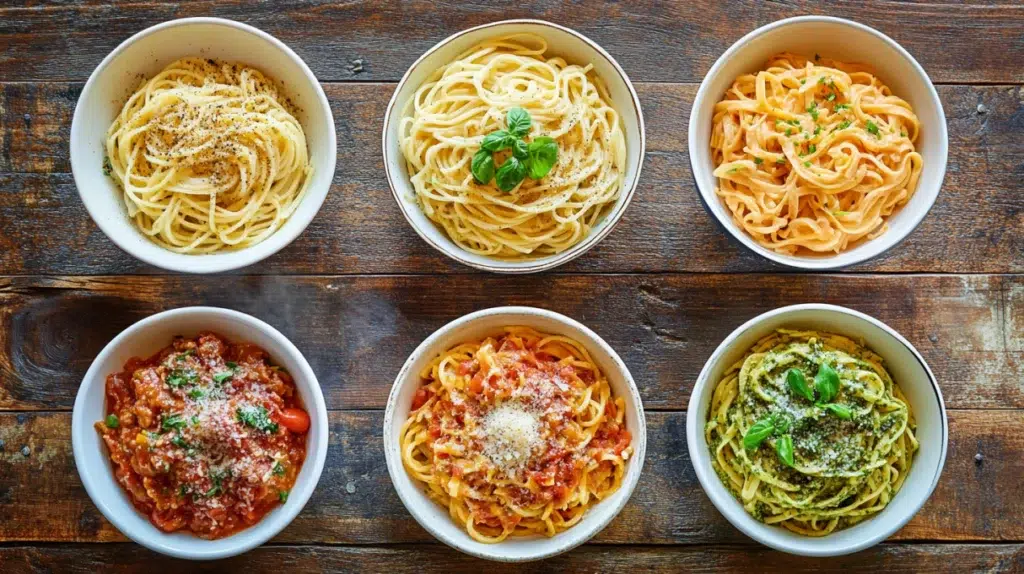
Authentic Italian pasta recipes are not complicated, but they are specific. And that specificity is exactly what most American pasta cooking gets wrong.
The six recipes in this guide are among the most famous pasta dishes in the world. They are also among the most frequently made incorrectly, cream in the carbonara, garlic in the bolognese, basil in the cacio e pepe, small deviations from the original that seem harmless and produce a dish that tastes fine but is not what it is supposed to be. Getting them right is not difficult. It requires knowing the rules, understanding why the rules exist, and following them.
This is part of the Italian recipes collection, and pasta is where Italian cooking is at its most essential. Start here. Learn these six. Everything else in the cuisine will follow.
The Shape-Sauce Rule: The Most Important Thing to Understand Before You Start
Before the recipes, the most important principle in Italian pasta cooking, the one most people have never been told.
Every pasta shape exists for a reason. The shape was designed to hold a specific type of sauce in a specific way. Long thin pasta (spaghetti, linguine) catches oil-based and light tomato sauces in its surface texture. Short ridged pasta (rigatoni, penne rigate) traps chunky meat sauces inside its tubes and ridges. Wide flat pasta (pappardelle, tagliatelle) provides surface area for clinging, rich meat ragùs. Small pasta (orecchiette, farfalle) holds chunky vegetable sauces in its curves.
Violating the shape-sauce pairing is not illegal. It will not ruin dinner. But it will produce a dish that is less than what it could be, a sauce sliding off a slippery shape that was not designed to hold it, or a delicate oil sauce getting lost in a chunky ridged tube. Follow the pairings in each recipe below. They are not arbitrary.
1. Spaghetti Aglio e Olio: The Simplest and Most Difficult
Spaghetti aglio e olio is the dish that tells you everything about where you are as an Italian cook.
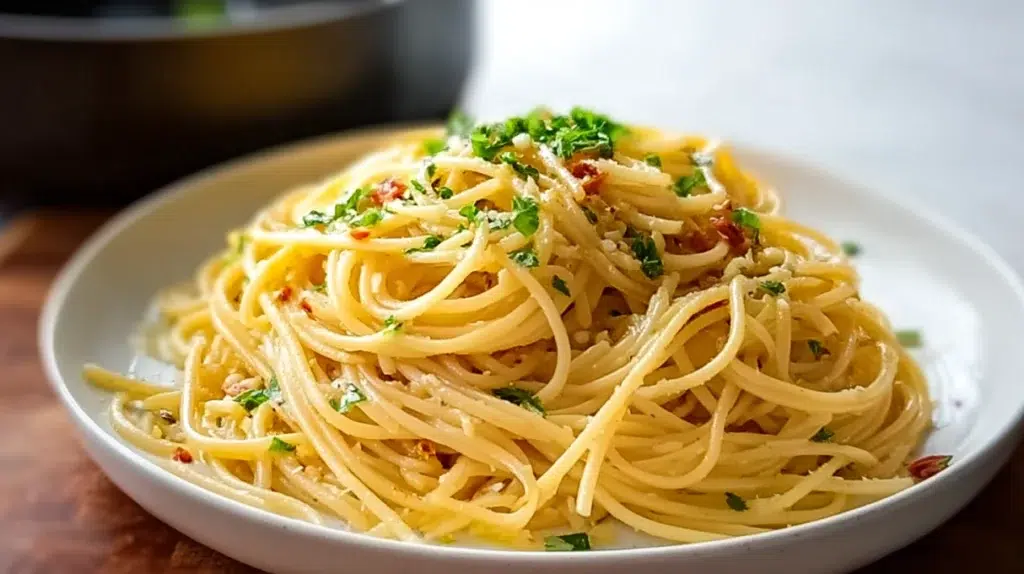
It has five ingredients: spaghetti, olive oil, garlic, dried chili flakes, and parsley. No cheese. No tomato. No cream. Nothing to hide behind. The dish is only as good as the quality of the olive oil, the skill of the garlic cooking, and the technique of emulsifying the pasta water into the oil to create a coherent sauce rather than a pool of greasy spaghetti.
This last point is the technique. The pasta water, starchy, salted, hot, is the emulsifier that brings the oil and the cooked pasta together into something saucy rather than oily. Add it gradually, toss constantly, and the sauce forms. Skip it and the dish separates.
Ingredients (serves 2)
- 200g spaghetti
- 6 tablespoons excellent extra-virgin olive oil
- 4 cloves garlic, very thinly sliced, not minced, not crushed. Sliced thin so they toast without burning.
- ½ teaspoon dried chili flakes, more or less to taste
- Large handful fresh flat-leaf parsley, roughly chopped
- Salt for the pasta water, very generously salted, as salty as the sea
Method: Cook the spaghetti in heavily salted boiling water. While it cooks, heat the olive oil in a wide pan over medium-low heat. Add the garlic slices and cook slowly until pale golden, about 3 minutes. Watch them constantly. Pale golden is perfect. Brown is bitter. Add the chili flakes and cook 30 seconds more.
Reserve a cup of pasta water before draining. Add the drained pasta to the pan with the oil and garlic. Add the pasta water a splash at a time, tossing continuously, until the oil and water emulsify into a light, glossy sauce coating every strand. Add the parsley, toss, serve immediately.
The test of whether you got it right: the pasta should be glossy but not oily. Each strand coated. No puddle of oil at the bottom of the bowl.
2. Spaghetti Carbonara: The Roman Original
Carbonara originated in Rome after World War II, developed from the powdered eggs and bacon that American soldiers brought to a starving Italy, combined with pasta and local cheese into a dish that became one of the most beloved in Roman cooking.
The authentic Roman version has five ingredients: spaghetti, guanciale (cured pork cheek), egg yolks, Pecorino Romano, and black pepper. No cream. No onion. No garlic. No pancetta if you can find guanciale. No Parmigiano if you can find Pecorino.
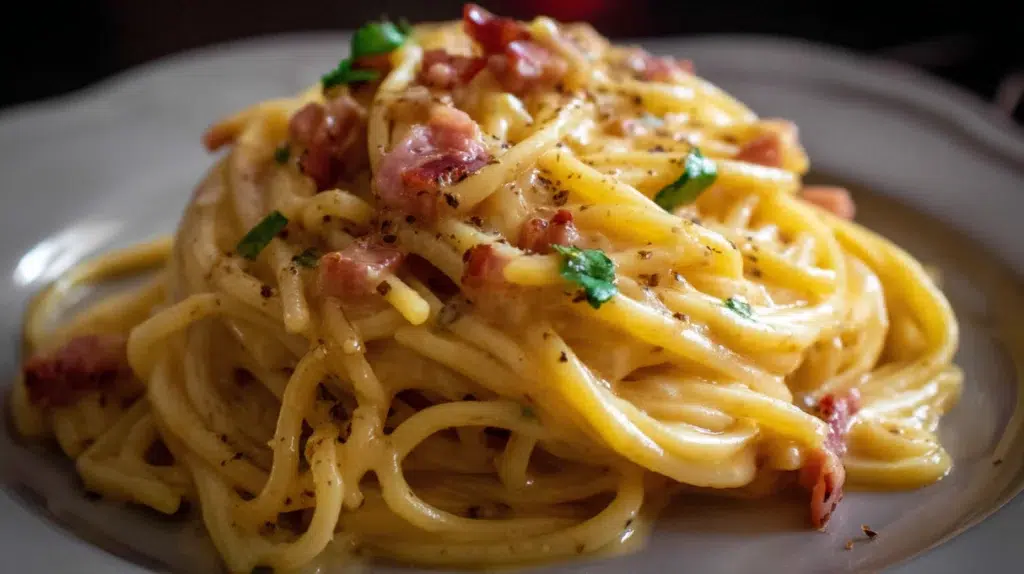
The cream question comes up constantly. Real carbonara does not contain cream. The creaminess of the sauce comes from the egg yolks emulsified with pasta water and the rendered fat from the guanciale, a technique that produces something richer and more complex than any cream-based version. The cream exists in Italian-American carbonara because the egg technique is difficult to explain and easier to replace. Follow the original technique. It is worth understanding.
The critical technique, the eggs: The eggs cook from the residual heat of the pasta. They must not scramble. The pan must be off the heat. The pasta must be slightly cooled before the eggs go in. Work quickly and toss continuously.
Ingredients (serves 2)
- 200g spaghetti or rigatoni
- 100g guanciale (or pancetta if guanciale unavailable), cut into cubes or lardons
- 3 egg yolks + 1 whole egg
- 60g Pecorino Romano, finely grated, plus extra for serving
- Black pepper, very generous, freshly ground. Carbonara is a pepper dish.
- Salt for pasta water
Method: Cook the pasta. Fry the guanciale in its own fat until crispy and golden, no added oil needed. Beat the eggs with the Pecorino and a generous amount of black pepper in a bowl.
Reserve a large cup of pasta water. Drain the pasta and add to the guanciale pan off the heat. Add a splash of pasta water and toss. Let the pan cool slightly, 30 seconds. Then add the egg mixture and toss vigorously, adding pasta water a splash at a time until the sauce is creamy and coating every strand. Serve immediately with more Pecorino and black pepper.
If the eggs scramble, the pan was too hot. Start again, it happens to everyone at least once.
3. Tagliatelle al Ragù Bolognese: Not What You Think It Is
Bolognese sauce is attributed to the city of Bologna in Emilia-Romagna, and garlic is never used. This is the first thing most people cooking “spaghetti bolognese” need to hear.
Ragù bolognese, the real dish is not a tomato sauce with meat. It is a meat sauce with a small amount of tomato. The meat is the point. The vegetables are the foundation. The tomato is a supporting element. The milk or cream added at the end rounds and sweetens the sauce. And the pasta is tagliatelle, the wide flat egg noodle of Emilia-Romagna, not spaghetti.
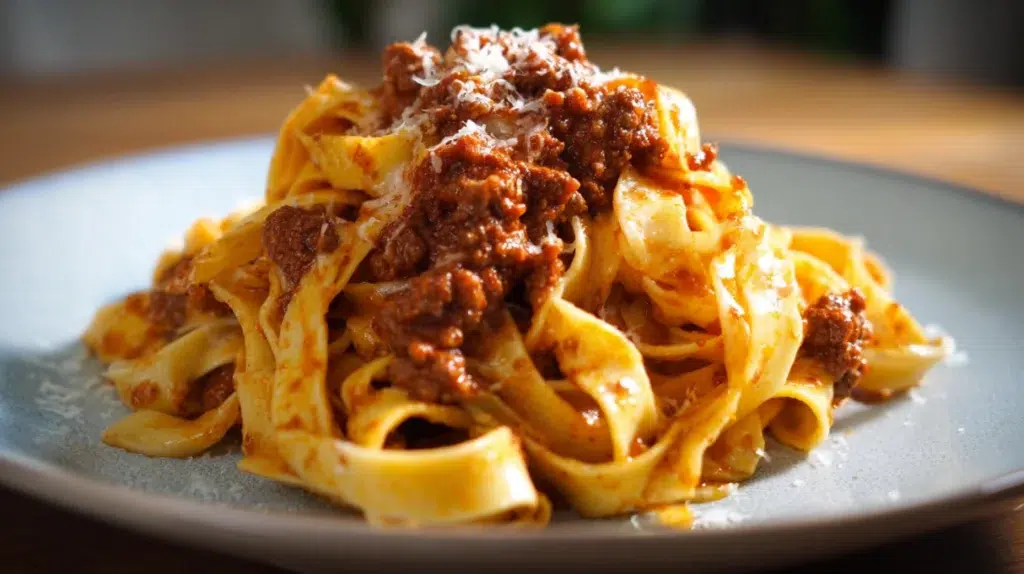
Cooking it correctly takes at least three hours. The meat must be browned deeply. The soffritto, onion, carrot, celery, must be cooked to complete softness. The wine must be reduced completely. The sauce must simmer at the lowest possible heat for two to three hours until it is thick, rich, and deeply flavored. There are no shortcuts that produce the same result.
Ingredients (serves 4-6)
- 300g fresh tagliatelle, or 250g dried egg tagliatelle nests
- 300g beef mince, coarsely ground if possible
- 150g pork mince
- 1 medium onion, very finely diced
- 1 carrot, very finely diced
- 1 celery stalk, very finely diced
- 3 tablespoons butter
- 150ml dry white wine
- 150ml whole milk
- 200g canned San Marzano tomatoes, crushed by hand
- Salt, black pepper
- Parmigiano-Reggiano for serving
Method: Melt butter in a heavy pot. Cook the soffritto, onion, carrot, celery, very slowly over low heat for 15-20 minutes until completely soft and just beginning to color. Increase heat to high, add the meat, and brown deeply, 10 minutes, stirring to break up. Add wine and let it evaporate completely. Add milk and let it reduce by half. Add the tomatoes and enough water to just cover. Season. Bring to a simmer, then reduce to the lowest possible heat. Cook uncovered for 2-3 hours, adding water in small amounts if it dries out, until the sauce is thick and the fat has separated slightly to the surface.
Cook tagliatelle until just al dente. Toss with the ragù and a ladleful of pasta water. Serve with Parmigiano.
The sauce will be better on day two. Make a large batch.
4. Cacio e Pepe: Rome’s Three-Ingredient Challenge
Cacio e pepe, cheese and pepper, is the Roman pasta dish that makes experienced cooks nervous. Three ingredients. No oil. No garlic. No cream. Just pasta, Pecorino Romano, and black pepper, and the technique of emulsifying the pasta water with the cheese into a sauce that is creamy, smooth, and clinging rather than clumpy and gluey.
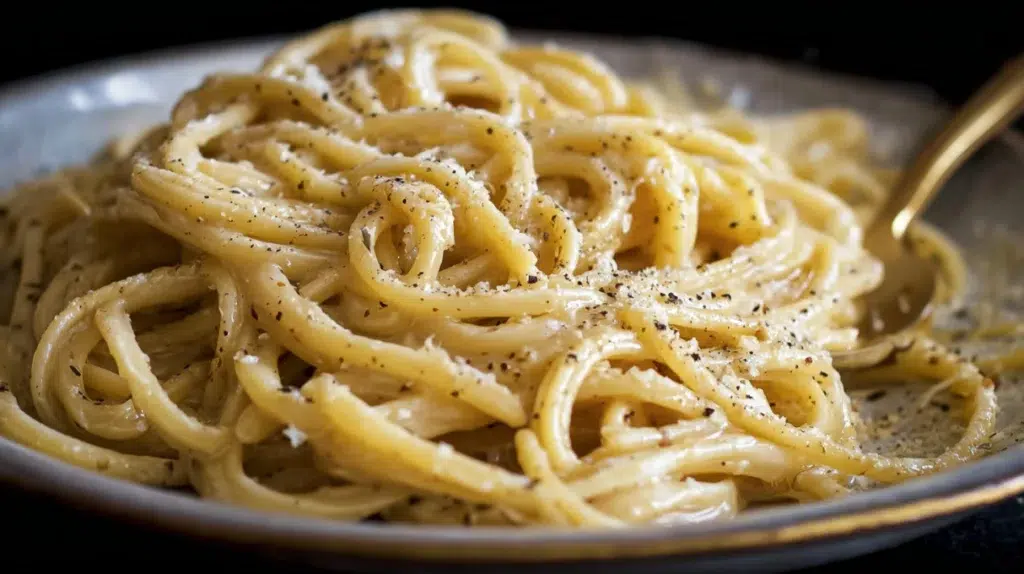
The clumping is the failure state. It happens when the cheese is added too quickly, when the pan is too hot, or when there is not enough pasta water. The correct technique is slow, patient, and done off the heat with the cheese added gradually.
Ingredients (serves 2)
- 200g spaghetti or tonnarelli (thick square spaghetti, traditional for this dish)
- 80g Pecorino Romano, finely grated on a microplane, the finer the grate, the smoother the sauce
- 2 teaspoons black pepper, freshly ground, toast it briefly in a dry pan first for more depth
- Salt for pasta water, less than usual, Pecorino is very salty
Method: Toast the ground pepper in a wide pan until fragrant, 1 minute. Add a ladleful of pasta water and let it bubble. Cook pasta until two minutes before al dente, then transfer directly into the pepper pan with tongs, carrying the pasta water with it. Finish cooking in the pan, tossing.
Remove from heat. Add the Pecorino in three additions, tossing vigorously after each, adding pasta water as needed. The sauce should be glossy and creamy. If it clumps, add more hot pasta water and toss harder. Work quickly.
Use a microplane for the cheese. Pre-grated Pecorino does not melt smoothly enough.
5. Pasta all’Amatriciana: The Tomato and Guanciale Classic
Amatriciana comes from Amatrice, a small town in Lazio, a simple sauce of San Marzano tomatoes, guanciale, Pecorino Romano, and dried chili, served with rigatoni or bucatini (thick hollow spaghetti). It is one of the four great Roman pasta dishes alongside carbonara, cacio e pepe, and coda alla vaccinara.
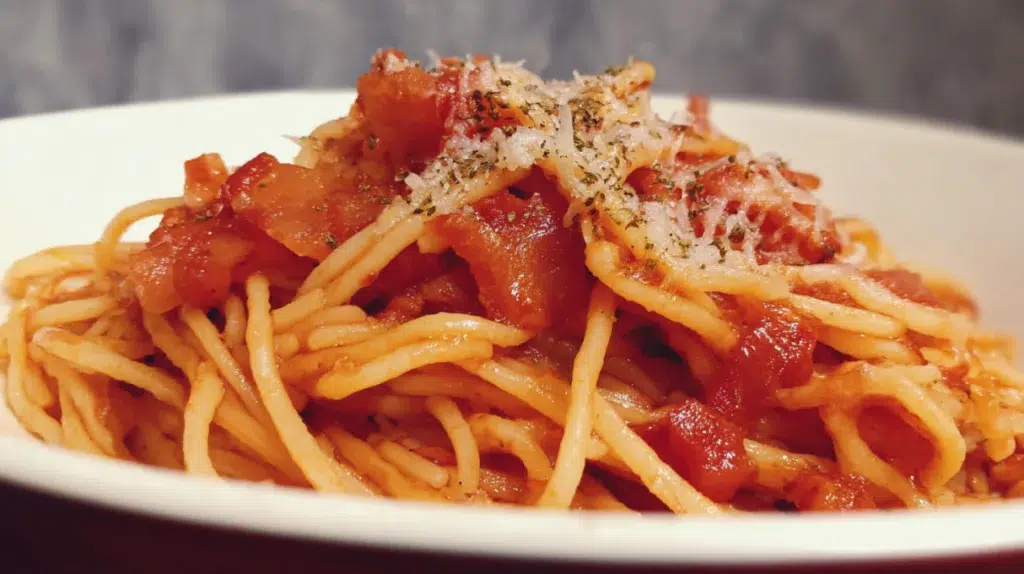
The tomatoes cook briefly, 15 minutes maximum, so they retain brightness and acidity. The guanciale is rendered until very crispy before the tomatoes go in. The Pecorino goes on at the table rather than stirred into the sauce.
Ingredients (serves 2)
- 200g rigatoni or bucatini
- 100g guanciale, cut into thin strips
- 200g San Marzano tomatoes, crushed by hand
- ½ teaspoon dried chili flakes
- 50g Pecorino Romano, grated, for serving
- Salt and black pepper
Method: Render the guanciale in a cold pan, start cold, increase heat gradually until the fat runs and the meat is crispy. Add chili. Add the crushed tomatoes and cook 15 minutes over medium heat. Season. Toss with cooked pasta and a splash of pasta water. Serve with Pecorino at the table.
6. Pasta al Pesto Genovese: Liguria’s Green Sauce
Pesto comes from Genoa in Liguria, the coastal region wedged between the Alps and the Mediterranean, and it was designed as a cold sauce, made in a marble mortar with a wooden pestle, never heated. The basil is Ligurian basil specifically: small-leafed, intensely fragrant, milder than large-leafed varieties.
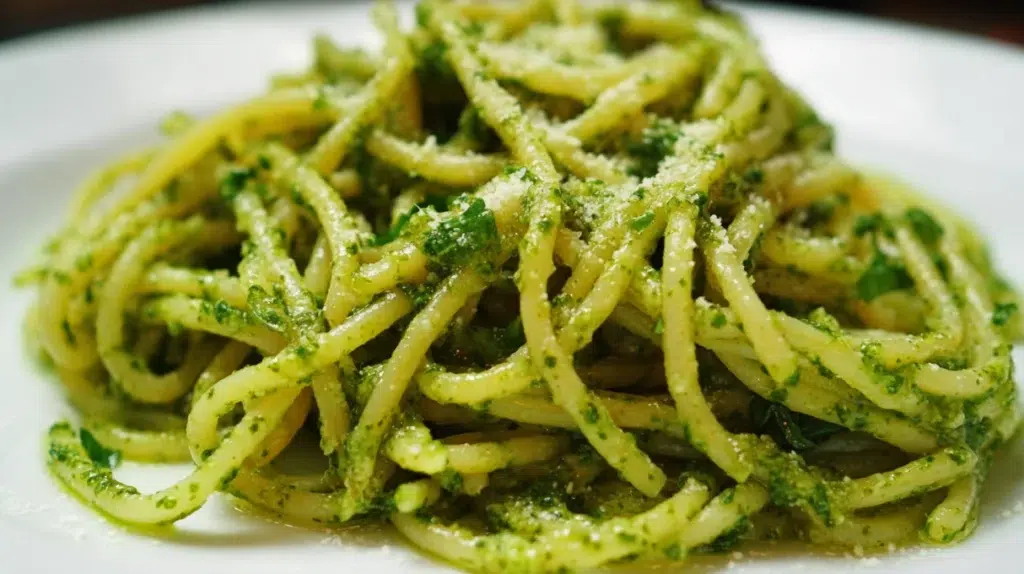
The authentic version uses a mortar and pestle, never a blender. The blender heats the basil as it processes, oxidizing the oils and producing a darker, slightly bitter sauce. The mortar produces a brighter, more nuanced result.
In Liguria, pesto is served with trofie (short twisted pasta), with trenette (flat pasta similar to linguine), or with potato and green beans cooked alongside the pasta in the same water, the potato starch helping to bind the pesto to the pasta.
Ingredients (serves 4)
- 50g fresh basil leaves, small-leafed if possible, completely dry
- 30g pine nuts
- 2 cloves garlic
- 50ml excellent extra-virgin olive oil, Ligurian DOP if you can find it
- 30g Parmigiano-Reggiano, finely grated
- 20g Pecorino Sardo, finely grated, less sharp than Romano
- Pinch of coarse salt
Method: Pound the garlic with salt to a paste in the mortar. Add the pine nuts and pound to a rough paste. Add the basil leaves a handful at a time, working in circular motions rather than pounding, you want to bruise rather than crush. Add the cheeses and mix. Stream in the olive oil while stirring. The result should be thick, fragrant, and vibrantly green.
Toss with cooked pasta off the heat, adding a spoonful of pasta water to loosen. Never heat pesto directly, it darkens and loses its character.
The Three Rules That Apply to Every Italian Pasta Recipes
Salt the water generously. The pasta water should taste of the sea, properly, noticeably salty. Pasta cooked in undersalted water tastes flat regardless of how good the sauce is. A tablespoon of salt for every litre of water is the baseline.
Reserve pasta water before draining. Always. The starchy pasta water is the emulsifier that brings sauce and pasta together. Take a full cup before you drain, you will not always use all of it, but you will sometimes need more than you think.
Finish the pasta in the sauce. Transfer the pasta from the water to the sauce pan one to two minutes before it is fully cooked. Finish cooking in the sauce, adding pasta water as needed. The pasta absorbs the sauce flavor and the starch thickens the liquid. This one step transforms how pasta tastes.
More From the Italian Recipes Collection:
- Risotto Recipe: The Art of Perfect Northern Italian Rice
- Italian Pizza Recipe: Neapolitan, Roman and the Home Version
- Italian Braised Meat: Ossobuco, Porchetta and More
- Italian vs French Food: The Honest Differences