Italian recipes are the most searched, the most cooked, and the most misunderstood food category in the American home kitchen.
Everyone cooks Italian, or thinks they do. Spaghetti bolognese made with ground beef and a jar of sauce. Chicken parmesan. Fettuccine alfredo. Caesar salad. Bruschetta with cherry tomatoes. These dishes exist on menus everywhere and in recipe collections everywhere and are called Italian without much examination. Some of them are genuinely Italian. Some are Italian-American inventions. Some have no connection to Italian cooking at all. And understanding which is which is the first step toward cooking Italian food in a way that is actually worth the effort.
This guide exists to make that distinction, not to be pedantic about authenticity, but because authentic Italian cooking is significantly better than its simplified American version, and the path from one to the other is shorter than most people think. You do not need special equipment or rare ingredients. You need a clearer understanding of what Italian food actually is.
This is part of the European recipes collection on RecipeWorldly. Let’s start from the beginning.
What Italian Cuisine Actually Is: The Most Important Thing to Understand
Italian cuisine remains characterized by strong regional traditions, local geography, and history, not one unified national cuisine but twenty distinct regional ones, and this is the single most important thing to understand before you cook a single Italian recipe.
Italy was not a unified country until 1861. Before unification it was a collection of independent city-states, kingdoms, and republics, each with its own politics, its own culture, and its own food tradition. The cooking of Lombardy in the north is built on butter, rice, and cream and has almost nothing in common with the cooking of Sicily in the south, which is built on olive oil, tomatoes, capers, and the Moorish spice influence of centuries of Arab occupation. The cooking of coastal Liguria, birthplace of pesto is different from the cooking of landlocked Umbria, which is different from the cooking of Bologna, which has a completely different pasta tradition from Rome.
There is no unified “Italian food.” There are twenty Italian regional cuisines that happen to share a language and a passion for cooking. When you understand this, everything about Italian recipes makes more sense, why a Roman recipe and a Venetian recipe for seemingly the same dish taste completely different, why certain ingredients appear in one region and are essentially absent from another, why arguments about the correct way to make a specific pasta sauce are genuinely unanswerable because the correct way depends on which region you are in.
The practical consequence for home cooks: when you follow an Italian recipe, the region of origin matters. A recipe labeled simply “Italian” without regional specification is already incomplete. This guide takes the regional framework seriously throughout.
The North-South Divide: The Two Great Italian Culinary Worlds
The most fundamental division in Italian cuisine is the divide between the north and the south, and it runs along several parallel lines simultaneously.
The fat: The north cooks primarily with butter. The south cooks with olive oil. This single difference shapes the flavor of everything, the richness of northern pasta sauces, the lightness of southern ones, the character of risotto versus the character of pasta al pomodoro.
The starch: The north eats rice and polenta as often as pasta. Risotto is a northern dish, the Lombardy and Veneto plains produce the short-grain rice (Arborio, Carnaroli, Vialone Nano) that makes risotto possible. The south is pasta country, dried durum wheat pasta made without eggs, in hundreds of shapes, each matched to a specific type of sauce.
The pasta itself: Northern pasta is often made fresh with eggs, tagliatelle, pappardelle, lasagne sheets, tortellini. Southern pasta is dried, made from semolina and water without eggs. Both traditions are ancient, both are extraordinary, and they have a completely different character in the mouth.
The meat tradition: The north braises, stews, and roasts, the cold winters of Piedmont, Lombardy, and the Veneto produce hearty, slow-cooked meat dishes that warm the table for hours. The south grills, bakes fish, and uses meat more sparingly, the warmer climate and poorer agricultural history of the Mezzogiorno produced a more vegetable-forward cuisine where meat was a luxury.
The tomato question: Tomatoes arrived in Italy from the Americas in the 16th century and took another two centuries to be fully adopted into Italian cooking. They are now central to southern Italian cooking, the tomato sauces of Naples and Sicily define the world’s image of Italian food. They are far less central to northern Italian cooking, where cream, butter, and broth-based sauces dominate.
Understanding which side of this divide a specific recipe comes from tells you almost everything you need to know about how to cook it and what to expect.
The Italian Pantry: What You Actually Need
The Italian pantry is simultaneously simpler and more specific than most people expect. The list of ingredients is short. The quality of those ingredients matters enormously.
The absolute essentials:
Extra-virgin olive oil: for southern cooking and finishing everything everywhere. Buy one good bottle for finishing dishes, Sicilian or Puglian cold-pressed if you can find it, and a less expensive one for cooking.
Good canned tomatoes: San Marzano tomatoes, grown in the volcanic soil near Vesuvius, are the benchmark for Italian tomato cooking. Look for DOP (Denominazione di Origine Protetta) labeled San Marzano on the can. The difference in sweetness, acidity balance, and texture compared to generic canned tomatoes is significant in any sauce where tomatoes are the primary flavor.
Parmigiano-Reggiano: real Parmigiano-Reggiano, PDO, aged at minimum 12 months, bought in a wedge and grated fresh. Pre-grated Parmesan from a green can is a completely different product. Real Parmigiano has a crystalline texture, a deep nutty-savory flavor, and an intensity that pre-grated cheese cannot approach. Buy a small wedge and use it properly.
Pecorino Romano: sheep’s milk cheese, sharper and saltier than Parmigiano, essential for Roman pasta dishes, cacio e pepe, carbonara, amatriciana. Not interchangeable with Parmigiano despite common usage.
’00’ flour: finely milled soft wheat flour used for fresh pasta and pizza dough. Available at Italian specialty stores and Whole Foods. All-purpose flour works but produces a slightly different texture.
Dried pasta: buy good quality dried pasta made from 100% durum wheat semolina by slow extrusion through bronze dies (trafilata al bronzo). Bronze die extrusion creates a rougher surface texture that holds sauce better than the smooth surface of cheaper pasta. Brands to look for: Rustichella d’Abruzzo, Garofalo, De Cecco, Setaro.
Risotto rice: Arborio is most widely available. Carnaroli is preferred by most Italian cooks for its better ability to maintain structure while releasing starch. Both are available at major grocery stores.
Pancetta and guanciale: Italian cured pork. Pancetta is cured pork belly. Guanciale is cured pork cheek, fattier, more intensely flavored, essential for authentic Roman carbonara and amatriciana. Both available at Italian grocery stores and good delicatessens.
The Recipes: Where to Start
Pasta: The Heart of Italian Cooking
Pasta is not one dish. It is a system, hundreds of shapes, each with its own structural logic, matched to specific sauce types for reasons that are not aesthetic but functional. Long thin pasta (spaghetti, linguine) pairs with oil-based or light tomato sauces. Ribbed short pasta (rigatoni, penne rigate) pairs with chunky meat sauces that lodge in the ridges. Flat wide pasta (pappardelle, tagliatelle) pairs with rich meat ragùs. Stuffed pasta (tortellini, ravioli) pairs with simple butter or broth.
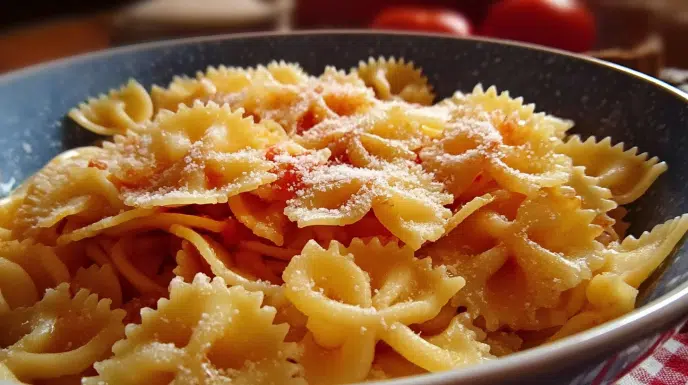
Understanding the shape-sauce logic changes how you cook pasta entirely. You stop treating pasta as interchangeable and start treating each shape as a vehicle designed for a specific purpose.
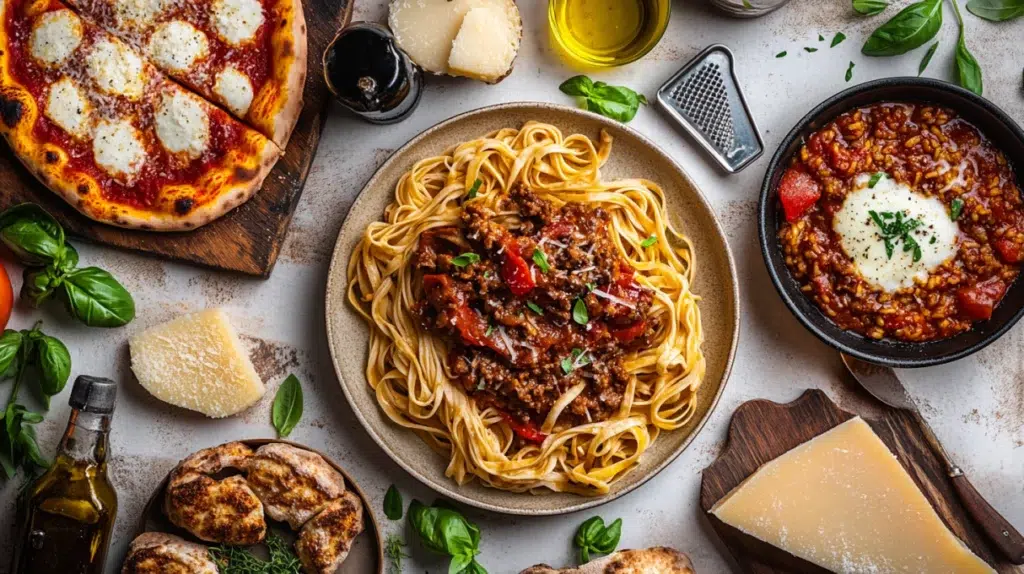
The essential pasta recipes every Italian cook should know: spaghetti aglio e olio (the simplest and most difficult), pasta al pomodoro (the benchmark of ingredient quality), carbonara (technique over everything), cacio e pepe (three ingredients, infinite ways to fail), tagliatelle al ragù bolognese (not bolognaise, ragù bolognese, which is specific, slow, and completely different from any meat sauce you have made before).
→ Full collection in the authentic Italian pasta recipes guide
Risotto: The Northern Art Form
Risotto is one of the most technically demanding dishes in Italian cooking and one of the most rewarding to master. The technique, toasting the rice, adding wine, adding hot stock ladle by ladle while stirring constantly until the rice releases its starch into a creamy, flowing consistency, cannot be rushed and cannot be done without attention.
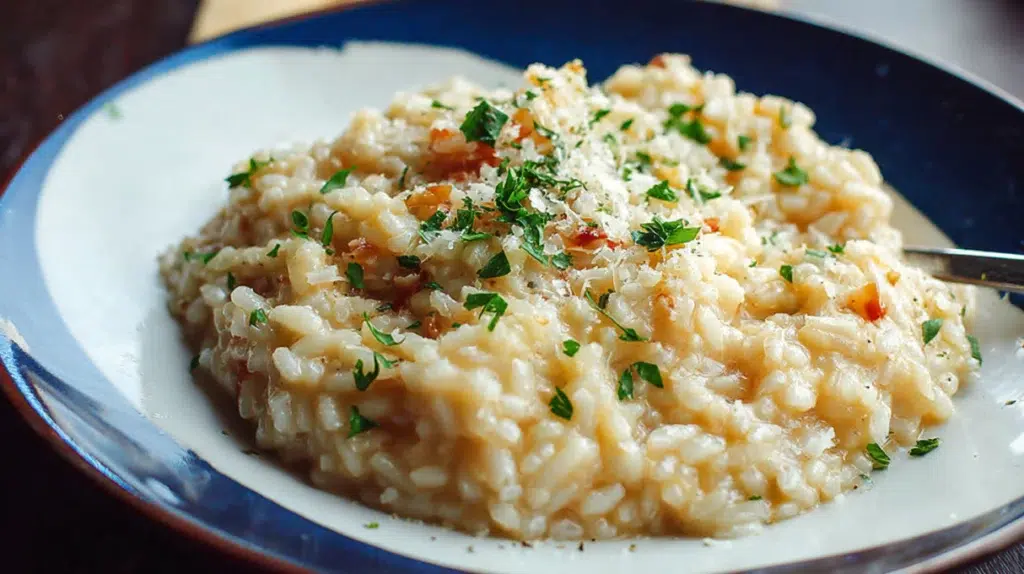
The classic versions define northern Italian cooking: risotto alla Milanese (saffron, the golden risotto of Milan), risotto ai funghi porcini (dried porcini mushrooms, deeply savory), risotto al nero di seppia (squid ink, Venetian, dramatically black), risotto primavera (spring vegetables, the seasonal expression of the technique).
The mantecatura, the final step where cold butter and Parmigiano are beaten into the finished risotto off the heat to create the silky, flowing consistency called all’onda (like a wave) is the single most important technique in risotto and the one most frequently skipped.
→ Full recipe and technique in the risotto recipe guide
Pizza: Not What Most People Think It Is
Neapolitan pizza, the original, the only pizza that truly matters in terms of understanding Italian pizza culture, is a specific thing with specific rules recognized by UNESCO as Intangible Cultural Heritage. Thin, soft, charred-spotted base. Simple tomato sauce from San Marzano tomatoes. Fior di latte or buffalo mozzarella. Fresh basil. Good olive oil. Cooked in a wood-fired oven at temperatures no domestic oven can reach.
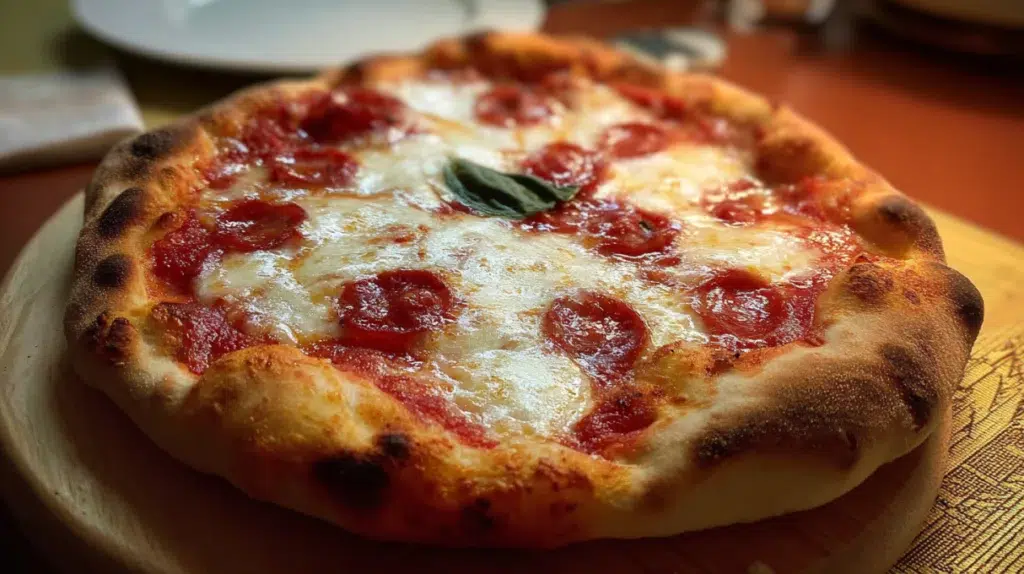
The approximation available to home cooks is good, a pizza stone or baking steel, the highest oven temperature you can achieve, a dough made with ’00’ flour and given a long cold fermentation for proper flavor development, and the result is significantly better than anything from a delivery box.
Understanding the difference between Neapolitan pizza, Roman pizza (thin, crispy, very different), Sicilian pizza (thick, focaccia-like, topped before baking), and the American interpretations of all three clears up enormous confusion and makes you a better pizza cook.
→ Full recipe and regional breakdown in the Italian pizza recipe guide
Italian Braises and Slow Cooking: The Underrated Heart of the Cuisine
The dishes most home cooks never get to, and the ones that represent Italian cooking at its most generous and most deeply satisfying. Ossobuco alla Milanese (braised veal shank with gremolata and saffron risotto alongside). Bollito misto (the northern Italian boiled mixed meats platter, a feast in itself). Porchetta (whole pig slow-roasted with wild fennel and garlic). Braised lamb with artichokes in the Roman spring tradition. Ribollita, the Tuscan bread-thickened bean and vegetable stew that improves for three days.
These dishes take time. They do not take skill, they take patience and good ingredients. The technique is almost always the same: brown the protein well, build aromatics, add liquid, cover and leave alone for several hours. The transformation that happens in that time is what slow cooking is for.
→ Full recipes in the Italian braised meat and slow cooking guide
Italian Food Culture: Things Worth Knowing
Food and drink are primary elements of Italian life, work patterns in Italy revolve around the midday meal, and this relationship between food and daily structure shapes everything about how Italians cook and eat.
The midday meal, pranzo, is the main meal of the day in traditional Italian culture. A proper pranzo is structured: antipasto, primo (pasta or risotto), secondo (meat or fish), contorno (vegetable side dish), dolce, coffee. Not every meal follows this structure fully, but the structure exists and it shapes how Italian food is conceived, as a sequence of courses with specific roles, not as a pile of everything on one plate.
The pasta course is not the main course
This trips up almost every American encountering Italian food for the first time. In Italian dining, pasta is the primo, the first course, served in a modest portion before the meat or fish second course. The mountains of pasta served as entire meals in Italian-American restaurants are not the Italian model. In Italy, pasta is measured and purposeful, enough to satisfy but not to overfill, because the secondo comes next.
The café and the espresso
The Italian espresso ritual is one of the most specific and most misunderstood elements of Italian food culture. A proper Italian espresso is drunk standing at the bar in about sixty seconds. It is not a drink to sit with for an hour. Cappuccino is a morning drink, ordered only before noon, never after a meal. Ordering a cappuccino after dinner in Italy marks you immediately as a non-Italian. The digestivo, grappa, amaro, limoncello, is the after-dinner drink, not more coffee.
The seasonal and local philosophy
Italian cooking before the era of global supply chains was entirely seasonal and entirely local, you cooked what grew near you, what was harvested this week, what the sea provided today. This philosophy is not nostalgic in Italy, it is still practiced and still valued. It explains why the same dish can taste completely different in different seasons and in different regions, and why Italian cooks are so insistent on specific ingredient origins for specific dishes.
The Sunday table
Sunday lunch is the most important meal of the Italian week, a long, multi-course, multi-generational gathering that can extend for three or four hours. This is where the most labor-intensive dishes appear, the ragù that has been simmering since Saturday evening, the stuffed pasta that took the morning to make, the roast that has been basting for hours. Understanding the Sunday table explains why Italian home cooking has such depth, generations of technique concentrated into the most important meal of the week.
How I Test Every Italian Recipe
Italian cooking presents a specific testing challenge that is worth naming honestly, ingredient substitution risk. Many Italian dishes depend on specific regional ingredients that are either unavailable or significantly different in the US. The Parmigiano-Reggiano from a green can is not Parmigiano-Reggiano. The San Marzano tomatoes from a can labeled “San Marzano style” are not San Marzano tomatoes.
In every recipe in this collection I identify which ingredient upgrades make the biggest difference and which substitutions are acceptable without significant loss to the dish. I test every recipe with ingredients available at major US grocery stores, and I test the upgraded version with specialty ingredients where they make a meaningful difference.
The three-cook process applies: traditional → adapted for US kitchen → stress-tested. If it passes all three, it publishes. Nothing else does.
Frequently Asked Questions
Is Italian food the same everywhere in Italy?
No, Italian cuisine is fundamentally regional. The food of Bologna is as different from the food of Palermo as French food is from Spanish food. Both are Italian. They share almost no specific dishes. Regional origin is the essential context for any Italian recipe.
What is the difference between Italian and Italian-American food?
Italian-American food developed from the cooking of southern Italian immigrants, primarily from Campania, Sicily, and Calabria, who adapted their traditions to American ingredients and American tastes over a century. Many Italian-American classics, chicken parmesan, spaghetti and meatballs, fettuccine alfredo, either do not exist in Italy or exist in very different forms. Both traditions are valid. They are different.
Do Italians really eat pasta every day?
Many do, particularly in the south, pasta is the daily primo in most southern Italian households. In the north, rice and polenta appear as frequently as pasta. Contrary to American assumptions, pasta portions in Italy are modest, not the plate-sized mountains of Italian-American restaurants but measured amounts that satisfy without overfilling.
Is fresh pasta better than dried?
Neither is better, they are different products designed for different purposes. Fresh egg pasta (tagliatelle, pappardelle) is silkier and more delicate, best with rich meat ragùs and cream sauces. Dried semolina pasta is firmer and more resilient, best with tomato-based and oil-based sauces. Using fresh pasta with aglio e olio would be wrong. Using dried spaghetti for a meat ragù is equally wrong. Learn both and use each appropriately.
All Italian Recipes on This Site
Pasta
- Authentic Italian Pasta Recipes: The Essential Collection
Rice and Risotto
- Risotto Recipe: The Art of the Perfect Northern Italian Rice Dish
Pizza
- Italian Pizza Recipe, Neapolitan, Roman and the Home Oven Version
Braises and Slow Cooking
- Italian Braised Meat: Ossobuco, Porchetta and More
Comparisons
- Italian vs French Food: The Honest Differences