Korean BBQ at home is one of the most rewarding cooking experiences you can create in your own kitchen, and it is significantly more achievable than most people realize.
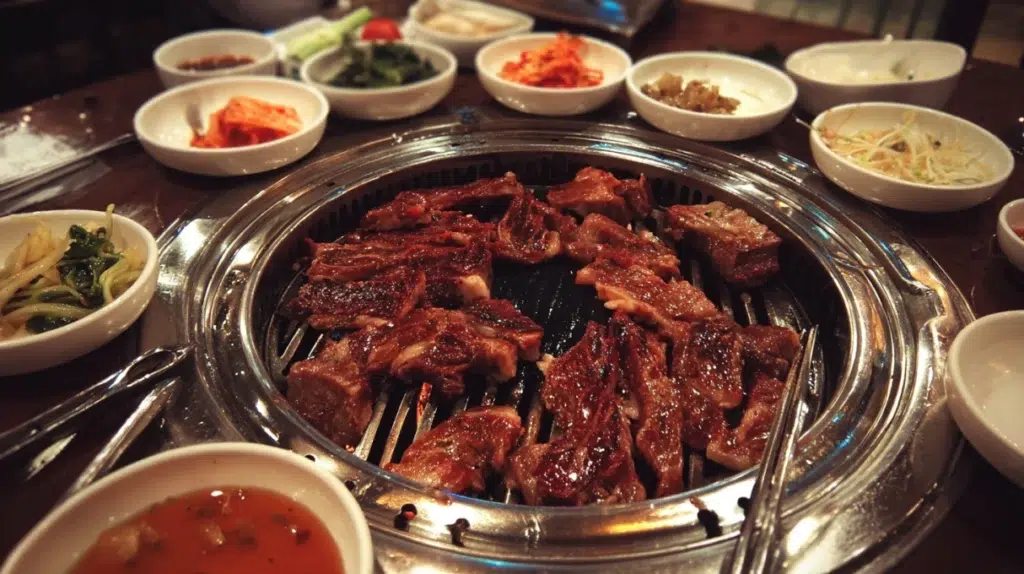
I know what you’re picturing. The restaurant experience, the built-in grill in the center of the table, the server bringing tray after tray of marinated meats, the banchan in twelve little dishes arranged around the grill, the smoke curling up to the ventilation hood above. That version is magnificent. But the home version, which I have been doing in Nashville for three years now, is genuinely its own thing. More personal. More relaxed. More fun in a different way. And the food is just as good, sometimes better, because you control every single variable.
This is part of my Korean recipes collection and Korean BBQ is where I tell people to go after they’ve made their first batch of kimchi and want to experience a full Korean feast at home. These two things together, kimchi and Korean BBQ are the entry point into one of the great food cultures in the world.
Let’s set up the feast.
What Korean BBQ Actually Is
Korean BBQ, known as gogigui, has been practiced in Korea for centuries, evolving from simple grilled meats over open fires into the highly refined, culturally specific dining experience it is today. The word gogigui translates literally as “meat roasting”, gogi meaning meat, gui meaning to roast or grill.
What distinguishes Korean BBQ from other grilling traditions is not just the method but the entire ecosystem around the grill. The banchan, small side dishes that accompany the meat. The ssam lettuce or perilla leaves used to wrap each bite. The dipping sauces. The way everything is eaten together in combinations rather than separately. Korean BBQ is interactive dining at its most evolved. You are not just eating food. You are assembling each bite yourself, combining flavors and textures and temperatures in a specific sequence that produces something greater than any individual component.
At home, you replicate this ecosystem. The grill, whether a tabletop charcoal grill, a portable gas burner, or a cast iron grill pan on your stove, is the center. Everything else is arranged around it. The meal unfolds over an hour or two. Nobody rushes. Everyone eats together.
The Meats: What to Buy and How to Prepare Them
Bulgogi: The Essential Starting Point
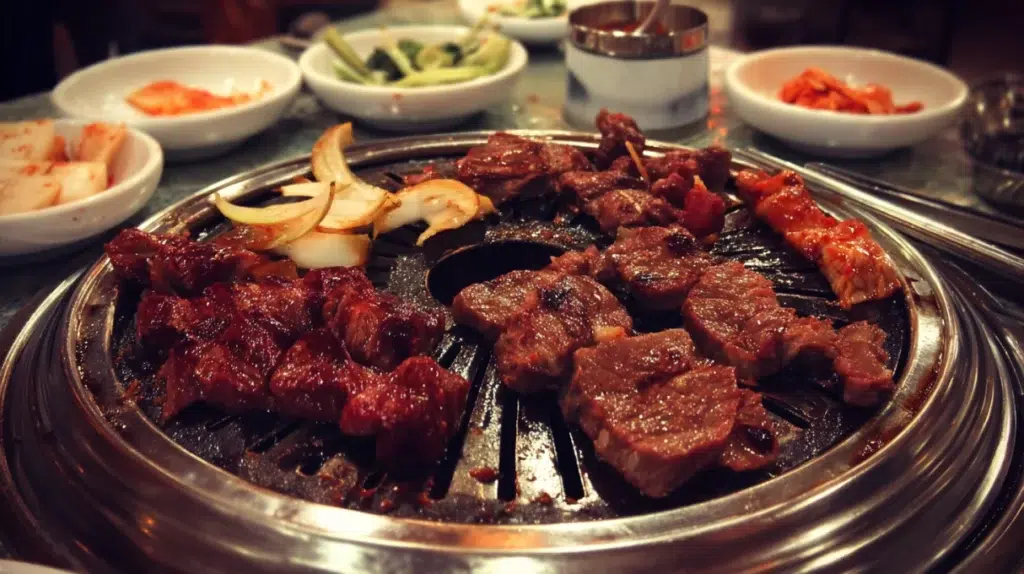
Bulgogi is the entry point for almost every non-Korean person’s Korean BBQ experience and for good reason. The word means “fire meat” and the dish is thin slices of beef marinated in a sweet-savory-garlicky sauce that caramelizes beautifully over high heat into something deeply addictive.
The cut: ribeye or sirloin, sliced very thin, about 3mm. Ask your butcher to do this. Most good butchers will slice it for you on request. Or buy pre-sliced beef bulgogi meat at Korean grocery stores, where it is sold ready to marinate.
The bulgogi marinade: make this the night before:
- 500g (about 1 lb) beef ribeye or sirloin, thinly sliced
- 4 tablespoons soy sauce
- 2 tablespoons sesame oil
- 2 tablespoons sugar, brown sugar adds slightly more depth
- 1 tablespoon rice wine (mirin or sake, regular dry sherry works too)
- 6 cloves garlic, minced fine
- 1 teaspoon fresh ginger, grated
- ½ Asian pear or kiwi, grated, this is the key ingredient that most recipes skip
Asian pears contain natural enzymes that tenderize meat, breaking down the muscle fibers in a way that marinades without fruit cannot achieve. The result is beef that is tender almost beyond what seems possible for a quick-cooking cut. Do not skip the pear. Kiwi works equally well if pear is unavailable, both contain proteolytic enzymes that do this specific job. One quarter of a kiwi, grated, is enough.
Combine all marinade ingredients, add the beef, and mix thoroughly with your hands until every slice is coated. Cover and refrigerate overnight, minimum 4 hours, overnight is significantly better.
Cooking bulgogi: High heat is essential. You want caramelization, not steaming. Cast iron grill pan or skillet, screaming hot, a thin film of oil. Cook the beef in a single layer, never crowd the pan or the meat steams rather than sears. 1-2 minutes per side, until caramelized and slightly charred at the edges. Work in batches. The smell as it hits the pan is something else entirely.
Galbi: Short Ribs Korean Style
Galbi (sometimes written kalbi) is beef short ribs, either the flanken-cut style (cut across the bone into thin strips with multiple bone cross-sections) or the butterflied style (one long strip of meat cut between the bones and unfolded flat).
The flanken cut is more traditional for Korean BBQ and cooks quickly, about 3-4 minutes per side. The butterflied style takes slightly longer but produces more caramelization on the meat surface. Either works beautifully.
The galbi marinade:
- 1kg (about 2 lbs) beef short ribs, flanken cut
- 5 tablespoons soy sauce
- 3 tablespoons sesame oil
- 3 tablespoons sugar
- 1 tablespoon rice wine
- 8 cloves garlic, minced
- 1 teaspoon ginger, grated
- ½ Asian pear, grated
- 1 tablespoon honey, adds gloss and depth
- 2 green onions, roughly chopped
- 1 tablespoon sesame seeds
- Black pepper to taste
The galbi marinade is richer and slightly more complex than the bulgogi marinade, more garlic, more sweetness, the addition of honey. Mix thoroughly and marinate overnight, galbi benefits even more than bulgogi from a long marinade because the ribs are thicker.
Cooking galbi: Same high heat principle as bulgogi. Cast iron grill pan or outdoor grill. Cook 3-4 minutes per side until deeply caramelized. The sugar and honey in the marinade means it catches quickly, watch it carefully and adjust heat as needed.
Samgyeopsal: Pork Belly
Samgyeopsal, thick slices of pork belly cooked plain on the grill, with no marinade, is arguably the most beloved Korean BBQ meat of all, even though (or perhaps because) it is the simplest. The fat renders as it cooks, the exterior crisps, and you eat it wrapped in lettuce with garlic, sliced fresh chiles, and ssamjang.
Buy thick-sliced pork belly from a Korean grocery store or ask your butcher to slice it about 5-7mm thick. Cook on high heat until the fat is rendered and the exterior is golden and slightly crispy, about 4-5 minutes per side. The only seasoning is a small amount of sesame oil brushed on while cooking. Everything else comes from the wrapping and dipping.
The Banchan: What to Serve Alongside
Korean BBQ without banchan is a meal. Korean BBQ with banchan is an experience. These small side dishes served in multiple small bowls arranged around the grill are eaten alongside the meat, providing flavor variety, textural contrast, and the kind of table generosity that makes Korean dining feel like a celebration even on a regular Tuesday night.
For a home Korean BBQ setup, aim for 4-6 banchan dishes. You do not need to make all of them from scratch, a good Korean grocery store will sell excellent pre-made banchan. But the homemade versions are noticeably better and most are very simple.
Essential banchan for Korean BBQ:
Kimchi: always. Fresh, fermented, aged, all versions have a place at a Korean BBQ table. See the full kimchi recipe for how to make your own.
Kongnamul: seasoned soybean sprouts. Blanch for 2 minutes, drain, toss with sesame oil, soy sauce, garlic, and sesame seeds. Ready in 10 minutes. Provides a fresh, crunchy counterpoint to the rich grilled meat.
Sigeumchi namul: seasoned spinach. Blanch fresh spinach for 30 seconds, squeeze completely dry, toss with soy sauce, sesame oil, garlic, and sesame seeds. One of the most simple and satisfying banchan.
Japchae: glass noodles stir-fried with vegetables and beef in sweet soy sauce. More substantial than other banchan, adds a different texture entirely. See the full recipe in the Korean noodle recipes guide.
Oi muchim: spicy cucumber salad. Slice cucumbers thin, salt for 10 minutes, squeeze dry, toss with gochugaru, garlic, sesame oil, vinegar, sugar. Bright, spicy, refreshing.
Steamed short-grain rice: always, always, always. The rice is not a side dish. It is the center.
The Wrapping Setup: Ssam
Ssam is the practice of wrapping each bite of grilled meat in a leaf, typically butter lettuce or perilla (kkaennip) with rice and accompaniments before eating. It is one of the defining pleasures of Korean BBQ and the part that makes eating it such an active, engaging experience.
What you need for ssam:
- Butter lettuce: individual leaves washed and kept cold and crisp
- Perilla leaves (kkaennip): available at Korean grocery stores, an earthy, slightly anise-flavored herb that is extraordinary with grilled pork belly
- Steamed short-grain rice
- Sliced fresh garlic (raw, it sounds intense but it works)
- Sliced fresh green chiles or jalapeños
- Ssamjang: the essential dipping paste
Ssamjang, make this ahead: Ssamjang is a thick, complex dipping paste made from doenjang (fermented soybean paste) and gochujang mixed with sesame oil, garlic, green onion, and sesame seeds. It is the flavor anchor of the whole ssam experience and it is exceptionally easy to make. See the full gochujang guide which covers gochujang and its role in ssamjang.
Quick ssamjang recipe:
- 3 tablespoons doenjang
- 1 tablespoon gochujang
- 1 tablespoon sesame oil
- 1 teaspoon sugar
- 2 cloves garlic, minced
- 2 green onions, finely sliced
- 1 tablespoon sesame seeds Mix everything together. Done. Keeps in the fridge for two weeks.
How to assemble each bite: Place a lettuce leaf flat in your palm. Add a small amount of rice. Place a piece of grilled meat on top. Add a small dab of ssamjang. Add a slice of raw garlic and a piece of green chile if you like heat. Fold the leaf around everything and eat in one bite. This is the correct way. One full bite, not nibbled, not half eaten. The whole thing, in one go.
The Home Setup: Equipment and Logistics
Option 1: Cast iron grill pan (what I use most): A cast iron grill pan on your stove works beautifully for bulgogi and galbi. Preheat for at least 5 minutes on high heat before adding any meat. Open your windows. Turn your exhaust fan to maximum. The smoke is real and it is the price of excellent Korean BBQ at home.
Option 2: Portable gas burner at the table: A portable butane burner placed in the center of your table with a cast iron pan or Korean BBQ grill plate on top replicates the restaurant experience most closely. The meat cooks at the table. Everyone watches. Everyone participates. The burners are inexpensive, about $25-35 and the butane canisters are available at any Korean or Asian grocery store.
Option 3: Outdoor grill: If you have a charcoal or gas grill, Korean BBQ translates beautifully to outdoor cooking. The char from charcoal adds an extra dimension that is particularly good with galbi. Cook in batches and bring to the table on a warm plate.
The Complete Korean BBQ Night: Timeline
This is how I run a Korean BBQ night at home for four people. Everything is manageable and nothing requires you to be at the stove while your guests are at the table.
Day before: Marinate the bulgogi and galbi overnight. Make the kimchi (if making from scratch, otherwise buy good kimchi). Make the ssamjang.
2 hours before: Make the banchan, kongnamul, sigeumchi namul, oi muchim. These all keep well and are actually better at room temperature than cold. Start the rice in the rice cooker or on the stove.
30 minutes before: Arrange the banchan in small bowls on the table. Set out the ssam setup, lettuce leaves, perilla, sliced garlic and chiles, ssamjang in a small bowl. Set up your grill or burner. Open the windows.
When guests arrive: Start grilling. Cook bulgogi first, it is fastest and gets everyone excited immediately. Then galbi. Then samgyeopsal if you are including it. Everyone eats as you cook, assembling their own ssam bites and eating continuously. This is the Korean BBQ experience. Not a formal service. A continuous feast.
Frequently Asked Questions
Do I need a special Korean BBQ grill?
No. A cast iron grill pan or a heavy cast iron skillet on your stove produces excellent results. For the full table-grilling experience, a portable butane burner and a Korean BBQ grill plate (available at Korean grocery stores for about $20) replicates the restaurant setup at minimal cost.
What is the best meat for Korean BBQ beginners?
Bulgogi. It is the most forgiving, the most universally loved, and the best introduction to Korean BBQ flavors. Once you’ve made bulgogi successfully, galbi and samgyeopsal are easy steps from there.
Can I make Korean BBQ without a Korean grocery store nearby?
Mostly yes. Soy sauce, sesame oil, garlic, ginger, and sugar, all at any grocery store. Gochujang is increasingly available at Whole Foods and major supermarkets. The hardest ingredient to source without an Asian grocery store is gochugaru for kimchi and doenjang for ssamjang, both available online if needed. See the full Korean pantry guide for sourcing options.
How do I stop my house from filling with smoke?
Open every window. Run your exhaust fan at maximum. If you have a particularly powerful exhaust fan, great. If you don’t, a portable induction burner outside on a table works beautifully in good weather. The smoke is the only real downside of indoor Korean BBQ and it is worth it.