Korean fried chicken is the recipe that made me question everything I thought I knew about fried chicken and I am from Nashville, which means that is not a statement I make lightly.
I grew up eating hot chicken. I have strong, deeply held opinions about fried chicken. I have been eating it my entire life and cooking it seriously for years. And then I had Korean fried chicken for the first time, that impossibly thin, glass-like, shatteringly crispy exterior, and I sat very quietly for a moment and reconsidered some things.
This is part of my Korean recipes collection. And this recipe, tested more times than any other in the collection because I kept wanting it to be slightly better is the one I make when I want to show someone what Korean cooking can do to a familiar ingredient. Nobody leaves the table without asking for the recipe. Nobody.
What Makes Korean Fried Chicken Different
Let me be specific about what distinguishes Korean fried chicken from every other fried chicken tradition in the world, because the differences are real, technical, and important to understand before you start cooking.
The double-fry. This is the defining technique. The double-frying method has been documented in Korean culinary history since the Joseon Dynasty, the chicken is fried once at a lower temperature to cook it through, rested to allow the steam inside to escape, then fried again at a higher temperature to create an extraordinarily crispy exterior. The result is a crust that is thinner, lighter, and more glass-like than any single-fry method produces and crucially, it stays crispy for significantly longer than American fried chicken.
The coating. Korean fried chicken uses potato starch rather than flour as the primary coating ingredient. Potato starch produces a significantly crispier coating than wheat flour because it contains less protein and more pure starch, it fries into a harder, thinner shell that shatters rather than bends when you bite into it.
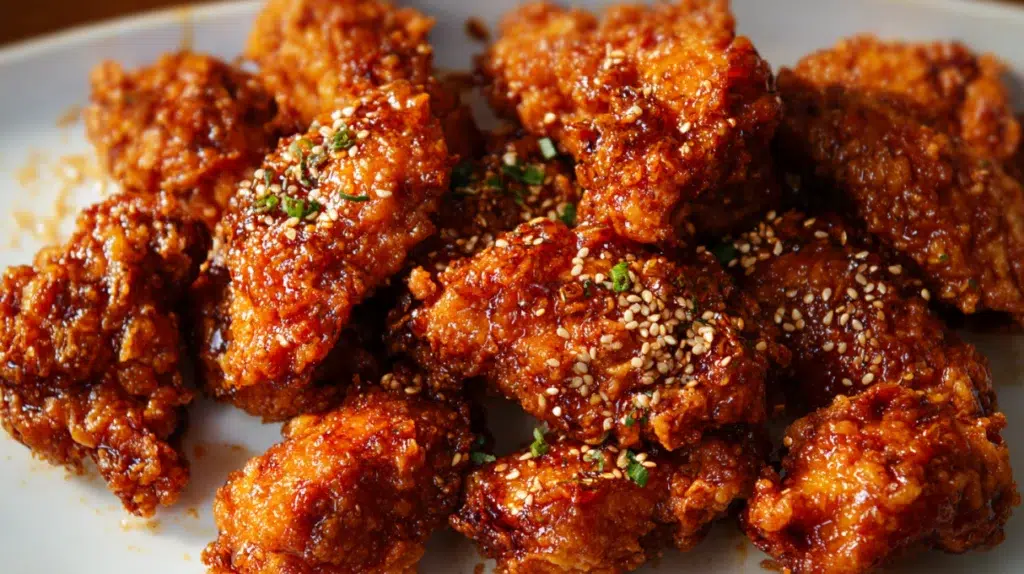
The sauce. Korean fried chicken is almost always sauced, either with a spicy-sweet gochujang glaze called yangnyeom sauce, or with a savory soy-garlic sauce. The sauce goes on after the second fry, tossed through the hot chicken so it clings to every piece without softening the crust. This is different from pre-saucing or baking sauce onto chicken, the crust stays crispy even under the sauce, at least for the first 15 minutes, which is all the time you need because it will be gone by then.
The pieces. Traditional Korean fried chicken uses the whole chicken cut into small pieces, including the wings, which fry especially beautifully with this technique. Bone-in pieces are standard. The double-fry method renders the fat from the skin so completely that the finished chicken is less greasy than most American fried chicken despite being fully submerged in oil.
Ingredients
Serves 4 | Active time: 45 minutes | Total time: 1 hour 15 minutes
For the chicken:
- 1.2kg (about 2.6 lbs) chicken, wings, drumettes, and small thigh pieces work best. Bone-in always.
- 1 teaspoon salt
- 1 teaspoon black pepper
- 1 teaspoon garlic powder
- 1 teaspoon ginger powder
- 1 tablespoon soy sauce
- 1 tablespoon rice wine or dry sherry
For the coating:
- 1 cup (130g) potato starch, not cornstarch, not flour. Potato starch specifically. Available at Korean grocery stores, Asian supermarkets, and increasingly at Whole Foods.
- ½ cup (65g) all-purpose flour
- 1 teaspoon baking powder, adds extra lightness to the crust
- ½ teaspoon salt
- Cold water, enough to make a thin batter, about ¾ cup
For frying:
- Neutral oil with a high smoke point, vegetable, canola, or rice bran oil
- Enough to submerge the chicken, at least 1 litre in a deep pot or wok
For the yangnyeom sauce (spicy-sweet gochujang glaze):
- 3 tablespoons gochujang, see the full gochujang guide for everything about this essential ingredient
- 2 tablespoons honey
- 2 tablespoons soy sauce
- 1 tablespoon rice wine vinegar
- 1 tablespoon sesame oil
- 3 cloves garlic, minced fine
- 1 teaspoon ginger, grated
- 1 tablespoon sugar
- 2 tablespoons water
For the soy-garlic sauce (the milder alternative):
- 4 tablespoons soy sauce
- 2 tablespoons honey
- 1 tablespoon sesame oil
- 4 cloves garlic, minced fine
- 1 teaspoon ginger, grated
- 1 tablespoon rice wine vinegar
- 1 tablespoon sugar
- 1 teaspoon sesame seeds
To serve:
- Pickled daikon radish cubes, called chicken-mu in Korean, sold at Korean grocery stores. The cool, vinegary sweetness against the hot spicy chicken is not optional. It is part of the dish.
- Beer, Korean lager (Hite, Cass, or OB) is traditional. The pairing of Korean fried chicken and beer is called chimaek and is a beloved Korean institution.
- Fresh kimchi on the side
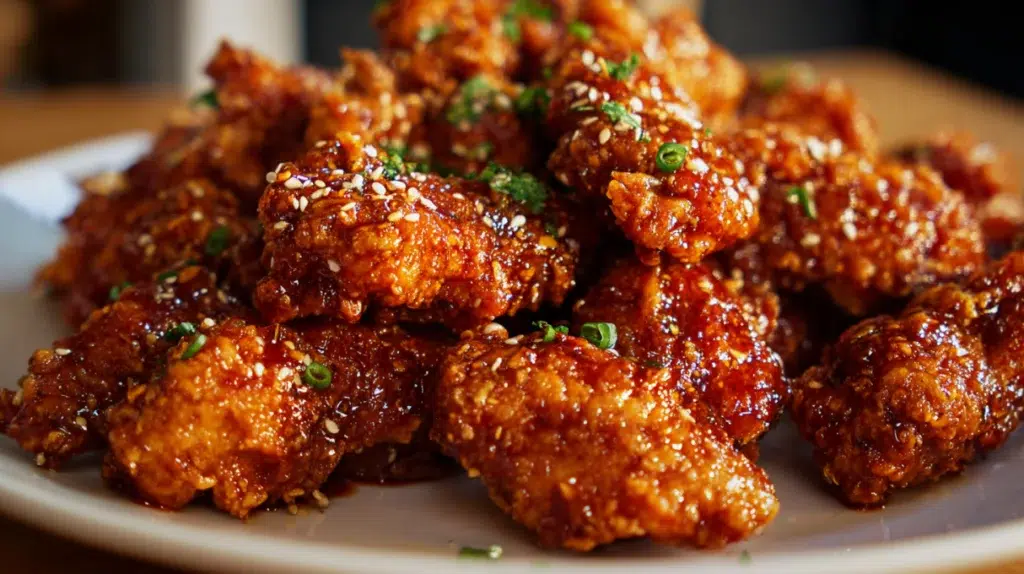
How to Make Korean Fried Chicken: Step by Step
Step 1: Marinate the Chicken (minimum 30 minutes, overnight better)
In a large bowl combine the chicken pieces with salt, pepper, garlic powder, ginger powder, soy sauce, and rice wine. Toss thoroughly until every piece is coated. Cover and refrigerate for at least 30 minutes, overnight produces noticeably more flavorful chicken but 30 minutes is workable for a weeknight.
The marinade does two things: it seasons the meat all the way through rather than just on the surface, and the soy sauce helps the crust adhere more evenly during the first fry.
Step 2: Make the Sauce (10 minutes)
Whichever sauce you’re making yangnyeom or soy-garlic, combine all the ingredients in a small saucepan over medium heat. Stir until the sugar dissolves and the sauce comes together into a glossy, slightly thickened consistency about 3-4 minutes. Remove from heat. Set aside. The sauce should be pourable but thick enough to cling to the chicken.
A note on choosing your sauce: yangnyeom is the more famous version, spicy, sweet, deeply red, the one you see in every Korean fried chicken photo. It is magnificent. Soy-garlic is the version I make when I want something more subtle, more savory, better suited to eating with rice and banchan rather than just as a standalone snack. Make both if you’re feeding more than two people. Half the chicken in each sauce produces the most satisfied table.
Step 3: Make the Batter and Coat (10 minutes)
In a large bowl, whisk together potato starch, flour, baking powder, and salt. Add cold water gradually, start with ½ cup and add more until you reach the consistency of thin pancake batter. It should be thin enough to drip off a spoon in a steady stream but thick enough to coat a finger visibly.
The cold water is important. Cold batter hits hot oil and the temperature shock creates a crispier crust than room-temperature batter would. Some cooks add a few ice cubes to their batter, this is not excessive. It genuinely makes a difference.
Pat the marinated chicken pieces completely dry with paper towels before dipping them in the batter. Wet chicken makes the batter slip off during the first fry. Dry chicken gives the batter something to grip.
Dip each piece into the batter, letting the excess drip off, and set on a wire rack while you heat the oil.
Step 4: First Fry (8-10 minutes per batch)
Pour at least 1 litre of neutral oil into your deepest pot or wok. Heat to 160°C / 320°F, use a thermometer. Temperature control is the single most important variable in fried chicken. Too hot and the outside burns before the inside cooks through. Too cool and the chicken absorbs oil and turns greasy.
Fry the chicken in batches, never crowd the pot, which drops the oil temperature dramatically and results in greasy, soggy chicken. Work in two or three batches depending on your pot size. Fry each batch for 8-10 minutes, turning halfway, until the coating is set and pale golden, not deeply colored, not crispy yet. The chicken should be cooked through at this stage but the crust will look underwhelming. This is correct.
Remove from the oil using a spider strainer or slotted spoon. Place on a wire rack over a baking sheet. Let rest for at least 5 minutes, this is when the residual steam inside the chicken escapes through the crust. This rest is what allows the second fry to achieve maximum crispiness. Skip it and the crust will be less crispy.
Step 5: Second Fry (3-4 minutes per batch)
Increase the oil temperature to 190°C / 375°F. Return the chicken to the hot oil in the same batches for 3-4 minutes, until the crust is deeply golden, shatteringly crispy, and audibly crackling as it fries.
The difference between the chicken after the first fry and after the second fry is remarkable. After the first fry it looks pale and slightly soft. After the second fry it is a completely different texture, thin, rigid, deeply colored, crackling when you tap it. This is the moment. This is why you went to the trouble of doing it twice.
Drain on the wire rack for 1-2 minutes.
Step 6: Sauce and Serve
Transfer the hot fried chicken to a large bowl. Pour the sauce over and toss quickly and thoroughly, every piece should be coated. The hot chicken absorbs the sauce while maintaining its crispiness for the first 10-15 minutes. Serve immediately.
Plate alongside the pickled daikon cubes, chicken-mu. They are not garnish. They are functional. The cool, sweet, vinegary bite of pickled daikon resets your palate between pieces of spicy fried chicken in a way that keeps you eating long past the point where you thought you were full.
Claire’s Notes: What I Learned During Testing
On potato starch: The single ingredient upgrade that makes the biggest difference in this recipe. Do not substitute all-purpose flour, the crust will be softer and less interesting. Cornstarch is better than flour but still not as good as potato starch. Find the potato starch. It is worth it.
On oil temperature: Buy a kitchen thermometer if you don’t have one. Not a luxury, a necessity for frying. Guessing oil temperature produces inconsistent results every time. A good instant-read thermometer costs $15 and changes your frying forever.
On the rest between fries: Five minutes minimum. I have rushed this step. The chicken is noticeably less crispy when I do. Be patient.
On making it ahead: Korean fried chicken is best eaten immediately after the second fry and saucing. It does not reheat well, the crust softens significantly. Make it and eat it. Plan your timing accordingly.
On the Nashville connection: I come from the city that invented hot chicken, a dish that is essentially fried chicken taken to its most aggressive, most gloriously excessive extreme. I love hot chicken with my whole heart. But I want to be clear: Korean fried chicken is doing something completely different. It is not trying to be hot chicken. It is thinner, lighter, less battered, more technical in its crispiness. They are two magnificent things in two completely different categories. Both deserve a place in your life.
Frequently Asked Questions
Can I use boneless chicken for this recipe?
Yes, boneless thighs work well and cook faster (first fry 5-6 minutes, second fry 2-3 minutes). The bone-in version has more flavor but boneless is more practical for some situations. Do not use boneless breast, it dries out during the double fry.
What if I don’t have potato starch?
Cornstarch is the best substitute, it produces a crispier crust than flour, though not quite as crispy as potato starch. A 50/50 mix of cornstarch and flour works well if you have neither. Pure all-purpose flour will work but gives a softer, doughier result.
Can I air fry this instead of deep frying?
You can make a version in an air fryer, coat the chicken in dry potato starch rather than batter, spray with oil, and air fry at 200°C / 390°F for 20-25 minutes, flipping halfway. It will be crispy but different from the deep-fried version, less glass-like, more similar to baked. A solid weeknight alternative.
How spicy is the yangnyeom sauce?
Medium spicy, noticeably hot but not overwhelming for most people. You can reduce the gochujang to 2 tablespoons for a milder version. See the gochujang guide for more on adjusting heat levels with gochujang.
What is chimaek?
Chimaek (치맥) is the beloved Korean combination of fried chicken (chicken, chi) and beer (maekju, mek). It is a cultural institution in Korea, eating Korean fried chicken with cold beer on a warm evening, often while watching football or gathered with friends. It is, objectively, one of the great pleasures of life. Replicate it at home accordingly.