The Korean pantry essentials you need to cook authentic Korean food are fewer than you think and more available at regular American grocery stores than most people realize.
I want to lead with that because the single biggest barrier I hear from people who want to cook Korean food at home is the belief that the ingredients are exotic, hard to find, and expensive. They are not. Some of the most important Korean pantry items, soy sauce, sesame oil, garlic, ginger, are things you almost certainly already have. Others, gochujang specifically are now available at Whole Foods, Trader Joe’s, and increasingly at regular Kroger locations. And the few things that genuinely require a trip to a Korean or Asian grocery store are worth finding once, because they keep for months and open up an entire cuisine.
This guide covers every ingredient you need to cook from my Korean recipes collection, what each one is, what it does, where to find it in the US, and what to substitute when you genuinely cannot find the real thing.
Spend 15 minutes here. Then go cook something extraordinary.
The Fermented Foundation: Start Here
Korean cooking is built on fermentation more than almost any other cuisine in the world. Before fresh ingredients, before spices, before cooking technique, fermented pastes and sauces are the flavor architecture that makes Korean food taste the way it does. These are your most important pantry items.
Gochujang: The Essential Fermented Chile Paste
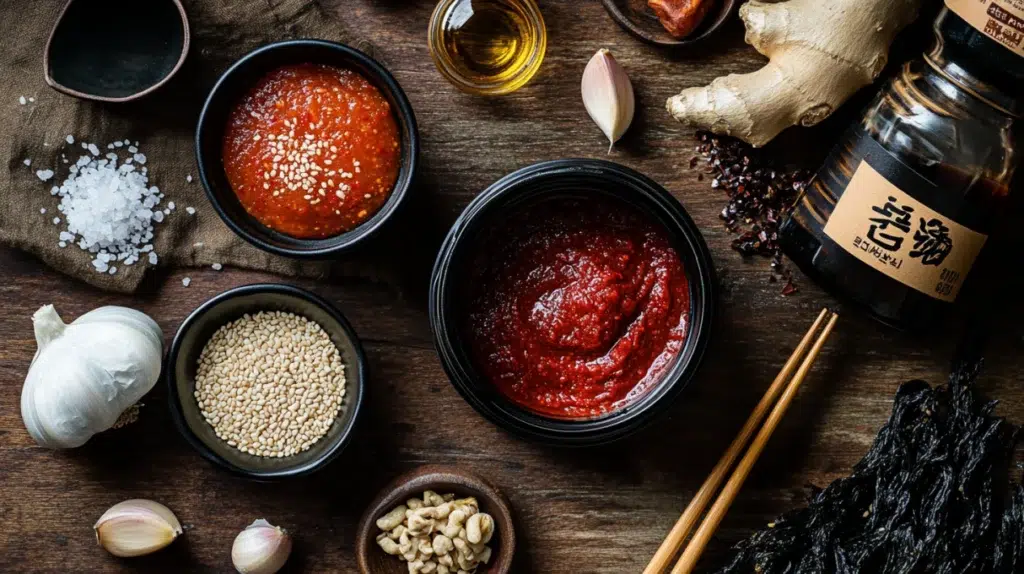
Gochujang is a thick, deep red paste made from fermented chiles, fermented soybeans, glutinous rice, and salt. It is simultaneously spicy, sweet, savory, and deeply umami, a combination that no other single ingredient in any cuisine achieves in quite this way. It goes into marinades, sauces, soups, stews, and dipping sauces. It is used in Korean BBQ, in Korean fried chicken glaze, in bibimbap sauce, in tteokbokki. It is everywhere.
Where to find it: Whole Foods (look for the brand Bibigo or Mother-in-Law’s), Trader Joe’s, H Mart, any Asian supermarket, Amazon. It comes in small red tubs or squeeze bottles. Refrigerate after opening, it keeps for months.
For everything about gochujang, what it tastes like, how to use it, how to substitute it, see the dedicated gochujang complete guide.
Doenjang: The Fermented Soybean Paste
Doenjang has been fermented and consumed in Korea for over two thousand years, a paste made from soybeans and salt, aged in clay pots, that develops an extraordinarily complex, deeply savory, slightly pungent flavor over months and years of fermentation. It is the Korean equivalent of Japanese miso but stronger, earthier, and more assertive.

Used in: doenjang jjigae (the most beloved Korean stew, eaten daily in most Korean households), ssamjang (the dipping paste for Korean BBQ), marinades for vegetables, and some soups.
Substitute: Japanese miso is the closest widely available substitute, use white or yellow miso for the most similar result. The flavor is milder and less pungent than doenjang but works well in most recipes.
Where to find it: H Mart, any Korean or Asian grocery store, Amazon. Available in plastic tubs, usually in the refrigerated section. Keeps for months in the fridge.
Ganjang: Korean Soy Sauce
Korean soy sauce (ganjang) is lighter, less salty, and slightly sweeter than Chinese soy sauce. Two types are used in Korean cooking:
Regular ganjang: used for marinades, stir-fries, and seasoning dishes. The most common type. Japanese soy sauce (Kikkoman) is an excellent substitute.
Soup soy sauce (guk-ganjang): lighter in color, saltier, specifically for seasoning soups and soup-based dishes. Harder to find outside Korean grocery stores. Regular soy sauce diluted slightly with water is a workable substitute.
Where to find it: Korean grocery stores, Asian supermarkets. Japanese soy sauce at any regular grocery store works well as a substitute for the regular variety.
Gochugaru: Korean Red Pepper Flakes
Gochugaru is Korean dried red chile flakes, coarser than regular chili flakes, mildly spicy, slightly sweet, with a bright red color and a clean chile flavor that is completely specific to Korean cooking. It is the essential ingredient in kimchi and used throughout Korean cooking for seasoning, color, and gentle heat.
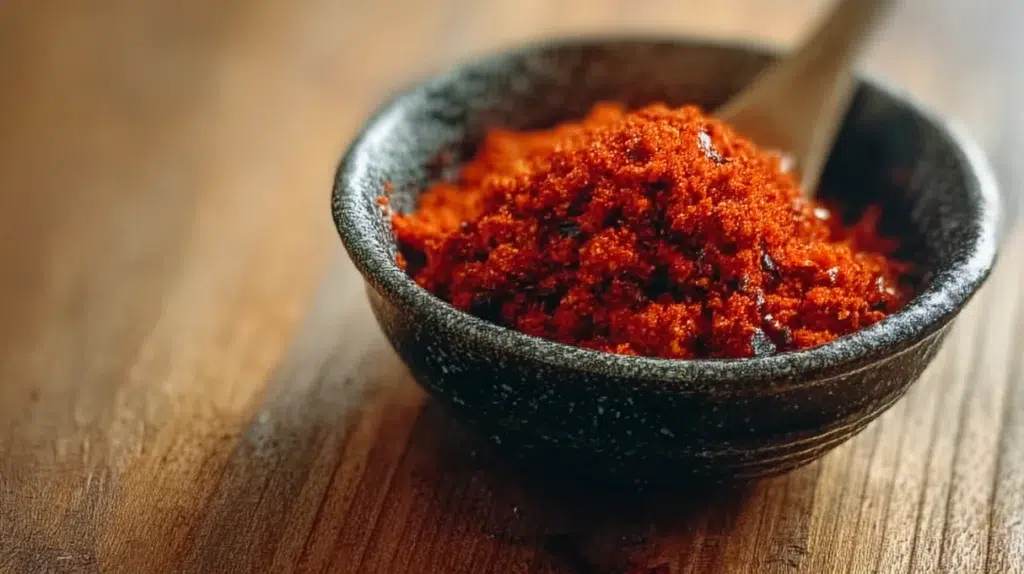
This is not the same as generic Italian red pepper flakes, the heat level and flavor profile are completely different. Gochugaru has a more complex, fruitier flavor and produces a very different result in recipes. Do not substitute with regular chili flakes.
Where to find it: H Mart, Korean grocery stores, Asian supermarkets, Amazon. Keeps well in the freezer for up to a year, buy a larger bag and freeze what you don’t use immediately.
The Flavor Enhancers: Supporting Cast
Sesame Oil: The Essential Finishing Oil
Sesame has been cultivated in Asia for thousands of years and toasted sesame oil, made from roasted sesame seeds, is one of the most distinctive flavors in Korean cooking. It is used as a finishing element almost exclusively, a small drizzle over a finished dish, stirred into a sauce or marinade at the end, never used for high-heat cooking where the delicate flavor would burn away.
The smell of toasted sesame oil is one of the most immediately recognizable in Korean cooking. A small drizzle transforms a bowl of blanched spinach into banchan. A teaspoon in a marinade adds depth that nothing else replicates.
Buy Korean or Japanese toasted sesame oil, the flavor is significantly better than generic brands. Kadoya is a widely available brand that is reliably excellent. Available at most major grocery stores in the Asian foods aisle.
Rice Wine: Mirim or Sake
Korean cooking uses rice wine (mirim, similar to Japanese mirin, or sake) to add sweetness, depth, and to eliminate the raw smell from meat and fish. Mirim is slightly sweeter than sake. Both work. Dry sherry is a perfectly acceptable substitute and available at every grocery store.
Rice Vinegar: Gentle Acidity
Used in marinades, quick pickles, and some sauces. Korean rice vinegar is slightly milder than Japanese rice vinegar, but Japanese rice vinegar is an excellent substitute and available everywhere. Regular white vinegar diluted with a little water works in a pinch.
Fish Sauce: Depth and Umami
Used in kimchi, some soups, and some marinades to add savory depth and oceanic umami. Thai fish sauce (Tiparos or Megachef) is widely available and works well in Korean recipes. Omit and add extra soy sauce for a vegan substitute.
The Starches and Grains: The Structural Elements
Short-Grain Rice: The Center of Every Meal
Korean cooking uses short-grain rice, the same variety as Japanese sushi rice. Slightly sticky when cooked, with a specific chewiness and flavor that long-grain rice does not have. Nishiki and Kokuho Rose are both excellent brands available at most major grocery stores. Do not substitute with long-grain, basmati, or jasmine, the texture and eating experience of Korean food specifically requires short-grain.
A rice cooker is not essential but it is transformative, it produces perfect short-grain rice every single time without attention. A $30-40 basic rice cooker is one of the best kitchen investments for anyone cooking Korean food regularly.
Potato Starch: For Frying and Thickening
Used as the primary coating for Korean fried chicken and as a thickener in some sauces. Produces a significantly crispier crust than cornstarch or flour. Available at Korean grocery stores, Asian supermarkets, and Whole Foods.
Glass Noodles (Dangmyeon): For Japchae
Sweet potato starch noodles, translucent, chewy, completely distinctive in texture. Used in japchae (the beloved stir-fried noodle dish) and some soups. Available at Korean grocery stores and Asian supermarkets. Keep for months in a cool dry pantry.
See the full Korean noodle recipes guide for how to cook dangmyeon properly and what to make with them.
The Fresh Essentials: Always Keep These
Garlic: Korean cooking uses extraordinary quantities. Keep a full head or two in your kitchen at all times if you cook Korean food regularly. Always fresh, never powder for Korean cooking.
Ginger: Fresh only. Used in kimchi, marinades, soups. Keeps well in the freezer, peel it, freeze it whole, grate directly from frozen.
Green onions: Used constantly as both a cooking ingredient and a finishing garnish. A bunch a week is not unusual.
Napa cabbage: For kimchi and some soups. Available at most major grocery stores.
Sesame seeds: Toasted, scattered over finished dishes. Keep a jar in your pantry.
Where to Buy: Your Complete US Sourcing Guide
At any regular grocery store (Kroger, Walmart, Publix): Soy sauce, sesame oil, rice vinegar, garlic, ginger, green onions, napa cabbage, short-grain rice (Nishiki brand), fish sauce, sesame seeds, gochujang (increasingly, check the Asian foods aisle)
At Whole Foods or Trader Joe’s: Gochujang (Bibigo brand), toasted sesame oil, rice wine, potato starch, some Korean sauces and condiments
At H Mart or Korean grocery stores (the best option if available): Everything above at better prices plus gochugaru, doenjang, Korean soy sauce, glass noodles, perilla leaves, Korean rice cakes (tteok), fresh kimchi, banchan pre-made, Korean snacks and pantry items of every description. If you have an H Mart within driving distance go. It is worth it.
Online (Amazon, Hmart.com, Weee!): Gochugaru, doenjang, Korean soy sauce, glass noodles, specialty items, everything ships well and keeps for months
Build Your Korean Pantry Essentials in Three Stages
You do not need everything at once. Here is how I’d approach it:
Stage 1: Start today (regular grocery store only): Gochujang, soy sauce, sesame oil, rice vinegar, garlic, ginger, green onions, short-grain rice, fish sauce, sesame seeds
With just these you can make Korean fried chicken, bulgogi, bibimbap, most banchan, and a basic kimchi. That is an enormous amount of excellent Korean cooking from one grocery run.
Stage 2: Expand when ready (Korean grocery store or online): Gochugaru, doenjang, glass noodles, potato starch, Korean soy sauce, rice wine
Stage 3: The complete pantry: Perilla leaves, Korean rice cakes, specialty fermented pastes, dried anchovies for stock, dasima (kelp) for broth, everything needed for the full depth of Korean home cooking.
Head back to the complete Korean recipes collection and start cooking, your pantry is ready.