Lebanese chicken recipes transformed how I think about cooking poultry and I say that as someone who grew up in Nashville, a city that considers itself to have strong opinions about what can and cannot be done with a chicken.
The difference is in the approach. American chicken cooking tends to focus on one dominant flavor, smoky, spicy, saucy, crispy. Lebanese chicken cooking layers flavors in a completely different way, the marinade is deeply aromatic with seven spice, lemon, garlic, and olive oil, the cooking is slow enough to develop real depth, and the result is chicken that tastes like it has been thought about rather than simply seasoned.
Lebanese chicken is one of the most rewarding entry points into Lebanese cuisine for American home cooks, the ingredients are accessible, the techniques are learnable in a single session, and the results are dramatic enough to make anyone at your table ask where you learned to cook like this.
These are the dishes I make most often. All tested three times minimum in my Nashville kitchen. All adapted for ingredients available at any major US grocery store.
1. Chicken Shawarma: The Street Food Icon
Chicken shawarma is the most famous Lebanese chicken dish in the world and it deserves every bit of that fame.
Shawarma originated in Turkey and spread across the Middle East through Ottoman influence, becoming so embedded in Lebanese food culture that it is now considered one of the defining dishes of the country. Traditionally cooked on a vertical rotating spit, layers of marinated chicken stacked and slow-roasted, the outer layers sliced off as they cook, it produces meat that is simultaneously crispy at the edges, juicy inside, and deeply spiced throughout.
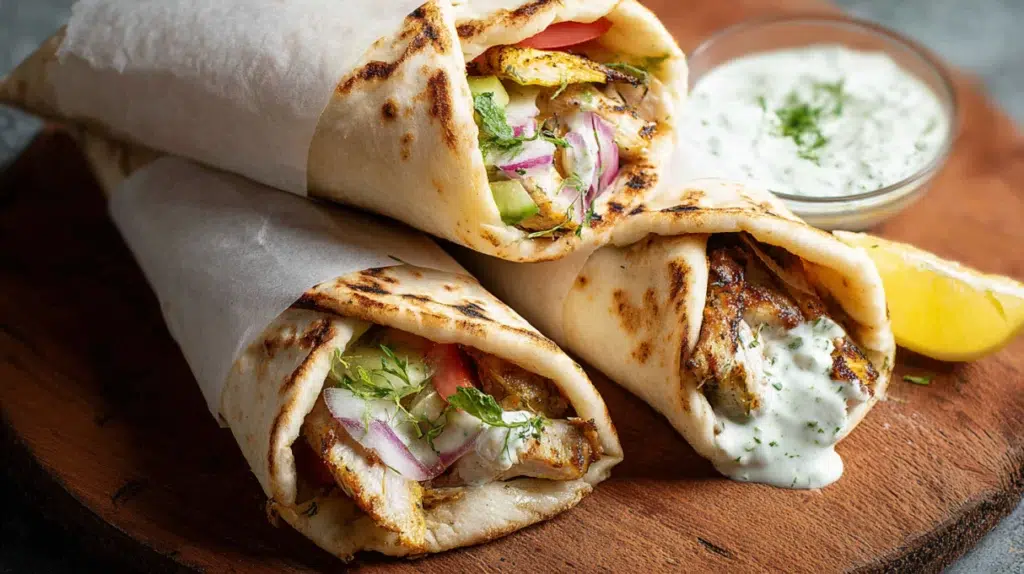
At home you replicate this by marinating chicken thighs overnight in the same spice blend, then roasting them in a very hot oven or cooking in a cast iron pan until the edges are genuinely caramelized and slightly charred. Not the same as the spit version, but extraordinarily good in its own right.
The marinade: make the night before:
- 800g (about 1.75 lbs) boneless skinless chicken thighs
- 4 tablespoons plain yogurt, tenderizes the meat and helps the spices adhere
- 3 tablespoons olive oil
- Juice of 1 lemon
- 5 cloves garlic, minced fine
- 2 teaspoons ground cumin
- 2 teaspoons sweet paprika
- 1 teaspoon ground coriander
- 1 teaspoon ground turmeric
- 1 teaspoon ground cinnamon
- ½ teaspoon ground allspice
- ½ teaspoon ground black pepper
- ½ teaspoon cayenne pepper, optional, for heat
- 1½ teaspoons salt
Mix all marinade ingredients thoroughly. Add the chicken thighs and coat completely. Cover and refrigerate overnight, minimum 4 hours, overnight significantly better.
To cook:
Oven method: Preheat to 220°C / 430°F. Spread the marinated chicken on a lined baking sheet in a single layer. Roast for 25-30 minutes until deeply golden and slightly charred at the edges. Rest for 5 minutes then slice thin, across the grain to replicate the spit-shaved texture.
Stovetop method: Heat a cast iron skillet over high heat. Cook the chicken thighs 5-6 minutes per side until deeply caramelized. Rest and slice thin.
To serve: Wrap in warm flatbread with the silky hummus that belongs alongside every Lebanese chicken dish, sliced tomato, cucumber, pickled turnips, and a generous drizzle of garlic sauce (toum, recipe below). This is the complete shawarma experience.
Time: 30 minutes cook + overnight marinade | Difficulty: Easy
2. Toum: Lebanese Garlic Sauce
Toum is not optional. Toum is the reason chicken shawarma is as good as it is.
It is a Lebanese garlic sauce, pure white, impossibly creamy, made from garlic, lemon juice, salt, and neutral oil emulsified together into something with the texture of thick mayonnaise but a flavor that is pure concentrated garlic in the most magnificent possible way. It is spread on shawarma, used as a dip for grilled meats, stirred into rice, eaten with literally everything.
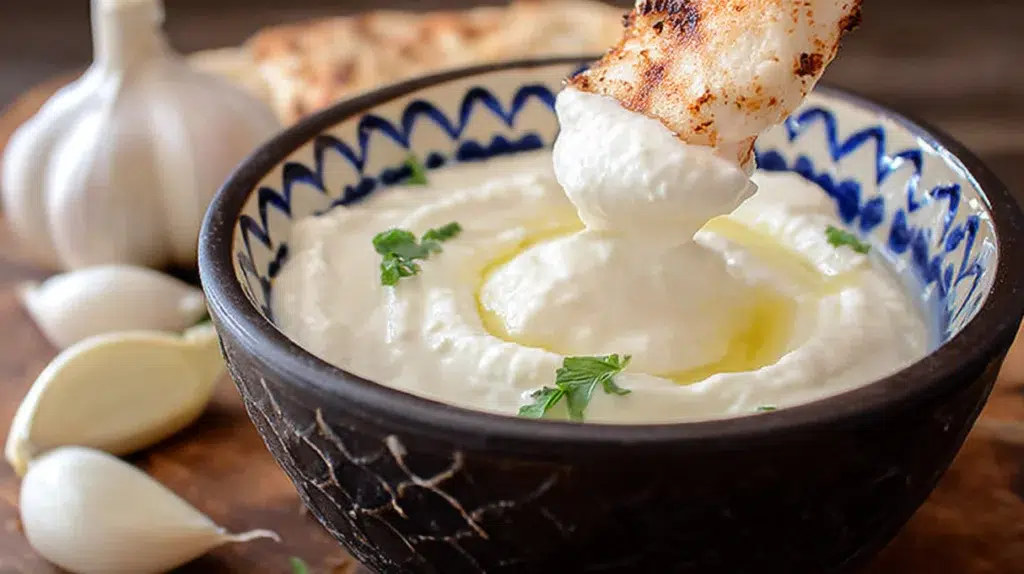
The technique is a blender or food processor emulsification, similar to making mayonnaise but with garlic instead of egg yolk as the emulsifier. It takes about 10 minutes and the result lasts two weeks in the fridge. Make a large batch. You will use it constantly.
Toum recipe:
- 1 whole head of garlic (about 40g peeled cloves)
- 1 teaspoon salt
- Juice of 1 lemon, about 3 tablespoons
- 240ml (1 cup) neutral oil, grapeseed or light vegetable oil. Not olive oil, the flavor is too strong.
- 2-3 tablespoons ice water
Place garlic and salt in a food processor. Process until minced fine, scraping down the sides. Add half the lemon juice. Process again. With the food processor running, add the oil in the thinnest possible stream, drop by drop at first, then in a very thin thread. Alternate adding oil and the remaining lemon juice, adding ice water if the emulsion becomes too thick. The result should be pure white, thick, and creamy.
If it breaks, if it becomes oily rather than creamy start over with fresh garlic and add the broken toum instead of fresh oil. It can be rescued this way almost always.
Time: 10 minutes | Difficulty: Medium, the emulsification needs patience
3. Kafta: Lebanese Grilled Spiced Meatballs
Kafta is ground chicken or more traditionally ground lamb or beef mixed with onion, fresh parsley, and the seven spice blend that defines the flavor of Lebanese cooking, formed into sausage shapes around skewers and grilled or pan-fried until slightly charred outside and juicy inside.
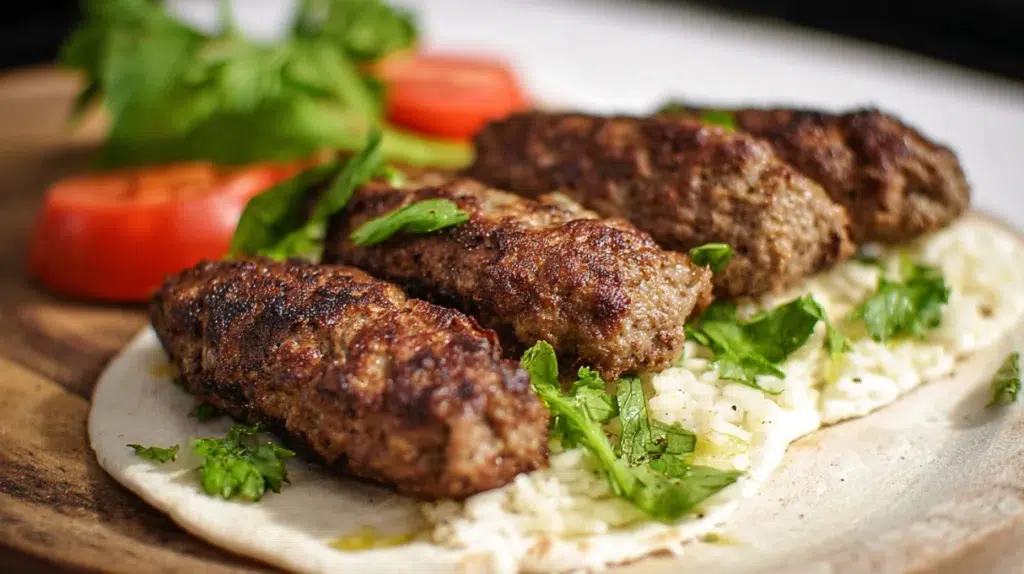
It is fast, it is deeply flavored, and it is one of the most satisfying things you can put on a grill. The spice mixture is straightforward, the quality of the meat and the freshness of the parsley are what make the difference between good kafta and extraordinary kafta.
Chicken kafta recipe:
- 500g (about 1 lb) ground chicken, dark meat if possible, it stays juicier
- 1 medium onion, grated fine and squeezed dry
- Large bunch flat-leaf parsley, very finely chopped, about ½ cup
- 1½ teaspoons seven spice (baharat), see the spice guide for the homemade recipe
- ½ teaspoon cinnamon
- ½ teaspoon cumin
- 1 teaspoon salt
- ½ teaspoon black pepper
- Pinch of cayenne
Mix all ingredients by hand until completely combined. The mixture should be sticky and hold its shape. If too wet, add a tablespoon of breadcrumbs. Refrigerate for 30 minutes, this helps it hold together on the skewer.
Divide into portions and form around flat metal skewers, long oval shapes, about 3cm thick. Or form into patties if you prefer. Grill or pan-fry on high heat for 4-5 minutes per side until cooked through and charred at the edges.
Serve with toum, warm flatbread, sliced tomatoes, and fresh parsley. Alongside the full Lebanese mezze spread that turns this into a proper feast, you have a complete Lebanese dinner table.
Time: 20 minutes + 30 minutes chilling | Difficulty: Very easy
4. Djaj Bil-Ruzz: Lebanese Roasted Chicken with Spiced Rice
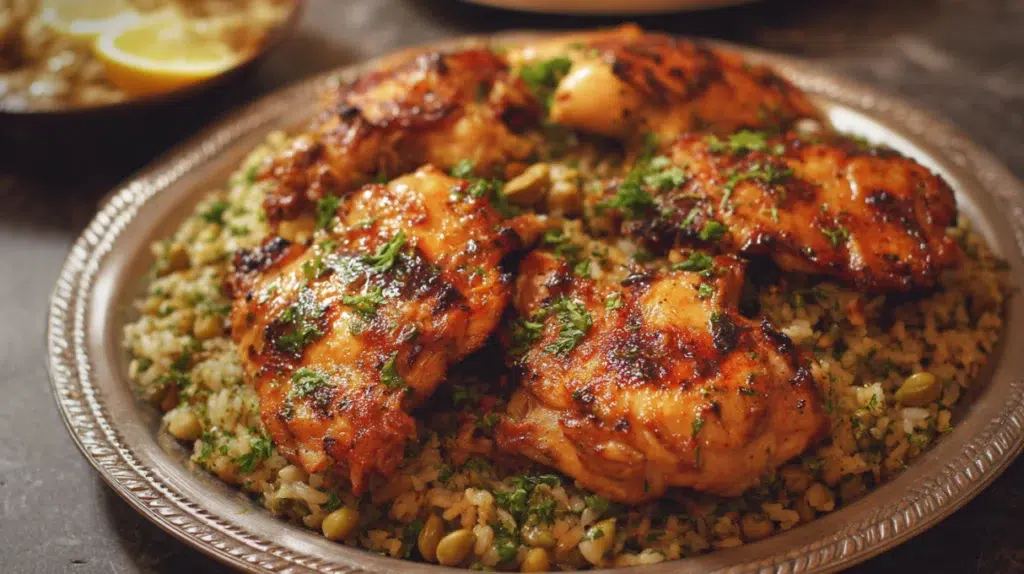
This is the dish I think of when I think of Lebanese home cooking at its most generous and most complete. A whole chicken marinated in seven spice and lemon and garlic, roasted until golden, served over a bed of spiced rice cooked with toasted vermicelli, browned onions, toasted pine nuts and almonds.
It is Friday dinner food. Celebration food. The kind of dish that fills a kitchen with a smell that makes people appear from other rooms asking when it will be ready.
The chicken marinade:
- 1 whole chicken, about 1.5kg (3.3 lbs)
- 3 tablespoons olive oil
- Juice of 1 lemon
- 4 cloves garlic, minced
- 2 teaspoons seven spice
- 1 teaspoon cinnamon
- 1 teaspoon salt
- ½ teaspoon black pepper
Rub the marinade all over the chicken, inside and out. Refrigerate for at least 4 hours or overnight. Roast at 200°C / 390°F for 1 hour 15 minutes until deeply golden and cooked through.
The spiced rice:
- 300g (1½ cups) long-grain rice
- 50g (about 2 oz) vermicelli noodles, broken into small pieces
- 2 tablespoons butter or olive oil
- 1 medium onion, finely diced
- 600ml (2½ cups) chicken stock
- 1 teaspoon seven spice
- ½ teaspoon cinnamon
- Salt to taste
- Handful of toasted pine nuts and slivered almonds for garnish
Brown the vermicelli in butter until golden. Add the onion and cook until soft. Add the rice and stir to coat. Add the stock and spices, bring to a boil, cover and cook on lowest heat for 18 minutes. Fluff and scatter the toasted nuts over the top.
Serve the roasted chicken carved and placed over the rice. A bowl of plain yogurt on the side. Fresh flat-leaf parsley scattered over everything.
Time: 1 hour 30 minutes | Difficulty: Easy, mostly hands-off
5. Chicken Fatteh: The Layered Celebration Dish
Fatteh is a layered dish, toasted or fried pita chips at the base, covered with chickpeas, topped with shredded poached chicken, then a generous pour of garlicky yogurt sauce, finished with toasted pine nuts, paprika, and fresh parsley. It is eaten immediately, the pita chips soften slightly from the warm yogurt sauce in a way that is deeply, specifically satisfying.
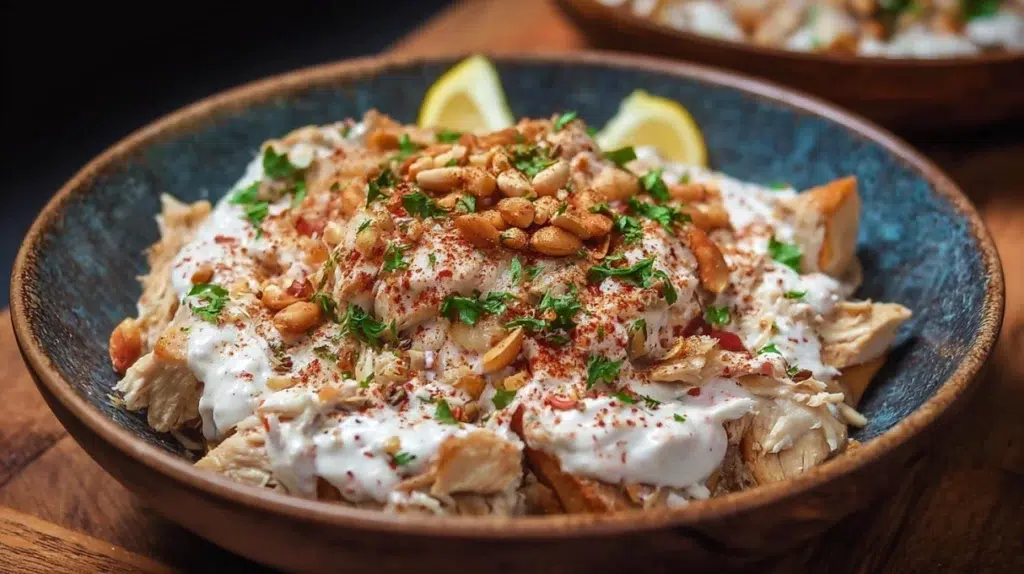
It is a celebratory dish in Lebanon, served at gatherings, at special occasions, at any moment when abundance is the point. The layers are built just before serving and eaten quickly, this is not a make-ahead dish. But every component can be prepared in advance and assembled at the last minute.
Key ingredients: pita bread, cooked chickpeas, poached chicken breast, yogurt, tahini, garlic, lemon, pine nuts, paprika Time: 40 minutes | Difficulty: Easy
How to Serve Lebanese Chicken Dishes: The Complete Table
Every Lebanese chicken dish is better when it is part of a table rather than alone on a plate. The serving philosophy is the same as the mezze philosophy, abundance, variety, generosity.
A complete Lebanese chicken dinner table looks like this:
The main dish, shawarma or kafta or djaj bil-ruzz in the center. Warm flatbread in a basket. A wide plate of hummus drizzled with olive oil. Toum in a small bowl. A simple fattoush or tabbouleh salad “tabbouleh has been a symbol of Lebanese identity since at least the Middle Ages” and it belongs on every Lebanese table alongside grilled meats. Pickled turnips in their bright pink brine. Good olives. Perhaps a dish of labneh with za’atar.
This is not complicated. Most of these components are made ahead. The result is a table that looks like it took all day and actually takes about 2 hours of real work spread over two days.
FAQ About Lebanese Chicken Recipes
Can I use chicken breast instead of thighs for shawarma?
You can but thighs are significantly better. Chicken breast dries out quickly under the high heat needed for caramelization. Boneless thighs stay juicy and develop better char. If breast is what you have reduce cook time and watch carefully.
How long does toum keep?
Two weeks in a sealed jar in the refrigerator. It holds its emulsion well when kept cold. Bring to room temperature before serving, cold toum is slightly less creamy.
Can I make kafta without skewers?
Absolutely. Form into oval patties about 2cm thick and pan-fry or grill exactly as you would a burger. The skewer shape is traditional but purely aesthetic.
What is the best way to warm flatbread for serving?
30 seconds per side in a dry skillet over medium heat. Or wrapped in foil and placed in a 180°C / 350°F oven for 5 minutes. Never microwave, it makes flatbread chewy rather than soft.