
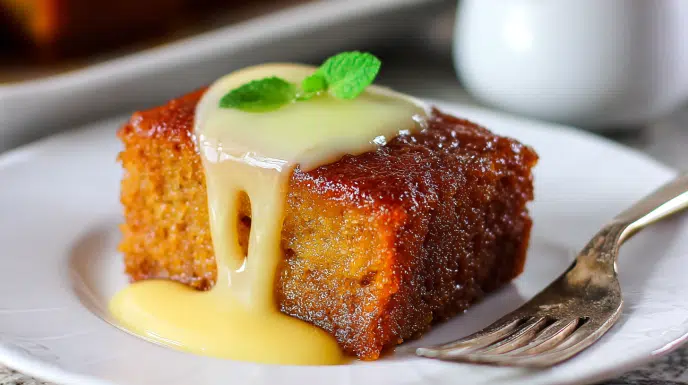
Malva pudding is the dessert I make when I want the table to go completely silent.
Not because it is complicated, it is not. Not because it requires unusual ingredients, it requires nothing you cannot find at any grocery store. But because the moment it comes out of the oven and the warm butter cream sauce is poured over it and soaks into every pore of the sponge, something happens that stops conversation and makes people close their eyes for a second.
That is the malva pudding effect. I have seen it happen every time I have made this for people who had never encountered it before. It is, without any qualification, one of the best warm desserts I have ever made and I have made a lot of warm desserts.
This is part of the South African recipes collection on RecipeWorldly. If you have just had bobotie for the first time and want to understand what South African home cooking is capable of, make this. Tonight if possible.
What Is Malva Pudding?
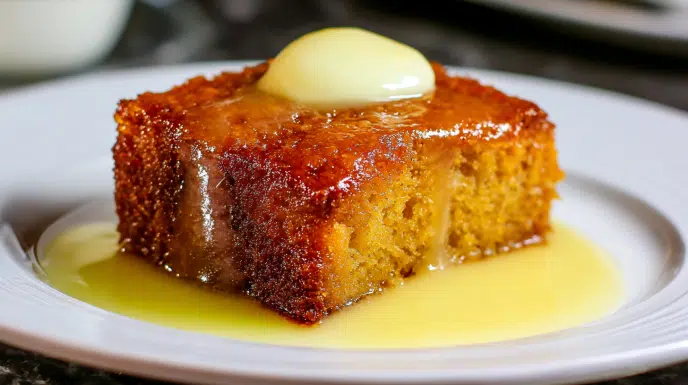
Malva pudding is a warm baked sponge cake made with apricot jam and a small amount of vinegar in the batter, the jam gives it a specific fruity depth, the vinegar reacts with the baking soda to produce a particularly tender, open-crumbed texture. It bakes until golden, then immediately, while still piping hot receives a generous pour of warm butter, cream, and sugar sauce that soaks into the sponge completely, making it wet through, impossibly rich, and deeply satisfying in a way that eating it cold simply cannot replicate.
It is served warm, usually with vanilla ice cream or a spoon of fresh cream alongside. The contrast of the hot pudding against cold ice cream is one of those combinations that makes you wonder why you ever eat anything else.
Sticky toffee pudding, malva pudding’s closest British cousin, is itself a relatively modern invention, likely from the 20th century. Malva pudding is older and specifically South African, rooted in the Cape Dutch and Afrikaner home cooking tradition rather than the British one. The two desserts share a philosophy, warm sponge soaked in sauce, eaten in cold weather, but the flavors are completely different. The apricot jam in malva pudding gives it a fruity warmth that sticky toffee pudding’s dates cannot replicate. And the butter cream sauce used in malva pudding is richer and more straightforwardly indulgent than the toffee sauce of its British counterpart.
Once you have eaten both, you will have strong opinions about which is better. I am not going to share mine. I will say that I make malva pudding significantly more often.
Where Malva Pudding Comes From
South Africa’s Afrikaner food tradition is one of the most distinctive settler cuisines in the world, developed over centuries by the Dutch and German settlers who arrived at the Cape Colony in the 17th century and adapted their European cooking traditions to local ingredients and South African conditions.
The Afrikaner cooking tradition, called boerekosse, meaning “farmer’s food”, is a specifically South African phenomenon. It is hearty, generous, slightly old-fashioned in the best possible sense, built around baking, braai, preserved meats, and warm desserts that were designed to feed families through cold highveld winters.
Malva pudding sits squarely in this tradition. The name “malva” is believed by many to come from the Afrikaans word for marshmallow, a reference to the soft, yielding texture of the finished pudding though others connect it to the South African wine cultivar of the same name, which was historically used in the batter. The exact origin is warmly debated among South African food historians in the way that only the origins of beloved national dishes can be.
What is not debated is that malva pudding appears in South African homes everywhere, at church potlucks, at family Sunday lunches, at school fundraiser tables, after braai feasts when the fire has died down and everyone is content and in need of something warm and sweet to complete the evening.
Ingredients
Serves 8-10 generously | Active time: 20 minutes | Total time: 55 minutes
For the pudding batter:
- 200g (1 cup) sugar
- 2 large eggs
- 2 tablespoons apricot jam, this is the ingredient that makes malva pudding malva pudding. Use good quality smooth jam.
- 1 tablespoon white wine vinegar, sounds alarming, essential, does not taste vinegary in the finished pudding
- 1 teaspoon bicarbonate of soda (baking soda)
- 250ml (1 cup) full-cream milk, slightly warmed
- 250g (2 cups) plain flour
- 1 teaspoon baking powder
- ½ teaspoon salt
- 2 tablespoons butter, melted
For the butter cream sauce, make this while the pudding bakes:
- 250ml (1 cup) heavy cream
- 125g (½ cup) butter, real butter, full fat, no compromise
- 150g (¾ cup) sugar
- 125ml (½ cup) hot water
- 1 teaspoon vanilla extract
To serve:
- Good vanilla ice cream, essential, not optional
- Or a generous spoonful of fresh cream if you prefer
- A light dusting of icing sugar is traditional but not necessary
How to Make Malva Pudding: Step by Step
Step 1: Prepare the Tin and Preheat
Preheat your oven to 180°C / 350°F. Generously butter a deep baking dish, approximately 30x20cm (12×8 inch) or a similar volume round or square dish. The baking dish needs to be deep enough to hold the pudding as it rises during baking and then absorbs the sauce afterwards. Too shallow and the sauce runs over the sides rather than soaking in.
Step 2: Make the Batter (10 minutes)
In a large bowl beat the eggs and sugar together until pale and slightly thickened, about 3 minutes with a hand mixer or vigorous whisking by hand. The mixture should be noticeably lighter in color than when you started.
Add the apricot jam and beat until combined. In a small separate bowl or cup, mix the bicarbonate of soda into the vinegar, it will fizz immediately and vigorously. Add this to the egg mixture and stir through.
Add the melted butter and stir through. Now alternately fold in the flour (sifted with baking powder and salt) and the warm milk starting and ending with flour, mixing gently until just combined. Do not overmix once the flour is in. The batter should be smooth, slightly thick, and pourable.
Pour the batter into the prepared baking dish and spread evenly.
Step 3: Bake (30-35 minutes)
Bake for 30-35 minutes until the pudding is deeply golden on top and a skewer inserted into the center comes out clean. The surface should be firm to the touch and the edges should have begun to pull away slightly from the sides of the dish.
Watch it from 25 minutes, ovens vary and a slightly overbaked malva pudding is drier than it should be. You want it baked through but not dried out, because the sauce is about to do the rest of the work.
Step 4: Make the Sauce (while the pudding bakes)
In a saucepan over medium heat combine the cream, butter, sugar, and hot water. Stir continuously until the butter is melted and the sugar is completely dissolved, about 5 minutes. Do not allow it to boil. Remove from heat, stir in the vanilla extract. Keep warm.
This sauce is deliberately thin, thinner than caramel, thinner than toffee sauce. It needs to be pourable and penetrating rather than thick and glossy. The goal is for it to soak into the pudding completely, not sit on top of it.
Step 5: The Most Important Step, Pour the Sauce Immediately
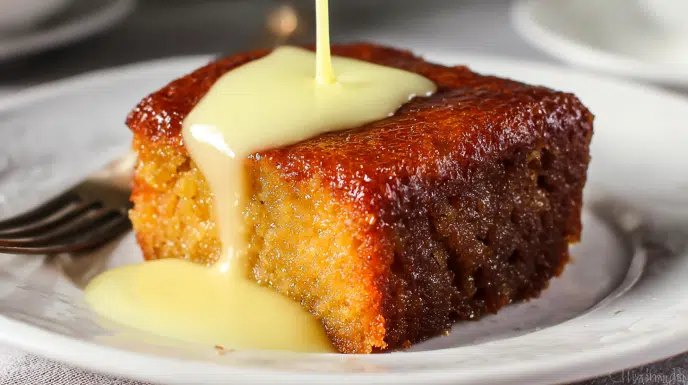
The moment the pudding comes out of the oven, not after it has rested, not after it has cooled slightly, use a skewer or fork to poke holes all over the surface. Then pour the entire warm sauce over the hot pudding in a slow, steady stream, moving around the dish to distribute it evenly.
The hot pudding absorbs the sauce almost immediately. You will watch it disappear into the sponge and wonder if you have done something wrong because the pudding seems to be swimming. You have not done anything wrong. Keep pouring. Use all the sauce.
Leave the pudding to rest and absorb the sauce completely, 10 minutes minimum. During this rest, the sauce finishes soaking in and the pudding transforms from a dry-topped sponge into something entirely different, wet through, soft, yielding, deeply caramel-scented.
Step 6: Serve Warm, Generously, With Ice Cream
Serve directly from the baking dish, large spoonfuls with the caramel-soaked base intact, alongside a scoop of cold vanilla ice cream placed next to the hot pudding, not on top of it. The ice cream melts slightly from the heat of the pudding. That melt is part of the experience.
This pudding needs to be eaten warm. It can be reheated, covered loosely with foil in a 150°C / 300°F oven for 15 minutes, but the first serving, straight from the oven with the sauce still warm, is the definitive version.
Claire’s Notes
On the apricot jam: The jam is not optional or substitutable. It gives malva pudding its specific fruity undertone that distinguishes it from every other warm sponge pudding. Use a smooth, good-quality apricot jam, not a low-sugar or “lite” version. Bonne Maman is excellent and widely available. Cheap, watery jam produces a noticeably less interesting pudding.
On the vinegar: Do not be alarmed by the tablespoon of white wine vinegar in the batter. It reacts with the bicarbonate of soda during baking and produces a more tender, more open crumb than you get from baking powder alone. The finished pudding has no detectable vinegar taste. This is the chemistry working as intended.
On the sauce quantity: The sauce quantity seems excessive when you look at it in the pan. Pour all of it over the pudding anyway. The pudding absorbs all of it. This is not a mistake. This is the recipe working correctly.
On making it ahead: Malva pudding reheats beautifully. Make it the day before, refrigerate, reheat covered in a low oven with an extra splash of cream poured over before reheating. For a dinner party this is actually preferable, it can be prepared completely in advance and finished in 20 minutes while guests have coffee.
On Amarula: Some South African recipes add a small splash of Amarula cream liqueur, made from the fruit of the marula tree to the sauce in place of some of the cream. If you have Amarula, use 3 tablespoons in the sauce alongside the cream. The result has a specific tropical, caramel quality that is completely extraordinary. If you do not have Amarula, the recipe is magnificent without it.
Frequently Asked Questions
Why is my malva pudding dry?
Either overbaked, underdone sauce, or most commonly, the sauce was poured over a pudding that had been allowed to cool too much. The sauce must go on while the pudding is still piping hot. Cold sponge does not absorb warm sauce properly.
Can I make malva pudding without apricot jam?
Technically yes, peach jam is the closest substitute and produces a good result. But apricot jam is what makes malva pudding specifically malva pudding. If you can source it, use it.
How long does malva pudding keep?
3-4 days covered in the refrigerator. Reheat in a low oven as described in the notes above. Do not microwave, it produces uneven heating and the texture suffers.
Can I freeze it?
You can freeze it before adding the sauce, wrap the cooled baked sponge tightly, freeze up to 3 months. Defrost overnight, make fresh sauce, reheat the sponge and pour the sauce over while both are warm. The result is very close to freshly made.
Is malva pudding the same as sticky toffee pudding?
They are related in concept, warm baked sponge with warm sauce but they are different dishes with different flavors and different histories. Malva pudding uses apricot jam and a butter cream sauce. Sticky toffee pudding uses dates and toffee sauce. Both are magnificent. They are not interchangeable.
More From the South African Recipes Collection: