Before deeping in the Mexican recipes, I need to tell you about Dona Carmen before we talk about anything else.
She was, maybe, seventy-five years old. Maybe eighty. Nobody seemed entirely sure, including her. She lived in a house in Oaxaca with a kitchen that had been producing the same mole negro for longer than I have been alive, and when I sat down across from her at that table I felt, immediately and without question, that I was in the presence of someone who knew something I did not.
She didn’t use a recipe. She didn’t use measuring spoons. She didn’t consult anything written down, because nothing was written down. She worked from memory and instinct and sixty years of tasting, adjusting, tasting again, and trusting her hands to know what her mind had long since stopped needing to think about consciously.
She taught me that some recipes are not documents. They are living things. They exist in the hands and the memory of the person who makes them, and they get passed on the same way, not through writing but through watching and doing and tasting until it becomes part of you.
That is what Mexican cooking is to me. Not a cuisine I studied. A cuisine I sat with, in a kitchen in Oaxaca, learning from someone who had been doing it her entire life.
This is the collection that came from that. Every recipe here tested three times minimum in my Nashville kitchen, first traditionally, then adapted for US ingredients, then stress-tested on a tired Tuesday night. Everything available at Kroger or Whole Foods. Nothing inaccessible. Nothing dumbed down.
Oaxaca has been called the culinary capital of Mexico, and after the time I spent there, I understand completely why. Let me show you what I found.
Table of Contents
What Makes Mexican Cuisine So Different From What Most Americans Think It Is
Here is the most important thing I want you to understand before you cook a single recipe from this collection.
Mexican food is not Tex-Mex. It is not the combination platter from the chain restaurant down the road. It is not ground beef in a crunchy shell with shredded iceberg lettuce and sour cream on top, though I understand that has its own time and place and I am not here to judge.
Authentic Mexican cooking is one of the most complex, regionally diverse, historically rich food cultures in the world. It varies so dramatically from state to state, from the deep, dark moles of Oaxaca to the seafood ceviches of Veracruz to the slow-braised meats of Jalisco, that calling it a single cuisine is almost like calling all of European cooking “European food.”
In 2010, UNESCO recognized Mexican cuisine as an Intangible Cultural Heritage of Humanity, one of only a handful of food cultures in the world to receive this distinction. That recognition wasn’t for tacos. It was for the depth and continuity of a culinary tradition that goes back thousands of years, rooted in indigenous Mesoamerican techniques and ingredients that have never stopped being used.
Corn. Chiles. Beans. Squash. Chocolate. Tomatoes. Avocados. These are not just ingredients, they are the foundation of a civilization. And they are what Mexican cooking is built on, right up to today.
Once you understand that, once you understand that Mexican food is ancient and profound and wildly diverse and deeply intentional, everything about cooking it changes. You stop looking for shortcuts and start paying attention.
The Mexican Pantry: Building Your Foundation
Before we get into recipes, let’s stock the pantry. Because the single biggest reason Mexican food falls flat for home cooks is the wrong or missing ingredients. You cannot make a real Mexican salsa with bell peppers and tomato paste. You cannot make proper mole with generic chili powder. The ingredients matter, and most of them are more accessible in the US than people realize.
The dried chiles: the heart of everything:
This is where most American home cooks feel intimidated and where the biggest flavor difference lives. Mexican cooking uses a whole vocabulary of dried chiles, each with its own flavor profile, heat level, and culinary purpose, and they are not interchangeable.
Ancho chiles: dried poblano peppers, deep red-brown, fruity and mild with a rich chocolate-like earthiness. The most versatile dried chile in Mexican cooking. Available at almost every Kroger and Walmart with a decent Latino foods section.
Guajillo chiles: bright red, smooth-skinned, with a slightly tangy, berry-like heat that’s mild to medium. The backbone of many salsas and sauces. Also widely available at most grocery stores.
Chipotle chiles: smoked and dried jalapeños, available both dried and canned in adobo sauce. The canned in adobo version is at every grocery store and is one of the most useful pantry items in Mexican cooking.
Mulato and Pasilla chiles: darker, earthier, more complex. These go into mole negro alongside the ancho and are slightly harder to find, Whole Foods usually carries them, or order online. Worth tracking down.
Árbol chiles: small, thin, fiery hot. Used for heat in salsas and sauces. A little goes a very long way.
The other non-negotiables:
Masa harina: the nixtamalized corn flour that makes real tortillas, tamales, and sopes. Maseca brand is at every grocery store. Do not substitute with regular cornmeal, they are completely different products made in completely different ways.
Mexican oregano: sharper and more citrusy than Mediterranean oregano. The flavor difference is significant. Available at Latino grocery stores and online.
Cumin: used throughout Mexican cooking, though more sparingly than you might expect. Fresh-ground from whole seeds makes a noticeable difference.
Epazote: an herb used in black beans and some salsas, with a pungent flavor that has no real substitute. Fresh epazote is worth finding if you can. Dried works in a pinch.
Tomatillos: small green fruits in papery husks that form the base of salsa verde. Available at almost every major grocery store now, usually in the produce section near the peppers.
Lard: yes, really. Traditional Mexican cooking uses lard for tamales, for refried beans, for frying. The flavor difference is real and significant. If lard is a hard stop for you, use a neutral oil, but know what you’re trading.
For the complete deep-dive on sourcing every ingredient, where to find it, and what to substitute when you genuinely can’t, see the full Mexican pantry guide.
The Recipes You Should Make First
Here is where I’d start if I were building my Mexican cooking skills from scratch. Organized by what you’ll learn, not just what you’ll eat.
Homemade Corn Tortillas
Everything begins here. I’m serious. Before you make any other Mexican recipe, make corn tortillas from scratch at least once.
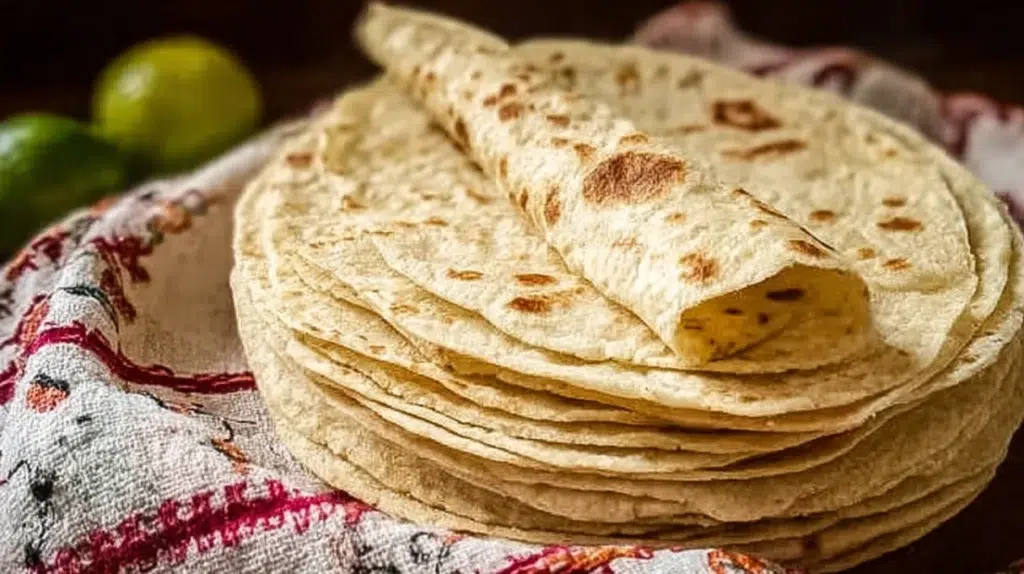
Not because you need to make them from scratch every time, though once you’ve tasted fresh-made, the packaged kind becomes genuinely difficult to go back to. But because making corn tortillas teaches you masa, teaches you how it should feel in your hands, teaches you the basic technique of pressing and cooking that shows up in other recipes throughout this cuisine.
It takes about 30 minutes. You need masa harina, warm water, salt, and a tortilla press (or a rolling pin and two pieces of plastic, that works too). The result is something that tastes completely different from anything you’ve bought in a package.
→ Get the complete Homemade Corn Tortillas recipe
Authentic Mole Negro: Oaxacan Style
This is the most ambitious recipe in the collection and the one I care about most personally.
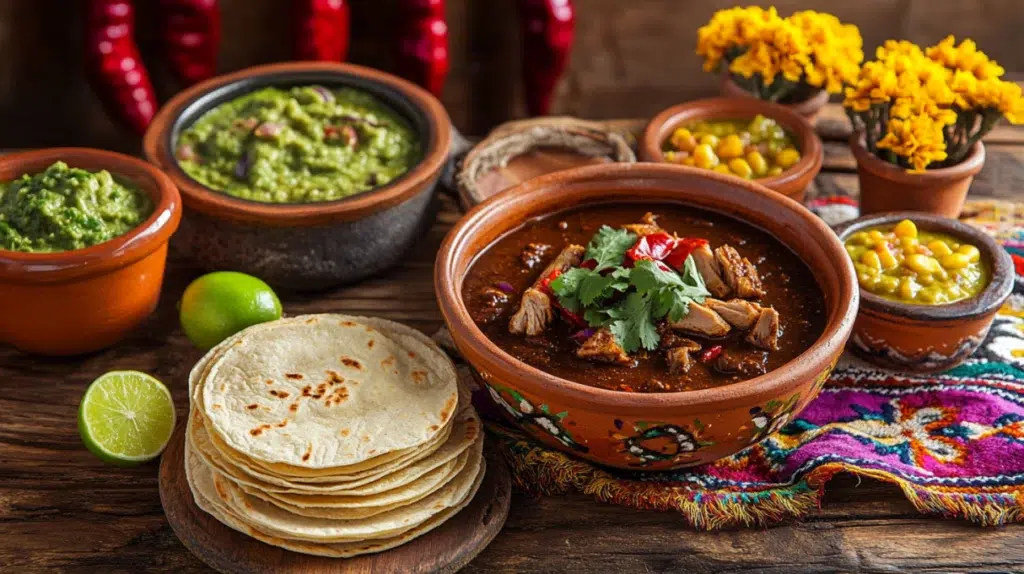
Mole negro is one of the great dishes of the world. Not Mexican food. The world. A sauce of extraordinary complexity, dried chiles, chocolate, tomatoes, tomatillos, toasted nuts and seeds, charred onion and garlic, spices, stale tortillas for body, that takes hours to make and produces something that tastes like nothing else in existence.
Dona Carmen made it in about three hours and made it look effortless. My first attempt in Nashville took six hours and tasted like a reasonable approximation. My third attempt, the one on this site, tastes like something I’m actually proud of.
It is not a Tuesday night dinner. It is a Sunday project. A labor of love. The kind of cooking that reminds you why cooking is worth doing.
→ Get the Oaxacan Mole Negro recipe
Mexican Street Food: Tacos, Elote and More
Mexican street food is where the cuisine is most alive, most spontaneous, most joyful. A perfect taco al pastor. Elote, grilled corn slathered with mayo, cotija cheese, chili powder, and lime, eaten standing on a sidewalk. Tostadas piled so high you genuinely can’t figure out the physics of eating them.
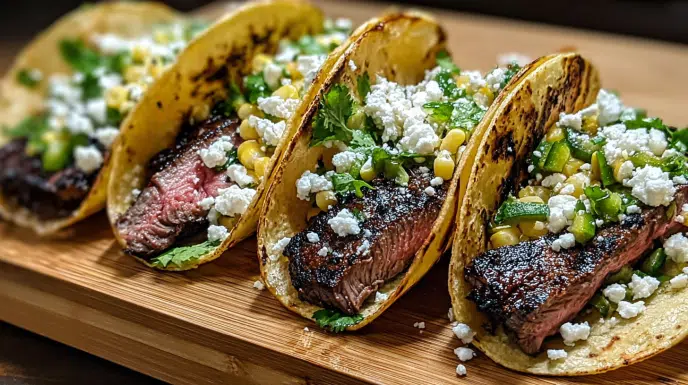
This collection covers the dishes I ate standing on streets and in markets across Mexico, adapted for a home kitchen but keeping the spirit completely intact.
→ See all Mexican Street Food Recipes
The Mexican Pantry Guide: Complete Ingredient Reference
Every chile, every dried herb, every specialty ingredient, what it is, what it does, where to find it in the US, and what to use when you genuinely cannot find the real thing.
This is the reference I wish I’d had when I started learning Mexican cooking. It took me years to build this knowledge. The guide gives it to you in one place.
→ Read the complete Mexican Pantry Guide
Mexican vs Tex-Mex: Understanding the Difference
The most common question I get about Mexican food and one that deserves a real, respectful, nuanced answer, because the difference matters and understanding it makes you a better cook.
→ Read Mexican vs Tex-Mex: What’s Actually Different
Mexican Food Culture: Things Worth Knowing
I want to share a few things about Mexican food culture that I think change how you cook it.
Corn is sacred. Literally.
In Mesoamerican tradition, specifically in the Maya and Aztec civilizations that form the cultural foundation of Mexican cuisine, corn (maize) was not just a crop. It was the substance from which humans were made, according to creation mythology. The Popol Vuh, the sacred Maya text, describes the gods creating humanity from corn dough.
That cultural weight does not disappear just because we’re cooking in a modern kitchen. When you nixtamalize corn, when you treat it with calcium hydroxide in the process that makes masa possible, you are participating in a technology that is literally thousands of years old and that transformed human civilization in Mesoamerica. You are doing what Dona Carmen does. What her mother did. What her grandmother did back through centuries.
That is worth knowing. That is worth respecting.
The chile is not just about heat.
Americans often think of chiles primarily in terms of spiciness, how hot is it? But in Mexican cooking, heat is almost secondary. The complexity of flavor is primary. An ancho chile adds fruity depth and a hint of chocolate. A guajillo adds brightness and tang. A mulato adds earthiness. A pasilla adds richness. None of those qualities is about heat, they are about flavor architecture. Building a mole or a salsa in Mexican cooking is an exercise in layering these flavor qualities, not just dialing up the fire.
Fresh herbs at the end, always.
Mexican cooking uses cilantro, flat-leaf parsley, epazote, and fresh chiles as finishing elements, added at the end of cooking to brighten and lift the whole dish. This is not decoration. The fresh herbs do something to the finished dish that cooked-in herbs cannot replicate. Do not skip the cilantro scattered over the top of your tacos. It is doing real work.
Limes, not lemons.
Every Mexican recipe that calls for citrus means lime. Not lemon, lime. The flavor is sharper, more aromatic, and specifically right for this cuisine. Keep a bag of limes in your fridge if you’re cooking Mexican food regularly. You will use them constantly.
How I Test Every Mexican Recipe
The same process as every other cuisine on this site, three rounds minimum, no shortcuts.
First cook follows the traditional method as closely as possible using authentic ingredients. I document everything. Second cook adapts for the US home kitchen, swapping genuinely unavailable ingredients, simplifying where possible without losing flavor or cultural authenticity. Third cook stress-tests the adapted version, tired, fast, first timer conditions. If it passes the third cook, it goes on the site.
If it doesn’t pass the third cook, it goes back to step two. No exceptions. No matter how good the first two attempts were.
This is not perfectionism for its own sake. It is respect for the people who taught me these dishes and for the people who are going to cook them. You are trusting me with your dinner. That means something.
Frequently Asked Questions About Mexican Cooking
Is authentic Mexican food spicy?
It depends entirely on the dish and the region. Some Mexican dishes are very spicy, certain Oaxacan salsas, dishes made with árbol chiles, and some are completely mild. The cuisine is not uniformly hot. You have enormous control over heat level by choosing which chiles you use and how many. Most of the recipes in this collection are mild to medium with clear instructions for adjusting heat.
What’s the difference between Mexican food and Tex-Mex?
A whole article’s worth of answer. The short version: Tex-Mex is a legitimate regional American cuisine that developed along the Texas-Mexico border, incorporating Mexican ingredients and techniques into a distinctly American style of cooking. Dishes like chili con carne, fajitas, and the combination plate are Tex-Mex innovations, not traditional Mexican dishes. Neither is better, they are different things. See the full Mexican vs Tex-Mex guide for the complete breakdown.
Where do I start if I’ve never cooked Mexican food from scratch?
Corn tortillas. Every time. Start there, make them once, understand masa, and everything else becomes easier. Then make a simple salsa verde, tomatillos, serrano or jalapeño, garlic, onion, cilantro, blended, and use it on everything for a week. By the time you’ve done those two things you’ll have the foundational skills and confidence to tackle anything else in this collection.
Do I need specialist equipment?
A tortilla press makes life significantly easier for tortillas and is inexpensive, about $20-25 on Amazon. A blender or food processor is essential for sauces, salsas, and moles. A heavy skillet or comal for toasting chiles and cooking tortillas. That’s genuinely all you need. Nothing exotic, nothing expensive.
Can I make mole without making it from scratch?
There are good quality mole pastes available, Doña Maria is the most widely available in the US and makes a decent starting point. But if you want to understand what mole actually is and what it can be, make it from scratch at least once. The difference is significant.
All Mexican Recipes on This Site
Flagship Recipes
- Authentic Oaxacan Mole Negro: Dona Carmen’s dish, my adaptation.
- Homemade Corn Tortillas from Scratch
Guides & Deep Dives
- Mexican Pantry Guide: Chiles, Spices & Everything You Need
- Mexican vs Tex-Mex: What’s Actually Different?
Street Food & Everyday Cooking
A Note From Claire
I want to be honest about something before you start cooking from this collection.
Mexican food is sometimes treated carelessly in American kitchens, reduced to a category, a genre, a set of flavors rather than a living, specific, deeply rooted culinary tradition. I want this collection to be the opposite of that.
Every recipe here comes with its cultural context because that context is part of the recipe. The history of corn in Mesoamerica is part of why corn tortillas taste the way they do. The tradition of mole negro being made for special occasions, weddings, festivals, days of the dead, is part of what makes it worth the time it takes.
Dona Carmen didn’t just teach me how to make mole. She taught me that food made with real knowledge and real time and real care tastes different from food that doesn’t have those things. I believe that. I cook that way. And that’s what this collection tries to give you.