
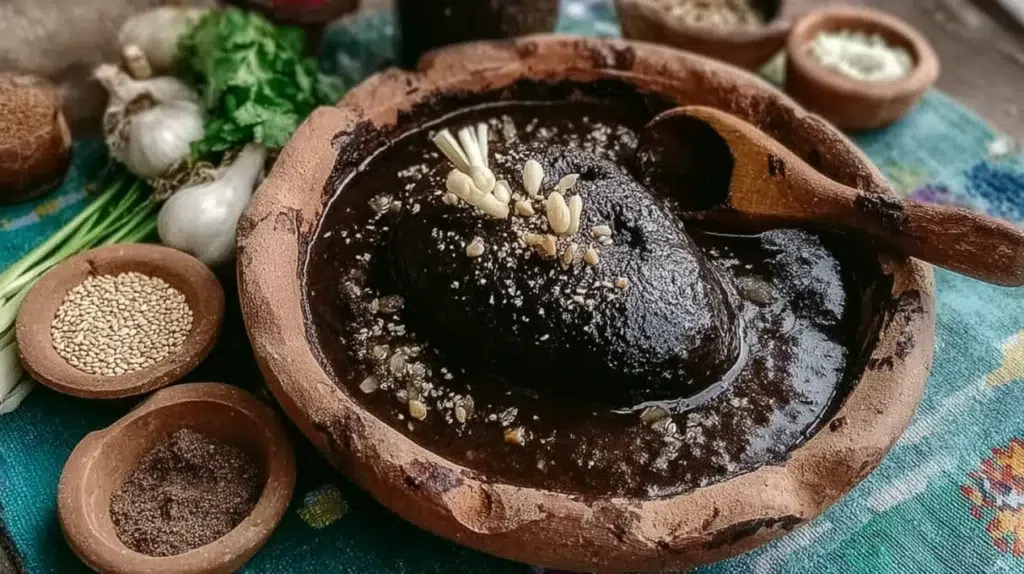
Before deeping in mole negro recipe, I’m going to be straight with you about something.
This recipe took me three years.
Not three years of working on it every day, but three years of attempting it, failing, learning something, attempting again, getting closer, failing differently, learning something new, and slowly, slowly, building up the understanding that Dona Carmen had in her hands and her memory and her sixty years of making this dish every time someone in her community had a wedding or a baptism or a funeral or a reason to celebrate or mourn.
She made it look effortless. In a kitchen in Oaxaca with a clay pot and a wood fire and no written recipe anywhere in sight, she produced a mole negro that made me go completely quiet for a full minute after the first taste. Not because I was being polite. Because I genuinely did not have language for what I was experiencing.
I came home to Nashville and started trying to make it work in my own kitchen with my own stove and the ingredients I could source at Kroger and Whole Foods and online. The first attempt was ambitious and wrong in about six different ways. The second attempt was better and wrong in three different ways. The third attempt, which is the recipe you’re reading right now, is the version I am genuinely proud of.
This is part of my Mexican recipes collection, and it is the recipe I care about most in the entire collection. Not because it’s the most impressive or the most dramatic (though it is both of those things). Because it came from someone who deserved to be learned from. And I want to honor that by giving you something real.
Let’s make mole negro.
What Is Mole Negro: And Why Is It So Complex
Mole negro is the darkest, most complex of all Mexican moles, a sauce of extraordinary depth built from a foundation of multiple dried chiles, dark chocolate, charred ingredients, toasted seeds and nuts, spices, and stale tortillas that act as a thickener. It is the signature dish of Oaxaca, the state in southern Mexico that has been called the culinary heart of the country.
There are seven distinct mole varieties recognized in Oaxacan cuisine, negro, rojo, coloradito, amarillo, verde, chichilo, and manchamanteles, each with its own specific chile combination, color, and flavor profile. Mole negro is the most complex of all of them, the most time-intensive, and widely considered the pinnacle of Oaxacan cooking.
The color is achieved through the use of chilhuacle negro and mulato chiles, darkened further by the traditional technique of charring the chiles until they are almost, but not quite, burned. This charring is not an accident or a mistake. It is intentional and it produces a bitterness that balances the sweetness of the chocolate and the richness of the other ingredients in a way that is, there is no other word, profound.
This is not a weeknight recipe. It is a Sunday project. A labor of love. A dish you make when you want to give people something that required real time and real care. And when you serve it, I promise you this, people will know.
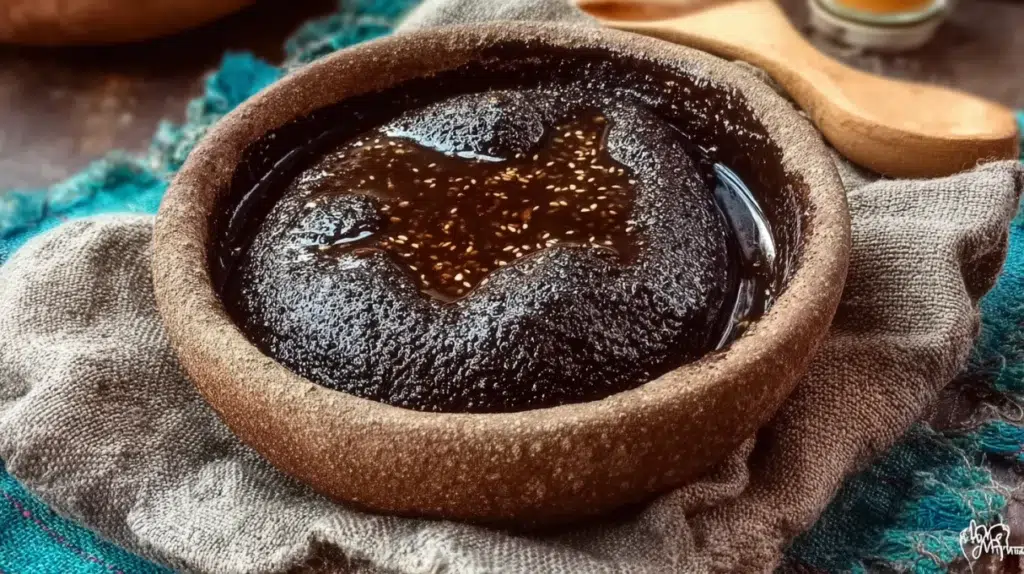
Ingredients For Mole Negro Recipe
Serves 8-10 | Active time: 1 hour 30 minutes | Total time: 3-4 hours Note: This recipe makes a generous batch of mole sauce. Leftover mole freezes beautifully for up to 3 months.
For the dried chiles:
- 4 chilhuacle negro chiles, the essential one, do not substitute
- 4 mulato chiles, dark, earthy, complex
- 3 ancho chiles, fruity, mild, adds body
- 2 pasilla chiles, dark and rich
- 2 chipotle chiles, dried, adds smokiness
- 1 chile de árbol, for heat, optional but traditional
For the charred ingredients:
- 1 large white onion, halved
- 8 cloves garlic, unpeeled
- 3 medium tomatoes, halved
- 4 tomatillos, husked and halved
- 1 stale corn tortilla, torn into pieces
- 1 slice stale bread (bolillo or white bread)
For the toasted seeds and spices:
- ½ cup (65g) sesame seeds
- ¼ cup (35g) pepitas (pumpkin seeds)
- ¼ cup (30g) blanched almonds
- ¼ cup (30g) raisins
- 1 teaspoon cumin seeds
- 1 teaspoon black peppercorns
- 4 whole cloves
- 1 cinnamon stick (Mexican cinnamon / canela if possible)
- 1 teaspoon dried Mexican oregano
- 1 teaspoon dried thyme
For the sauce:
- 90g (about 3 oz) dark chocolate, minimum 70% cacao, Mexican chocolate (Ibarra brand) if you can find it
- 1 litre (4 cups) good quality chicken or turkey stock
- 3 tablespoons lard or neutral vegetable oil
- 2 teaspoons salt, adjust to taste
- 1 teaspoon sugar, adjust to taste
- 1 dried avocado leaf, optional but adds authentic flavor, available online
For serving:
- Turkey legs or chicken pieces, poached in salted stock until tender
- Freshly made corn tortillas, highly recommended
- Sesame seeds for garnishing
- Fresh cilantro
The Method: Step by Step
Step 1: Source and Prepare the Chiles (30 minutes)
The chilhuacle negro is the soul of this mole and the hardest ingredient to find. Check Latin grocery stores first, they almost always carry them. Whole Foods sometimes has them. Otherwise order online, Amazon and specialty spice retailers carry them reliably.
Remove the stems and seeds from all the dried chiles. Reserve about a tablespoon of the seeds, you’ll toast a small amount of them and add back into the sauce. This is traditional and adds complexity. Set the chiles aside in two piles, the chilhuacle negro and mulato chiles in one pile, the ancho, pasilla, chipotle and árbol in another.
Now the charring. In a dry heavy skillet, cast iron is ideal, over medium-high heat, toast the chilhuacle negro and mulato chiles one at a time, pressing them flat against the hot surface with a spatula, for about 30-45 seconds per side. You want them darkened, genuinely darkened, with a few blackened spots, but not completely burned. The smell is intense. Your kitchen will smell like something between coffee and wood smoke and dried fruit. This is correct. This is what you want.
Do not do this step with the windows closed.
Place the charred chiles and the remaining uncharred chiles in a large bowl. Cover with boiling water and weigh down with a plate so they stay submerged. Soak for 30 minutes until completely softened.
Step 2: Char the Vegetables
In the same dry skillet over high heat, char the onion halves cut-side down until deeply blackened, about 8 minutes. Don’t move them. You want real char, not just color. Transfer to a bowl.
Char the unpeeled garlic cloves until the skins are blackened and the insides are soft, about 5 minutes, turning occasionally. Peel when cool enough to handle.
Char the tomato and tomatillo halves cut-side down until softened and darkened, about 6 minutes. Transfer to the bowl with the onion.
In the same skillet, fry the torn tortilla pieces and bread in a small amount of lard until deeply golden and slightly charred at the edges, about 3 minutes. These will thicken the mole and add body. Set aside.
Step 3: Toast the Seeds and Spices
In the dry skillet over medium heat, toast the sesame seeds, stirring constantly, until golden, about 3 minutes. Transfer to a bowl. Toast the pepitas until they start popping, about 2 minutes. Add to the bowl. Toast the almonds until golden, 2 minutes. Add to the bowl.
In the same pan, toast the cumin seeds, peppercorns, cloves, and cinnamon stick together for 1 minute until fragrant. Grind in a spice grinder or mortar and pestle.
Toast the reserved chile seeds, just the tablespoon you set aside, until darkened. Add to the spice bowl.
Step 4: Blend in Batches
This is where the mole comes together. You’ll blend in several separate batches because each component needs different treatment and you want control over the texture.
Batch 1: Drain the soaked chiles, reserving the soaking liquid. Blend the chiles with about 1 cup of warm stock until as smooth as possible. Press through a medium sieve to remove any remaining skin pieces. This step is important, un-sieved mole has a slightly grainy texture that the sieving fixes.
Batch 2: Blend the charred tomatoes, tomatillos, onion, and garlic with ½ cup of stock until smooth.
Batch 3: Blend the toasted seeds, almonds, raisins, fried tortilla and bread with 1 cup of stock until as smooth as possible.
Batch 4: Blend the ground spices with a small amount of stock to make a paste.
Step 5: Build the Mole (45 minutes)
Heat the lard in your largest, heaviest pot, a Dutch oven is perfect, over medium-high heat until shimmering. Add the chile blend from Batch 1. It will splatter dramatically. Stand back, reduce the heat immediately to medium, and stir constantly for 5 minutes as it fries in the fat. This step, frying the chile paste in the fat, is called “freír el mole” and it is essential. It deepens the color and intensifies the flavor in a way that just simmering cannot replicate.
Add the tomato blend (Batch 2) and stir to combine. Cook for another 5 minutes, stirring frequently.
Add the seed and nut blend (Batch 3) and the spice paste (Batch 4). Stir to combine. The mixture will be extremely thick.
Add the remaining stock, a cup at a time, stirring constantly. Add the chocolate broken into pieces and stir until completely melted and incorporated. Add the dried avocado leaf if using. Add salt and the small amount of sugar.
Reduce heat to the lowest possible simmer. Cook uncovered, stirring every 10 minutes to prevent sticking, for 45 minutes to an hour. The mole should gradually darken and deepen in color and the fat will begin to separate and float on the surface. This separation is a sign the mole is ready. It should be thick enough to coat a spoon, not watery, not paste-like.
Taste. Adjust salt. Adjust with a small amount of sugar if the bitterness is too sharp. If the mole tastes flat, it needs more salt. If it tastes harsh, it needs another 15 minutes of cooking.
Step 6: Serve
Add the poached turkey or chicken pieces to the mole and simmer together for 15 minutes so the meat absorbs the sauce. Serve over rice or directly on a plate with a generous pool of mole over the meat. Garnish with sesame seeds and fresh cilantro. Serve with freshly made corn tortillas, this is not optional. The tortilla is part of the dish.
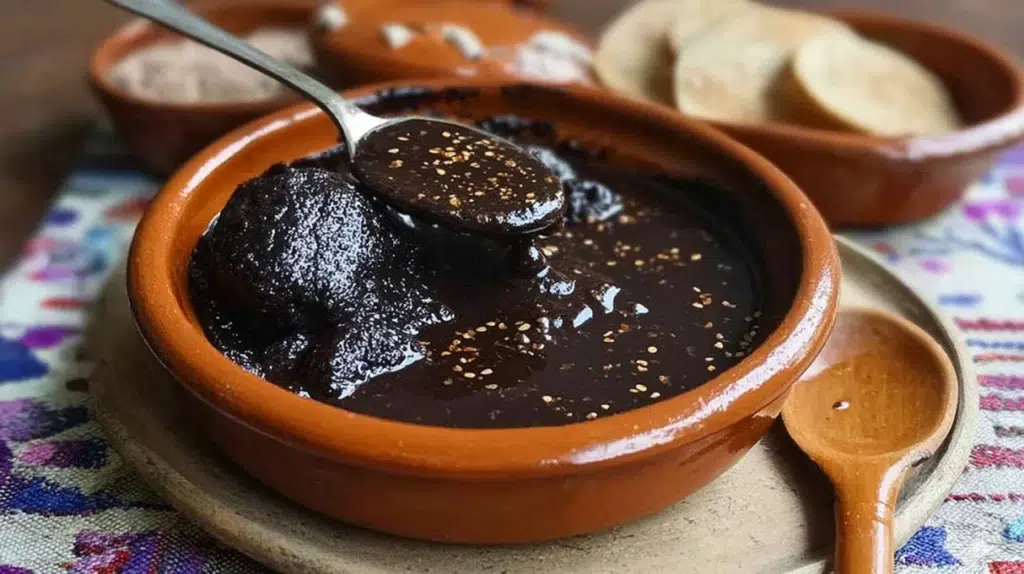
Understanding the Chocolate: Why It Matters
The chocolate in mole negro is not an addition. It is a fundamental structural element of the sauce.
Chocolate originates from Mesoamerica, the cacao tree was domesticated in this region thousands of years before Europeans encountered it, and its use in savory sauces predates its use as a sweet food by millennia. In mole negro, the chocolate provides bitterness, depth, and a particular fatty richness that no other ingredient replicates.
Use the darkest chocolate you can find, minimum 70% cacao. Mexican chocolate (Ibarra brand is widely available at Latin grocery stores and on Amazon) is traditionally used and has a slightly grainier, spicier quality from the addition of cinnamon and almonds. Either works. Do not use milk chocolate or chocolate chips, the sugar content is wrong and the result will be cloying rather than complex.
Claire’s Notes: What I Learned After Three Years
On the charring: The single biggest mistake home cooks make with mole negro is under-charring the chiles out of fear of burning them. You want them dark. Really dark. Almost-but-not-quite burned dark. That bitterness is fundamental to the flavor profile. Trust the process.
On the soaking liquid: I don’t add the chile soaking liquid to the mole, it can be quite bitter and add an unpleasant muddy quality. Use fresh stock instead. Some traditional recipes do use it, taste yours and decide. If it’s pleasantly complex, add a little. If it’s harsh, discard.
On making ahead: Mole negro is dramatically better the next day. Make it a day ahead and reheat gently. The flavors settle and deepen overnight in a way that’s genuinely remarkable. This is also what makes it ideal for entertaining, all the work is done before your guests arrive.
On freezing: Portion the mole into freezer bags or containers and freeze for up to 3 months. Defrost overnight in the fridge and reheat gently with a splash of stock. It reheats beautifully and having mole in the freezer is one of the great kitchen luxuries.
On the chile sourcing: Chilhuacle negro chiles are the make-or-break ingredient. Don’t skip them and don’t substitute with something else. Check Latin grocery stores locally first, they’re usually significantly cheaper and fresher than online. If you genuinely cannot find them anywhere, a combination of more ancho and mulato plus a small amount of dark unsweetened cocoa powder added at the end will give you something in the right direction, but it will not be the same.
On what Dona Carmen would say: She would probably look at this written recipe and shake her head slowly. Because for her, the recipe is not the point. The tasting is the point. The adjusting is the point. The sixty years of knowing what it should taste like before you can say it’s done, that’s the point. This recipe is a starting point. Cook it enough times and eventually you’ll be tasting and adjusting from memory rather than from instructions. That’s when you’ll really have it.
Frequently Asked Questions
How long does mole negro take to make?
About 3-4 hours total, with roughly 1 hour 30 minutes of active cooking time. The rest is simmering time where you just need to stir occasionally. Plan for a full afternoon.
Can I use a shortcut mole paste?
Doña Maria mole negro paste is the most widely available and makes a reasonable weeknight version. But if you want to understand what mole actually is, make it from scratch at least once. The paste and the scratch version are genuinely different experiences.
What do I serve with mole negro?
Turkey is the most traditional pairing, mole negro turkey is the centerpiece of many Oaxacan festivals and celebrations. Chicken works beautifully and is easier to source and prepare. White rice alongside. Fresh corn tortillas on the side, always.
Is mole negro very spicy?
No, despite the number of chiles involved, mole negro is not a hot dish. The heat level is mild to medium. The chile de árbol adds the most heat and can be omitted entirely if you prefer no heat at all.
Why does mole negro taste bitter?
Some bitterness is correct and intentional, it comes from the charred chiles and the dark chocolate and it should be balanced by the sweetness of the raisins, the richness of the nuts, and the small amount of sugar. If your mole tastes sharply bitter rather than pleasantly complex, cook it for another 15-20 minutes, the extended cooking mellows the bitterness significantly.