I still remember the exact moment I fell in love with Moroccan food. It was the summer I turned 26, standing in Jemaa el-Fna square in Marrakesh (a UNESCO World Heritage site, recognized for its role as a living cultural space), jet-lagged, slightly lost, and completely overwhelmed by everything happening around me. The smoke. The noise. The smell of cumin and charred meat drifting through the evening air like it owned the place.
A woman was pressing dough around a sizzling pan of kefta over an open flame, working with this calm, rhythmic confidence that made it obvious she’d done this ten thousand times before. I just… stood there and watched. She didn’t speak English. I didn’t speak Arabic. But somehow she caught me staring, smiled, and handed me a piece of msemen straight off the griddle, still steaming, folded, slightly crispy on the outside and pull-apart soft in the middle.
And that was it. That was the moment. That one bite, from a stranger in a square in Morocco, kicked off four years of traveling and cooking my way across twelve countries.
So yeah. Moroccan food holds a special place for me. It’s where everything started.
Table of Contents
What Is Moroccan Cuisine, Really?
Okay so here’s what most people get wrong. Moroccan food isn’t just “North African food.” It’s this incredibly specific, deeply layered cuisine that sits at the crossroads of Berber, Arab, Andalusian, and French cooking, and that combination produces something unlike anything else in the world.
The flavor profile is… hard to describe if you’ve never experienced it. It’s warm and aromatic without being spicy-hot (unless you want it to be). Sweet and savory happen in the same bite and somehow it just works. Dried fruits in a meat stew? Honey drizzled over a savory pastry? Cinnamon in a chicken dish? Yes, yes, and absolutely yes. That’s Moroccan cooking doing what it does best, making you question every flavor rule you thought you knew.
The cuisine is built on three foundations: slow cooking, layered spicing, and incredible hospitality. Food in Morocco isn’t just fuel. It’s how people show love, celebrate milestones, and welcome strangers. I think about that msemen woman every time I make something from this collection. Food really is the shortest distance between two people.
The Essential Moroccan Spices: Your Starting Point
Before we get into recipes, let’s talk spices. Because honestly? This is where most people’s Moroccan cooking goes wrong. You can have the right technique and the right ingredients and still end up with a flat, disappointing dish if your spice game isn’t there.
The good news is that most of what you need is either already in your pantry or available at any regular grocery store. Kroger, Walmart, Whole Foods, all of them carry what you need.
The non-negotiables:
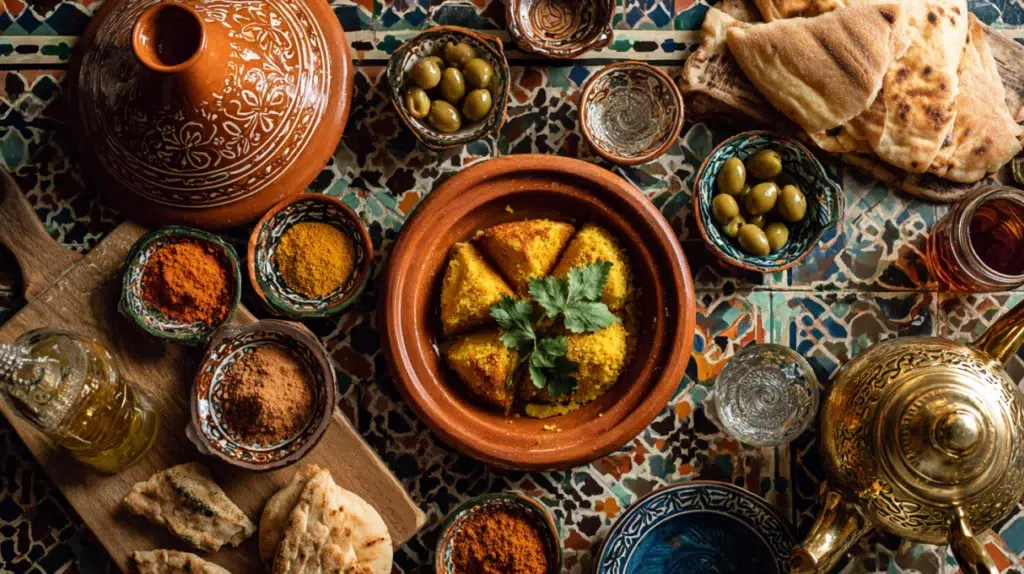
Cumin: this is the backbone of Moroccan cooking. Ground cumin goes in almost everything. Toasting whole cumin seeds and grinding them fresh makes a noticeable difference, but pre-ground works fine for weeknight cooking.
Cinnamon: and not just for desserts. Cinnamon goes into tagines, into couscous, into spiced ground meat. It adds this deep warmth that you can’t quite place at first but you’d absolutely miss if it wasn’t there.
Ginger: ground dried ginger, not fresh (though fresh works too). It’s lighter and more floral than you’d expect.
Turmeric: a small amount goes a long way. It gives dishes that golden color and adds an earthy undercurrent that ties everything together.
Paprika: both sweet and smoked versions. Morocco uses a lot of paprika, more than most people realize.
Saffron: yes, it’s expensive. No, there’s no real substitute. But a tiny pinch, and I mean tiny, like 8-10 threads, is enough to perfume an entire pot of couscous or a tagine broth. A small jar lasts months if you use it right. Saffron is the world’s most expensive spice by weight, a fact that makes more sense when you learn it takes roughly 75,000 flowers to produce a single pound.
And then there’s Ras el Hanout, the king of Moroccan spice blends, and a whole topic unto itself. I have a full guide to Moroccan spices that goes deep on this, but the short version is: it’s a complex blend of anywhere from 10 to 30+ spices depending on who’s making it. You can buy a decent version at most specialty stores, or make your own once you’re comfortable with the individual spices.
Wait, before I forget, preserved lemons are also essential. They’re not a spice but they function like one. That salty, intensely citrusy flavor you get in a proper chicken tagine? That’s the preserved lemon doing its job. You can find them at Whole Foods or Middle Eastern grocery stores, or, and this is honestly the better option, make your own. It takes 10 minutes of active work and three weeks of waiting. Worth every second.
The Moroccan Tagine: Everything You Need to Know
If there’s one dish that defines Moroccan cuisine for most Americans, it’s the tagine. And rightfully so, it is spectacular.
A tagine is both the name of the dish and the name of the conical clay pot it’s traditionally cooked in. The design is genius, honestly. The cone-shaped lid creates a self-basting cycle, steam rises, condenses at the top, and drips back down over the meat and vegetables, keeping everything incredibly moist without you doing anything. Slow, low, patient cooking that produces results that feel almost unfair for how hands-off the process is.
Now. Do you need an actual tagine pot to make Moroccan tagine?
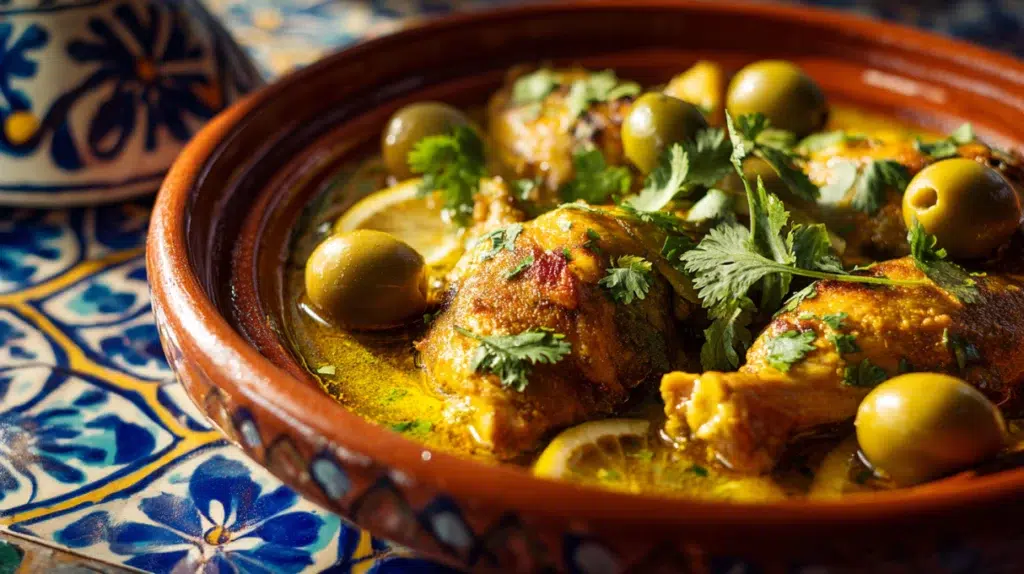
No. You really don’t. A heavy-bottomed Dutch oven works beautifully. I’d argue it works even better on a modern gas or electric stove because you get more even heat distribution. I did a full comparison and wrote about it in my tagine pot substitute guide if you want the details, but the short answer is: use what you have. A Le Creuset, a Lodge cast iron Dutch oven, even a heavy stockpot with a tight lid, all fine.
The real key to a great tagine isn’t the vessel. It’s the technique. Low and slow. Don’t rush it. Don’t crank the heat when you’re impatient (I’ve done this, I know how it ends). Let the magic happen at a gentle simmer and it’ll reward you.
The Moroccan Recipes You Should Make First
Okay, here’s where I’d start if I were you, especially if Moroccan food is new to your kitchen. I’ve organized these roughly in order of approachability, though honestly none of them are as complicated as they look.
Moroccan Chicken Tagine with Preserved Lemons and Olives
This is the flagship. The one I make most often, the one my Nashville friends ask for by name, the one that converted my neighbor Karen from someone who “doesn’t really do ethnic food” (her words, not mine) into someone who bought a jar of preserved lemons and now keeps ras el hanout in her spice drawer.
It’s deeply savory, warmly spiced, with this bright lemony tang from the preserved lemons that cuts right through the richness of the slow-cooked chicken. The olives add a briny depth that… I don’t know, it just makes the whole thing taste more complex than it has any right to for a one-pot weeknight dinner.
→ Get the full Moroccan Chicken Tagine recipe
Authentic Moroccan Couscous
Not the five-minute box kind. Real couscous, steamed twice over the stew, fluffed with butter, topped with caramelized onions, chickpeas, vegetables, and those sweet raisins that I know sound weird but please just trust me.
This is the dish I watched Moroccan families make on Fridays, it’s a communal meal, the way Sunday roast is in England or fried chicken is in the South. It takes a couple of hours but almost all of that is hands-off time, and the result is something that genuinely makes people go quiet when they take the first bite. Good quiet. The kind where compliments come a full minute later because nobody wanted to stop eating.
→ Get the Authentic Moroccan Couscous recipe
Moroccan Breakfast: Msemen, Baghrir and Mint Tea
This one is personal. Msemen was my first Moroccan food experience, that folded, griddle-fried flatbread that the woman in Jemaa el-Fna handed me. And baghrir (the thousand-hole pancake, people actually call it that) is one of those foods that seems too simple to be that good and then absolutely floors you.
Moroccan breakfast is its own whole universe. Slow, social, deeply comforting. Perfect for a weekend morning when you have nowhere to be.
→ See all Moroccan Breakfast Recipes
Moroccan Vegetarian Recipes
Moroccan cuisine is actually naturally incredible for vegetarians, the vegetable tagines, the lentil soups (harira is a whole thing), the grain-based dishes. This isn’t a concession or a “oh but there’s a vegetarian version” situation. These dishes are genuinely outstanding on their own terms.
→ Browse Moroccan Vegetarian Recipes
The Moroccan Spice Guide: Going Deeper
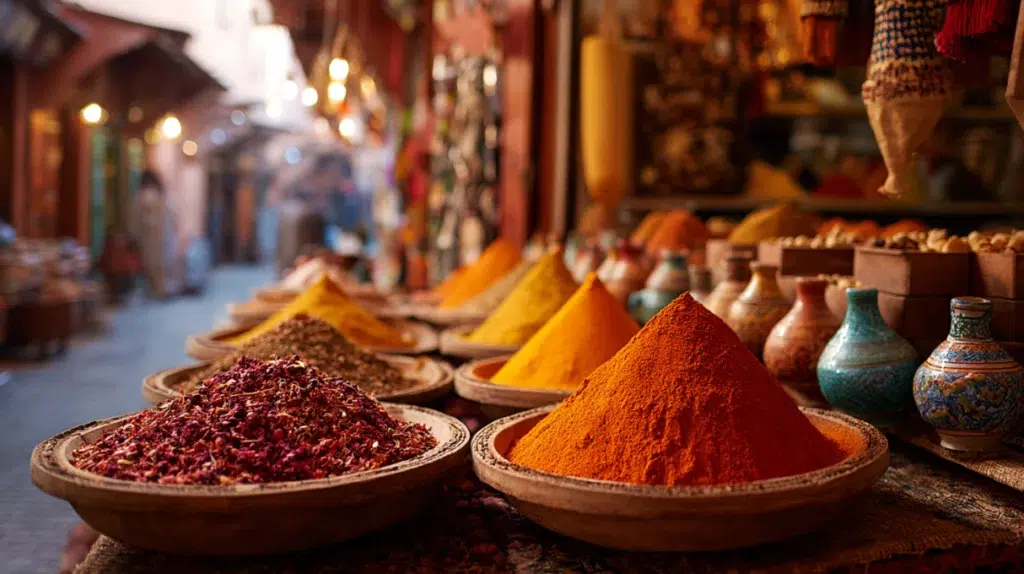
I keep mentioning spices because I can’t help it, they really are the heart of this cuisine. If you want to go further than the basics I covered above, I put together a full breakdown of every major Moroccan spice and spice blend, what each one does, how to buy it, how to store it, and how to use it if you’ve never cooked with it before.
Including finally, a proper explanation of ras el hanout. What’s actually in it, why it varies so much from producer to producer, and my recipe for making your own at home.
→ Read the complete Moroccan Spice Guide
Moroccan Food Culture: Things Worth Knowing Before You Cook
I want to take a second here and talk about something that I think makes the difference between cooking Moroccan food and actually understanding it.
Moroccan meals are not eaten the same way American meals are. There’s no individual plate in front of each person. Traditionally, food is served in a communal dish in the center of the table, a large tagine or a platter of couscous, and everyone eats from the same pot, using bread to scoop rather than utensils. You eat from the section directly in front of you. You don’t reach across to the other side of the dish. These aren’t just etiquette rules, they’re an expression of how the food is meant to be shared.
Bread, specifically Moroccan khobz, is present at every meal. It’s not a side dish. It’s a utensil. You tear a piece, use it to scoop up meat or sauce, eat it. Repeat.
Tea comes at the end. Moroccan mint tea, gunpowder green tea, fresh spearmint, a significant amount of sugar, is poured from height into small glasses to create a froth. This isn’t just ceremony. The pouring from height aerates the tea and changes the texture. And the sugar isn’t negotiable in traditional Moroccan homes, though I know, I know, you can adjust it in your own kitchen.
I’m not saying you need to replicate all of this at your dinner table in Nashville. But knowing the context of how these dishes are meant to be experienced, that changes how you cook them. It makes you more patient. More generous with the portions. More willing to let the food do its thing without overthinking it.
How I Test Every Moroccan Recipe Before It Goes on This Site
Quick note on my process, because I think it matters and I want you to trust what you’re making.
Every single Moroccan recipe on this site has been cooked at least three times in my Nashville kitchen before it goes live. First time: I follow the authentic recipe as closely as possible, traditional method, traditional ingredients, no shortcuts. Second time: I adapt it for a US home kitchen, swapping out anything that’s genuinely difficult to source and making sure it works on a standard American stove with standard American equipment. Third time: I cook it tired. I cook it fast. I cook it like someone who’s never made it before and see if it still holds up.
If it doesn’t survive the third cook, it goes back to step two. No exceptions.
Every recipe includes substitution notes for anything specialty. Everything is available at Kroger, Whole Foods, or, for a few specific items like preserved lemons or good ras el hanout, Amazon or a Middle Eastern grocery store if you have one nearby.
The Moroccan Pantry: What to Buy and Where
Let’s make this practical. Here’s what I’d suggest buying if you’re starting from zero and want to build a Moroccan pantry that covers 90% of the recipes on this page.
From any regular grocery store: Ground cumin, ground cinnamon, ground ginger, ground turmeric, sweet paprika, smoked paprika, honey, dried apricots, raisins, chickpeas (canned or dried), green olives, couscous (the box kind is fine for most recipes)
From Whole Foods, Trader Joe’s, or a specialty store: Preserved lemons (or make your own, seriously, so easy), ras el hanout spice blend, saffron threads, harissa paste, Moroccan olive oil
Worth ordering online if you can’t find locally: Good quality ras el hanout (the store brands are often lacking, Moroccan-sourced blends make a real difference), rose water (for some desserts), argan oil (not essential but if you want to go deep into Moroccan cuisine, it’s a beautiful ingredient)
Frequently Asked Questions About Moroccan Cooking
Is Moroccan food spicy?
Mostly no, not in the way that Thai or Mexican food can be spicy. Moroccan cooking is heavily spiced but not typically hot-spicy. The heat, when it’s there, comes from harissa (a chili paste) which is served on the side and used to your taste. The base of most Moroccan dishes is warm and aromatic, not fiery.
What’s the difference between Moroccan and Middle Eastern food?
Genuinely a great question and one I get a lot. The short answer is: they share some ingredients (cumin, coriander, chickpeas, lamb) but are quite distinct cuisines. Moroccan food has much stronger Berber and Andalusian influences, uses more sweet-savory combinations, and relies heavily on slow-braised dishes. Middle Eastern food (Lebanon, Syria, Turkey) tends toward fresher, lighter preparations, mezze, grilled meats, raw salads.
Can I make Moroccan food without a tagine pot?
Yes. Absolutely yes. A Dutch oven or any heavy pot with a tight lid works perfectly. See my tagine pot substitute guide for exactly how to adjust.
How long does Moroccan food take to cook?
Honestly, it depends. Moroccan salads and breakfast dishes can be done in 20-30 minutes. A proper tagine or couscous dish is 1.5-2 hours, but 90% of that is hands-off simmering time. The active cooking time is usually 20-30 minutes. You’re not standing at the stove the whole time, you’re living your life while the pot does the work.
Where do I start if I’ve never cooked Moroccan food before?
Start with the chicken tagine. It’s the most forgiving of the big dishes, uses the most accessible ingredients, and produces the most dramatic results for the effort involved. Once you’ve made that once, everything else will make a lot more sense.
Start Here: My Personal Recommendation
If I had to give you one place to start with Moroccan cooking, it’s the chicken tagine. Make it on a Sunday afternoon. Use a Dutch oven if you don’t have a tagine pot. Don’t skip the preserved lemons. Open the windows because the smell, that combination of saffron and cinnamon and cumin simmering together, is going to make your whole house smell incredible for hours.
And then, once you’ve tasted it, you’ll understand why a stranger in a square in Marrakesh handing me a piece of flatbread off a griddle was enough to change the entire direction of my life.
Moroccan food does that. It gets you.