Can I be honest with you for a second?
The first time I tried to cook Moroccan food at home, back in Nashville, about three weeks after I’d returned from Marrakesh, I went to Kroger, grabbed whatever spices looked vaguely Middle Eastern, threw them in a pot, and produced something that tasted like… sad soup. Warm-ish. Brownish. Deeply, profoundly disappointing.
It wasn’t the technique. It wasn’t the chicken. It was the spices. Wrong ones, wrong proportions, wrong understanding of what each one was actually supposed to do.
So before you touch a single recipe from my Moroccan recipes collection, please read this first. Ten minutes here will save you from the sad soup situation. I promise.
Why Moroccan Spices Feel Complicated (And Why They’re Actually Not)
Here’s the thing about Moroccan spicing that nobody tells you upfront: it’s not about heat. It’s about layers.
American cooking tends to use spices in a pretty straightforward way, cumin goes in chili, cinnamon goes in apple pie, paprika goes on deviled eggs. Clean, separate, predictable. Moroccan cooking blows all of that up. Cinnamon goes in the lamb stew. Ginger goes in the chicken. Cumin goes in… pretty much everything. And somehow it all works together in a way that makes you close your eyes on the first bite.
The logic isn’t random, it’s just different from what most of us grew up with. Once you understand what each spice brings to the party, the whole cuisine clicks into place. So let’s go through them one by one.
The Essential Moroccan Spices: What Each One Does
Cumin: The Backbone
If Moroccan cuisine had a signature spice, cumin would be it. Ground cumin goes into tagines, into kefta (spiced ground meat), into vegetable dishes, into marinades. It has this earthy, slightly smoky warmth that sits at the base of almost every savory Moroccan dish.
Buying tip: Pre-ground cumin from the grocery store is completely fine. But, and this is worth the extra five minutes if you’re making something special, toasting whole cumin seeds in a dry pan and grinding them fresh is a completely different experience. The flavor is brighter, more complex, almost floral. I do this for my chicken tagine every single time now. It matters.
Store it: Away from heat and light. Whole spices keep longer than ground, up to 3 years vs about 1 year for ground.
Cinnamon: The Surprise
I know. I know. Cinnamon in savory food sounds wrong if you’ve never encountered it. But this is one of those fundamental Moroccan flavor principles, sweet and savory are not enemies, they’re collaborators.
Ground cinnamon goes into tagines with dried fruit, into couscous, into spiced ground lamb. It adds depth and warmth that you can’t quite identify but you’d absolutely miss if it weren’t there. It’s not a strong cinnamon flavor, you’re not making cinnamon rolls. You’re just adding a whisper of warmth that makes everything taste more… complete.
Use Ceylon cinnamon if you can find it (Whole Foods usually carries it). It’s more delicate and floral than the Cassia cinnamon that most grocery stores sell. Worth the upgrade.
Ginger: The Brightness
Ground dried ginger in Moroccan cooking is lighter and more floral than fresh ginger, it adds brightness without that sharp punch you get from fresh. It appears in tagines, in spice blends, in marinades.
I used to skip this when I first started cooking Moroccan food because I didn’t really understand what it was contributing. Big mistake. It’s the spice you don’t notice until it’s missing.
Turmeric: The Color and the Earth
A small amount of turmeric, usually half a teaspoon or les, does two things: it gives dishes that golden color that makes Moroccan food so visually stunning, and it adds an earthy, slightly bitter undercurrent that ties everything together.
Don’t go overboard. Too much turmeric and everything tastes medicinal. A little goes a long, long way.
Paprika: More Than You Think
Morocco uses a lot of paprika. Both sweet and smoked versions. It adds color, subtle sweetness, and body to sauces and marinades. I use sweet paprika as the base in most recipes and add smoked paprika when I want more depth.
This is one of the most accessible Moroccan spices, every grocery store carries it and it keeps well. If yours has been sitting in the cabinet since 2019… just buy a fresh jar. Old paprika tastes like nothing.
Saffron: Yes, You Need It. No, It’s Not Optional.
Okay. Let’s talk about saffron.
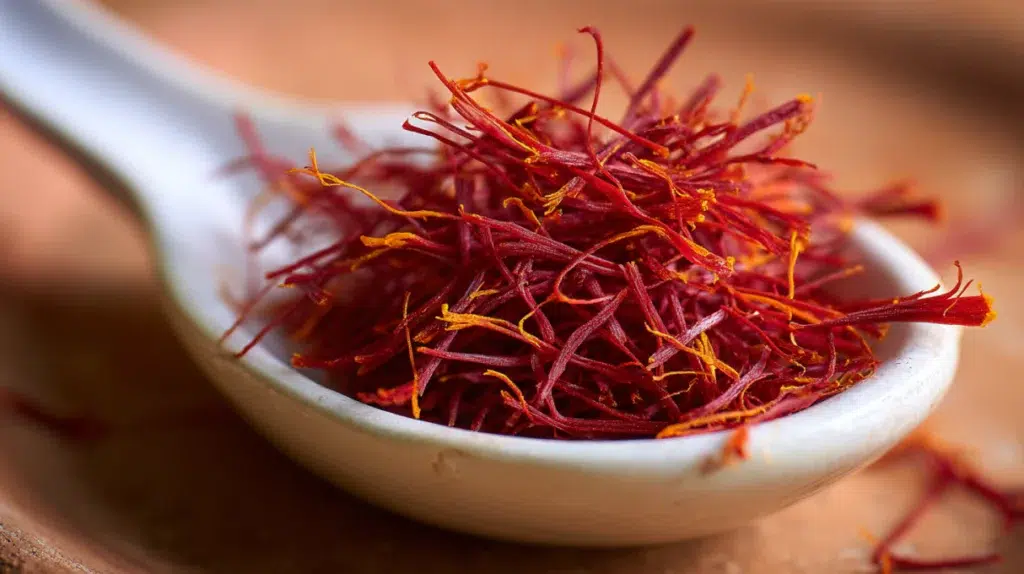
I know it’s expensive. I know it feels like a luxury ingredient. But here’s the reality, a small jar of saffron costs about $8-12 at Whole Foods and you use 8-10 threads at a time. That jar will last you six months of regular Moroccan cooking. We’re talking pennies per dish.
And what it does cannot be replicated. That deep golden color in a tagine broth? The floral, almost honey-like warmth? That’s saffron. “Yellow food coloring” is not saffron. Turmeric is not saffron. Nothing is saffron except saffron.
How to use it: Always bloom it first. Crumble 8-10 threads into 2 tablespoons of warm (not boiling) water and let it sit for 5 minutes. This releases the color and flavor into the water, which then distributes evenly through your dish. Throw dry threads straight into a pot and half of them just float around doing nothing.
Where to buy: Whole Foods, specialty grocery stores, or Amazon. Look for Spanish or Iranian saffron for best quality. Iran produces approximately 90% of the world’s saffron supply, making it the global benchmark for quality and the standard against which all other saffron is measured.
Preserved Lemons: The Secret Weapon
Technically not a spice but it functions like one. Preserved lemons are whole lemons that have been cured in salt and their own juice for weeks until the rind becomes soft, intensely flavored, and completely transformed.
You use just the rind, rinse it well and slice it thin, and it adds this bright, salty, deeply citrusy note that is unlike anything else in cooking. It’s the thing that makes people taste my chicken tagine and say “what IS that?” It’s not lemon. It’s not salt. It’s something in between that’s better than both.
Find it at: Whole Foods, Middle Eastern grocery stores, or Amazon. Or make your own, 10 minutes of work, 3-4 weeks of waiting. Completely worth it.
Ras el Hanout: The King of Moroccan Spice Blends
Wait. Before I forget, we need to talk about ras el hanout properly because it deserves its own section.
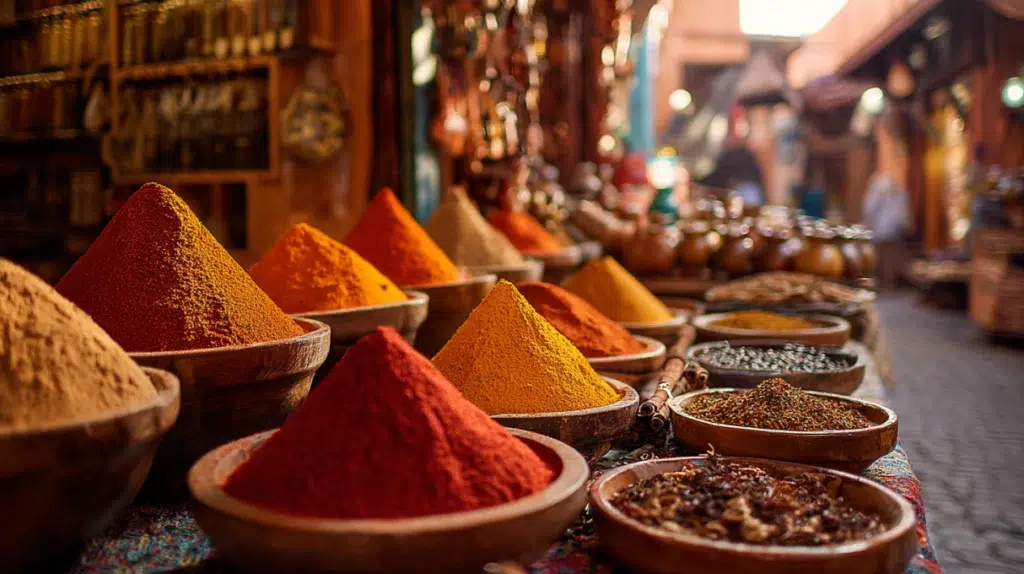
The name translates roughly to “head of the shop”, meaning the best spices the merchant has to offer. And it’s exactly that. Ras el hanout is a complex spice blend that can contain anywhere from 10 to 35+ individual spices depending on who’s making it: cumin, coriander, cinnamon, ginger, turmeric, cardamom, nutmeg, allspice, rose petals, lavender… the list varies wildly.
The blend has been documented in Moroccan culinary tradition for centuries and varies significantly by region, family, and individual spice merchant.
There is no single definitive ras el hanout recipe. Every Moroccan family, every spice merchant, every region has their own version. That’s kind of the magic of it.
Buying vs making your own:
Buying is fine, especially when you’re starting out. Look for ras el hanout at Whole Foods, World Market, or specialty spice shops. The quality varies enormously between brands though. Cheap supermarket versions often taste flat and one-dimensional. I’d recommend spending a little more on a Moroccan-sourced blend if you can find one.
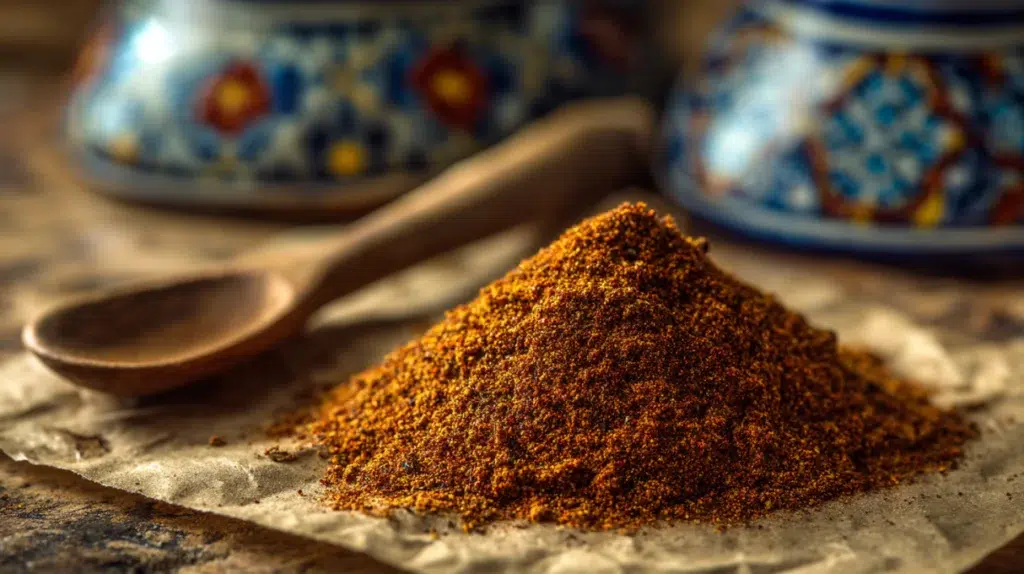
Making your own is honestly not as complicated as it sounds. Once you have the individual spices (which you’ll have after stocking your Moroccan pantry), you can blend your own in about 5 minutes. I’ll be publishing my personal ras el hanout recipe soon, but in the meantime, a good store-bought blend works perfectly for every recipe in my Moroccan recipes collection.
Where to Buy Moroccan Spices in the US
At any regular grocery store (Kroger, Walmart, Publix): Cumin, cinnamon, ginger, turmeric, sweet paprika, smoked paprika
At Whole Foods or specialty stores: Saffron, ras el hanout, smoked paprika, preserved lemons, Ceylon cinnamon, good quality cumin
Online (Amazon or specialty spice retailers): Ras el hanout from Moroccan suppliers, high-quality saffron, preserved lemons, rose water, argan oil
At Middle Eastern grocery stores (if you have one nearby): Everything above at better prices, plus fresh spice blends mixed to order, bulk preserved lemons, and other ingredients you won’t find elsewhere
How to Store Your Moroccan Spices
A few quick rules that make a real difference:
Ground spices lose potency fast. Buy smaller quantities more frequently rather than huge jars that sit for years. If you can’t remember when you bought it, throw it out and buy fresh. Stale spices are the silent killer of good Moroccan cooking.
Store everything away from heat and light. Not above the stove. Not on a sunny windowsill. A dark cabinet or drawer is ideal.
Whole spices last significantly longer than ground. If you’re going to invest in quality spices, buy whole and grind as needed. A cheap coffee grinder dedicated to spices is a $15 investment that completely changes your cooking.
Start Cooking: You’re Ready
That’s genuinely everything you need to know to start cooking Moroccan food with confidence. You don’t need every spice on day one, start with cumin, cinnamon, ginger, turmeric, and paprika, and you can make probably 80% of the recipes on this site.
Then add saffron when you’re ready for tagines. Add preserved lemons. Add ras el hanout. Build the pantry one recipe at a time.
And honestly? That’s not a bad way to spend a Sunday afternoon.
More from the Moroccan Recipes Collection:
- Moroccan Chicken Tagine with Preserved Lemon and Olives
- Authentic Moroccan Couscous: The Friday Meal
- Do You Need a Tagine Pot? Honest Substitutes Guide
- Moroccan Breakfast Recipes: Msemen, Baghrir & Mint Tea