Nigerian recipes represent one of the most vibrant, most underrepresented and most genuinely exciting food cultures in the world, and one of the most difficult to find authentic, detailed guidance on in English.
Nigeria is the most populous country in Africa, with over 220 million people across more than 250 ethnic groups and three major regional food traditions. Its food culture is as diverse as its people, the palm oil-based soups and stews of the Yoruba south, the spiced grilled meats and millet-based dishes of the Hausa-Fulani north, the bold egusi and ofe onugbu of the Igbo southeast. And yet for most American home cooks, Nigerian food remains almost entirely unknown. The restaurants are few. The cookbooks are scarce. The online recipes range from excellent to wildly inauthentic. RecipesWorldly spent three months in Lagos and Accra specifically to fix this.
This is part of the African recipes collection on RecipesWorldly.
What Nigerian Food Actually Is
Food is an important part of Nigerian life, in the south, soups built on tomatoes, onions, red pepper and palm oil are prepared with okra, egusi and meat or fish, while rice is eaten throughout the country. This description captures the foundation, but it only hints at the depth and variety of what Nigerian cooking actually contains.
The first thing to understand is that Nigerian food is not one cuisine. It is a collection of distinct regional traditions that share a set of core ingredients and a general philosophy, food should be deeply flavored, generously seasoned, and made from ingredients that have been coaxed into giving everything they have. Nigerian cooking does not whisper. It speaks directly.
The four pillars of Nigerian flavor:
Palm oil: the cooking fat that defines Nigerian cooking more than any other single ingredient. Red, thick, deeply earthy, with a flavor that is simultaneously fruity and savory and unlike any other oil in the world. Used in soups, stews and rice dishes throughout southern Nigeria. No substitute produces the same result. Available at African grocery stores, H Mart, and increasingly at Whole Foods.
Crayfish (dried and ground): tiny dried shrimp, ground to a powder, used as a seasoning throughout Nigerian cooking. It adds umami depth and a specific oceanic savoriness that appears in almost every Nigerian soup and stew. Sounds unusual. Is essential. Buy at African grocery stores.
Scotch bonnet peppers: the preferred chili of Nigerian cooking. Intensely hot, with a specific fruity, floral heat that habaneros approximate but do not exactly match. Blended with tomatoes and onions to form the base pepper sauce that underlies jollof rice, egusi soup, stewed meats and dozens of other dishes.
Ogiri or locust beans (iru): fermented and dried locust beans used as a condiment, adding a deeply pungent, fermented umami note to soups and stews. Optional for most recipes but present in the most authentic versions. Available at African grocery stores.
The Regional Divide: North and South
Nigerian food divides broadly along geographic and cultural lines. Understanding this divide makes the cuisine far more navigable.
Southern Nigeria: soup and stew culture
The food cultures of the Yoruba (southwest), Igbo (southeast) and Niger Delta peoples are built around soups, not thin European soups but thick, intensely flavored stews eaten with a starchy accompaniment called a “swallow.” Swallows are dense, smooth starches made from pounded yam, cassava (eba/gari), plantain or cocoyam that are rolled into small balls, dipped into the soup and swallowed whole. The soup is the flavor. The swallow is the vehicle.
The great southern soups: egusi (ground melon seed soup with leafy greens and meat), ofe onugbu (bitter leaf soup), efo riro (Yoruba spinach stew), afang (waterleaf and wild spinach soup), edikaikong (Cross River spinach and waterleaf soup), okra soup, banga (palm nut soup). Each is distinct, each belongs to a specific ethnic tradition, and each rewards the attention it takes to make properly.
Northern Nigeria: grains and grilled meat culture
The food culture of the Hausa-Fulani north is shaped by the drier climate, the largely Muslim population, and a cooking tradition built on millet, sorghum, wheat and the spectacular grilled meat tradition known as suya. The north produces Nigeria’s finest beef, the White Fulani cattle raised by the nomadic Fulani people, and transforms it into suya: thinly sliced beef skewers coated in a dry spice blend called yaji (ground peanut, ginger, paprika, garlic and other spices) and grilled over charcoal until the exterior is charred and the interior is juicy.
Tuwo shinkafa (thick rice porridge), miyan taushe (pumpkin soup), fura da nono (millet balls in fermented milk), kunu (spiced millet drink), these are the foods of the north, almost entirely unknown outside Nigeria and extraordinarily worth discovering.
The Recipes: Where to Start
Jollof Rice: Nigeria’s Most Famous Dish and Its Most Contested
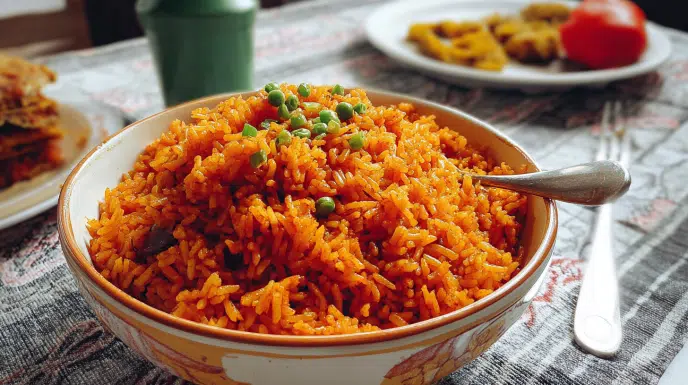
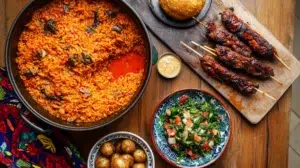
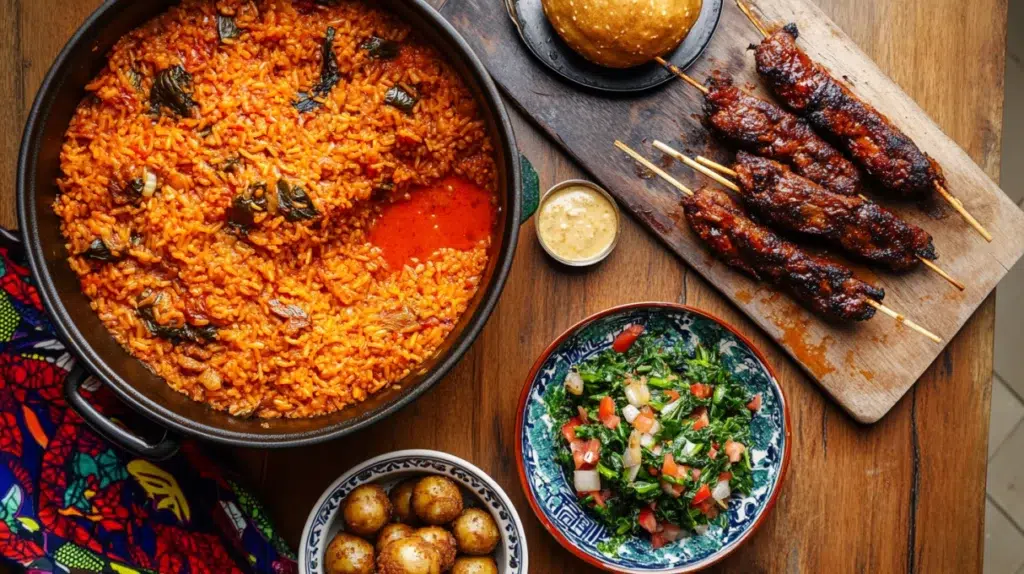
Jollof rice originated in the Senegambian region before spreading throughout West Africa, Nigerians typically use parboiled rice and often cook party jollof over open flames to achieve a smoky base layer. This smoky bottom layer, the slightly charred, intensely flavored crust that forms when the rice cooks over live flame, is called the party jollof effect, and it is the specific quality that distinguishes the best Nigerian jollof from a merely good one.
Nigerian jollof is built on a blended pepper base, tomatoes, scotch bonnets, red bell peppers and onions blended smooth and fried in vegetable oil until the raw smell cooks out and the mixture darkens and sweetens. Parboiled long-grain rice is added, coated in this base, and then cooked covered over medium-low heat until the rice is tender and the bottom has developed the characteristic slightly smoky crust.
→ Full recipe with party jollof technique in Nigerian jollof rice
Egusi Soup: The Great Nigerian Soup
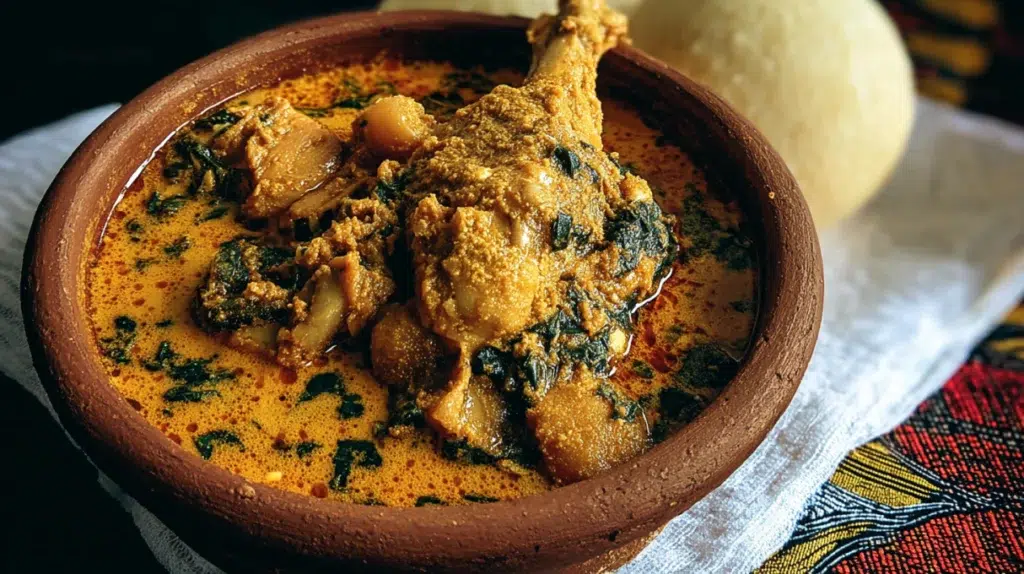
Egusi soup is arguably the most important and most widely eaten soup in Nigeria. Made from ground melon seeds (egusi) that form the thick, protein-rich body of the soup, cooked with palm oil, tomatoes, peppers, leafy greens, assorted meats and dried crayfish, egusi soup is deeply savory, rich and complex in a way that rewards the multiple steps it takes to make correctly.
The egusi can be prepared two ways: the frying method (egusi is fried directly in palm oil until it forms crumbly, golden clumps before the liquid is added) and the water method (egusi is cooked directly in the broth). The frying method produces a toastier, more complex egusi flavor and is the preferred technique in most of southern Nigeria.
→ Full recipe with both methods in egusi soup
Suya: Nigeria’s Greatest Street Food
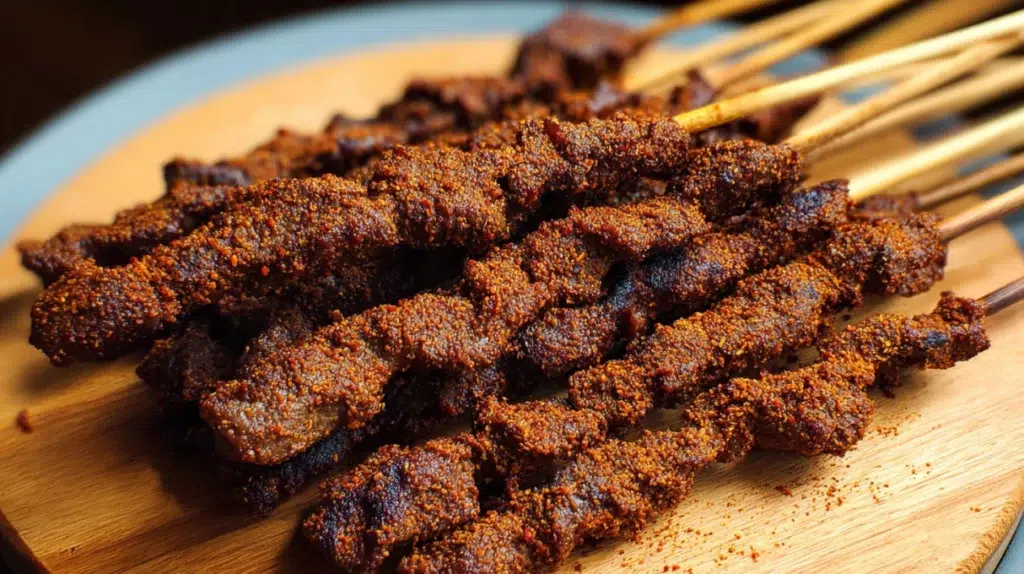
Suya is the street food that stops people in their tracks. Thinly sliced beef, or chicken, kidney, liver, skewered, coated in yaji spice blend and grilled over hot charcoal until the exterior is charred, the interior juicy, and the smell alone has drawn a crowd. Served wrapped in newspaper with sliced raw onion, tomato and more yaji dusted over the top.
The yaji spice blend is the entire dish. Ground peanut, ground ginger, paprika, garlic powder, onion powder, ground crayfish, ground chili and a spice mix that varies by family and region. Getting the yaji right, the right balance of peanut richness, ginger warmth and chili heat, is the work of the recipe.
→ Full recipe and yaji blend in Nigerian suya
Nigerian Snacks: Puff Puff, Akara and Chin Chin
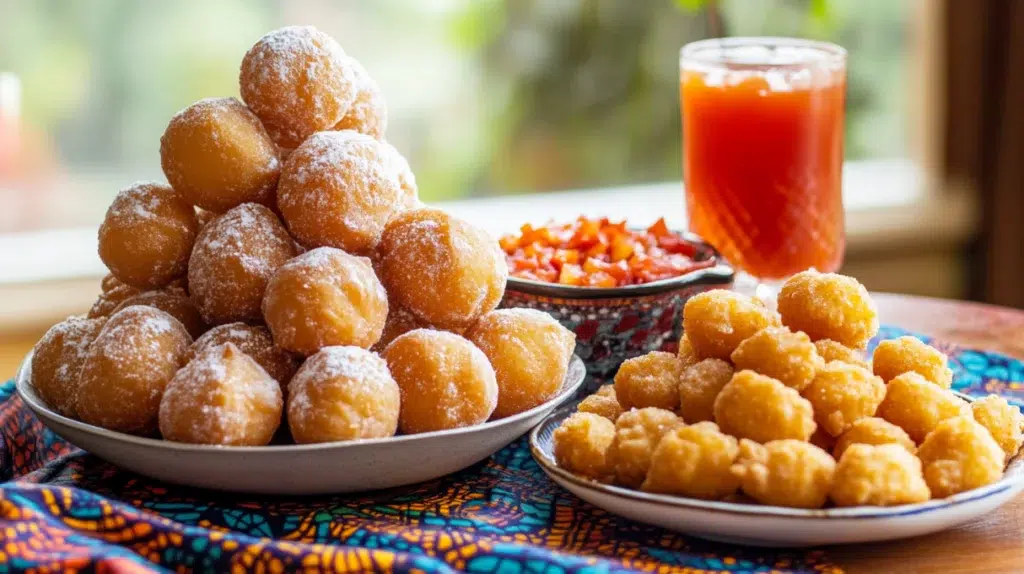
Nigerian snack culture is one of the most enjoyable entry points into the cuisine for American home cooks. Puff puff are small, round, deep-fried yeast dough balls, sweet, fluffy, addictive and one of the easiest Nigerian recipes to make. Akara are black-eyed pea fritters, soaked and blended black-eyed peas seasoned with onion and scotch bonnet, fried until crispy outside and soft within. Chin chin are small, crunchy fried dough snacks with the specific satisfying crunch that makes them impossible to stop eating.
→ Full recipes for all three in Nigerian snacks
Nigerian vs Ghanaian Jollof: West Africa’s Most Delicious Argument
The jollof rice debate, Nigeria or Ghana, is one of West Africa’s most culturally significant food arguments. Nigerian jollof uses parboiled rice, a tomato-forward blended pepper base and the party jollof smoky technique. Ghanaian jollof typically uses jasmine rice, a slightly different spice balance and a different texture philosophy. Both are excellent. The debate has been raging for decades.
→ Full comparison and both recipes in Nigerian vs Ghanaian jollof
The Nigerian Pantry: What You Need
Nigerian cooking requires a specific set of ingredients that are not available at mainstream American grocery stores but are universally available at African grocery stores, which exist in every major American city.
Palm oil: the single most important Nigerian cooking fat. Buy red palm oil (not refined). Brands: Zomi, Banga, Niru.
Ground crayfish: dried ground shrimp used as a seasoning. Buy at African grocery stores in small jars.
Scotch bonnet peppers: fresh or frozen. Substitute: habaneros, slightly fewer as they are hotter.
Egusi seeds: dried melon seeds, sold whole or pre-ground. Buy pre-ground for convenience.
Stockfish (dried and salted cod): used in many soups for specific depth. Requires long soaking. African grocery stores only.
Iru/locust beans: fermented dried locust beans. Optional but worth using for authentic depth.
Nigerian white yam: not sweet potato. Available at African grocery stores in large chunks.
Black-eyed peas: widely available at any grocery store. Used for akara, moi moi and bean porridge.
Nigerian Food Culture: Things Worth Understanding
Swallows and soups: the fundamental structure of a Nigerian meal in the south. A swallow (starch) served with soup. A small ball is pulled from the mound with the right hand, an indent pressed in the center with the thumb, dipped into the soup and swallowed whole. This is where the name comes from.
Pounded yam is the most prestigious swallow, yam boiled until completely tender, then pounded in a large wooden mortar for 15-20 minutes until smooth and elastic. The labor of making it properly is part of its cultural value.
Food at celebrations: Nigerian food culture is deeply tied to celebration. Jollof rice is the party food. Puff puff appears at every gathering. A Nigerian wedding or naming ceremony has a specific food vocabulary, jollof, fried rice, chicken, moi moi, plantains, and the quality and abundance of the food is a direct reflection of the host’s regard for their guests.
The pepper soup tradition: goat pepper soup, catfish pepper soup, oxtail pepper soup, intensely spiced restorative broths made with whole peppercorns, uziza seeds and aromatic herbs. Served at celebrations, after childbirth, during illness. The hottest, most intensely flavored things in Nigerian cooking.
All Nigerian Recipes on This Site
Rice dishes
- Nigerian Jollof Rice: The Party Method and the Smoky Bottom
Soups and stews
- Egusi Soup Recipe: The Two Methods Explained
Grilled meats
- Nigerian Suya Recipe: The Yaji Spice Blend and the Technique
Snacks
- Nigerian Snack Recipes: Puff Puff, Akara and Chin Chin
Comparisons
- Nigerian vs Ghanaian Jollof: West Africa’s Greatest Food Debate
Frequently Asked Questions
Is Nigerian food spicy?
Yes, and specifically so. Scotch bonnet peppers are among the hottest commonly used chilis in the world. Most Nigerian recipes call for generous amounts. Heat level is adjustable, reduce the scotch bonnets and the dish still works, just with less fire. The flavor of the pepper is as important as its heat.
What makes Nigerian jollof different from other jollof?
Nigerian jollof uses parboiled rice, a deeper-fried pepper base, vegetable oil, and the party jollof technique of cooking over higher heat for a smoky bottom crust. The flavor is bolder and smokier than Ghanaian or Senegalese versions.
Where do I buy Nigerian ingredients in the US?
African grocery stores are the best single source, in every major US city. Search “African grocery store” or “West African grocery” near you. Online: Amazon, Walmart, and AfroNation Market carry palm oil, egusi, ground crayfish and dried stockfish.
What is the difference between jollof rice and Nigerian fried rice?
Both appear at celebrations but are completely different dishes. Jollof rice cooks in a seasoned pepper-tomato sauce. Nigerian fried rice is parboiled rice stir-fried with mixed vegetables, curry powder, thyme and protein. Both always appear together at Nigerian parties.
Planning your week? Add Nigerian jollof rice night to your weekly meal planner alongside your everyday staples.