A ramen recipe done properly is one of the most satisfying cooking projects in Japanese food, and one of the most misunderstood in terms of what “properly” actually requires.
The fear: ramen requires 18-hour bone broths, specialty equipment, imported noodles and years of practice. This fear is not entirely without basis, the best ramen in Japan is the work of chefs who have dedicated their professional lives to a single bowl. But it is also largely irrelevant to the question of making excellent ramen at home. The shortcut that professional ramen cooks themselves use, the tare system, produces a genuinely great bowl in under an hour with ingredients from H Mart and a good chicken stock.
This is part of the Japanese recipes collection. Before you start, check the Japanese pantry, soy sauce, mirin, sake and miso are the four ingredients this article uses most.
The Structure of a Ramen Bowl: Understanding Before Cooking
Every bowl of ramen, regardless of regional style, is built from the same three components. Understanding them separately is the key to understanding why ramen tastes the way it does, and how to make it taste right at home.
1. Tare: the concentrated seasoning base Tare (pronounced tah-reh) is a small quantity of intensely concentrated seasoning, soy sauce-based, salt-based, or miso-based, that is placed in the bowl before the broth is added. It is the soul of the ramen. Two tablespoons of tare in a bowl of plain chicken stock transforms that stock into ramen. This is the professional shortcut. This is what your recipe uses.
2. Broth (soup stock) The liquid that carries the tare. Can be chicken stock (the most common and most accessible), pork bone stock (tonkotsu, requires long simmering), dashi, or a combination. The better the stock, the better the ramen. A good purchased chicken stock works. Homemade is better.
3. Noodles Fresh or dried ramen noodles, thin, wavy, alkaline egg noodles. The alkalinity (from kansui, a solution of sodium carbonate and potassium carbonate) gives ramen noodles their characteristic springy chew and slightly yellow color. Dried ramen noodles from an Asian grocery store are genuinely good. Sun Noodle brand fresh ramen noodles (available at H Mart) are excellent.
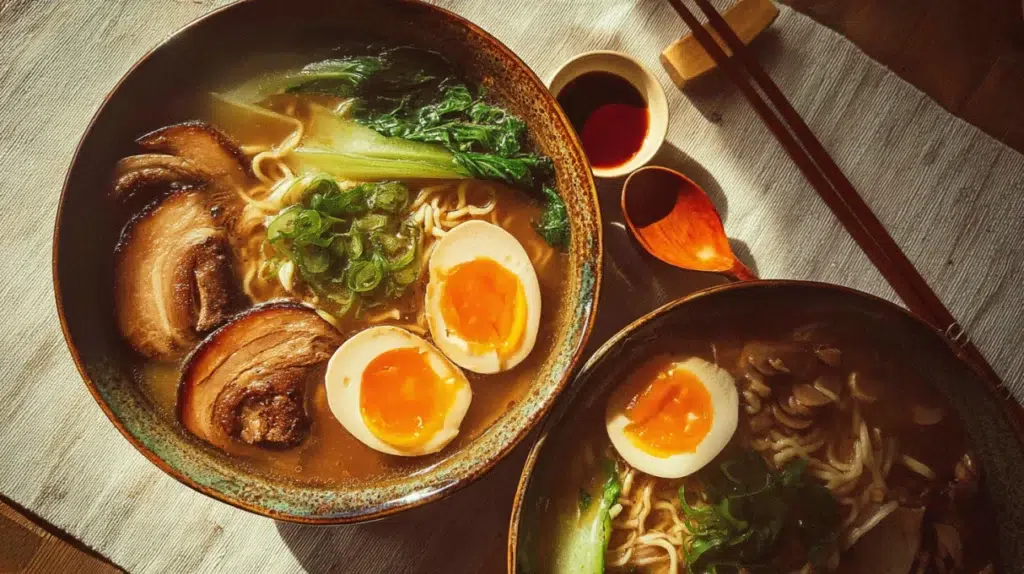
The toppings, chashu pork, marinated eggs, bamboo shoots, nori, green onions, corn, butter, are the personality of each bowl, but they are additions to the structure rather than the structure itself.
The Four Regional Styles: What Makes Each One Different
Ramen originated from Chinese la mian noodles brought to Japan in the 1880s by traders in Yokohama, the dish became a staple of Japanese noodle shops nationwide. Over the following century, distinct regional styles developed, each reflecting the local ingredients, climate and flavor preferences of different parts of Japan.
Shoyu Ramen (Tokyo): Soy Sauce Broth
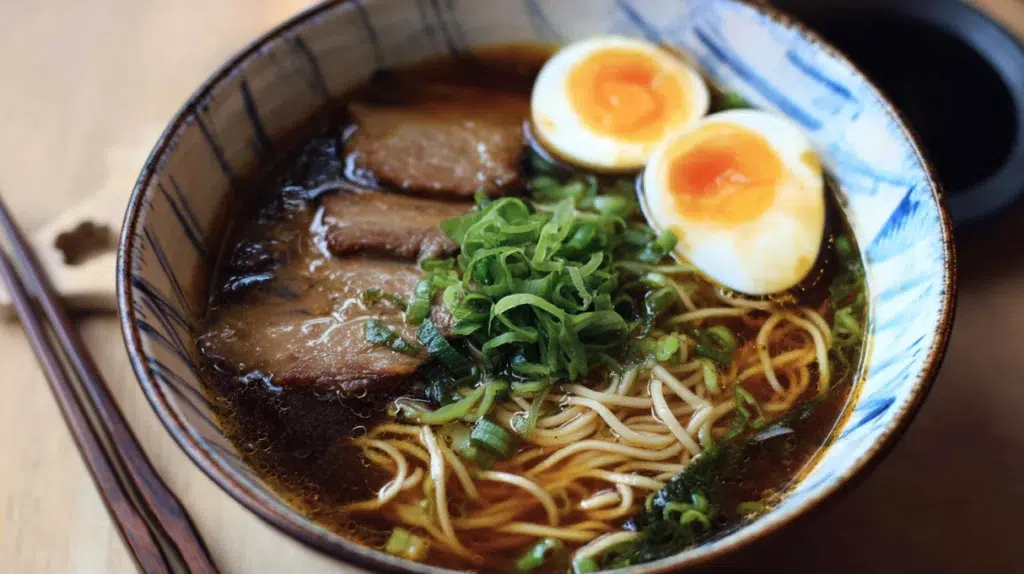
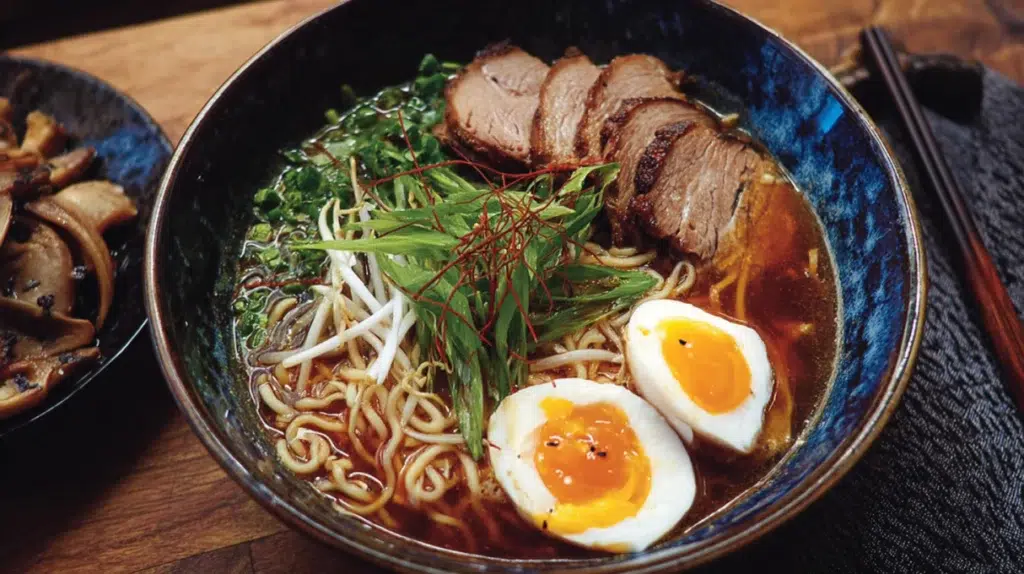
The oldest and most widely recognized style. A clear-to-amber broth made from chicken or dashi stock seasoned with a soy sauce tare. The flavor is clean, savory and balanced, assertively umami but not heavy. Topped traditionally with chashu pork, menma (fermented bamboo shoots), nori, narutomaki (fish cake), green onions and a marinated soft-boiled egg.
This is the style most Americans think of as “ramen”, the recognizable brown bowl. It is the most approachable for home cooking because the tare is straightforward to make and chicken stock is universally available.
Flavor profile: Clean, savory, slightly salty, deeply umami, golden-brown color.
Shio Ramen (Hakodate, Hokkaido): Salt Broth
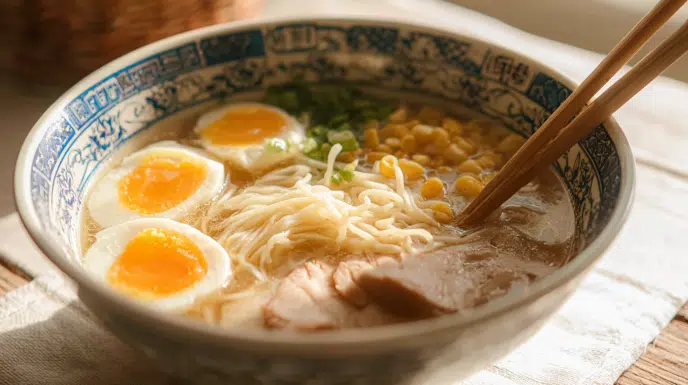
The lightest and most delicate style. A pale, almost clear broth made from chicken or seafood stock seasoned with a salt-based tare (salt, sake, mirin, sometimes dried seafood). The flavor is clean and subtle, the quality of the stock carries everything because there is no dark soy sauce or miso to mask it.
Shio is the style that most rewards a genuinely excellent homemade stock. It is less forgiving than shoyu, thin or flavorless stock cannot hide behind seasoning.
Flavor profile: Pale, delicate, clean, the purest expression of the stock’s quality.
Miso Ramen (Sapporo, Hokkaido): Miso Broth
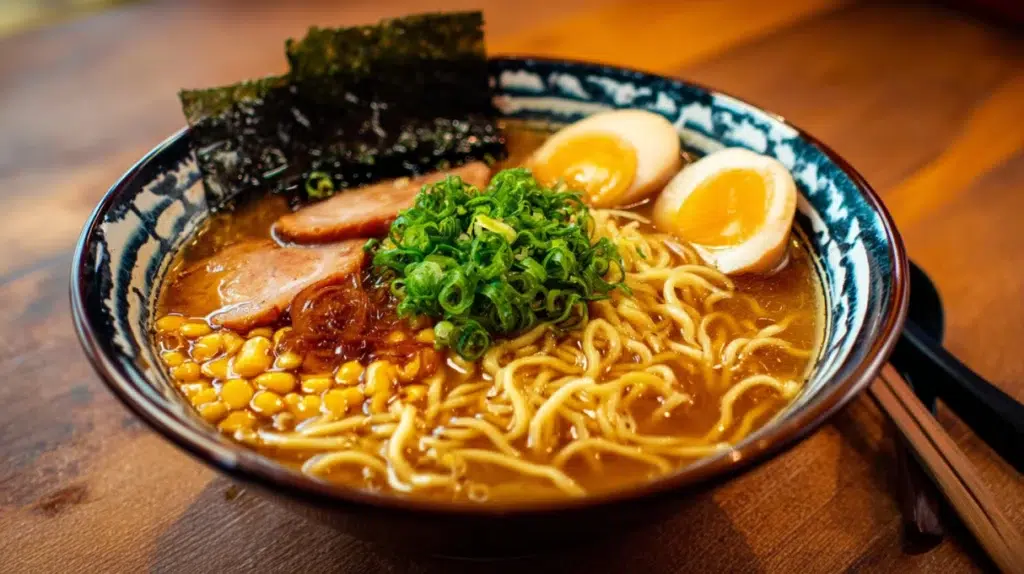
The boldest and richest of the light-stock styles. Miso, the fermented soybean paste at the heart of miso ramen, is used as a simmering liquid and seasoning base across Japanese cooking. In miso ramen, a miso tare is combined with chicken or pork stock to produce a thick, complex, deeply savory broth with a warmth and fermented depth that shoyu and shio cannot match.
Sapporo miso ramen traditionally includes corn and a pat of butter on top, the corn’s sweetness and the butter’s richness complement the miso’s intensity in a combination that sounds wrong and tastes completely right.
Flavor profile: Rich, thick, deeply savory, fermented complexity, warming.
Tonkotsu Ramen (Fukuoka, Kyushu): Pork Bone Broth
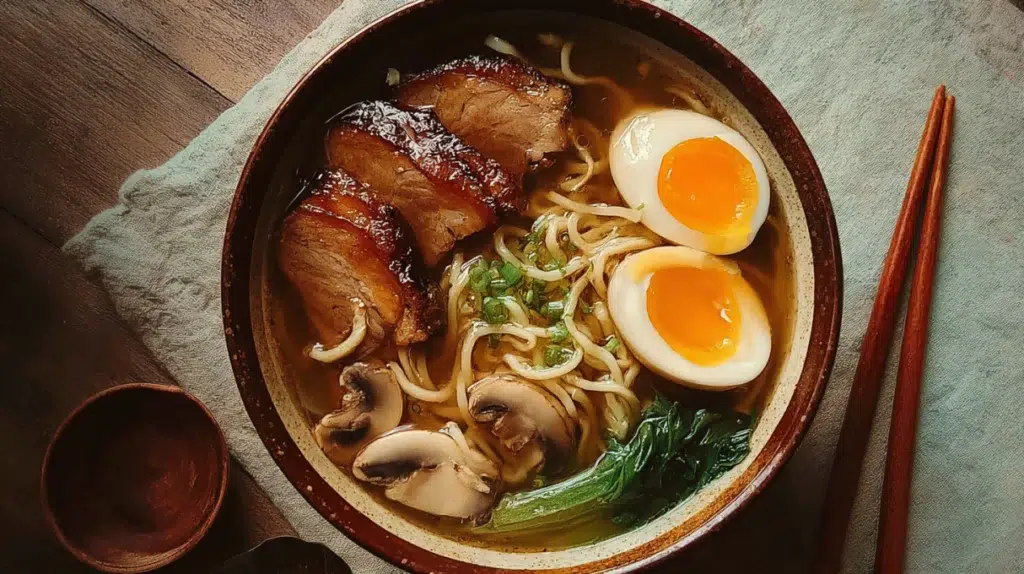
The most distinctive and most labor-intensive style. Tonkotsu broth is made by boiling pork bones, specifically trotters and back bones, at a full rolling boil for 8-12 hours. The extended high-heat cooking extracts collagen and fat that emulsify into the liquid, turning the broth milky white, extraordinarily rich, and intensely porky. The mouth-coating richness of proper tonkotsu broth is unlike anything else in ramen.
For home cooks: full tonkotsu from scratch requires time and commitment. The shortcut is a purchased tonkotsu ramen broth concentrate (available at H Mart and Asian grocery stores) combined with a small amount of homemade or good-quality chicken stock. Not identical to 12-hour tonkotsu, but genuinely good and achievable on a weeknight.
Flavor profile: Milky white, intensely rich, porky, thick and coating.
The Master Shortcut: Shoyu Tare Recipe (Use for Any Style)
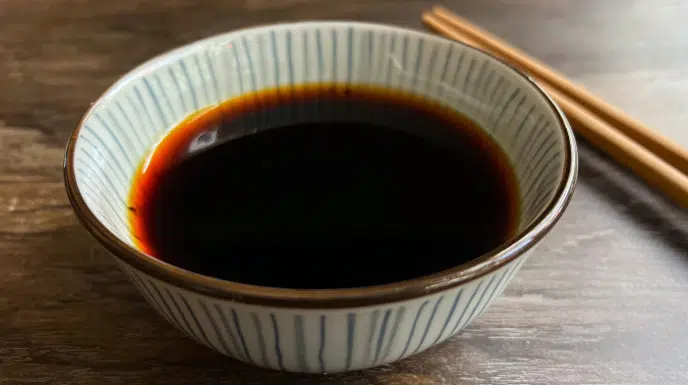
This tare recipe produces a concentrated seasoning base that transforms plain chicken stock into excellent shoyu ramen in minutes. Make a batch on Sunday. It keeps refrigerated for two weeks and makes approximately 8-10 bowls.
Shoyu Tare Ingredients (makes enough for 8-10 bowls)
- 100ml (7 tablespoons) Japanese soy sauce, Kikkoman koikuchi
- 50ml (3½ tablespoons) mirin
- 50ml (3½ tablespoons) sake
- 2 tablespoons sugar
- 3 cloves garlic, lightly crushed
- 1 thumb-sized piece fresh ginger, sliced
- 2 spring onions, roughly chopped
- 1 teaspoon sesame oil
Tare Method: Combine soy sauce, mirin, sake and sugar in a small saucepan. Add garlic, ginger and spring onions. Bring to a gentle simmer over medium-low heat. Cook 10 minutes until slightly reduced and fragrant. Strain. Stir in sesame oil. Cool and refrigerate.
To use: Place 2 tablespoons of tare in the bottom of each bowl. Ladle 350ml (1½ cups) of hot, well-seasoned chicken stock over it. Stir to combine. Add noodles and toppings.
Full Shoyu Ramen Bowl: Complete Recipe
Ingredients (serves 4)
For the broth:
- 1.5 litres (6 cups) good quality chicken stock, homemade or best purchased
- 8 tablespoons shoyu tare (from recipe above)
- 2 teaspoons sesame oil
For the noodles:
- 400g (14 oz) fresh or dried ramen noodles
For chashu pork belly (make ahead, keeps 4 days refrigerated):
- 600g (1.3 lbs) pork belly, skin-on, rolled and tied
- 60ml (4 tablespoons) soy sauce
- 60ml (4 tablespoons) mirin
- 60ml (4 tablespoons) sake
- 2 tablespoons sugar
- 200ml (¾ cup) water
- 2 cloves garlic, halved
- 1 thumb ginger, sliced
- 2 spring onions
For marinated soft-boiled eggs (ajitsuke tamago, make ahead):
- 4 large eggs
- 3 tablespoons soy sauce
- 3 tablespoons mirin
- 1 tablespoon sake
- 100ml (7 tablespoons) water
Standard toppings:
- 2 sheets nori, cut into quarters
- 4 tablespoons menma (bamboo shoots in soy, from a jar)
- 4 spring onions, finely sliced
- 1 tablespoon white sesame seeds
- Optional: corn kernels, bean sprouts, a pat of butter (for miso style)
Method: Step by Step:
Chashu pork (2 days or 1 day ahead, not optional, worth every minute):
Roll the pork belly tightly and tie with kitchen twine at 3cm intervals. Sear in a hot pan with a little oil until browned on all sides, 8 minutes total.
Combine soy sauce, mirin, sake, sugar, water, garlic, ginger and spring onions in a heavy pot just large enough to hold the pork. Add the seared pork belly. Bring to a simmer, cover, and cook over the lowest possible heat for 90 minutes, turning the pork every 30 minutes, until it yields to a chopstick inserted through the center.
Remove the pork and place in a zip-lock bag or container. Strain the braising liquid and pour half over the pork. Refrigerate overnight, the fat will solidify on top and can be skimmed. The pork will firm as it chills, making it possible to slice cleanly into 5mm rounds. Slice cold, then warm briefly in a pan before serving.
The braising liquid that remains becomes your chashu tare, a secondary seasoning you can add by the tablespoon to deepen the broth further.
Marinated eggs (at least 4 hours ahead, overnight is better):
Bring a pot of water to a full rolling boil. Lower the eggs gently into the water. Cook exactly 6 minutes 30 seconds. Transfer immediately to ice water for 3 minutes. Peel carefully, the white is set, the yolk is jammy and orange.
Combine soy sauce, mirin, sake and water in a zip-lock bag. Add the peeled eggs. Seal, pressing out air so the eggs are fully submerged in the marinade. Refrigerate at least 4 hours, ideally overnight. The eggs will turn light brown and taste like the bowl itself.
Assembly (15 minutes):
Heat the chicken stock to a rolling boil. Taste it, it should be well-seasoned and clean. Add the sesame oil.
Cook the ramen noodles according to the package instructions, typically 1-2 minutes for fresh, 3-4 minutes for dried. Drain thoroughly. Noodles must be well-drained, water dilutes the bowl.
Place 2 tablespoons of shoyu tare in each preheated bowl. Ladle 350ml of hot stock over the tare. Stir. Taste. Add a little more tare if the flavor needs lifting.
Add the drained noodles. Arrange 2-3 slices of warm chashu pork to one side. Place a halved marinated egg cut-side up next to the pork. Add a quarter sheet of nori, a tablespoon of bamboo shoots, and a scatter of spring onion and sesame seeds.
Serve immediately. Ramen waits for no one, the noodles absorb the broth and become soft within minutes.
Miso Tare: For Miso Ramen Specifically
Ingredients (makes enough for 6 bowls)
- 100g (7 tablespoons) awase miso (white-red blend)
- 2 tablespoons sake
- 1 tablespoon mirin
- 1 teaspoon sesame oil
- 1 teaspoon toasted sesame seeds
- 1 small clove garlic, grated
- 1 teaspoon fresh ginger, grated
Method: Combine all ingredients. No cooking needed. Store refrigerated for up to 2 weeks.
To use for miso ramen: Place 2½ tablespoons of miso tare in the bowl. Add 350ml of hot chicken or pork stock. Stir well until the miso dissolves completely. Add noodles and toppings. Top with a small piece of butter and a tablespoon of corn.
The Marinated Egg: Worth Making Every Time
The ajitsuke tamago (seasoned soft-boiled egg) is the most universally loved ramen topping and the one that most rewards a small amount of planning. The 6 minutes 30 seconds cooking time produces the jammy, orange-centered yolk that photographs like a magazine and tastes even better than it looks. The overnight marinade in soy, mirin and sake infuses the white with a savory depth while leaving the yolk untouched.
Make a batch of six eggs every Sunday. They keep for four days in the marinade and can go into ramen, breakfast bowls, onigiri, or eaten directly from the container at midnight. Claire does this. No regrets.
FAQ About Ramen Recipe
Can I use instant ramen noodles?
For practice and emergencies, yes. Discard the flavour packet entirely and use only the noodles with your own tare and stock. The texture is acceptable and improves dramatically once it is sitting in a properly made broth rather than the sodium bomb the packet produces.
What is the difference between ramen and pho?
Both are noodle soups, but the similarity ends there. Pho uses rice noodles, a clear bone broth scented with star anise and cinnamon, and raw beef or chicken. Ramen uses wheat noodles, a stock-plus-tare broth, and braised pork. The flavor philosophies are entirely different, pho is clean and aromatic, ramen is rich and savory.
Why do my ramen noodles go soggy?
Two reasons: the noodles were cooked too long, or they sat in the broth too long before eating. Ramen noodles should be cooked until just tender with a slight chew remaining, they will continue cooking in the hot broth. Serve immediately after assembly and eat within 10 minutes.
Can I make ramen vegetarian?
Yes. Replace the chicken stock with a kombu and shiitake mushroom dashi, deeply savory and genuinely excellent. Use a shio or miso tare. Replace the chashu pork with roasted king oyster mushrooms or crispy tofu. The marinated egg remains if you eat eggs, or omit it. A well-made vegetarian ramen with proper dashi is not a compromise, it is a different and equally excellent bowl.
Planning your week? Add ramen night to your weekly meal planner, make the chashu pork and eggs on Sunday and the bowl itself takes 15 minutes on any weeknight.
More From the Japanese Recipes Collection:
- Japanese Recipes: The Complete Guide
- Japanese Pantry Guide: Every Ingredient Explained
- Sushi at Home: Sushi Rice, Hand Rolls and What Fish to Buy
- Japanese Comfort Food: Karaage, Tonkatsu and More