South African recipes are the most culturally layered, the most surprisingly complex, and the most genuinely underrepresented food tradition that any American home cook can discover right now.
I want to lead with that because South African cuisine is almost invisible in American food media. You will find a hundred Korean recipe blogs, fifty Moroccan cookbooks, endless Italian pasta tutorials. South African food, one of the most fascinating, most diverse, most historically rich culinary traditions in the entire world, gets almost no coverage in English outside South Africa itself. Which means if you start cooking it seriously, you will be ahead of almost everyone.
I came to South African food through my three months cooking across West Africa in Ghana and Nigeria, learning cuisines that are equally underrepresented and equally extraordinary. South Africa is different from West Africa in fundamental ways, the cultural influences are different, the history is different, the landscape is different but the same principle applies: this is a cuisine that rewards serious attention and produces results that make people genuinely stop and ask what they are eating.
This collection is my best attempt to document South African cooking properly for American home cooks. Everything tested three times minimum in my Nashville kitchen. Everything adapted for ingredients available at major US grocery stores. Everything written with the cultural respect this cuisine deserves.
This is part of the African recipes collection on RecipeWorldly. Let’s begin.
What Makes South African Cuisine Unlike Anything Else
South Africa’s cuisine reflects its extraordinary mixture of cultures, African, Dutch, British, Malay, and Portuguese and that multicultural layering produces something that has no real equivalent anywhere else in the world.
South Africa has eleven official languages and a culinary tradition that is the direct product of centuries of cultural collision, indigenous African traditions, Dutch and German settler cooking, British colonial influence, Cape Malay cooking brought by enslaved people from Indonesia and Malaysia, Portuguese coastal seafood traditions, and the cuisines of the significant Indian community that settled in KwaZulu-Natal. All of these traditions have been living alongside each other, influencing each other, borrowing from each other, for hundreds of years. The result is not a fusion cuisine in the trendy modern sense. It is something more organic, a genuine cultural synthesis that reflects how people actually cook when they live together across generations.
The three pillars of South African home cooking are braai, boerewors, and bobotie and understanding each of these gives you the foundation for everything else.
Braai: South Africa’s BBQ tradition, built around an open fire, communal and social, present at almost every South African gathering regardless of culture or background. The braai is the great unifying institution of South African food culture. Every South African regardless of ethnicity, language, or cultural background understands and participates in the braai tradition. It is genuinely the most culturally inclusive food tradition in the country.
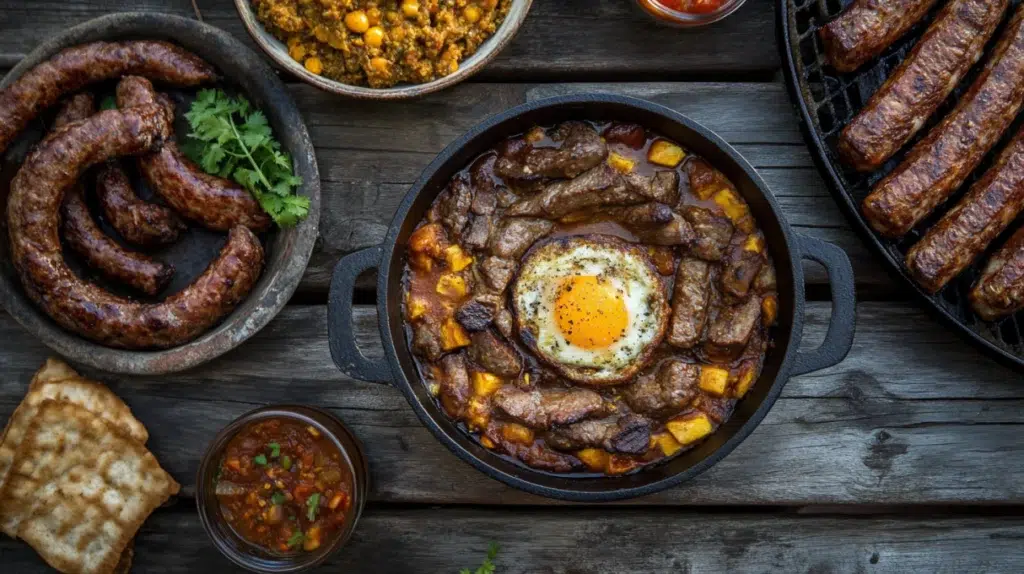
Boerewors: literally “farmer’s sausage,” a coiled spiced sausage of beef and pork seasoned with coriander, cloves, nutmeg, and allspice. Cooked on the braai. The smell of boerewors on a fire is, for most South Africans, one of the most emotionally loaded food memories in their lives.
Bobotie: a Cape Malay dish of spiced minced meat with a savory egg custard topping, flavored with dried fruit, curry, and almonds. Bobotie has been recognized as South Africa’s national dish, a designation that speaks to both its deliciousness and the specific multicultural history it embodies.
Understanding these three dishes gives you the foundation for the whole cuisine.
The South African Pantry: What You Need
South African cooking draws on a surprisingly accessible set of ingredients, most of what you need is at any major US grocery store, with a few specific items worth sourcing from specialty stores or online.
The spice essentials:
Coriander seed: the defining spice of South African cooking. Ground coriander appears in boerewors, in biltong marinades, in potjie spice blends. Fresh toasted and ground coriander has a completely different quality from pre-ground. If you do one spice upgrade for South African cooking, make it this.
Allspice and cloves: present in boerewors and in several Cape Malay dishes. The warm-spiced profile of Cape Malay cooking relies heavily on these two spices alongside cinnamon and nutmeg.
Turmeric: used in Cape Malay dishes, in pickled fish, and in some rice dishes. Gives the characteristic golden color to Cape Malay rice.
Curry powder: specifically in Cape Malay tradition. South African curry powder tends toward a slightly sweeter, more aromatic blend than Indian curry powder. Rajah brand (widely available online) is the most authentic choice for Cape Malay dishes.
Dried apricots and raisins: used in bobotie, in some stews, and in the sweet-savory tradition of Cape Malay cooking. The sweetness balancing the savory depth of spiced meat dishes is one of the most distinctive and surprising elements of South African food.
The ingredients worth sourcing:
Boerewors: if you live near a South African butcher or South African grocery store, buy it fresh. Otherwise, the recipe for homemade boerewors is achievable and deeply satisfying. The specific spice blend, coriander forward, with cloves, allspice, and nutmeg cannot be replicated by any other sausage.
Amarula cream liqueur: for malva pudding and some desserts. Made from the fruit of the marula tree, with a caramel-custard flavor that is completely specific to South Africa. Available at specialty liquor stores and online. Baileys Irish Cream is a workable substitute but the flavor is different.
Rooibos tea: used in some desserts and as a marinade component. Available at most major grocery stores now in the tea aisle or health food section.
The Recipes: Where to Start
The Braai: South Africa’s Greatest Culinary Institution
The braai is not just a cooking method. It is a social institution, a cultural ritual, a way of being together that runs through every South African community regardless of background.
The word braai (Afrikaans for “to grill” or “to roast”) refers both to the act of cooking over an open fire and to the social event built around that cooking. A braai is not a dinner party. It is a gathering where the fire is the center and the cooking is communal and participatory. The fire is built with real wood, not charcoal and the cooking happens over coals that have been allowed to burn down to the right temperature. Patience with the fire is fundamental to the braai philosophy.
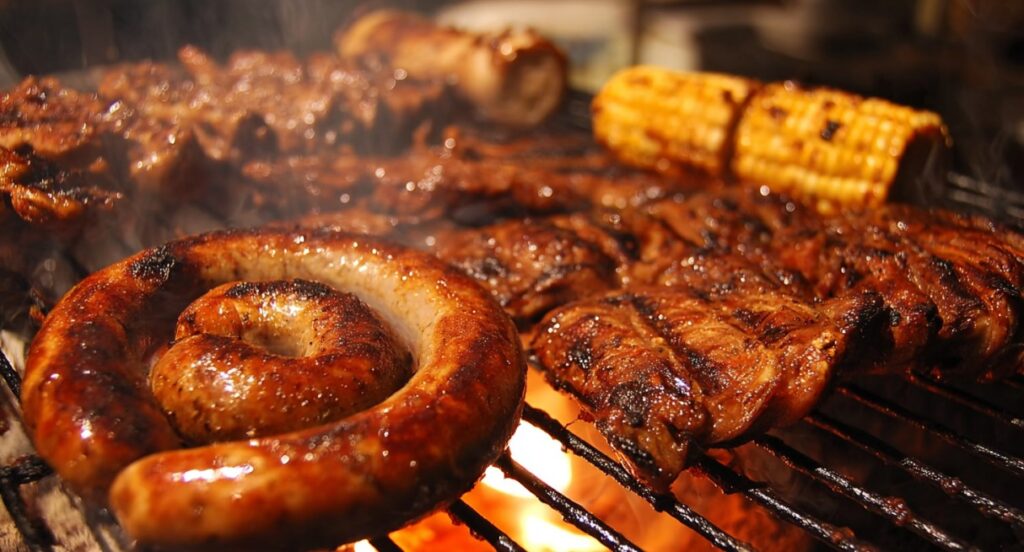
The essential braai meats are boerewors (coiled spiced sausage), sosaties (skewered marinated lamb or pork), lamb chops marinated in garlic and rosemary, chicken wings in peri-peri sauce, and whole fish wrapped in foil. All cooked over real wood fire. All eaten with a salad of roasted vegetables or pap (maize porridge) alongside.
The complete South African braai guide covers the full braai setup, how to build and manage the fire, every essential meat and marinade, the side dishes that make a complete braai feast.
Bobotie: The National Dish
Bobotie is the dish that makes people stop. The dish that produces the silence followed by “what is this and how do I get more of it.”
It is a Cape Malay dish, the culinary tradition developed by the enslaved people brought from Indonesia, Malaysia, and other parts of Asia to the Cape Colony in the 17th and 18th centuries. Spiced minced beef (or lamb) is cooked with onion, garlic, curry powder, dried apricots, raisins, chutney, and almonds. This spiced meat mixture is spread in a baking dish, topped with a custard of eggs and milk flavored with bay leaves, and baked until the custard is set and golden. Served with yellow turmeric rice and a simple salad.
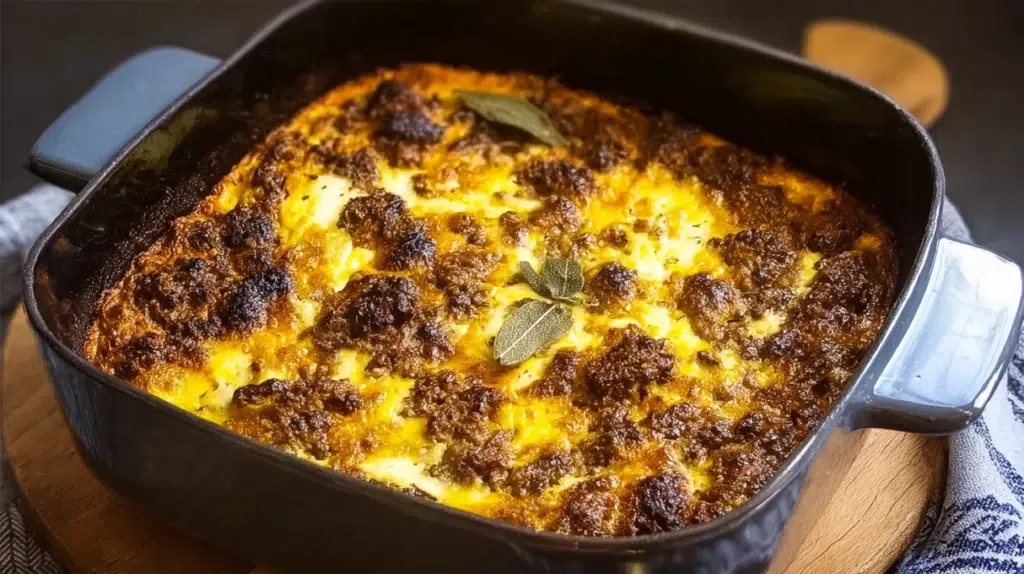
The combination of sweet, savory, and warmly spiced, the dried fruit and chutney against the spiced meat against the milky custard on top is not like anything else. It is completely South African in a way that makes immediate, total sense once you taste it.
→ Full recipe in the complete South African bobotie guide
Malva Pudding: The Greatest South African Dessert
Malva pudding is a warm, spongy, deeply caramel-flavored baked pudding soaked immediately after baking with a cream and butter sauce that soaks into every pore of the sponge, making it, I’m going to say this plainly, one of the most satisfying desserts I have ever made or eaten.
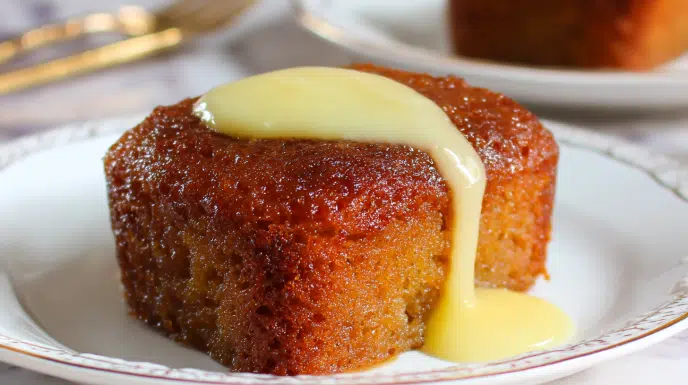
It is the South African equivalent of the British sticky toffee pudding but with apricot jam in the batter that gives it a specific fruity depth, and with a warm butter cream sauce that you pour over it while it is still hot from the oven. The sauce soaks in. The pudding becomes something between a cake and a warm, yielding, impossibly rich pudding that makes rational decisions about portion size very difficult.
→ Full recipe in the South African malva pudding guide
Homemade Biltong: South Africa’s Legendary Dried Meat
Biltong is South Africa’s contribution to the global dried meat tradition and it is significantly better than any jerky you have ever eaten. Thick strips of beef (or game meat, ostrich, kudu, springbok in South Africa) are marinated in vinegar, salt, coriander, and black pepper, then air-dried for several days until they reach the specific texture ranging from very moist to quite dry depending on preference, that every South African has strong opinions about.
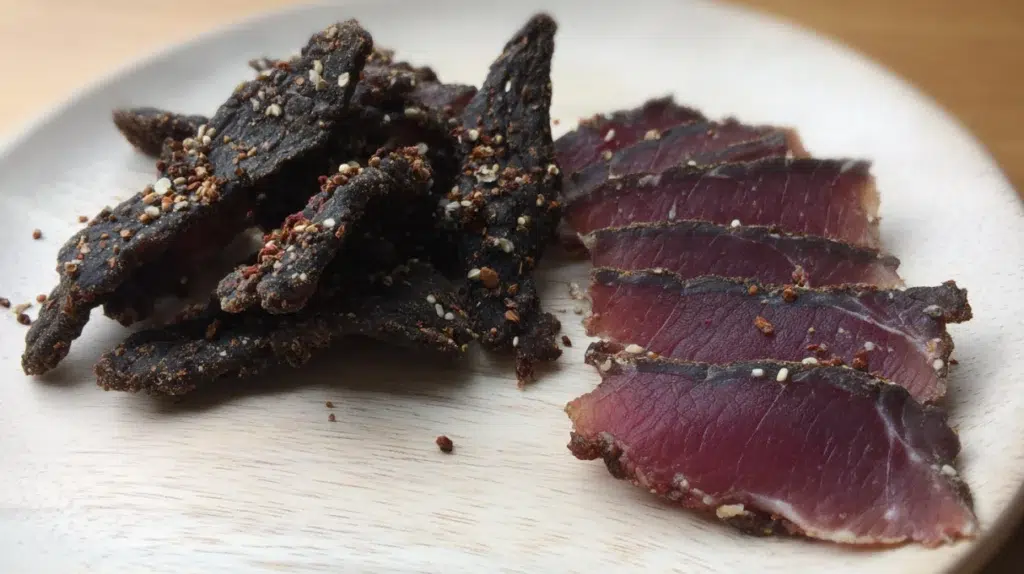
The flavor is completely distinctive, the coriander forward, the vinegar tang, the deep beef flavor concentrated by drying and it is something Americans have no real equivalent for. Beef jerky does not come close. Biltong is its own thing.
Making biltong at home requires a biltong maker or a DIY drying setup, a box with a small fan and a light source to control humidity and airflow. The investment is small. The results are extraordinary.
→ Full guide in the homemade biltong recipe and setup guide
South African Food Culture: Things Worth Knowing
The Rainbow Nation table
South Africa’s post-apartheid identity has been shaped by the concept of the Rainbow Nation, the idea that South Africa’s extraordinary cultural diversity is a strength rather than a division. This philosophy is reflected in the food culture in specific and meaningful ways. South African food events, braais, potjie competitions, food markets are genuinely multicultural spaces where people from different backgrounds eat together and share food traditions in a way that was systematically prevented under apartheid.
Understanding this context changes how you think about South African food. When you eat bobotie you are eating the direct result of the Cape Malay culinary tradition, a tradition developed by enslaved people who brought their food knowledge from Indonesia and Malaysia and integrated it with local ingredients. The dish carries that history. Knowing it makes the food taste different, more meaningful, more specific, more worth understanding properly.
Pap: the great staple
Mealie pap, maize porridge made from white corn meal is the staple food of indigenous South African cuisine and appears on South African tables in many forms. Stiff pap (stywe pap) is dense and firm, eaten alongside braai meats or stews by breaking off pieces and using them to scoop sauce. Soft pap is looser and creamier, eaten for breakfast. Krummelpap is crumbly and textured, specifically designed to soak up the juices of braai meats.
Pap is to South Africa what rice is to Japan or bread is to France, the foundational starch around which everything else is organized, eaten daily by the majority of the population.
Banting and the South African diet culture
South Africa has a specific relationship with the concept of low-carbohydrate, high-fat eating that is worth knowing about. Professor Tim Noakes, a prominent South African sports scientist, popularized a low-carbohydrate approach to eating in South Africa that became known as Banting. It has had a significant influence on South African food culture and cooking, you will encounter Banting-friendly versions of many traditional South African recipes online. This guide focuses on traditional recipes rather than dietary adaptations.
Koeksisters, melktert and the Afrikaner sweet tradition
Afrikaner baking and dessert tradition, developed by Dutch and German settlers over centuries, produces some of the most distinctive sweets in the South African food landscape. Koeksisters, braided, deep-fried dough soaked in cold syrup until they are incredibly sweet, glossy, and impossible to put down. Melktert, milk tart, a pastry shell filled with a delicate cinnamon-scented custard. Rusks, hard, dry, twice-baked biscuits dunked in coffee until softened, eaten at breakfast.
These sweet traditions are deeply embedded in Afrikaner home cooking and exist alongside the Cape Malay sweet tradition, which runs to spiced cakes and cardamom-scented koesisters (a softer, coconut-rolled version of the koeksister with completely different flavor).
How I Test Every South African Recipe
The same three-cook process as every other cuisine on this site. First cook: as close to the authentic traditional version as possible. Second cook: adapted for US ingredients and equipment. Third cook: stress-tested under real weeknight conditions.
South African cooking presents specific sourcing challenges for US home cooks, boerewors, biltong, and some Cape Malay spice blends are not widely available outside South African communities. In every recipe I am transparent about which ingredients genuinely need to be sourced specially and which can be substituted without significant loss to the dish.
Frequently Asked Questions
Is South African food spicy?
It depends entirely on which tradition you are cooking from. Cape Malay cooking is warmly spiced but not hot. Peri-peri cooking, from the Portuguese Mozambican influence, is genuinely very spicy. Indigenous African cooking varies by region. The braai tradition is mostly mild with spice added as optional sauces. South African food is not uniformly spicy.
What is peri-peri sauce?
Peri-peri (also spelled piri-piri) is a sauce made from African bird’s eye chiles, originally developed in Mozambique under Portuguese influence and brought into South African cooking through the country’s geographic and cultural connections to Mozambique. The most famous brand globally is Nando’s, a South African restaurant chain built almost entirely around peri-peri chicken. Making proper peri-peri sauce at home from fresh or dried bird’s eye chiles is straightforward and significantly better than the bottled versions.
What is the difference between South African and West African food?
Significant differences in staple grains (maize dominant in South Africa, rice and yams more prominent in West Africa), in spicing traditions (South African Cape Malay spicing vs West African palm oil and fermented ingredient traditions), and in the cultural influences that shaped the cuisine (European settler influence much more significant in South Africa). Both are extraordinary cuisines. They share very little in terms of flavor profile or technique.
Where do I start with South African cooking?
Bobotie. Every time. It is accessible, deeply flavorful, uses ingredients available at any major grocery store, and produces a result that is completely unlike anything else you have cooked. Once you’ve made bobotie once, you will understand the Cape Malay flavor tradition and everything else will follow from there.
All South African Recipes on This Site
The Essential Dishes
- South African Braai: The Complete Guide to South Africa’s BBQ Tradition
- Bobotie Recipe: South Africa’s National Dish
Desserts
Preserved and Dried