Sushi at home is one of those projects that sounds intimidating, turns out to be mostly about the rice, and becomes, once you have made it twice, one of the most genuinely fun meals you can cook for other people.
The fear most people have is about the fish. Raw fish. Sourcing it, handling it, the safety of it. This guide addresses that fear specifically and clearly. But before the fish, there is a more important fact to understand: the rice is the art form. A sushi master in Japan trains for years primarily on the rice, the fish is secondary. If your sushi rice is correctly seasoned, correctly textured and served at the correct temperature, home sushi is already 70% of the way to excellent. Cold, underseasoned rice with beautiful fish is still bad sushi.
This is part of the Japanese recipes collection. The Japanese pantry guide covers the specific ingredients you need, short-grain rice, rice vinegar, mirin, nori and soy sauce.
What Sushi Actually Is
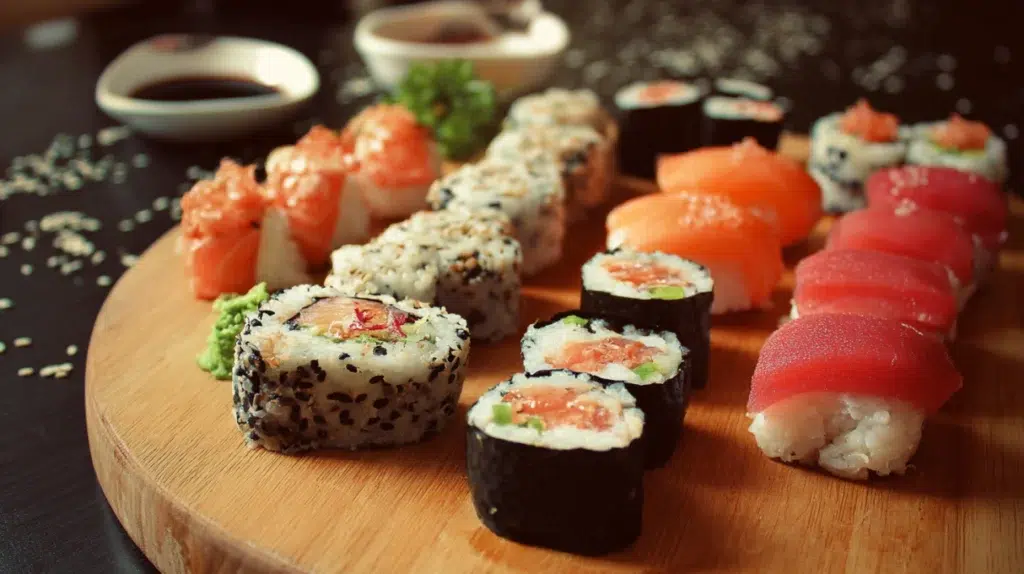
Sushi is a staple rice dish of Japanese cuisine, cooked rice flavored with vinegar served with vegetable, egg or raw seafood garnishes, with nigiri, maki and oshi being the main styles. This definition immediately clarifies the most common Western misunderstanding: sushi is not raw fish. Sushi is vinegared rice. The fish, raw or cooked, is a garnish. There is sushi with cucumber. Sushi with avocado. Sushi with tamago (sweet cooked egg). Sushi with pickled vegetables. None of these contain raw fish and all of them are genuine sushi.
The word “sushi” refers specifically to the vinegared rice. The word “sashimi” refers to the raw fish served on its own without rice. These are related but different preparations.
The main sushi styles:
Nigiri-zushi: hand-pressed oblong of rice topped with a single piece of fish or shellfish and a tiny dab of wasabi between the rice and the fish. The form that most people picture when they think of sushi. Requires the most skill to make at home, the hand pressure that forms the rice affects its texture, and the slice of fish must be cut at the correct angle and thickness.
Maki-zushi: nori wrapped around rice and fillings, rolled with a bamboo mat and sliced into rounds. The familiar sushi roll. Requires some practice with the rolling mat but produces consistent results once the technique is understood.
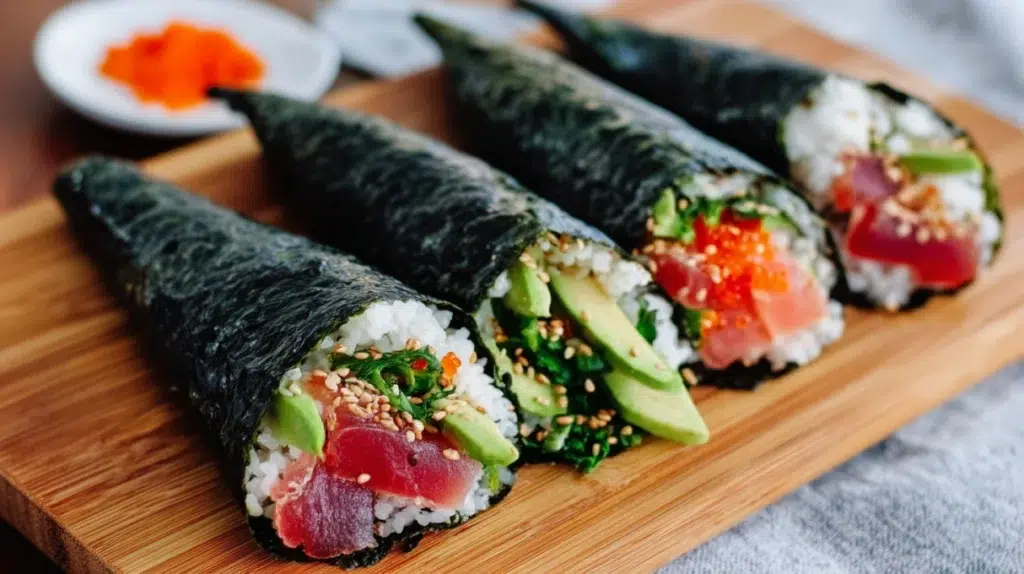
Temaki-zushi: hand rolls, nori cones filled with rice and toppings. No rolling mat. No technique. Assembled by each person at the table from components laid out in small dishes. The most accessible home format and the way Japanese families eat sushi at home.
Chirashi-zushi: scattered sushi, a bowl of seasoned rice topped with an array of fish and vegetables. Requires no rolling or shaping at all, the most forgiving format of all and genuinely beautiful when the toppings are carefully arranged.
The Sushi Rice: The Non-Negotiable Foundation
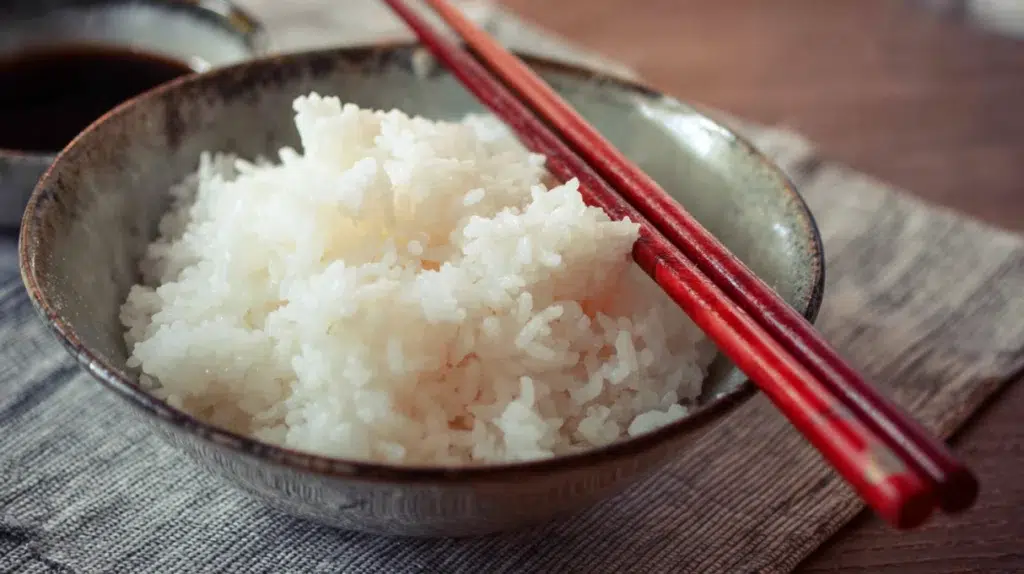
Sushi rice (shari or sumeshi) is short-grain Japanese rice cooked, then seasoned while hot with a blend of rice vinegar, sugar and salt called sushi-zu. The temperature at which you season and serve the rice matters as much as the seasoning ratio.
The temperature rule: Sushi rice must be seasoned while still hot (the vinegar absorbs better into hot rice) and served at body temperature, slightly warm to the touch. Cold sushi rice is incorrect. It becomes dense, loses its sweetness, and tastes starchy and flat. This is why sushi left in the refrigerator always disappoints, the rice has been ruined by the cold.
The folding rule: Season the hot rice by folding, never stirring. A cutting and folding motion with a rice paddle or flat spatula, combined with fanning to cool the rice evenly. Stirring crushes the grains and makes the rice gluey.
Sushi Rice Recipe
Ingredients (serves 4: approximately 600g cooked)
- 360g (2 cups) Japanese short-grain rice, Koshihikari, Nishiki, or Tamaki Gold
- 400ml (1⅔ cups) cold water
- Pinch of salt
For the sushi-zu (seasoning):
- 60ml (4 tablespoons) Japanese rice vinegar, Marukan or Mizkan brand
- 2 tablespoons sugar
- 1 teaspoon fine sea salt
Method:
Step 1: Wash the rice. Place the rice in a bowl, cover with cold water, swirl and pour off the cloudy water. Repeat 4-5 times until the water runs mostly clear. This removes excess surface starch. Drain in a fine mesh sieve for 30 minutes.
Step 2: Cook the rice. Rice cooker: use the sushi rice setting if available, otherwise standard white rice. Stovetop: combine washed rice and water in a heavy saucepan with a tight-fitting lid. Bring to a boil over medium-high heat. Reduce to the lowest heat, cover, cook 12 minutes. Remove from heat. Rest covered for 10 minutes, do not lift the lid during cooking or resting.
Step 3: Make the sushi-zu. Combine rice vinegar, sugar and salt in a small saucepan over low heat, stirring until the sugar and salt dissolve completely. Do not boil. Remove from heat and cool slightly.
Step 4: Season the rice. Turn the hot rice out into a wide, shallow bowl, ideally a wooden hangiri (sushi rice tub) which absorbs excess moisture, but a large ceramic or glass bowl works. Pour the sushi-zu evenly over the rice. Using a rice paddle or flat spatula, fold the vinegar into the rice with broad cutting strokes, not stirring, while fanning the rice with a hand fan or piece of cardboard to cool it quickly. The fanning creates a glossy sheen on the rice by evaporating surface moisture.
Continue folding and fanning for 3-4 minutes until the rice is glossy, each grain is separated but slightly sticky, and the rice has cooled to body temperature, warm but not hot to the touch.
Use immediately or cover with a damp cloth at room temperature. Never refrigerate sushi rice.
Temaki Hand Rolls: The Home Sushi Format That Actually Works
Temaki is the correct format for home sushi. No rolling mats. No technique. No stress about tight rolls or even cuts. Each person takes a sheet of nori, adds a small amount of rice, places their chosen fillings diagonally across the rice, and rolls it into a cone.
The result is deliberately imperfect, deliberately personal and genuinely delicious. The nori stays crisp because it is filled and eaten immediately, the crisp nori texture, which disappears within 30 seconds of refrigeration, is one of the great simple pleasures of fresh sushi.
Setting up a temaki station:
Lay out small dishes of:
- Cooked sushi rice in a bowl with the paddle
- Sheets of nori, cut in half (each half = one hand roll)
- Your chosen fish and fillings (see fish selection below)
- A small dish of soy sauce
- Wasabi: real wasabi paste in a tube, or the horseradish-based version
- Pickled ginger (gari), palate cleanser between rolls
- Optional: Kewpie mayo, sliced avocado, cucumber batons, shiso leaves
Each person assembles their own. Children love this format. So does everyone else.
How to roll a temaki: Hold a nori half in your non-dominant hand, rough side up. Place a small amount of rice (about 2 tablespoons) on the left third of the nori, spreading it slightly. Add a dab of wasabi. Lay your fillings diagonally from the top-left corner toward the bottom-center. Roll from the bottom-left corner upward and to the right to form a cone. Eat immediately.
The Fish: What to Buy, Where to Buy It, and How to Stay Safe
This is the section most people come for. Here is the honest information.
The “sushi-grade” label is not regulated. In the United States, the FDA has no legal definition of “sushi-grade” or “sashimi-grade.” Any fishmonger can put these words on any fish. The words indicate intent and handling practices, not a guaranteed standard. This does not mean avoiding raw fish at home, it means buying from a source you trust and following the guidance below.
What actually matters for raw fish safety:
Freezing kills parasites. The FDA recommends that fish intended for raw consumption be frozen at -20°C / -4°F for 7 days, or at -35°C / -31°F for 15 hours. Most commercial fish sold for sushi in the US has been commercially frozen to these temperatures. Farm-raised fish (salmon especially) have a much lower parasite risk than wild-caught and generally do not require freezing.
Freshness matters more than the “sushi-grade” label. Fresh fish for raw consumption should smell of the sea, clean, briny, slightly sweet. It should never smell fishy. The flesh should be firm and bright, not dull or yielding. Buy from a fishmonger with high turnover, ideally one who supplies local restaurants.
The safest fish for home sushi:
Atlantic salmon (farm-raised): the most accessible and safest raw fish for home sushi. Farm-raised Atlantic salmon has an extremely low parasite risk, is almost universally available, has been commercially frozen, and has a rich, buttery flavor that makes excellent nigiri and temaki. Buy from Whole Foods, Costco or a trusted fishmonger.
Tuna (bluefin, yellowfin, bigeye): the most traditional sushi fish and the most widely available. Look for deep red color, firm texture and no brown discoloration. Whole Foods and H Mart both carry sushi-quality tuna reliably.
Yellowtail (hamachi): delicate, slightly fatty, one of the most refined sushi fish. Less widely available than salmon and tuna. H Mart and Japanese grocery stores carry it reliably.
Scallops (hotate): large sea scallops eaten raw as sushi are sweet, tender and extraordinary. Buy dry-packed (not wet-packed, which means they have been treated with sodium tripolyphosphate) from a fishmonger or Whole Foods seafood counter. Tell them you are eating them raw.
Shrimp (ebi): cooked shrimp is the most common sushi shrimp in Japan. Blanch prawns briefly, split down the center and press flat for nigiri. No raw fish concerns.
Cooked and vegetarian options (no raw fish concerns):
- Tamagoyaki (sweet rolled egg): see Japanese comfort food for the full recipe
- Cucumber (kappa maki): one of the most elegant sushi rolls
- Avocado: a Western addition that works beautifully with salmon
- Pickled daikon or carrot
- Crab stick (surimi): not traditional but enjoyed by many
Nigiri: For When You Want to Go Further
Nigiri is the most skilled home sushi format and the most rewarding when it works. The technique:
Slice the fish. Cut at a 45-degree angle against the grain, approximately 6mm thick and 4cm wide. The diagonal cut creates a larger surface area and a better texture than a straight cut.
Form the rice. Wet your hands lightly with a mix of water and rice vinegar (this prevents sticking). Take approximately 20g of sushi rice (roughly one heaped tablespoon) and press gently in your palm into a small oblong. The rice should hold together with light pressure, not compacted, not crumbling.
Assemble. Place a very small amount of wasabi on the back of the fish slice. Place the rice oblong on the fish. Invert, press gently with two fingers, and flip to serve fish-side up. The pressure matters, too firm and the rice becomes dense, too light and it falls apart when lifted.
The first few nigiri will be imperfect. By the end of the meal they will be better. By the third time you make them they will be good. This is the correct pace of improvement.
The Accompaniments
Soy sauce for dipping: use a small amount. Dip the fish side of nigiri, not the rice side, rice soaked in soy sauce becomes salty and falls apart.
Wasabi: in Japan, wasabi is placed between the rice and fish by the sushi chef. Dissolving wasabi into the dipping soy is considered an imprecise approach that overseason the whole bowl.
Pickled ginger (gari): eaten between different fish to cleanse the palate. Not eaten with each piece of sushi.
Miso, the fermented soybean paste used throughout Japanese cooking, appears in dipping sauces and marinades alongside sushi in a traditional Japanese meal. A small bowl of miso soup alongside a temaki spread is the most natural and complete Japanese home sushi experience.
FAQ About Sushi at home
Is it safe to eat raw fish at home?
Yes, with the right fish and the right sourcing. Buy from a trusted fishmonger or Whole Foods with high turnover. Farm-raised Atlantic salmon is the lowest-risk option. Commercially sold tuna has almost always been frozen to FDA-recommended temperatures. Smell the fish before buying. If it smells of anything other than the sea, do not use it raw.
Why does my sushi rice go hard and clumpy?
Two causes: refrigeration, or too much water during cooking. Sushi rice must never be refrigerated, serve it at room temperature, covered with a damp cloth, within 2 hours of making. For clumpy rice: reduce the water slightly (try 380ml per 360g rice) and ensure you are rinsing thoroughly before cooking to remove excess starch.
Can I make sushi rolls without a rolling mat?
Yes. Temaki hand rolls require no mat at all and are the correct format for relaxed home sushi. For maki rolls, a bamboo sushi mat (available at Asian grocery stores for under $5) is worth having. Without one, use a sheet of cling film on a flat surface as a substitute.
How much fish do I need per person?
For a temaki dinner: plan for 80-100g of fish per person as a guideline, most people eat less than they expect because the rice is filling. For a multi-fish spread, 50-60g of each variety works for 4 people.
What is the difference between sushi and sashimi?
Sushi, vinegared rice plus toppings or fillings. Sashimi = sliced raw fish or seafood served alone, without rice. Sashimi is not sushi. You can eat sashimi without eating sushi, and you can eat sushi (with cooked or vegetarian toppings) without eating raw fish.
Planning your week? Add a sushi night to your weekly meal planner, temaki is perfect for a Friday dinner with friends where everyone assembles their own.
More From the Japanese Recipes Collection: