
Feijoada recipe searches come from two different types of cooks: Brazilians abroad who are homesick and want to make it correctly, and non-Brazilians who encountered it somewhere and cannot stop thinking about it. This article is written for both.
Feijoada is not a complicated dish. It is a slow dish, patient, unhurried, built over three to four hours of low simmering, but it is not technically demanding. The complexity in feijoada comes from the combination of smoked and dried meats, each contributing a different layer of flavor to the black bean broth, and from the assembly of the complete meal: the beans, the rice, the farofa, the collard greens, the orange slices, the hot pepper sauce. Each component is simple. Together they form one of the great communal eating experiences in any food culture.
Feijoada completa is the national dish of Brazil, black beans cooked with fresh and smoked meats, the sliced meats displayed on a large platter alongside the beans, rice, farofa, sliced oranges, collard greens and hot pepper sauce. That description from Britannica captures the architecture of the dish perfectly, the beans are the body, the meats are the event, and the accompaniments are the frame that makes the whole thing work as a meal.
This is part of the Brazilian recipes collection, the dish that, more than any other, represents what Brazilian cooking is.
The Saturday Tradition
Feijoada is a Saturday dish. Not by law or rule but by deep cultural practice, in Rio de Janeiro, in São Paulo, in Brazilian homes everywhere in the world, Saturday is feijoada day. The pot goes on late Friday night or early Saturday morning. By noon it is ready. The meal is served late, 1pm, 2pm and eaten slowly, over hours, with cold beer (chopp) or caipirinha, with the radio or a football match in the background, with whoever is around. There is always enough for whoever shows up.
The pace of the meal is the point. Feijoada cannot be rushed and should not be eaten quickly. The richness of the beans and smoked meats demands the counterpoint of the orange slices (their acidity cutting through the fat), the collard greens (their slight bitterness balancing the smoke), the farofa (its crunch and nuttiness providing texture relief), and the hot pepper sauce (its heat waking everything up). Eat through all of these slowly and the meal never becomes heavy.
Making feijoada on a Saturday in Nashville is not a lesser version of the Rio original. It is exactly the same tradition, transplanted.
The Meats: What to Use and Why
Black beans are of Central and South American origin and figure prominently in Latin American cuisines, in Brazil they are the single most important legume, eaten daily across all five regions of the country. But feijoada’s complexity comes from what cooks alongside those beans: a combination of smoked, dried and fresh pork and beef that builds the broth into something far beyond beans alone.
The traditional feijoada completa uses up to twenty different meat cuts, pig’s ears, pig’s trotters, pig’s tail, smoked tongue, carne seca (Brazilian dried salted beef), paio (a smoked pork sausage), linguiça (fresh pork sausage), bacon, and fresh pork ribs among others. This is not required for a home version. The essential principle is variety of smoke and salt, at least one smoked sausage, one dried or salted beef, one fresh cut of pork. This combination produces the layered depth that makes feijoada taste like itself rather than a bean stew with sausage.
The US-accessible meat list for authentic feijoada:
Smoked linguiça or chouriço: Portuguese-style smoked pork sausage, available at Portuguese delis, Brazilian grocery stores, some Whole Foods and H Mart. If unavailable: andouille sausage or any quality smoked pork sausage. Cut into thick rounds.
Carne seca (dried salted beef): the Brazilian version of jerked beef, sold at Brazilian grocery stores in the US. Requires 24 hours of soaking and water changes to reduce the saltiness before cooking. If unavailable: corned beef (not canned, the cut from the deli section, drained and rinsed) is an acceptable substitute. Or use smoked brisket.
Smoked pork ribs: available everywhere. The bones contribute collagen to the broth that thickens it into something silky and rich over the long cooking time.
Fresh pork belly or bacon: in thick slices or large chunks, adds uncured pork fat that rounds the flavor of the smoked elements.
Pork shoulder (optional): added for bulk in larger batches. Becomes completely tender after three hours.

The Complete Feijoada Recipe
Ingredients (serves 8, feijoada is made for a table)
The beans and meats:
- 500g (2½ cups) dried black beans, soaked overnight in cold water, drained and rinsed
- 300g (10 oz) smoked linguiça or chouriço, cut into 3cm rounds
- 300g (10 oz) carne seca, soaked 24 hours with 3-4 water changes, drained, cut into large pieces. Or: 300g corned beef brisket, soaked in cold water 2 hours, drained.
- 300g (10 oz) smoked pork ribs, separated into individual ribs
- 200g (7 oz) thick-cut bacon or pork belly, cut into large chunks
- 1 large onion, finely diced
- 8 cloves garlic, 4 minced, 4 left whole
- 2 bay leaves
- 1 teaspoon black pepper
- 2 tablespoons vegetable oil
- Salt, add only at the end, the smoked meats provide substantial saltiness throughout cooking
The farofa (toasted cassava flour):
- 200g (1½ cups) farinha de mandioca (cassava flour), available at Brazilian grocery stores, Latin food aisles, Amazon
- 3 tablespoons unsalted butter
- 1 small onion, finely diced
- 3 strips bacon, finely diced
- 2 spring onions, sliced
- Salt and pepper
The collard greens (couve):
- 400g (14 oz) collard greens, stems removed, leaves stacked, rolled tightly and sliced into very thin ribbons, the thinner the better, aim for 2-3mm
- 3 tablespoons olive oil
- 4 cloves garlic, finely sliced
- Salt
The hot pepper sauce (molho de pimenta):
- 4 tablespoons of the hot feijoada cooking liquid, ladled out when the beans are done
- 1 malagueta pepper or bird’s eye chili, finely sliced
- 1 small white onion, finely diced
- 2 tablespoons white wine vinegar
- Salt
To serve:
- 400g (2 cups dry) long-grain white rice, cooked
- 4 oranges, sliced into rounds or wedges
Method: Day Before:
Soak the dried black beans overnight in plenty of cold water, they will roughly double in size. Drain and rinse before cooking.
Soak the carne seca, place in a bowl, cover with cold water and refrigerate. Change the water 3-4 times over 24 hours. This draws out the excess salt that would otherwise make the entire dish unpalatably salty. After soaking, cut into large chunks. Taste a small piece, it should be pleasantly salty but not aggressively so. If still very salty, soak 4 more hours.
Method: Cooking Day:
Step 1: Build the base (15 minutes)
Heat the oil in a very large, heavy pot (at least 6 litres) over medium heat. Add the diced onion and cook 5-6 minutes until soft and translucent. Add the minced garlic and cook 1 more minute. Add the whole garlic cloves and the bay leaves.
Add all the meats: the smoked linguiça rounds, the soaked carne seca pieces, the smoked pork ribs and the bacon chunks. Turn everything in the onion and oil base for 3-4 minutes over medium-high heat, you are not trying to brown everything deeply, just beginning the flavor development and coating the meats in the aromatics.
Step 2: Add beans and liquid (5 minutes)
Add the soaked, drained black beans directly to the pot. Pour in enough cold water to cover everything by at least 5cm, approximately 2 litres. Add the black pepper. Do not add salt yet.
Bring to a full boil over high heat. Skim off the grey foam that rises to the surface in the first 5-8 minutes of boiling, this foam is coagulated protein from the meats and will make the broth cloudy and slightly bitter if left in. Keep skimming until the foam subsides and the liquid runs relatively clear.
Step 3: The long simmer (2.5 to 3 hours)
Reduce heat to low, the pot should be at a gentle, lazy simmer, not rolling. Cover with the lid slightly ajar to allow some steam to escape. Leave it. Stir every 30-40 minutes, checking the water level, add hot water if the beans become exposed above the liquid surface.
After 2 hours, check the beans: press one between your fingers. It should yield completely with no resistance. If there is still hardness, continue simmering. After 2.5 hours, begin checking every 15 minutes.
When the beans are completely tender, press 4-5 tablespoons of beans against the side of the pot with the back of a spoon and stir them into the broth, this thickens the liquid naturally into the characteristic semi-liquid, almost silky consistency of proper feijoada. The broth should be dark, thick and deeply savory. Taste now and add salt if needed.
Before the feijoada is done, ladle out 4 tablespoons of the hot liquid into a small bowl for the molho de pimenta.
Step 4: Rest (minimum 20 minutes)
Turn off the heat. Leave the feijoada covered for at least 20 minutes before serving, the flavors deepen and settle, the broth thickens further as it rests. This rest is not optional. Feijoada served immediately out of the pot is noticeably thinner and less integrated than feijoada rested for 20-30 minutes.
While the feijoada rests, make the three accompaniments:
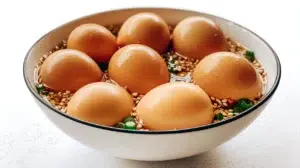
Farofa: Cook the diced bacon in a wide pan over medium heat until crispy. Add the butter and diced onion, cook 4-5 minutes until the onion is soft and golden. Add the cassava flour all at once. Stir constantly over medium heat for 4-5 minutes until the flour is evenly coated in the butter and bacon fat, golden in color and smells toasted and nutty. Add the spring onions, salt and pepper. Remove from heat. Farofa should be loose, crunchy and crumbly, not clumped or wet.
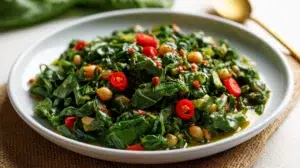
Couve (collard greens): Heat olive oil in a wide pan over high heat. Add the sliced garlic and cook 30 seconds until just golden, do not let it burn. Add all the collard greens ribbons at once and toss rapidly for 60-90 seconds only. The greens should wilt slightly but retain their bright color and some bite. Season with salt. Collard greens cooked beyond 2 minutes become dark, soft and bitter. The quick cook is the correct technique.
Molho de pimenta: Combine the reserved hot feijoada liquid with the sliced malagueta, diced onion and vinegar. Stir. Taste, it should be spicy, sharp and savory. This sauce is served in a small dish at the table for people to add heat as they choose.

Assembly: The Correct Order
Feijoada completa is served on a large table with every element in its own dish, not plated individually in the kitchen. The assembly order at the table:
- 1. Rice goes on the plate first, a generous mound.
- 2. Beans ladled alongside the rice, the dark, thick broth running into the rice.
- 3. Meat pulled from the pot and arranged on a separate platter for people to take from the linguiça rounds, the shredded carne seca, the ribs.
- 4. Farofa scattered generously over the beans, a thick, crunchy layer.
- 5. Couve alongside.
- 6. Orange slices on the plate or in a separate bowl, eat between bites throughout the meal, not just at the end. The acid and freshness are essential counterpoints.
- 7. Molho de pimenta at the table, add to individual taste.
The first plate is the exploration plate. The second plate made after a pause of ten minutes, is the plate where everything comes together. Feijoada is always better on the second plate.
The Caipirinha: The Only Correct Drink
A cold caipirinha alongside feijoada is not optional in the Rio tradition, it is part of the meal. The lime’s acidity and the cachaça’s earthy sweetness cut through the richness of the beans and smoked meats in exactly the right way.
Caipirinha: Cut 1 lime into 8 pieces. Place in a heavy glass. Add 2 teaspoons of white sugar. Muddle firmly, press and twist the lime pieces to extract juice and oils from the skin. Fill with crushed ice. Pour over 60ml (2 oz) of cachaça (Brazilian sugarcane spirit available at most liquor stores). Stir once. Serve immediately. Do not add anything else. Do not use soda water. Do not use vodka (that is a caipivodka, a different drink).
For a table: scale up and batch in a jug, adding the cachaça just before serving.
Frequently Asked Questions
Can I make feijoada in a slow cooker?
Yes, sauté the onion and garlic first in a pan, then transfer everything to the slow cooker on low for 8-10 hours. The result is excellent. Skip the initial skimming step (or skim when you check it at the halfway point). The rest time still applies.
Can feijoada be made without carne seca?
Yes, the dish will be less complex but still very good. Replace with smoked brisket, corned beef or additional smoked pork ribs. The principle of having multiple types of smoke and salt in the pot should be maintained even if the specific traditional cuts are unavailable.
How long does feijoada keep?
Feijoada improves significantly over 24-48 hours in the fridge as the flavors continue to develop, many Brazilians consider leftover feijoada superior to the freshly cooked version. Keeps 4-5 days refrigerated. Reheats gently with a splash of water. Freezes perfectly for up to 3 months.
What is the difference between feijoada and a bean stew?
The combination of multiple smoked and dried meats building the broth over 3+ hours of simmering, the specific accompaniment structure (farofa, couve, orange, molho de pimenta) and the cultural practice of serving it as a Saturday communal meal are what distinguish feijoada from a generic bean stew. The accompaniments are not optional garnish, they are structural components of the dish that change how the beans taste by providing acidity, crunch, bitterness and heat in turns.
Why do you serve orange with feijoada?
The orange slices serve two purposes, their acidity cuts through the richness of the beans and smoked pork fat, and they are traditionally believed to aid in the digestion of the heavy meal. Whether or not that is medically accurate, the flavor logic is sound: a bite of fresh orange after a spoonful of dark, fatty feijoada resets the palate completely. Do not skip them.
Planning your week? Add a Saturday feijoada to your weekly meal planner, start the beans soaking Friday night and the whole pot cooks itself through Saturday morning while you do other things.