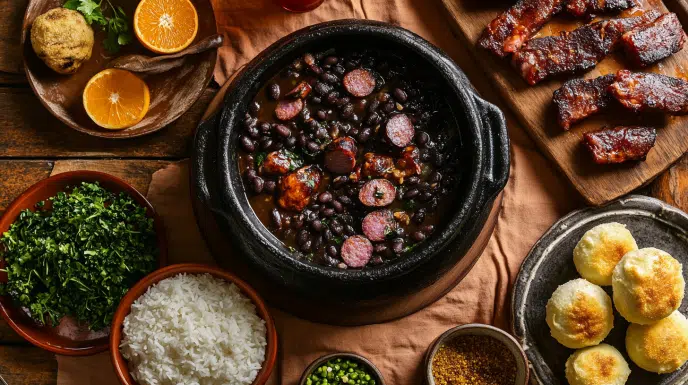
Brazilian recipes reflect a country that is simultaneously five countries in one, a geography so vast, a history so layered and a population so mixed that no single dish or tradition can represent the whole.
Brazil is the fifth largest country on earth. Its northern Amazon basin has almost nothing culinary in common with the southern cattle country of Rio Grande do Sul. The seafood-rich Bahian northeast, shaped by four centuries of African influence, produces food that looks and tastes entirely different from the Japanese-influenced cooking of São Paulo, home to the largest Japanese diaspora outside Japan. And all of it is Brazilian.
What holds this diversity together is not a single ingredient or technique but a specific spirit in Brazilian cooking, generous, communal, unhurried, deeply social. The churrascaria, where meat is carved tableside in an endless procession for hours. The Saturday feijoada, served late in the morning and eaten through the afternoon with family. The brigadeiro bowl passed around at every birthday party, every child reaching in. Brazilian food is not eaten quickly or alone.
This is part of the Americas recipes collection, the most geographically and culturally diverse cuisine in the Western hemisphere.
Table of Contents
The Three Food Traditions
Brazilian food culture emerged from three distinct traditions, Indigenous, African and Portuguese with African influences strongest along the northeastern coast, where they shaped the ingredients, cooking methods and flavor profiles that define Bahian cuisine. Understanding these three traditions is the framework for understanding every Brazilian dish.
The Indigenous Foundation
Brazil’s Indigenous peoples, hundreds of distinct groups speaking hundreds of languages, established the agricultural and foraging foundation of Brazilian cooking long before European contact. Cassava (manioc) is the most important Indigenous contribution: this starchy root, toxic in its raw form but transformed through grating, pressing and toasting into the safe and extraordinarily versatile farinha de mandioca (cassava flour), is the foundational carbohydrate of Brazilian cooking across all five regions. Farinha appears at the Brazilian table the way bread appears at a European one, always present, constantly used, taken completely for granted.
Other Indigenous ingredients that became central to Brazilian cooking: açaí (the purple palm fruit of the Amazon, eaten as a thick bowl with granola and banana throughout Brazil), pupunha (peach palm fruit), various Amazon river fish, guaraná (the caffeine-rich berry that became the basis of the most popular Brazilian soft drink), and dozens of native fruits, cupuaçu, caju (cashew fruit, not just the nut), jabuticaba, maracujá (passion fruit), that appear in juices, desserts and sauces throughout the country.
The African Tradition
The transatlantic slave trade brought an estimated 4-5 million enslaved Africans to Brazil between the 16th and 19th centuries, more than to any other country in the Americas. The culinary traditions they brought, adapted and maintained under the most brutal conditions produced what is now considered Brazil’s most distinctive and celebrated regional cuisine: Bahian cooking.
Dendê (red palm oil), the same ingredient as West African palm oil became the defining cooking fat of Bahia. Dried shrimp, used throughout West African cooking, became essential to Bahian dishes. Black-eyed peas (feijão fradinho), okra (quiabo), coconut milk, ginger and malagueta peppers all came with or through the African food tradition. The technique of slow-cooking legumes with meats and strongly seasoned broth, which produced feijoada is deeply rooted in West African one-pot cooking traditions.
Acarajé, black-eyed pea fritters fried in dendê oil, split and filled with vatapá (a paste of dried shrimp, bread, coconut milk and peanuts) and caruru (okra cooked with dried shrimp), is sold by Baianas in white dresses on the streets of Salvador and is one of the most direct culinary connections between modern Brazil and West African cooking. It is the same dish as Nigerian akara, transformed and enriched by four centuries of Brazilian adaptation.
The Portuguese Tradition
The Portuguese brought the backbone of Brazilian everyday cooking: the technique of building dishes on a sofrito of onion, garlic and tomato; the love of salt cod (bacalhau), still one of the most eaten fish in Brazil despite the country’s extraordinary abundance of fresh seafood; the tradition of sweet egg-based desserts (including the quindim, a golden coconut and egg yolk custard and doce de leite, milk caramel that appears in everything); and the basic Portuguese table structure of rice, beans and protein that became arroz com feijão, the foundational everyday meal of Brazil.
The Five Regions, Five Different Tables
North: Amazon Cooking
The Amazon region is where Indigenous food traditions are strongest and most intact. River fish, tambaqui, pirarucu, tucunaré, cooked simply in tucupi (a sour yellow broth made from fermented wild manioc juice that is toxic until cooked), served with jambu (a leaf that produces a mild numbing sensation similar to Sichuan peppercorn). Tacacá a street food soup of tucupi broth, tapioca starch, dried shrimp and jambu leaves is the iconic dish of Pará state, sold from clay pots by tacacazeiras on street corners in Belém. Amazon cooking is the most challenging for home cooks outside Brazil to replicate, many of its defining ingredients (tucupi, jambu, specific Amazon fish) are genuinely difficult to source. But açaí bowls, roasted tucumã (a creamy Amazon palm fruit), and cassava preparations are all accessible starting points.
Northeast: Bahian and Sertanejo Cooking
Northeastern Brazil contains the most African-influenced cooking in the country and some of the most internationally recognized Brazilian dishes. Bahia’s coastal cooking, moqueca, acarajé, caruru, vatapá, xinxim de galinha (chicken cooked with dried shrimp and dendê), is built on dendê oil, coconut milk, dried shrimp and malagueta pepper. The sertão (the semi-arid interior hinterland) produces a harder, more austere cooking: carne de sol (sun-dried salted beef), sarapatel (a stew of pork offal and blood), feijão de corda (a variety of cowpea), rapadura (unrefined cane sugar) and corn-based dishes shaped by scarcity and intense heat.
Southeast: Rio and São Paulo
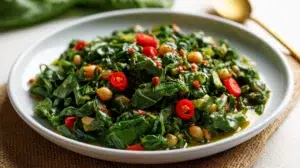
The Southeast is home to feijoada as it is most celebrated, the Saturday feijoada served from noon onward, the black bean and smoked meat stew accompanied by rice, couve (collard greens sautéed with garlic), farofa (toasted cassava flour), orange slices and a cold caipirinha. São Paulo’s extraordinary immigrant food culture, Italian, Japanese, Lebanese, Syrian, Korean, has produced a food city of genuine global ambition, with the world’s largest Japanese community outside Japan contributing sushi, ramen and yakisoba to the everyday São Paulo table alongside the traditional Brazilian meal.
South: Churrasco Country
The south of Brazil, the states of Rio Grande do Sul, Santa Catarina and Paraná is the heartland of cattle culture and churrasco. German and Italian immigration in the 19th century produced a European-influenced cooking tradition built on bread, sausage, polenta and schmaltz alongside the Gaucho cattle tradition. Churrasco here is not a method, it is a way of life. The churrascaria system (meat on skewers, carved tableside in an endless relay) was born in Rio Grande do Sul and spread across Brazil and eventually the world. The chimichurri-style sauces and the specific cuts favored here, picanha (the rump cap, the most prized Brazilian cut), fraldinha (flank), costela (ribs) are the language of southern Brazilian cooking.
Central-West: Cerrado and Pantanal
The vast Central-West plateau and Pantanal wetlands produce their own cooking tradition: river fish from the Pantanal (pacu, dourado, pintado), pequi (a yellow fruit with an intensely distinctive flavor that divides Brazil between devoted lovers and people who cannot tolerate it), and the arroz com pequi that is the regional comfort food of Goiás state. Empadão goiano (a deep-filled pie of chicken, heart of palm and vegetables with egg) is the state’s great celebratory dish.
The Essential Brazilian Dishes
Feijoada: The National Dish
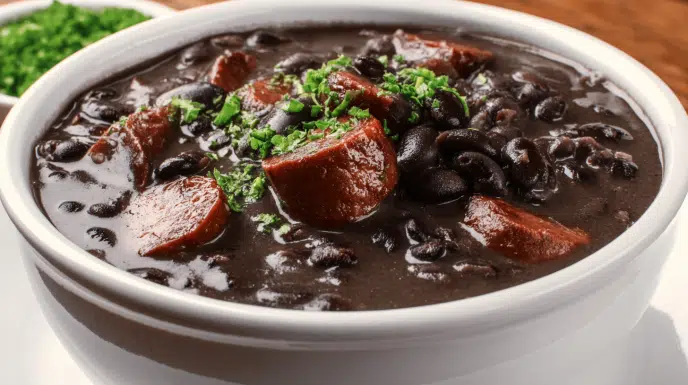
Feijoada completa is the national dish of Brazil, black beans cooked with fresh and smoked meats, served with rice, collard greens, farofa and orange slices, a dish whose origins are rooted in the country’s history of slavery and African culinary tradition. The full feijoada completa uses up to 20 different cuts of pork, smoked sausage, dried beef, pig’s ears, pig’s trotters, pig’s tail, all simmered together with the black beans until the beans are completely soft and the broth is thick, dark and deeply flavored.
It is a Saturday dish. Not because it cannot be made other days, but because feijoada requires time, 3-4 hours minimum and produces quantities that feed a table of 8-10 comfortably. Making feijoada is a social act as much as a cooking act. The full recipe with all components and the correct assembly order is in the feijoada guide.
Churrasco: Brazilian Barbecue
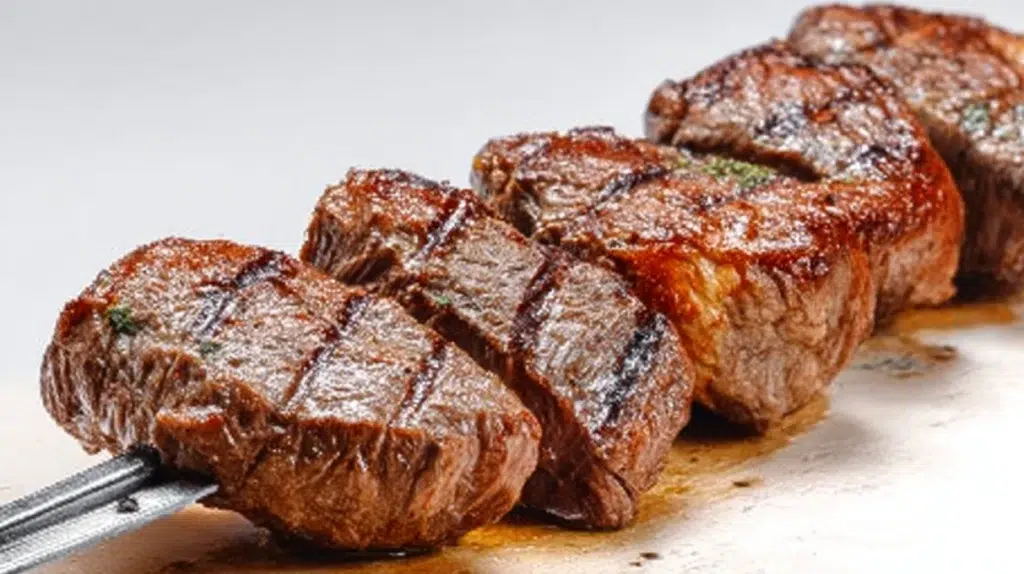
Churrasco is the cooking method, not a specific dish, meat on skewers or flat grates over live charcoal or wood, cooked by a churrasqueiro who manages the fire, the distance, the turning and the resting of each cut. The defining seasoning is simple: rock salt (sal grosso), pressed onto the meat just before grilling and partially shaken off at the table. Nothing else. The quality of the meat and the skill of the fire management is the entire dish.
The cuts matter more in Brazilian churrasco than in almost any other grill tradition. Picanha, the rump cap, a cut with a thick layer of fat on one side, is the most prized. The fat cap must be left on and faces the fire first so it renders and bastes the meat as it cooks. Fraldinha (flank), linguiça (pork sausage), costela (ribs slow-cooked for hours over a lower fire) and coração de frango (chicken hearts on tiny skewers) are the supporting cast. The complete churrasco guide covers the fire, the cuts, the technique and the molho campanha (fresh tomato and onion sauce) that is the only condiment churrasco ever needs.
Moqueca: Bahian Fish Stew
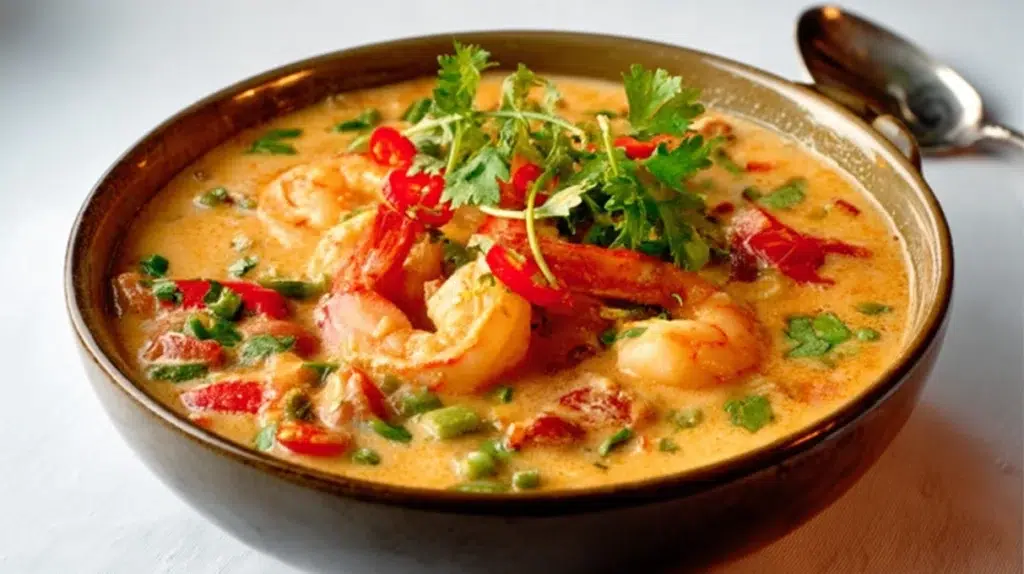
Moqueca is the great dish of Bahia, a fragrant, deeply flavored seafood stew built on dendê oil, coconut milk, onion, tomato, coriander and malagueta pepper, cooked in a clay pot called a panela de barro that gives the dish a specific earthy quality no other pot replicates. The fish (traditionally grouper or sea bass), shrimp or a combination are cooked gently in this rich, orange-tinted sauce until just done, the flesh barely holding together, the sauce clinging to it.
There is also moqueca capixaba, the version from Espírito Santo state, made without dendê oil or coconut milk, seasoned instead with annatto (urucum) and olive oil. Lighter, less rich, completely different in character. Both are correct within their own regional traditions. The full recipe and the regional differences are in the moqueca guide.
Pão de Queijo: Cheese Bread
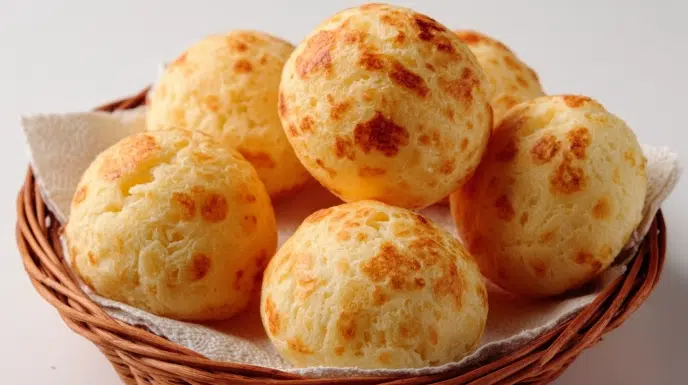
Pão de queijo, small, round, chewy cheese rolls made from tapioca starch (not wheat flour) and queijo minas (a mild Brazilian cheese) is Brazil’s most universally loved everyday food. Eaten at breakfast, as a snack, at any time. The tapioca starch gives the rolls a specific stretchy, chewy interior and a crisp exterior that wheat flour cannot replicate. They are naturally gluten-free. They are also extremely easy to make at home, the dough comes together in a blender in 5 minutes, baked 20 minutes, eaten immediately.
Brigadeiro: Brazil’s Favourite Sweet

Brigadeiro is what Brazil offers the world when the world asks for chocolate truffles. Condensed milk cooked with cocoa powder and butter until thick and fudge-like, cooled, rolled into balls and coated in chocolate sprinkles. Made at every birthday party, every celebration, every gathering where something sweet is wanted. The recipe is four ingredients. The technique, constant stirring over medium heat until the mixture pulls away from the sides of the pan is the only technical requirement. The full recipe with variations (white chocolate, passion fruit, pistachio) is in the brigadeiro guide.
The Brazilian Pantry: What You Actually Need
Brazilian cooking uses a specific set of ingredients that are increasingly available in the US. The full breakdown is in the Brazilian pantry guide, the short list:
Farinha de mandioca (cassava flour), the most important ingredient in Brazilian cooking. Used as farofa (toasted in butter until golden and nutty), as a thickener, as a coating. Available at Brazilian and Latin grocery stores, some Whole Foods, Amazon.
Dendê oil (red palm oil), essential for Bahian cooking. The same ingredient as West African palm oil, buy at African grocery stores, H Mart or online. Annatto oil (azeite de urucum) is the non-Bahian substitute.
Coconut milk: standard supermarket coconut milk works for moqueca.
Malagueta pepper: small, intensely hot Brazilian pepper. Available as pickled malagueta in jars at Brazilian grocery stores and online. Substitute: bird’s eye chili or small Thai chili for the heat, not the flavor.
Tapioca starch (polvilho azedo or polvilho doce), two types, both used differently. Available at Brazilian grocery stores and Amazon.
Condensed milk, standard supermarket condensed milk is identical to the Brazilian version.
Queijo minas, available at Brazilian grocery stores. Substitute: fresh mozzarella (similar mild, milky character) for pão de queijo.
All Brazilian Recipes on This Site
The national dish
- Feijoada Recipe: Brazil’s Black Bean and Smoked Meat Stew
Fire and meat
- Brazilian Churrasco: The Complete Guide to Brazilian Barbecue
Bahian cooking
- Moqueca Recipe: The Bahian Fish Stew That Defines Brazil’s Northeast
Pantry and ingredients
- Brazilian Pantry Guide: Every Essential Ingredient
Sweets
- Brigadeiro Recipe: Brazil’s Most Beloved Chocolate Treat
Frequently Asked Questions
What is the most famous Brazilian dish?
Feijoada completa, black beans slow-cooked with smoked pork and beef, served with rice, collard greens, farofa and orange slices, is Brazil’s national dish and its most internationally recognized. Churrasco (Brazilian barbecue) is arguably more famous globally due to the spread of Brazilian steakhouses worldwide, but feijoada is the dish Brazilians themselves consider most representative of their food culture.
Is Brazilian food spicy?
It depends entirely on the region. Bahian cooking from the northeast is the spiciest, malagueta peppers are used generously in moqueca, acarajé sauces and xinxim de galinha. Southern churrasco cooking uses almost no heat at all, the focus is on the meat’s natural flavor. Most Brazilian everyday cooking sits between these extremes, moderately seasoned, not aggressively spicy.
What is the difference between Brazilian churrasco and Argentine asado?
Both are live-fire beef traditions rooted in Gaucho cattle culture but they differ in key ways. Brazilian churrasco favors skewers (espetinhos) and picanha (rump cap with fat). Argentine asado uses flat iron grill grates and favors short ribs (asado de tira) and longer, slower cooking times. The seasoning philosophy differs too, Brazilian churrasco uses rock salt only, Argentine asado uses chimichurri and simple olive oil marinades. Both traditions prize quality of meat above all else.
What is farofa and how is it used?
Farofa is cassava flour (farinha de mandioca) toasted in butter with onion, garlic, bacon or other aromatics until golden, nutty and slightly crunchy. It is served alongside feijoada, rice and beans, grilled meats and fish, sprinkled over the plate or the pot the way breadcrumbs might be used in Italian cooking. Its function is textural as much as flavorful, the crunch and the toasted nutty flavor it adds to a bowl of soft black beans is one of the essential combinations in Brazilian eating.
What is açaí and is it the same as the bowls sold in the US?
Açaí is a purple palm fruit from the Amazon consumed as a thick, almost solid frozen pulp, scooped into a bowl and topped with granola, sliced banana and honey. In Brazil it is an everyday food eaten at any time, not a wellness product. The US açaí bowl is derived from the Brazilian original and is broadly similar, though Brazilian açaí is considerably less sweet and often unsweetened entirely. The closest US equivalent is at Brazilian-owned açaí shops now found in most major US cities.
Planning your week? Add a Saturday feijoada to your weekly meal planner, it is the most sociable cooking project in this collection and produces enough to feed a full table.