⏱ Injera ferment: 2–3 days 🔥Doro Wat: 2 hrs 👤Serves: 4–6 🌍Origin: Ethiopia
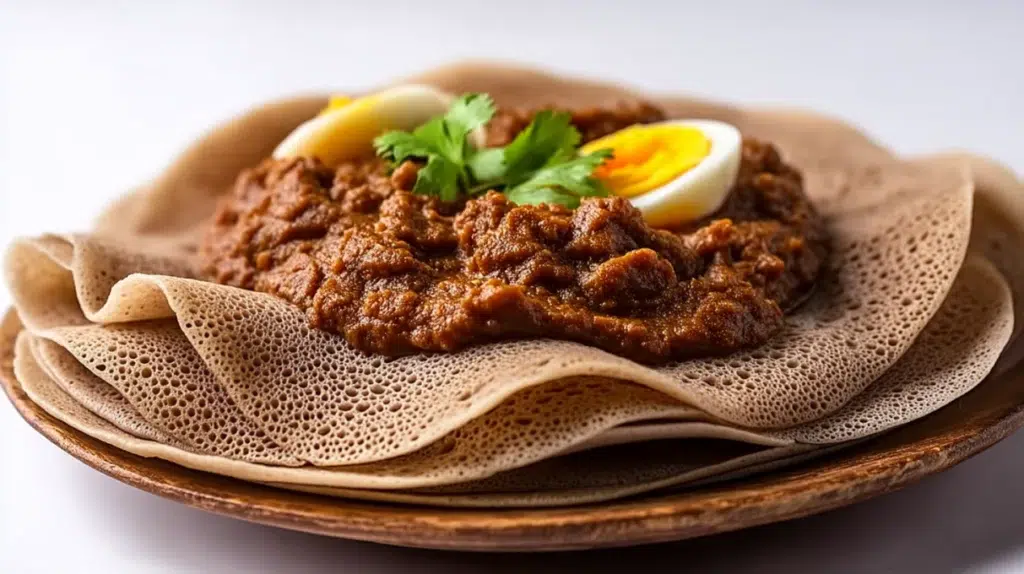
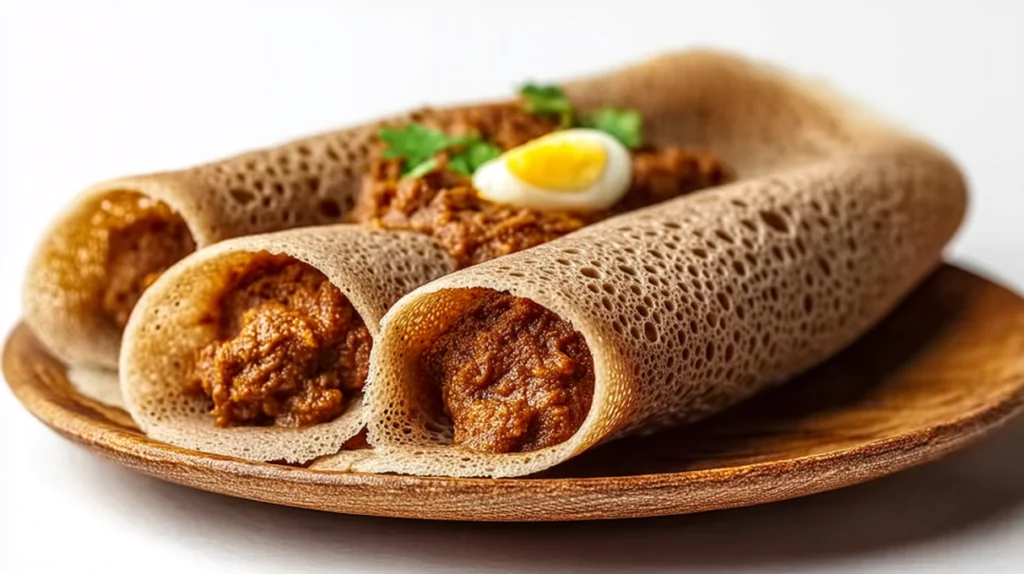
Injera with doro wat is not just a meal, it is the Ethiopian way of eating. The injera is both the plate and the utensil, a large, spongy, slightly sour teff flatbread that ferments for two to three days before cooking, developing a complex tang that no other bread produces. The doro wat is spooned directly onto the injera.
Ethiopia’s most celebrated chicken stew, dark and deeply spiced with berbere, caramelized onions and hard-boiled eggs and eaten by tearing pieces of injera to scoop everything up. No plates. No cutlery. The most communal way of eating in the world.
The plan: two components, one feast
This article covers both components together because that is how Ethiopian cooking works, the injera and the doro wat are inseparable.
- Day 1: Mix the teff batter and begin fermentation, 5 minutes of active work
- Day 2–3: Batter ferments, no work required. Start the doro wat on Day 3, it takes 2 hours
- Day 3: Cook the injera, 30 minutes. Finish the doro wat. Serve together
Injera ingredients
Traditional method (2–3 day ferment)
- 2 cups (240g) teff flour, brown or ivory teff. The defining ingredient, teff is a tiny grain native to the Horn of Africa, naturally gluten-free and rich in iron, fiber and protein. Available at Whole Foods, health food stores, Ethiopian grocery stores and Amazon. For first-time injera makers: use 1½ cups teff plus ½ cup all-purpose flour, the addition of wheat makes the batter easier to handle and produces a slightly more forgiving injera. For fully gluten-free: 100% teff only.
- 3 cups (720ml) distilled or filtered water, chlorine and fluoride in tap water interfere with fermentation. Use distilled, filtered or boiled and cooled water. This is confirmed across every authentic injera source.
- ¼ cup ersho (fermented starter), optional but speeds fermentation dramatically. Ersho is saved fermented teff batter from a previous batch. First time making injera: omit and rely on wild fermentation, or add 1 tablespoon of plain yogurt with live cultures as a starter substitute to kickstart the process.
Quick method (1 hour, 70% result)
- 1½ cups (180g) teff flour
- ½ cup (60g) all-purpose flour
- 1 teaspoon instant yeast
- 1 tablespoon apple cider vinegar, mimics the sourness of fermentation
- ½ teaspoon salt
- ¼ teaspoon baking soda, added just before cooking, not into the batter
- 1½ cups (360ml) warm water
The quick method produces injera that looks right and tastes acceptable. It lacks the deep, complex sour flavour of the fermented version. If this is your first time and you want to understand what injera should actually taste like, make the traditional version. The patience is the point.
For cooking
- Salt, ½ teaspoon added to the batter just before cooking
- Non-stick skillet or crepe pan, 10–12 inches. A lid is essential, the steam from covering the pan is what creates the signature porous, bubbly surface on the top of the injera.
Making the injera
Traditional fermentation method
- Mix and ferment. Whisk teff flour and water together in a large non-reactive bowl (glass or ceramic, not metal). Add the ersho starter or yogurt if using. Whisk until completely smooth. Cover loosely with a kitchen towel or plastic wrap with a few holes. Leave at room temperature (ideally 72–80°F / 22–27°C) for 2–3 days. Do not refrigerate.Check daily. You are looking for: surface bubbles forming, a slightly domed appearance, a clear liquid layer separating on top (pour it off or stir back in, both are fine) and a distinctly sour, slightly tangy smell. This is correct. The wild yeast and lactobacillus bacteria naturally present in the teff flour are doing exactly what they should.
- The absit step, cook a small portion first. When the batter is ready, scoop out approximately ¼ cup of the fermented batter into a small saucepan. Add ¼ cup of water. Cook over medium heat, stirring constantly, until it thickens into a smooth, loose paste, 2–3 minutes. Remove from heat. Stir this cooked paste back into the main fermented batter. This is called absit in Ethiopian, it adds elasticity and helps the injera hold together and develop its signature texture.The absit step is the technique that separates authentic Ethiopian injera from simplified recipes. It gelatinises a small amount of the starch and creates the specific elastic, pliable texture that allows the injera to be torn and used as a utensil without falling apart.
- Rest and prepare to cook. After stirring in the absit, leave the batter to rest for 30 minutes. Add ½ teaspoon of salt and stir. The batter should be thin, thinner than pancake batter, closer to a runny crepe batter. If it is too thick, add a small amount of water.
- Cook the injera. Heat a 10–12 inch non-stick skillet over medium heat for 2 minutes. Do not add oil or butter. Pour approximately ⅓ cup of batter into the centre of the pan. Quickly tilt and swirl the pan in a spiral motion from the centre outward, or pour in a spiral, to create a thin, even round about 10 inches in diameter. Cover immediately with a lid.The lid is what makes injera. The steam trapped under the lid cooks the top surface of the batter through, creates the signature bubbles (called “eyes”) and produces the soft, spongy texture. Without the lid the injera is dry and flat. Do not flip, injera cooks on one side only.
- Remove and stack. Cook for 2–3 minutes until the surface is completely dry and set, no wet spots remaining and the edges begin to curl slightly from the pan. Do not flip. Slide the injera out onto a clean kitchen towel or plate. Cover immediately with another towel to prevent drying. Continue with remaining batter. Stack the finished injera separated by parchment or kitchen towel.Fresh injera is soft and flexible. Injera that dries out becomes stiff and brittle and loses its ability to scoop stew. Keep each one covered the moment it leaves the pan.
Quick method
Whisk teff flour, all-purpose flour, yeast, apple cider vinegar and salt together. Add warm water and whisk until smooth. Cover and rest 1 hour until bubbly. Add baking soda immediately before cooking. Cook exactly as above, same pan, same lid, same technique. No absit step needed.
The doro wat
The complete doro wat recipe is bone-in chicken thighs slow-cooked for 2 hours in a base of caramelized onions, niter kibbeh (Ethiopian spiced butter), berbere spice, garlic and ginger with hard-boiled eggs added at the end. Make it the same day you cook the injer, start the doro wat first since it takes longer. The doro wat keeps refrigerated for 5 days and freezes for 3 months, making both ahead of time and serving together is straightforward.
Building the feast
Lay one or two large injera on a wide, low serving platter, they become the tablecloth and the plate simultaneously. Spoon the doro wat generously across the centre of the injera sauce, chicken and eggs together. Add smaller mounds of vegan sides around it if serving a full Ethiopian feast: misir wat (red lentils), gomen (collard greens), tikil gomen (cabbage and carrots). Bring extra injera folded on the side for scooping. Everyone eats from the same platter, tearing pieces of injera and using them to scoop the stew directly. This is gursha, the Ethiopian tradition of hand-feeding a bite to a guest as a gesture of love and friendship. No plates, no utensils, no separation between people and food.
The honest note on injera
Claire’s note
The first batch of injera is almost always imperfect. The batter spreads unevenly, the eyes do not form uniformly, the edges stick. This is not failure, it is the learning curve of a fermented bread with a technique unlike anything in Western baking. By the third injera the pattern clicks and by the sixth the result is genuinely close to what you find in an Ethiopian restaurant. The fermented batter improves with every day it sits, the flavour deepens and the batter becomes more cooperative. Save a ¼ cup of fermented batter in the fridge as your ersho starter for the next batch. Within two batches the injera will taste and behave exactly as it should.
Add this Ethiopian feast to your weekly meal planner, start the injera batter Monday, make the doro wat Wednesday, feast Thursday. And for more recipes, follow us on Pinterest.
Print
Injera with Doro Wat
- Total Time: Batter ferments for 2880 minutes (2-3 days); cooking takes 120 minutes.
- Yield: 4–6 servings 1x
- Diet: Gluten-Free (if using only teff flour)
Description
Experience the authentic Ethiopian way of eating with injera and doro wat, a flavorful chicken stew served on spongy flatbread.
Ingredients
- 2 cups (240g) teff flour
- 3 cups (720ml) distilled or filtered water
- ¼ cup ersho (fermented starter), optional
- 1½ cups (180g) teff flour (quick method)
- ½ cup (60g) all-purpose flour (quick method)
- 1 teaspoon instant yeast (quick method)
- 1 tablespoon apple cider vinegar (quick method)
- ½ teaspoon salt (quick method)
- ¼ teaspoon baking soda (quick method)
- 1½ cups (360ml) warm water (quick method)
- ½ teaspoon salt (added before cooking)
- Non-stick skillet or crepe pan, 10–12 inches
Instructions
- Mix teff flour and water together in a large bowl for the injera.
- Add the ersho starter or yogurt if using, whisk until smooth and cover loosely.
- Leave at room temperature for 2–3 days to ferment.
- Whisk the fermented batter with ¼ cup water to make the absit mixture.
- Stir this into the main batter and let it rest for 30 minutes.
- Heat a non-stick skillet and pour ⅓ cup of batter, swirling to create a thin round.
- Cover the pan with a lid and cook for 2–3 minutes until dry.
- Remove and stack the injera, keeping them covered.
- For the quick method, mix ingredients and rest for 1 hour before cooking similarly.
- Cook the doro wat separately with chicken and spices as described.
Notes
This recipe requires patience, as the injera needs time to ferment for the best flavor and texture.
- Prep Time: 5 minutes
- Cook Time: 120 minutes
- Category: Main Course
- Method: Fermentation and Baking
- Cuisine: Ethiopian
Nutrition
- Serving Size: 1 serving
- Calories: 450
- Sugar: 2g
- Sodium: 300mg
- Fat: 8g
- Saturated Fat: 3g
- Unsaturated Fat: 3g
- Trans Fat: 0g
- Carbohydrates: 65g
- Fiber: 10g
- Protein: 16g
- Cholesterol: 70mg