
⏱ Prep: 15 min 🔥Cook: None 👤Makes: 2 cups 🧄Keeps: 1 month
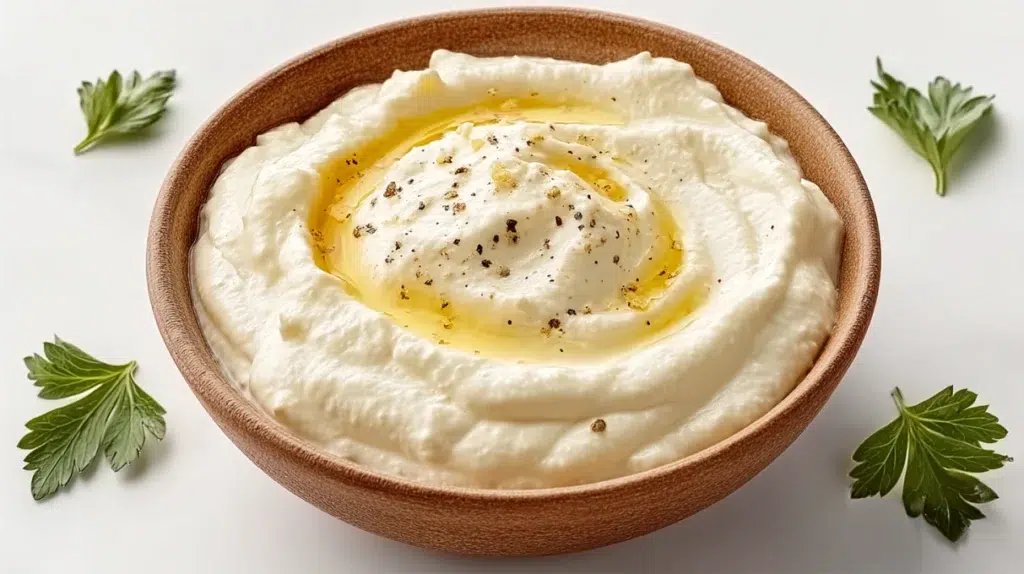
Lebanese garlic sauce, toum, is four ingredients and one technique that produces the most intensely garlic, bright white, impossibly fluffy condiment in Middle Eastern cooking. Fresh garlic, neutral oil, fresh lemon juice and salt emulsified in a food processor into a thick, airy, snow-white spread that goes on everything, shawarma, grilled chicken, pita, vegetables, roasted potatoes, directly off the spoon. Fifteen minutes. Keeps for a month. Once you have a jar in the fridge you will use it every day.
Ingredients
- 1 full head of garlic, approximately 40–50g of peeled cloves. Fresh garlic only, not jarred, not pre-minced, not garlic paste. Confirmed across every source: jarred garlic does not have the same flavour punch and does not emulsify as well as fresh. Peel every clove and halve lengthwise to remove the green germ, see step 1.
- 1 teaspoon kosher salt, added at the very start. Salt helps the garlic cloves gain traction as they process and is essential to the initial paste formation.
- ¼ cup (60ml) fresh lemon juice, from approximately 2 lemons. Fresh only, bottled lemon juice contains preservatives that interfere with the emulsion. The lemon juice alternates with the oil during processing to stabilise the emulsion. It also brightens the flavour and extends the shelf life.
- 1 cup (240ml) neutral oil, canola, sunflower or grapeseed. Confirmed by multiple sources as the best choice, neutral flavour lets the garlic shine. Extra virgin olive oil makes toum bitter and can break the emulsion due to its polyphenol content. Avoid it.
- 2–3 tablespoons ice water, optional but useful. A few drops of ice-cold water help stabilise the emulsion if it starts to look too thick or shows signs of breaking. The cold also prevents the food processor from heating up and destabilising the sauce.
Step by step
- Prepare the garlic. Peel every clove. Halve each clove lengthwise and use the tip of a small knife to remove the green germ, the thin green sprout running through the centre of older garlic cloves. The germ is more pungent and bitter than the surrounding garlic and removing it produces a noticeably smoother, less harsh toum.Very fresh garlic from a farmers market may have no visible germ, this is fine. Supermarket garlic that has been stored for weeks almost always has a visible green centre. Remove it when present.
- Make the garlic paste. Place the peeled, halved garlic cloves and the salt in a food processor. Pulse 8–10 times until very finely minced. Scrape down the sides thoroughly with a spatula, every piece of garlic needs to be as fine as possible before the oil begins. Run the processor again for 30 seconds until the garlic starts to look paste-like. A small food processor (3–4 cup capacity) works better than a large one for this recipe, the garlic and oil stay close to the blade and the emulsion forms more efficiently. In a large food processor the ingredients can splash around the sides rather than emulsifying.
- Begin the emulsion, the slow part. With the food processor running, begin drizzling the oil in through the feed tube in the thinnest possible stream, almost drop by drop at the very start. After adding 2 tablespoons of oil, stop and scrape down the sides. Add 1 teaspoon of lemon juice. Run the processor again. Continue alternating: 2–3 tablespoons of oil, then 1 teaspoon of lemon juice, scraping down the sides every few additions.The first 3–4 tablespoons of oil are the most critical. This is where the emulsion either forms or fails. Pour too fast at the start and the oil does not incorporate, the sauce stays greasy and broken. A thin, steady stream gives the garlic time to grab each droplet of oil and surround it.
- Build the sauce. Once the mixture starts to look thick, white and glossy, after roughly half the oil has been added, you can increase the flow of oil slightly but still maintain a steady thin stream. Continue alternating oil and lemon juice until all of both have been incorporated. The finished toum should be thick, bright white, fluffy and hold its shape when a spoon is drawn through it.The whole process takes 10–15 minutes. This is not a recipe that can be rushed. If the food processor starts to feel warm to the touch, stop and refrigerate the processor bowl for 10 minutes before continuing, heat breaks the emulsion.
- Taste and adjust. Taste the finished toum. It should be intensely garlicky, bright with lemon, well-salted and have a clean, sharp flavour with no bitter aftertaste. Add more salt or a squeeze of lemon if needed. Transfer to a clean glass jar. Refrigerate immediately, do not leave at room temperature.Toum tastes very sharp and intensely raw when freshly made. After 24 hours in the fridge the garlic mellows significantly and the flavour rounds out into something considerably more pleasant. Many people who find fresh toum too pungent love the day-old version. The sauce genuinely improves over the first 3–4 days.
Why the emulsion works
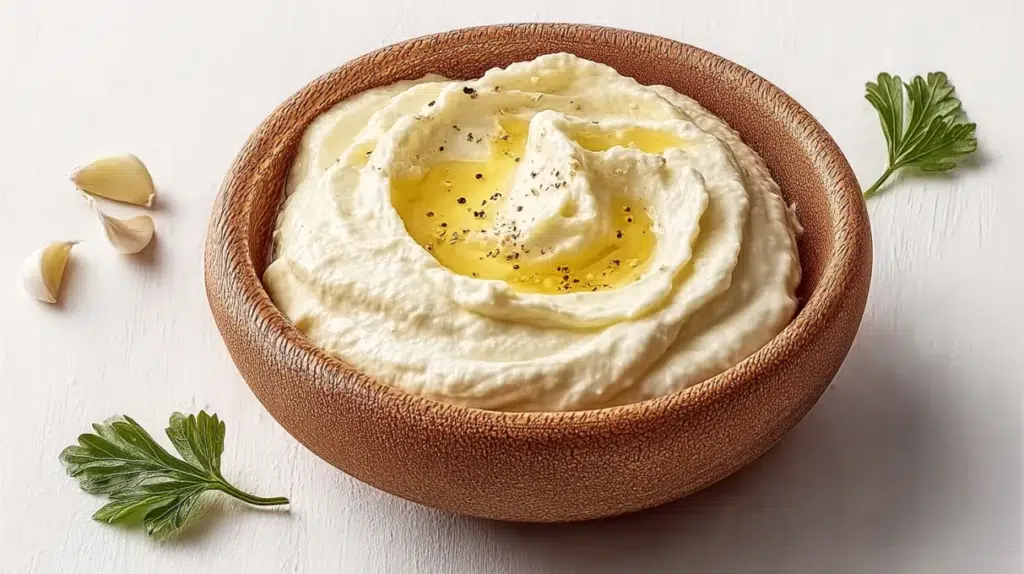
Lebanese garlic sauce is an aioli without the egg. Standard mayonnaise and aioli use egg yolk as the emulsifier, the lecithin in the yolk holds oil and water together. Toum uses garlic itself as the emulsifier. The cell walls of minced garlic contain natural emulsifying compounds that, when fully broken down and combined with the right ratio of acid and oil added slowly, create a stable, long-lasting emulsion.
The lemon juice is the acid, without it the garlic alone cannot hold the oil in suspension and the sauce breaks. The alternation between oil and lemon juice is what keeps the emulsion stable throughout the process.
Adding the oil too fast at the start is the single most common cause of broken toum. The garlic needs time to surround each droplet of oil. Go slow at the beginning. After the sauce visibly thickens and turns white you can speed up slightly.
If the sauce breaks
Claire’s note
Broken toum looks like a greasy, separated, yellowish mess in the processor. Do not throw it out. Fix it: start fresh with 2–3 new garlic cloves and a pinch of salt in a clean processor. Process until a paste forms. Then, with the processor running, drizzle the broken sauce into the new garlic paste in the same thin stream you should have used originally. The new garlic acts as a fresh emulsifier base and brings the broken sauce back together. This works reliably. Alternatively: add one egg white to the broken sauce and blend, this almost always rescues it but makes the toum no longer vegan. The most common causes of breaking: oil added too fast, food processor getting warm, or bottled lemon juice used instead of fresh.
Everything toum goes on
The short answer: everything. Chicken shawarma with toum is the definitive Lebanese street food combination. Beef shawarma equally. Kafta kebabs with a bowl of toum alongside. Roasted potatoes with toum instead of ketchup. Spread thick on warm pita. As a dipping sauce for the complete Lebanese mezze spread. On grilled fish. On roasted vegetables. Mixed into salad dressing.
Add Lebanese garlic sauce to your weekly meal planner, make one batch Sunday and use it all week. It keeps for a month. And for more recipes, follow us on Pinterest.
Print
Lebanese Garlic Sauce (Toum)
- Total Time: 15 minutes
- Yield: 2 cups 1x
- Diet: Vegan
Description
Toum is a fluffy, intensely garlicky Lebanese sauce that pairs perfectly with various dishes.
Ingredients
- 1 full head of garlic, approximately 40–50g of peeled cloves
- 1 teaspoon kosher salt
- ¼ cup (60ml) fresh lemon juice
- 1 cup (240ml) neutral oil (canola, sunflower, or grapeseed)
- 2–3 tablespoons ice water (optional)
Instructions
- Prepare the garlic. Peel every clove and halve each clove lengthwise to remove the green germ.
- Make the garlic paste. Place the peeled garlic cloves and salt in a food processor. Pulse until finely minced, then run for 30 seconds until paste-like.
- Begin the emulsion. With the food processor running, drizzle in the oil very slowly. Alternate between adding oil and lemon juice.
- Build the sauce. Once thick and white, increase the oil flow slightly while still maintaining a steady stream until fully incorporated.
- Taste and adjust seasoning to your preference, then transfer to a clean jar and refrigerate.
Notes
Toum keeps well for a month in the fridge. Allow it to sit for 24 hours for the flavors to mellow.
- Prep Time: 15 minutes
- Cook Time: 0 minutes
- Category: Condiment
- Method: Emulsifying
- Cuisine: Lebanese
Nutrition
- Serving Size: 1 tablespoon
- Calories: 100
- Sugar: 0g
- Sodium: 300mg
- Fat: 11g
- Saturated Fat: 1g
- Unsaturated Fat: 10g
- Trans Fat: 0g
- Carbohydrates: 1g
- Fiber: 0g
- Protein: 0g
- Cholesterol: 0mg