⏱ Marinate: 30 min, overnight 🔥Cook: 50 min 👤Serves: 4 🌍Origin: Philippines
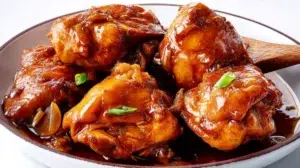
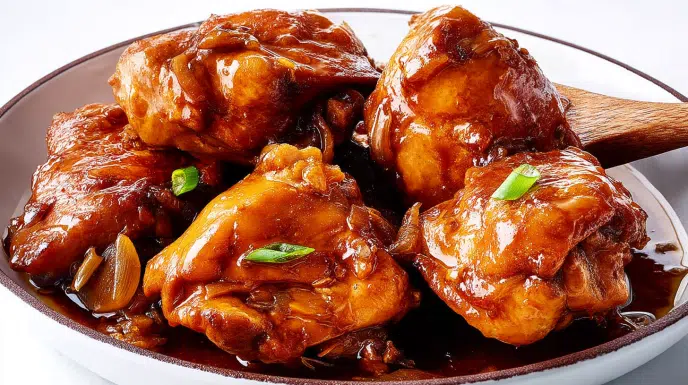
Chicken adobo recipe is the unofficial national dish of the Philippines and the dish every Filipino grandmother makes differently, and yet every version produces the same deeply satisfying result. Bone-in chicken braised in soy sauce, vinegar, garlic, bay leaves and whole black peppercorns until the meat falls from the bone and the sauce reduces into a dark, sticky, glossy glaze. Six ingredients. One pot. Better the next day than the day you make it.
Ingredients
- 2 lbs (900g) bone-in skin-on chicken thighs and drumsticks, bone-in only. The bones enrich the braising liquid as the chicken cooks and produce a sauce with far more depth than boneless chicken ever achieves. Skin-on is traditional, the skin renders into the sauce during cooking. Remove after cooking if preferred.
- ½ cup (120ml) soy sauce, Filipino brands Silver Swan or Datu Puti are the most authentic, thinner, darker and closer to what adobo tastes like in the Philippines. Kikkoman or any regular soy sauce works well. Avoid low-sodium for this recipe, the salt is structural to the dish.
- ½ cup (120ml) white cane vinegar, or white distilled vinegar. Cane vinegar is the most traditional choice in the Philippines, fermented from sugarcane syrup with a mild, clean acidity. Apple cider vinegar is an acceptable substitute. Avoid balsamic or red wine vinegar, the flavour is wrong.
- 1 whole head of garlic, approximately 10–12 cloves, crushed with the flat side of a knife, not minced. Crushed cloves release flavour more slowly during the long braise and remain intact as a textural element. Confirmed by Panlasang Pinoy: a whole head is normal.
- 3–4 dried bay leaves, give the sauce a soft herbal background note that is one of adobo’s most distinctive aromatic qualities
- 1 teaspoon whole black peppercorns, whole, not ground. Whole peppercorns release flavour slowly during the simmer and become soft enough to eat by the end of cooking.
- 1 teaspoon brown sugar, optional but recommended, rounds out the salt and vinegar balance without making the dish sweet
- 2 tablespoons neutral oil, for browning
- ¼ cup (60ml) water, just enough to bring the liquid to the top of the chicken
Step by step
- Marinate the chicken. Combine the chicken, soy sauce, crushed garlic and bay leaves in a large bowl or zip-top bag. Marinate for at least 30 minutes at room temperature, or refrigerate overnight. The longer the marinade the deeper the flavour penetrates the bone.Even 30 minutes of marinating produces a noticeably more flavoured result than no marinating at all. Overnight produces chicken that tastes seasoned all the way to the bone, the difference is significant and worth planning ahead for.
- Brown the chicken. Remove the chicken from the marinade, reserve the marinade. Pat the chicken pieces dry with paper towels. Heat oil in a wide heavy pot or Dutch oven over medium-high heat. Add the chicken skin-side down in a single layer, work in batches if needed. Brown for 4–5 minutes until the skin is deeply golden. Flip and brown 2 minutes on the other side. Remove and set aside.Browning creates deeper flavour through caramelisation and renders excess fat from the skin. Do not skip this step, unbrowned chicken produces a pale, thin sauce. The deep golden skin is what gives adobo its characteristic rich colour.
- Build the braise. Pour off most of the rendered fat from the pot, leave approximately 1 tablespoon. Add the crushed garlic from the marinade to the pot. Cook for 30 seconds until golden and fragrant. Pour in the reserved marinade, vinegar, water, whole peppercorns and brown sugar. Stir to combine and scrape up any browned bits from the bottom of the pot. Adding the vinegar here, not at the beginning, is the traditional Filipino approach. Adding it early can prevent the chicken from browning properly. After browning, the acidity mellows into the sauce during the long simmer rather than tasting sharp.
- Braise. Return the browned chicken to the pot, nestle the pieces in the liquid. The liquid should come just to the top of the chicken, add a little more water if needed but do not submerge. Bring to a boil over high heat. Reduce to a gentle simmer, cover partially and cook for 30–35 minutes until the chicken is completely tender and beginning to fall from the bone.
- Reduce the sauce. Remove the lid completely. Increase heat to medium-high. Continue cooking for 10–15 minutes, turning the chicken occasionally, until the sauce reduces and thickens into a dark, glossy glaze that clings to the chicken. The sauce should coat a spoon heavily when ready.This final reduction is what separates excellent adobo from decent adobo. The sauce must reduce enough to become sticky and glaze the chicken. A thin, watery sauce means it needed more time uncovered on the heat.
- Taste and serve. Taste the sauce before serving. Adobo should be salty, tangy, garlicky and have a faint sweetness from the sugar. Add a splash more vinegar for brightness, more soy sauce for saltiness. Serve over steamed white rice with the sauce spooned generously over everything. Remove the bay leaves before serving.
Why it tastes better the next day
Almost every Filipino grandmother will have her own adobo recipe, but they all agree on one thing: adobo is usually better the next day.
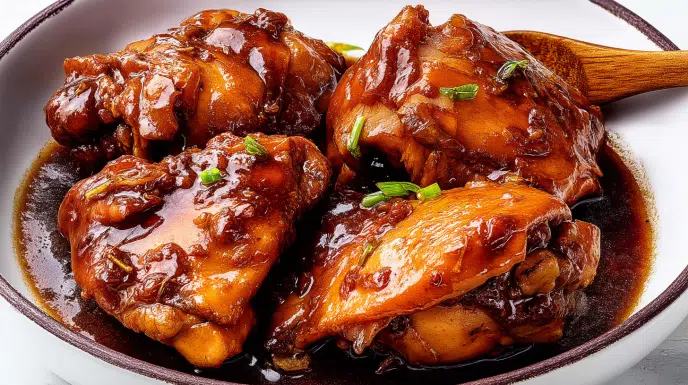
Overnight the chicken absorbs the sauce fully, the garlic mellows from sharp to sweet, the vinegar acidity softens and integrates, and the sauce tightens around the meat as it cools and reheats. Make it Sunday. Eat it Monday. The difference is remarkable.
The vinegar does not make adobo sour, it adds depth and balance. As the sauce cooks down, that acidity mellows into a glossy glaze that clings to the meat with deep, savory flavor. This is the thing first-time adobo cooks are always surprised by the vinegar disappears into the sauce and what remains is complexity, not sharpness.
Make it ahead
Claire’s note
Chicken adobo is the meal-prep dish of Filipino home cooking, it is specifically designed to be made ahead, stored and eaten over several days. Refrigerate in a sealed container for up to 5 days. The flavour deepens with every day. Reheat gently in a pan over low heat with a splash of water, or eat cold directly from the container, which is exactly how many Filipinos eat leftover adobo. Adobo also freezes perfectly for up to 3 months. The sauce freezes as a solid block which reheats into the original glossy consistency. Double the batch and freeze half, the active cooking time is the same, and you get two separate meals.
Serve with
Chicken adobo is served over steamed white rice always, without exception. The sauce is the reason the rice exists. A side of steamed or sautéed greens, bok choy, spinach or morning glory is the classic Filipino accompaniment. For more from the Asian collection, the Asian crunch salad, the Korean beef bowl and everything else is in the complete Asian recipes guide.
Add chicken adobo to your weekly meal planner, make a double batch Sunday and eat it four different ways before Friday. And for more recipes, follow us on Pinterest.
Print
Chicken Adobo
- Total Time: 80 minutes
- Yield: 4 servings 1x
Description
Chicken adobo is the unofficial national dish of the Philippines, featuring chicken braised in soy sauce, vinegar, garlic, and spices until tender and infused with deep flavors.
Ingredients
- 2 lbs (900g) bone-in skin-on chicken thighs and drumsticks
- ½ cup (120ml) soy sauce
- ½ cup (120ml) white cane vinegar
- 1 whole head of garlic, crushed
- 3–4 dried bay leaves
- 1 teaspoon whole black peppercorns
- 1 teaspoon brown sugar (optional)
- 2 tablespoons neutral oil
- ¼ cup (60ml) water
Instructions
- Marinate the chicken: Combine the chicken, soy sauce, crushed garlic, and bay leaves. Marinate for at least 30 minutes or overnight for deeper flavor.
- Brown the chicken: Pat dry and heat oil in a pot. Brown chicken skin-side down for 4–5 minutes. Flip and brown the other side for 2 minutes.
- Build the braise: Pour off rendered fat, add crushed garlic, and cook until golden. Add reserved marinade, vinegar, water, peppercorns, and brown sugar.
- Braise: Return chicken to the pot, cover with liquid, and simmer for 30–35 minutes until tender.
- Reduce the sauce: Remove the lid and cook for another 10–15 minutes until sauce thickens and coats the chicken.
- Taste and serve: Adjust seasoning and serve over steamed rice, removing bay leaves.
Notes
Adobo tastes better the next day as flavors deepen. It can be prepared ahead and stored for up to 5 days in a sealed container. Also freezes well for up to 3 months.
- Prep Time: 30 minutes
- Cook Time: 50 minutes
- Category: Main Course
- Method: Braising
- Cuisine: Filipino
Nutrition
- Serving Size: 1 serving
- Calories: 450
- Sugar: 8g
- Sodium: 600mg
- Fat: 15g
- Saturated Fat: 4g
- Unsaturated Fat: 9g
- Trans Fat: 0g
- Carbohydrates: 10g
- Fiber: 1g
- Protein: 30g
- Cholesterol: 100mg