⏱ Prep: 10 min 🔥Cook: 20 min 👤Serves: 4🌿Vegan
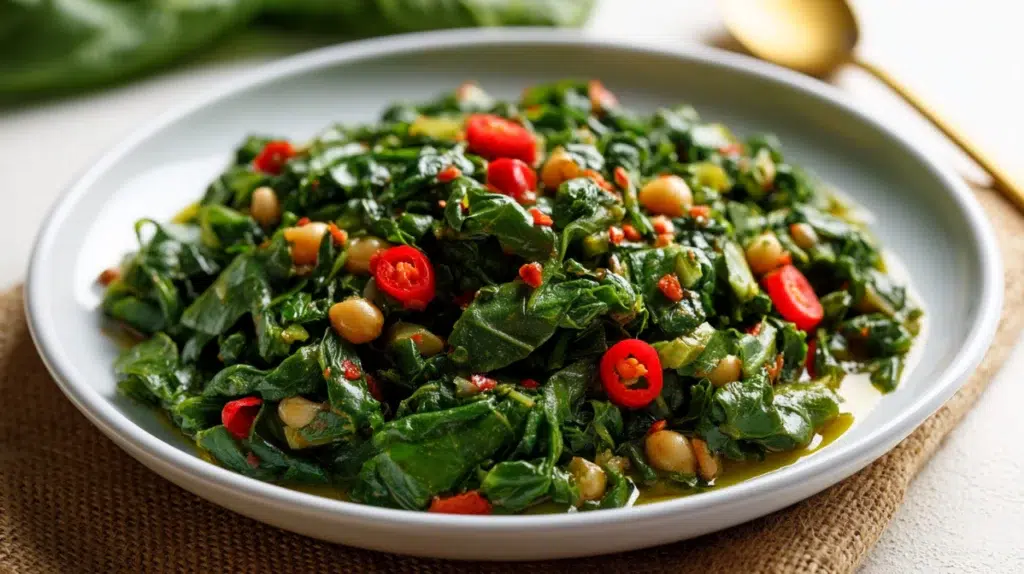
Tanzanian Collard Greens or Sukuma wiki means “push the week” or “stretch the week” in Swahili, a reference to its role as the everyday vegetable dish that extends meals and makes food go further across Tanzania, Kenya and Uganda. Collard greens, known in Swahili simply as sukuma, cooked dry with onions, tomatoes, garlic and a bouillon cube until tender and deeply savoury. No water needed beyond what the tomatoes provide. The finished dish should be dry, not saucy, which concentrates every bit of flavour into the greens themselves.
It is one of the most eaten dishes in East Africa, found at every level of the food economy, from roadside stalls with ugali alongside to home kitchens with a piece of grilled fish. The coastal Tanzanian version, influenced by the Arab and Indian spice culture of Zanzibar, often adds coconut milk for a richer, creamier result. Both versions are in this article.
Ingredients
- 500g (about 1 large bunch) fresh collard greens, washed thoroughly. To prep: fold each leaf in half lengthwise and strip the leaf away from the thick central stem, the stem is too tough to eat pleasantly. Stack the stemmed leaves in a pile, roll into a tight cylinder and slice thinly across into fine ribbons, about 5mm wide. Thin slicing produces a more tender result and reduces the cooking time significantly.
- 3 tablespoons vegetable oil, enough to properly sauté the onions and fry the tomatoes. Sufficient oil is what gives sukuma wiki its characteristic flavour, too little produces a dry, underseasoned result.
- 1 large onion, finely diced
- 4 cloves garlic, finely minced
- 1 teaspoon fresh ginger, finely grated, optional but adds warmth that is characteristic of the Tanzanian coastal version
- 3 medium ripe tomatoes, finely diced, or 1 × 400g tin of chopped tomatoes. Fresh tomatoes produce a fresher, brighter result. Whatever you use, cook the tomatoes completely down before the greens go in, the oil should be separating from the tomatoes before the sukuma is added.
- ½ teaspoon curry powder, a characteristic East African addition. The mild yellow curry blend used across the region adds a gentle warmth and earthiness.
- ¼ teaspoon turmeric, for colour and a subtle earthiness
- ½ teaspoon smoked paprika, adds a slight smokiness that echoes the charcoal-cooking of East African street food
- 1 bouillon cube (Royco, Maggi or Knorr), crumbled, the standard East African seasoning. Adds umami depth. Royco mchuzi mix is the most authentically Tanzanian/Kenyan option if available. Knorr chicken cube is widely used and excellent.
- Salt and black pepper to taste
- Juice of ½ lemon, added at the end to brighten the flavour
For the coastal Tanzanian version (mkunde wa nazi)
- 100ml (⅓ cup) full-fat coconut milk, stirred in after the greens have wilted. Produces a creamier, richer sukuma wiki with a slight coconut flavour. Particularly common in Zanzibar and the Tanzanian coastal towns where coconut is a staple ingredient.
Optional protein additions
- 200g ground beef or lamb, browned in the pan after the onions and before the tomatoes. The most common meat addition.
- 200g chicken breast or thigh, diced, cooked the same way
- Sardines or mackerel from a tin, flaked into the tomatoes before the greens go in. Common along the Tanzanian coast.
Step by step
- Prep the collard greens. Wash each leaf thoroughly. Fold in half lengthwise and strip the leaf from the thick central stem, hold the stem with one hand, grip the leaf at the base with the other and pull upward. Discard the stems. Stack the leaves, roll into a tight cylinder and slice into fine ribbons about 5mm wide. Set aside in a colander. Fine ribbons cook faster, more evenly and have a more tender texture than roughly torn or coarsely chopped pieces. This is the standard Tanzanian and Kenyan prep method, the thin cut is part of what makes sukuma wiki distinctly different from Southern US-style braised collards, which are coarsely cut and cooked for much longer.
- Sauté the onion until golden. Heat the vegetable oil in a large, wide pan or wok over medium-high heat. Add the diced onion. Cook, stirring frequently, for 5–6 minutes until the onion is soft and beginning to turn golden at the edges, not just translucent. A properly golden onion produces a sweeter, deeper base than a barely cooked one.
- Add garlic, ginger and spices. Add the minced garlic and grated ginger. Stir for 1 minute until fragrant. Add the curry powder, turmeric and smoked paprika. Stir for 30 seconds, the spices should bloom in the oil and the pan should smell aromatic.
- Add and fry out the tomatoes, until the oil separates. Add the diced tomatoes and crumbled bouillon cube. Stir to combine. Cook over medium-high heat, stirring occasionally, for 6–8 minutes until the tomatoes have broken down completely and the oil has separated and risen to the surface. The tomato mixture should look darker and drier than when it went in, not saucy. Frying out the tomatoes until the oil separates is the key technique in most East African stews and vegetable dishes. This removes the raw tomato acidity and concentrates the flavour. If the greens go in before the tomatoes are fully cooked down, the sukuma wiki will taste raw and watery rather than deep and savoury.
- Add the collard greens in batches. Add the sliced collard greens to the pan in two or three batches, they will not all fit at once. Add the first batch and stir to coat with the tomato mixture. Let it wilt for 1–2 minutes, then add the next batch and repeat. Once all the greens are in, stir everything together thoroughly. Adding in batches prevents the pan from being overwhelmed and keeps the temperature high enough to cook the greens rather than steam them. Raw collard greens look like an impossible quantity in the pan, they wilt down to about a quarter of their raw volume within 3–4 minutes.
- Cook until tender but not grey. Cook the sukuma wiki, stirring occasionally, for 7–10 minutes until the greens are tender with a slight bite remaining, not limp and grey. Season with salt and black pepper. All the liquid from the tomatoes and greens should have evaporated, sukuma wiki is a dry dish. If any liquid remains, increase the heat and cook uncovered for a further 2–3 minutes to drive it off. The dry finish is important, soupy sukuma wiki has a diluted flavour and doesn’t pair well with ugali, which is itself dense and starchy. The greens should look glossy from the oil and deeply coloured, not waterlogged.
- Coastal version: add coconut milk. If making the coconut version: pour in the coconut milk at this stage. Stir through and simmer for 3–4 minutes until the coconut milk has mostly absorbed into the greens and the dish looks creamy but not watery.
- Finish and serve. Squeeze the lemon juice over the sukuma wiki and stir through. Taste and adjust salt. Serve immediately with ugali, chapati or rice.
Claire’s note
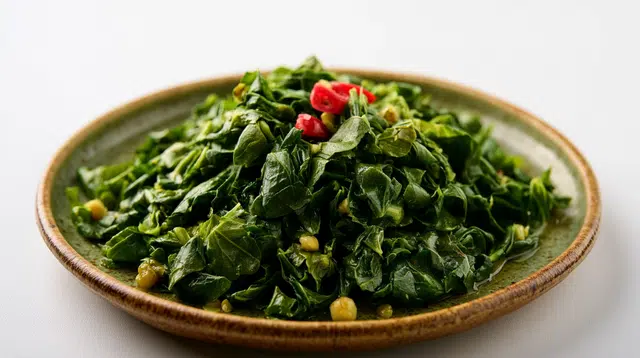
The thin cut and the dry finish are the two things that make sukuma wiki taste like it does in Tanzania rather than like generic braised greens. Slice the collard greens into fine ribbons, 5mm wide and cook out all the liquid before serving. The thin cut produces a more tender result in the short cooking time without overcooking and turning everything grey and mushy.
The dry finish concentrates every bit of flavour from the onion, tomato and bouillon into the greens themselves rather than diluting it into a watery sauce. These two things take an extra five minutes of attention and produce a completely different dish.
What is ugali and how to make it
Ugali is the East African cornmeal porridge that is the traditional accompaniment to sukuma wiki. Bring 600ml (2½ cups) of water to a boil in a medium saucepan. Gradually pour in 250g (1½ cups) of fine white cornmeal (maize flour / posho / unga), stirring constantly to prevent lumps. Reduce heat to low and stir firmly for 5–8 minutes until the ugali pulls away from the sides of the pan and becomes very thick, the consistency of stiff mashed potato.
Tip onto a plate and serve alongside the sukuma wiki. To eat: tear off a piece of ugali, press into a cup shape with your fingers, and use it to scoop the sukuma wiki. The ugali absorbs the flavour of the greens and is eaten together in each bite.
What to serve with Tanzanian Collard Greens
Sukuma wiki is traditionally served with ugali, see above, as the standard Tanzanian and Kenyan meal. It also pairs with East African chapati, steamed rice or roasted meat and fish. For a full East African spread: Tanzanian coconut fish curry, Kenyan pilau and the full African food collection.
Add Tanzanian collard greens to your weekly meal planner as a weeknight side dish, 20 minutes, one pan, made from pantry staples. Cook a double batch on Sunday and reheat throughout the week alongside whatever protein you have.
And for more recipes, follow us on Pinterest.
Print
Tanzanian Collard Greens (Sukuma Wiki)
- Total Time: 30 minutes
- Yield: 4 servings 1x
- Diet: Vegan
Description
A traditional East African dish, Sukuma Wiki is made with collard greens cooked dry with onions, tomatoes, and spices, resulting in a flavorful, savory vegetable side.
Ingredients
- 500g fresh collard greens, prepared
- 3 tablespoons vegetable oil
- 1 large onion, finely diced
- 4 cloves garlic, finely minced
- 1 teaspoon fresh ginger, finely grated (optional)
- 3 medium ripe tomatoes, finely diced
- ½ teaspoon curry powder
- ¼ teaspoon turmeric
- ½ teaspoon smoked paprika
- 1 bouillon cube, crumbled
- Salt and black pepper to taste
- Juice of ½ lemon
- 100ml full-fat coconut milk (optional, for coastal version)
- 200g ground beef or lamb (optional)
- 200g chicken breast or thigh (optional)
- Sardines or mackerel from a tin (optional)
Instructions
- Prep the collard greens: Wash each leaf and strip the leaf from the stem, then slice into fine ribbons.
- Sauté the onion: Heat oil in a pan, add onion, and cook until golden.
- Add garlic, ginger and spices: Stir in garlic, ginger, curry powder, turmeric, and smoked paprika.
- Add and fry out the tomatoes until the oil separates.
- Add the collard greens in batches, stirring to coat.
- Cook until tender, seasoning to taste.
- Coastal version: If making the coconut version, stir in coconut milk.
- Finish and serve: Squeeze lemon juice over and adjust seasoning. Serve with ugali, chapati, or rice.
Notes
Slice collard greens into fine ribbons and ensure the dish is dry for concentrated flavor. Serve with traditional ugali for an authentic experience.
- Prep Time: 10 minutes
- Cook Time: 20 minutes
- Category: Side Dish
- Method: Sautéing
- Cuisine: African
Nutrition
- Serving Size: 1 serving
- Calories: 150
- Sugar: 3g
- Sodium: 350mg
- Fat: 6g
- Saturated Fat: 3g
- Unsaturated Fat: 3g
- Trans Fat: 0g
- Carbohydrates: 20g
- Fiber: 4g
- Protein: 5g
- Cholesterol: 0mg