⏱ Prep: 20 min 🔥Cook: Rice only 👤Makes: 6–8 rice balls 🌏Origin: Japan
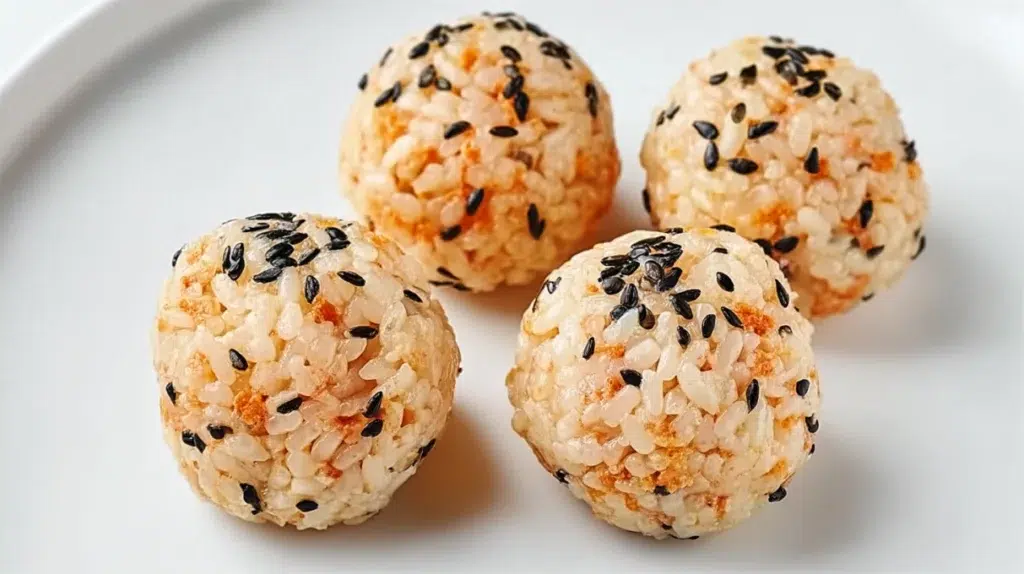
No cook salmon rice balls are exactly what they sound like, onigiri made without any cooking beyond the rice itself. Smoked salmon mixed with Japanese mayo, soy sauce, sesame oil and a splash of rice vinegar, shaped into rice balls with nori wrapped around the outside. Twenty minutes, zero heat, completely portable, and the kind of lunch that makes people at your table immediately ask if there are more.
The “no cook” part matters because most salmon onigiri recipes involve cooking fresh salmon first, pan-frying, baking, or grilling before it goes into the rice. This version skips all of that. Smoked salmon is already cured and ready to eat, which means the entire recipe beyond cooking the rice involves nothing but mixing and shaping. It is genuinely one of the fastest genuinely satisfying things you can make, and it works as a weeknight dinner, a packed lunch, a picnic, and a lunchbox addition that small people will actually eat without negotiation.
Ingredients
The rice
- 2 cups Japanese short-grain rice, or Calrose rice. Short-grain is non-negotiable, its starch content is what makes the rice balls hold their shape. Long-grain, basmati or jasmine rice will not stick together properly and the balls will fall apart when you pick them up.
- 2 cups water, for cooking the rice
- 2 tablespoons rice vinegar
- 1 teaspoon sugar
- 1 teaspoon salt
The salmon filling
- 150g smoked salmon, roughly chopped or flaked, hot-smoked or cold-smoked both work. Hot-smoked (the flaky kind) is easier to mix. Cold-smoked (the silky sliced kind) should be torn into small pieces. Or substitute: one 213g can of good-quality canned salmon, drained and flaked, remove any bones. Canned salmon is saltier; reduce or skip the soy sauce if using.
- 2 tablespoons Japanese mayonnaise (Kewpie), Kewpie is richer and more umami-forward than regular mayo. Available at Asian grocery stores and many mainstream supermarkets. Regular full-fat mayo is an acceptable substitute.
- 1 teaspoon soy sauce, light soy sauce; reduce to ½ teaspoon if using canned salmon
- 1 teaspoon sesame oil, adds deep nutty fragrance that lifts the whole filling
- ½ teaspoon rice vinegar, balances the richness of the mayo
- ½ teaspoon sriracha or chilli paste, optional but excellent; makes the filling spicy-creamy in the best possible way
- 2 spring onions, very finely sliced, for freshness
To finish
- 4–6 sheets nori, cut into strips or squares, wrap around the rice ball just before eating, not before storage. Nori wrapped in advance goes soft and slightly unpleasant.
- 1 teaspoon fine salt, for your hands when shaping
- Furikake seasoning, optional but highly recommended; roll the finished rice balls in it for extra flavour and visual appeal. Available at Japanese and Asian grocery stores.
- Toasted sesame seeds, optional garnish
Step by step
- Cook and season the rice. Rinse the rice in cold water until the water runs completely clear, this removes excess starch that makes the rice gluey rather than sticky. Cook according to your rice cooker instructions or use the absorption method: combine rice and water in a saucepan, bring to a boil, cover tightly, reduce to lowest heat for 15 minutes, remove from heat and rest covered for 10 minutes without lifting the lid. While still hot, stir in the rice vinegar, sugar and salt gently with a folding motion. Spread the rice on a flat surface or large bowl to cool to just warm, not hot, not cold. Cool rice is harder to shape and sticks to your hands more aggressively. Warm rice, just warm enough to handle, shapes the most easily and holds together best. Aim for the temperature you’d describe as “comfortable to hold.”
- Make the salmon filling. In a bowl, combine the smoked salmon with the Japanese mayo, soy sauce, sesame oil, rice vinegar, sriracha if using, and spring onions. Mix gently until everything is evenly combined, you want small pieces of salmon throughout, not a smooth paste. Taste and adjust, it should be creamy, savoury, slightly tangy and smell distinctly of sesame.
- Prepare your hands. Fill a small bowl with cold water. Wet both hands completely, shake off the excess, then rub a small pinch of fine salt over your palms. This prevents the rice from sticking to your hands and lightly seasons the outside of each rice ball. Re-wet and re-salt your hands between each ball.This is the step most people skip and then wonder why the rice sticks to everything. Wet, salted hands are the entire secret to shaping onigiri without frustration. Keep the bowl of water right next to where you’re working.
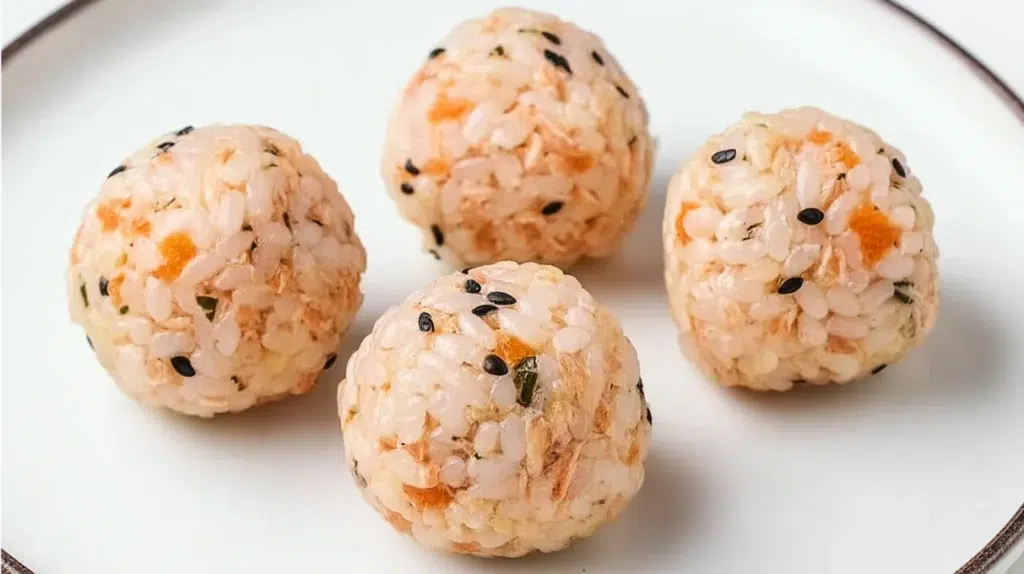
- Shape the rice balls. Take about 100–120g of warm seasoned rice, roughly a generous handful and flatten it slightly in your palm. Place a heaped teaspoon of salmon filling in the centre. Bring the rice up around the filling and press firmly to enclose it completely, then shape the ball into a triangle by cupping your hands in a V shape and pressing firmly from both sides and top. Rotate and press until the triangle holds its shape. Press firmly, more firmly than feels necessary. A loosely pressed rice ball falls apart when picked up. The goal is a shape that holds together under its own weight when held in one hand. If you find hand-shaping difficult, an onigiri mold (available at Asian grocery stores) makes perfect triangles every time with no technique required.
- Finish and serve. If using furikake, roll the outside of each rice ball through a shallow dish of furikake until coated. Wrap a strip of nori around the base of each rice ball immediately before eating. Scatter extra sesame seeds over the top if you like.
Why short-grain rice is the only option
Short-grain Japanese rice and its close relative Calrose, contains a significantly higher proportion of amylopectin starch than long-grain varieties. Amylopectin is what makes the cooked rice grains cling to each other rather than sitting separately. When you press short-grain rice it compresses into a shape that holds. When you press long-grain rice it crumbles.
There is no workaround and no substitute, if you make rice balls with basmati, jasmine or any long-grain variety they will fall apart when picked up, regardless of how firmly you press them. Japanese short-grain rice is available at Asian grocery stores, Whole Foods, and increasingly at mainstream supermarkets. If you already own a rice cooker, you almost certainly already have this rice at home.
Make it your own
Claire’s note, meal prep and storage
These rice balls are genuinely excellent for meal prep. Shape them, wrap each one tightly in cling film without the nori, and refrigerate for up to 2 days. The nori goes on at the last possible moment before eating, nori wrapped and refrigerated overnight turns soft and slightly chewy in a way that is unpleasant. If packing in a lunchbox, pack the nori separately as a strip and wrap it around at the table.
For a spicier version, increase the sriracha and add a thin layer of gochujang to the filling, the heat works very well against the smokiness of the salmon. A few thin slices of cucumber pressed into the filling before shaping add crunch. An avocado half spooned over the top when serving makes this a complete meal rather than a snack.
Serve with
No cook salmon rice balls work as a standalone lunch with miso soup alongside, or as part of a larger Japanese spread. For more shaping techniques and the full onigiri method, the chicken onigiri recipe covers the hand-shaping technique in detail. The complete Japanese recipes collection has everything from this cuisine.
Add no cook salmon rice balls to your weekly meal planner, cook the rice on Sunday and the balls take 15 minutes to assemble and pack for the week. And for more recipes, follow us on Pinterest.
Print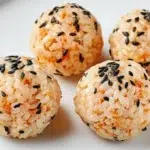
No Cook Salmon Rice Balls
- Total Time: 35 minutes
- Yield: 6–8 rice balls 1x
- Diet: Pescatarian
Description
Delicious and portable onigiri made with smoked salmon, rice vinegar, and sesame oil, shaped into bite-sized rice balls without any cooking beyond the rice itself.
Ingredients
- 2 cups Japanese short-grain rice or Calrose rice
- 2 cups water
- 2 tablespoons rice vinegar
- 1 teaspoon sugar
- 1 teaspoon salt
- 150g smoked salmon, roughly chopped
- 2 tablespoons Japanese mayonnaise (Kewpie)
- 1 teaspoon light soy sauce
- 1 teaspoon sesame oil
- ½ teaspoon rice vinegar
- ½ teaspoon sriracha or chili paste (optional)
- 2 spring onions, finely sliced
- 4–6 sheets nori, cut into strips or squares
- 1 teaspoon fine salt (for shaping)
- Furikake seasoning (optional)
- Toasted sesame seeds (optional garnish)
Instructions
- Cook and season the rice by rinsing it in cold water until the water runs clear. Cook according to instructions, then stir in rice vinegar, sugar, and salt while hot, and cool to warm.
- Make the salmon filling by combining smoked salmon, Japanese mayo, soy sauce, sesame oil, rice vinegar, sriracha, and spring onions in a bowl.
- Prepare your hands by wetting them with cold water and rubbing a pinch of fine salt over your palms to prevent sticking.
- Shape the rice balls: Take about 100–120g of warm rice, flatten it, add salmon filling, and mold it into a triangle shape.
- Finish and serve by rolling the rice ball in furikake if desired and wrapping a strip of nori around just before eating.
Notes
These rice balls are excellent for meal prep. Wrap tightly in cling film without nori for up to 2 days. Serve cold with miso soup or as part of a larger Japanese spread.
- Prep Time: 20 minutes
- Cook Time: 15 minutes
- Category: Snack
- Method: Mixing and Shaping
- Cuisine: Japanese
Nutrition
- Serving Size: 1 rice ball
- Calories: 180
- Sugar: 1g
- Sodium: 300mg
- Fat: 9g
- Saturated Fat: 1g
- Unsaturated Fat: 7g
- Trans Fat: 0g
- Carbohydrates: 19g
- Fiber: 1g
- Protein: 6g
- Cholesterol: 10mg