⏱ Prep: 5 min 🔥Cook: 25–30 min ❄️Chill: 2 hrs+🍮 Serves: 6 🌿Vegetarian · Gluten-free
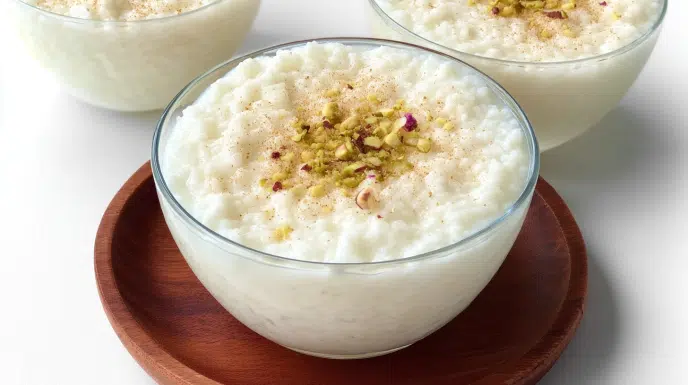
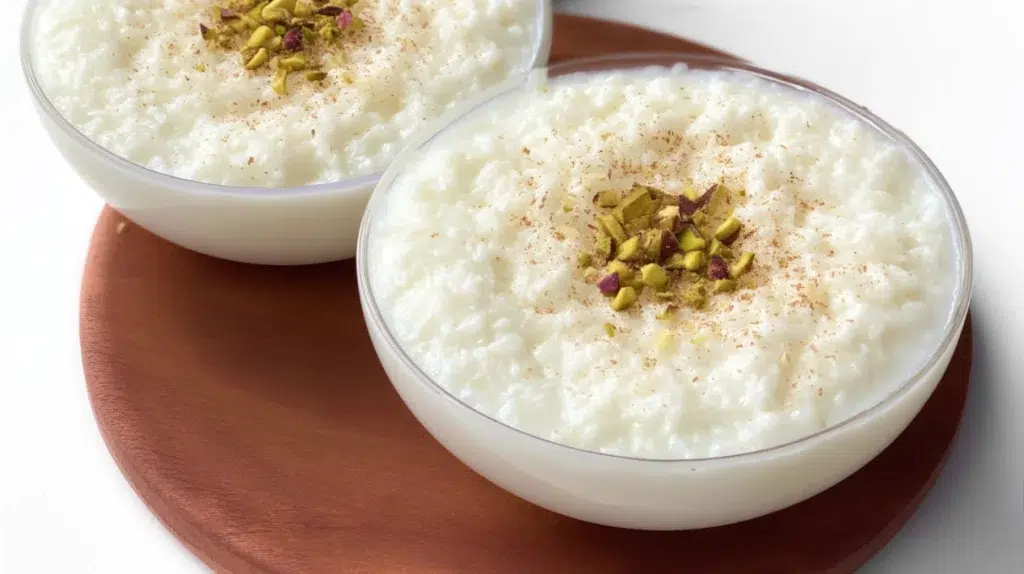
Lebanese Rice Pudding, Roz bi haleeb, literally “rice in milk” in Arabic, is the Lebanese version of rice pudding and one of the simplest, most comforting desserts the Lebanese kitchen produces. It is eaten cold, spooned into small bowls, scattered with crushed pistachios, and it tastes the way orange blossom trees smell on a warm evening in the Bekaa Valley. That flavour, intensely floral, clean, barely sweet is the whole point of the dish, and it comes entirely from the orange blossom water (mazaher) and rose water (maward) stirred in at the very end.
The technique is simple and the ingredient list is short. But there are two things that separate a good roz bi haleeb from a remarkable one. First: do not wash the rice. The surface starch is what makes the pudding creamy rather than watery, and rinsing removes it. Second: the flower waters go in off the heat. Added to boiling milk they evaporate immediately and leave a flat, faintly chemical note behind. Added to liquid that has already left the stove, they bloom into the pudding and make it taste the way it is supposed to taste. This is the single most important step in the recipe and the easiest one to get wrong.
Ingredients
- 150g (¾ cup) short-grain or medium-grain rice, unrinsed, Calrose, arborio, sushi rice or any medium-grain rice. Do not rinse, the surface starch is essential for creaminess. Short-grain produces a thicker, denser pudding; medium-grain produces a slightly lighter result. Both are correct.
- 250ml (1 cup) cold water, for parboiling the rice before the milk goes in. This method prevents the rice from scorching in milk and ensures it cooks through evenly.
- 1 litre (4 cups) whole milk, full-fat only. The fat in whole milk is what gives roz bi haleeb its characteristic richness and creamy mouthfeel. Reduced-fat milk produces a noticeably thinner, less satisfying pudding.
- 100g (½ cup) caster sugar, adjust to taste. Roz bi haleeb is not very sweet, the flower waters provide fragrance and the pistachios provide flavour, so the sugar is a background note rather than the point. Start with 80g and add more to taste at the end.
- 2 tablespoons cornstarch (cornflour), mixed with 4 tablespoons cold milk to form a slurry before adding. Helps the pudding thicken faster and more evenly, and gives it a silkier texture. Mix the slurry in a separate cup first, never add dry cornstarch directly to hot liquid, it will clump.
- 1½ tablespoons orange blossom water (mazaher), added off the heat only. The single most important flavour in this dish. Available at Lebanese, Middle Eastern and Mediterranean grocery stores, and many mainstream supermarkets in the international aisle. It does not taste like orange juice, do not substitute with orange zest or orange extract.
- 1 tablespoon rose water (maward), added off the heat alongside the orange blossom water. Use a good-quality culinary rose water, not fragrance-grade. The combination of both flower waters is the traditional Lebanese flavour; using only one produces a less complex result. Reduce to ½ tablespoon if you are sensitive to floral flavours.
- Pinch of mastic gum (mastika), optional but traditional in some Lebanese versions. Gives a very subtle pine-resin note in the background. Must be frozen for 30 minutes before use and then ground with a pinch of salt to prevent it from sticking to the mortar. Available at Middle Eastern grocery stores. Omit entirely if unavailable, the pudding is excellent without it.
For garnish
- 50g unsalted pistachios, roughly crushed, the essential garnish for roz bi haleeb. The crunch against the cold, creamy pudding is textural contrast the dish depends on. Scatter generously, a thin sprinkle is not enough.
- Dried rose petals, optional, for appearance and a whisper of additional floral flavour. Available at Middle Eastern grocery stores and online spice retailers.
- Ground cinnamon, optional, used in some Lebanese family versions as a warm counterpoint to the floral flavour
Step by step
- Prepare the cornstarch slurry. In a small cup or bowl, combine the cornstarch with 4 tablespoons of cold milk taken from the 1 litre. Stir until completely smooth with no lumps. Set aside, it needs to be ready to pour when the moment comes. If using mastic gum, take the small piece from the freezer, place in a mortar with a pinch of salt and grind to a fine powder. Set aside.
- Parboil the rice in water. Place the unrinsed rice in a medium-large, heavy-based saucepan. Add the 250ml of cold water. Bring to a medium heat and cook, stirring occasionally, until all the water has been absorbed and the rice is about half-cooked, about 6–8 minutes. The rice will look translucent at the edges and slightly sticky. It should not be fully cooked yet. Starting the rice in water rather than milk prevents scorching. Milk sugars caramelise and burn at the bottom of a pot quickly once the liquid reduces; water gives the rice time to hydrate and begin cooking before the milk is added. This parboil method also gives more control over the final texture.
- Add the milk and sugar. Pour the remaining milk (the litre minus the 4 tablespoons you used for the slurry) into the pot with the parboiled rice. Add the sugar and the ground mastic if using. Stir everything together. Raise the heat to medium and bring to a gentle simmer, stirring frequently to prevent the rice from sticking to the bottom. Once it reaches a simmer, reduce the heat to low-medium and cook, stirring continuously or very frequently, for 15–20 minutes. Do not walk away during this stage. Rice pudding sticks and scorches at the bottom before you notice, and a scorched bottom flavours the entire pot. Keep stirring, a silicone spatula that reaches the bottom corners of the pan is the right tool. The pudding is ready for the next step when it has thickened to the consistency of a loose béchamel or a thin custard, it should coat the back of a spoon but still flow easily when the pot is tilted.
- Add the cornstarch slurry. Give the cornstarch slurry a final stir in its cup (it settles quickly) and pour it into the pot while stirring constantly. Continue to stir over low-medium heat for 3–5 more minutes until the pudding thickens noticeably, it should now look like a pourable but clearly thickened custard. Taste and adjust sugar if needed. The pudding will look slightly too thin at this point. This is correct. It thickens significantly as it cools, both at room temperature and especially in the refrigerator. If you cook until it looks thick enough in the pot, it will be dense and gluey once cold. The right consistency off the heat is the texture of a just-setting panna cotta, pourable but with clear body.
- Remove from heat, add the flower waters now and only now. Take the pot completely off the heat. Wait 60 seconds for the bubbling to fully stop. Then add the orange blossom water and rose water and stir through thoroughly for 30 seconds. The fragrance should be immediate and vivid, if it smells faint, the pudding has cooled enough that you can add a little more. This step cannot happen while the pot is still on the heat or still boiling. The floral volatile compounds in both orange blossom water and rose water evaporate at temperatures close to boiling, adding them to hot, actively simmering liquid destroys the very thing that makes roz bi haleeb taste like itself. Off the heat, cooled slightly, stirred in gently: that is the technique that makes this pudding floral rather than flat.
- Pour and chill. Ladle the pudding into individual serving bowls or cups while still warm, it pours easily at this stage and becomes harder to move once it has set. Leave to cool at room temperature for 30 minutes, then cover each bowl loosely with plastic wrap and refrigerate for at least 2 hours, or overnight. The pudding is best eaten cold. Scatter the crushed pistachios and any other garnishes immediately before serving, not before, since the pistachios will soften in the refrigerator if added too early.
Claire’s note
The first time I had roz bi haleeb made properly was in a house in the Bekaa Valley, eaten cold from a small bowl with a spoon, mid-morning, as a between-meal thing that no one felt the need to justify. The woman who made it used a lot more orange blossom water than the recipe said to, she poured it in with the confidence of someone who has been doing this for forty years and knows that the quantities in recipes are guidelines, not limits. If you like floral flavours, be generous.
The pudding can handle considerably more than 1½ tablespoons of orange blossom water and 1 tablespoon of rose water. Taste as you go after the heat is off, add a little more of whichever flower water you prefer until it smells the way you want it to taste.
One practical note: orange blossom water and rose water vary significantly in strength between brands. Lebanese and Middle Eastern brands (look for ones with Arabic script on the bottle) tend to be more concentrated than Western supermarket versions. If using a concentrated brand, start with 1 tablespoon of orange blossom water and ½ tablespoon of rose water, taste, and add more. If using a mild brand, use the full quantities in the recipe or slightly more.
Serve with
Roz bi haleeb is served cold, on its own, in small individual bowls with crushed pistachios scattered over the top. It is eaten as a dessert after a Lebanese meal, as a breakfast in Lebanese households (the rice makes it genuinely filling), or as a mid-morning or afternoon sweet with coffee. As part of a Lebanese dessert spread it sits naturally alongside baklava, basbousa, and maamoul, all of which use the same flower water flavour language.
The complete Lebanese recipes collection has everything from this cuisine, and the broader Mediterranean & Middle East collection covers the regional context.
Add Lebanese rice pudding to your weekly meal planner as a make-ahead dessert, it keeps refrigerated for 4 days and is better on day two than day one. And for more recipes, follow us on Pinterest.
Print
Lebanese Rice Pudding (Roz bi Haleeb)
- Total Time: 2 hours 35 minutes
- Yield: 6 servings 1x
Description
A comforting Lebanese rice pudding delicately flavored with orange blossom and rose water, perfect for a sweet treat any time of day.
Ingredients
- 150g (¾ cup) short-grain or medium-grain rice, unrinsed
- 250ml (1 cup) cold water
- 1 litre (4 cups) whole milk
- 100g (½ cup) caster sugar
- 2 tablespoons cornstarch, mixed with 4 tablespoons cold milk
- 1½ tablespoons orange blossom water
- 1 tablespoon rose water
- Pinch of mastic gum (optional)
- 50g unsalted pistachios, roughly crushed (for garnish)
- Dried rose petals (optional, for garnish)
- Ground cinnamon (optional, for garnish)
Instructions
- Prepare the cornstarch slurry by mixing it with cold milk until smooth.
- Parboil the rice in water until about half-cooked, about 6–8 minutes.
- Add the milk and sugar to the pot, stirring to combine and bring to a gentle simmer.
- Cook while stirring for 15–20 minutes until it thickens to a loose béchamel consistency.
- Pour in the cornstarch slurry while stirring and continue to cook for another 3–5 minutes until thickened.
- Remove from heat and add the orange blossom water and rose water.
- Pour the pudding into serving bowls and let it cool before refrigerating for at least 2 hours.
- Serve chilled, garnished with crushed pistachios and optional rose petals or cinnamon.
Notes
For a stronger floral flavor, adjust the amount of orange blossom and rose water to taste. The pudding keeps well in the refrigerator for up to 4 days.
- Prep Time: 5 minutes
- Cook Time: 30 minutes
- Category: Dessert
- Method: Stovetop
- Cuisine: Lebanese
Nutrition
- Serving Size: 1 serving
- Calories: 280
- Sugar: 20g
- Sodium: 110mg
- Fat: 10g
- Saturated Fat: 5g
- Unsaturated Fat: 5g
- Trans Fat: 0g
- Carbohydrates: 40g
- Fiber: 1g
- Protein: 6g
- Cholesterol: 25mg