⏱ Soak: 30 min 🔥Cook: 50 min 👤Serves: 6 🌍Origin: Iran
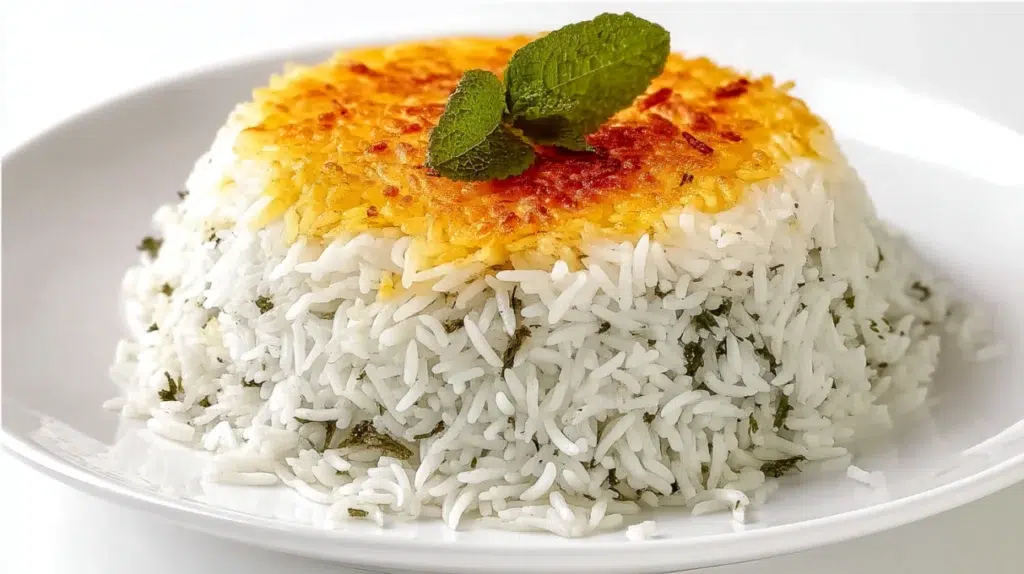
Persian Rice with Tahdig, Chelow ba tahdig, is the foundation of the Iranian table. Every khoresh, every kebab, every Persian stew is served over it. The rice itself (chelow) has long, separate, fluffy grains. The tahdig, meaning “bottom of the pot” is the golden, crackling crust that forms beneath it, the most prized part of the meal, the piece everyone reaches for first.
The technique is a two-stage process: parboil the basmati until 70% cooked, drain it, then steam it slowly in a covered pot with fat and saffron at the base to form the crust. A towel wrapped around the lid absorbs condensation so it never drips back. A cold towel under the pot at the end releases the tahdig cleanly. Neither step is optional.
Ingredients
- 400g (2 cups) extra-long grain basmati rice, extra-long basmati produces the longest, most elegant grains after steaming. Regular basmati also works. Do not use short-grain or jasmine rice, the starch content is wrong for this technique.
- 3 tablespoons fine salt, for the soaking water and the parboiling water. Persian rice is cooked in heavily salted water, it seasons the grain throughout and then drains away. The rice will not taste salty in the finished dish.
- ¼ teaspoon saffron threads, ground with a pinch of sugar using a mortar and pestle or the back of a spoon, then dissolved in 3 tablespoons of hot water. Steep 10 minutes. This is bloomed saffron, the only way it properly colours and flavours the rice.
- 3 tablespoons neutral oil or clarified butter (ghee), for the base of the pot. Oil produces a crisper tahdig; butter produces a more flavourful, golden one. A mixture of both is excellent.
- 2 tablespoons unsalted butter, cut into small cubes, placed on top of the mounded rice before steaming. Enriches the grain as it steams.
For the yogurt tahdig base (recommended for beginners)
- 2 tablespoons full-fat plain yogurt, mixed with a few spoonfuls of the parboiled rice and half the bloomed saffron water to form the tahdig base. Yogurt makes the crust easier to release cleanly from the pot and produces a more evenly golden colour. Skip this for a pure rice tahdig.
Step by step
- Rinse and soak. Place the rice in a bowl and rinse under cold water, swirling and draining, until the water runs completely clear, at least 3–4 changes of water. Cover with fresh cold water, add 1 tablespoon of the salt, and soak for 30 minutes (or up to 2 hours). The grains will elongate visibly. Drain and set aside. Rinsing removes surface starch. Soaking allows the grain to lengthen before heat is applied, this is what produces the characteristic long, separate, non-sticky grains of Persian rice rather than the clumped result you get from other methods.
- Bloom the saffron. While the rice soaks, grind the saffron threads with a pinch of sugar using a mortar and pestle until powdered. Add 3 tablespoons of hot (not boiling) water and steep for 10–15 minutes. The liquid should be a deep, saturated gold. Set aside, you will use it in two parts.
- Parboil the rice. Bring a large pot of water to a vigorous boil. Add the remaining 2 tablespoons of salt, the water should taste like the sea. Add the drained rice and stir once. Boil over high heat for 5–7 minutes, stirring occasionally. To test: remove a grain and bite it. It should be cooked at the outside but have a small white dot at the centre, about 70% cooked. Drain immediately into a fine-mesh sieve and rinse briefly with lukewarm water to stop the cooking. Do not fully cook the rice here. It will finish cooking during the steaming stage. Over-parboiled rice produces a mushy final texture. Under-parboiled rice will be raw at the centre after steaming. The white-dot test is the only reliable doneness check.
- Make the tahdig base. Heat the oil (or butter, or both) in a wide, heavy non-stick pot over medium-high heat until shimmering. In a small bowl, mix 3–4 large spoonfuls of the parboiled rice with the yogurt and half the bloomed saffron water. Stir to combine. Spread this mixture evenly and firmly across the bottom of the hot oiled pot in a thin, compact layer. This is the tahdig. A non-stick pot is important, not strictly essential but significantly reduces the anxiety of the release. The yogurt mixture makes the crust more reliably golden and easier to flip out cleanly than plain rice on oil alone.
- Mound the rice. Add the remaining parboiled rice to the pot on top of the tahdig base. Use a spoon to shape it into a gentle mound or pyramid, not flat, not packed down. The mound shape allows steam to circulate freely between the grains. Using the handle of a wooden spoon, poke 5–6 holes through the rice mound but not through the tahdig layer, these are steam vents. Place the butter cubes into the holes and across the top of the mound. Drizzle the remaining saffron water over the top for colour.
- Steam with the towel lid. Wrap a clean kitchen towel around the pot lid, gathering and tying the corners securely on top so they cannot hang near the flame. Place the lid firmly on the pot. Cook over medium-high heat for 8–10 minutes until you hear a gentle crackling from the base and see steam escaping around the lid edges. Reduce the heat to the lowest setting and continue steaming for 30–40 minutes. Rotate the pot 180° once halfway through for even crisping. The towel is doing specific work: it absorbs the condensation that forms inside the lid during steaming. Without it, that condensation drips back onto the rice and produces wet, gummy grains. A paper towel folded into several layers works if you have no clean kitchen towel. Make sure it is fully secured above the flame before walking away.
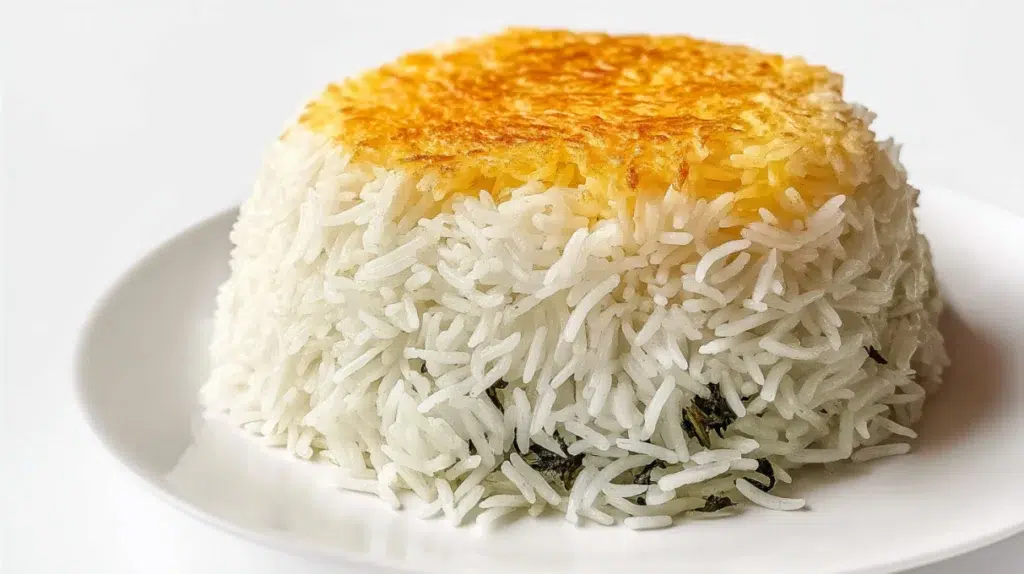
- Release the tahdig. When the steaming time is up, remove the pot from the heat. Fill your sink with about 2cm of cold water, or wet a large kitchen towel and lay it flat on the counter. Set the base of the hot pot directly on the cold water or wet towel for 5 minutes. This thermal shock contracts the metal and releases the tahdig crust from the bottom of the pot cleanly.Do not skip this step. The cold towel release is the difference between a tahdig that comes out in one intact, showstopping golden disc and one that breaks apart and stays stuck in the pot. Five minutes on the cold surface, then invert or serve.
- Serve. To serve intact: place a large flat serving plate over the pot, hold both firmly, and invert in one confident motion. The tahdig will be on top, golden and crackling. To serve separately: spoon the fluffy rice out onto a platter, then use a spatula to lift the tahdig from the bottom of the pot in pieces and arrange alongside.
Claire’s note
The tahdig will make you nervous the first time. This is normal. You will smell the oil heating, hear the faint crackling from the base after the first 10 minutes, and resist the urge to lift the lid and check, because lifting the lid releases the steam and disrupts the process. Trust the sound. Trust the timer. The first tahdig I made came out in one perfect golden disc and I genuinely applauded, alone in a kitchen in Nashville, because I had read enough about Persian cooking to know how much that moment means.
There is also a version made with potato slices laid flat on the oiled bottom of the pot instead of rice, tahdig sib zamini, which is even easier to release cleanly and produces a potato crust that absorbs the saffron and butter and becomes something extraordinary. Worth making once you are comfortable with the basic version.
Tahdig variations
The base version here uses a yogurt-rice mixture which is the most beginner-friendly. Two other traditional variations worth knowing: plain rice tahdig, simply the parboiled rice laid directly on the oiled pot base, producing a pure, crispier crust with no yogurt. And potato tahdig (tahdig sib zamini), thin rounds of potato layered on the oiled pot base instead of rice, which absorb the saffron butter and become an impossibly good golden potato crust. The potato version is the most forgiving and the easiest to release cleanly.
Serve with
Persian rice with tahdig is the accompaniment to almost everything in Persian cooking. It is served alongside ghormeh sabzi and Persian saffron chicken. For a full Persian table the complete Mediterranean & Middle East collection has everything from this cuisine region.
Add Persian rice with tahdig to your weekly meal planner as a weekend cook, the active time is 20 minutes; the rest is mostly watching and waiting. And for more recipes, follow us on Pinterest.
Print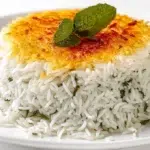
Persian Rice with Tahdig
- Total Time: 80 minutes
- Yield: 6 servings 1x
- Diet: Vegetarian
Description
Chelow ba tahdig is the foundation of the Iranian table, served with khoresh and kebabs, featuring long, separate grains and a prized golden crust.
Ingredients
- 400g (2 cups) extra-long grain basmati rice
- 3 tablespoons fine salt
- ¼ teaspoon saffron threads, ground
- 3 tablespoons neutral oil or clarified butter (ghee)
- 2 tablespoons unsalted butter, cut into small cubes
- 2 tablespoons full-fat plain yogurt (optional for base)
Instructions
- Rinse and soak the rice in cold water with salt for 30 minutes.
- Bloom the saffron threads in hot water and set aside.
- Parboil the rice in salted boiling water for 5–7 minutes, then drain.
- Make the tahdig base by mixing yogurt with parboiled rice and saffron water.
- Mound the remaining rice on top of the tahdig base and add butter cubes.
- Steam the rice with a towel-wrapped lid for 30–40 minutes, rotating halfway.
- Release the tahdig by cooling the pot on a wet towel for 5 minutes.
- Serve the rice and tahdig on a platter, either together or separately.
Notes
Don’t be afraid of the tahdig process; trust the timings and sounds. For beginners, the yogurt-rice tahdig is recommended.
- Prep Time: 30 minutes
- Cook Time: 50 minutes
- Category: Side Dish
- Method: Steaming
- Cuisine: Persian
Nutrition
- Serving Size: 1 serving
- Calories: 320
- Sugar: 2g
- Sodium: 600mg
- Fat: 14g
- Saturated Fat: 6g
- Unsaturated Fat: 7g
- Trans Fat: 0g
- Carbohydrates: 46g
- Fiber: 2g
- Protein: 7g
- Cholesterol: 20mg