⏱ Marinate: overnight 🔥Cook: 3 hrs 👤Serves: 4
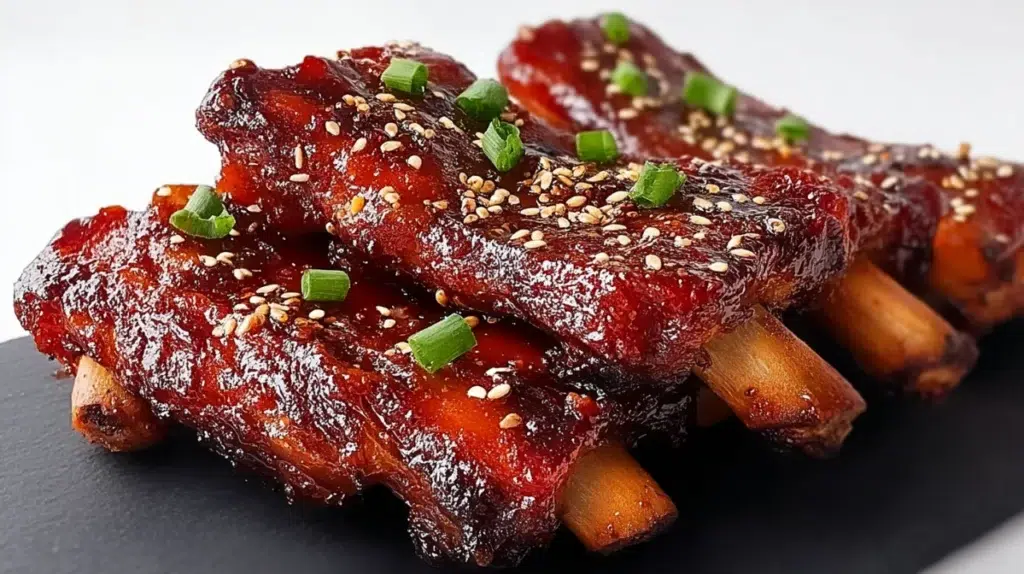
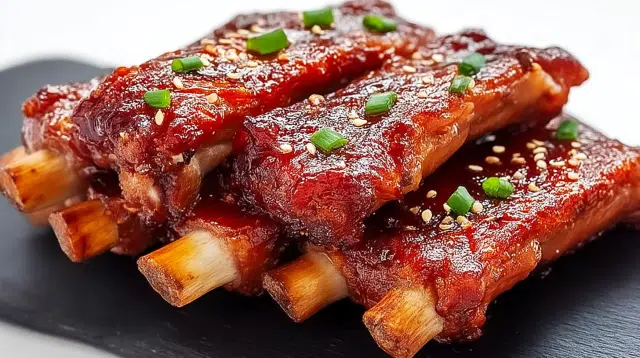
Gochujang ribs, pork ribs slow-baked until fall-off-the-bone tender, then glazed twice with a sticky gochujang, honey and soy sauce lacquer and finished under a hot broiler until the edges char and the glaze caramelises into something between a crust and a sauce. Korean BBQ flavours without a grill. The heat is sustained and deep, the sweetness is real, and the glaze builds into a lacquer that sticks to everything, your fingers included.
The structure is simple: remove the membrane, marinate overnight, cook low and slow in a foil parcel, glaze and broil. The glaze never goes on until the slow cook is finished, gochujang burns at sustained low temperatures and produces a bitter, acrid result if cooked for 3 hours. Low and slow for tenderness. High heat at the end for caramelisation. Two separate jobs, done separately.
Ingredients
For the ribs
- 1.5–2kg pork spare ribs or St. Louis cut ribs, St. Louis cut (trimmed spare ribs) is the most reliable choice, a consistent rectangular rack that cooks evenly. Baby back ribs work but are leaner and need slightly less time (2–2.5 hours). Spare ribs are meatier and more flavourful. Whatever the cut, the membrane must come off the bone side, see Step 1.
- 3 tablespoons apple juice or water, added to the foil parcel before sealing. Creates steam inside the package, keeping the ribs moist throughout the long cook.
For the dry rub
- 1 tablespoon gochugaru (Korean red chili flakes), smoky, mildly spicy Korean chili flakes. Different from regular chili flakes, milder, with a distinct fruity-smoky character. Available at Korean grocery stores. Substitute: 1 teaspoon regular chili flakes + ½ teaspoon sweet paprika.
- 1 teaspoon fine salt
- 1 teaspoon garlic powder
- ½ teaspoon black pepper
- ½ teaspoon onion powder
For the gochujang glaze
- 4 tablespoons gochujang, the backbone of the glaze. Its fermented, spicy, slightly sweet depth cannot be replicated by any other ingredient. Brand matters slightly, CJ Haechandle and Bibigo are milder; Sempio is sharper. Taste your brand and adjust the honey accordingly.
- 3 tablespoons honey, balances the gochujang heat and provides the stickiness. Dark honey (buckwheat, manuka) adds more complexity; regular runny honey is fine.
- 2 tablespoons soy sauce
- 1 tablespoon brown sugar, extra caramelisation under the broiler
- 1 tablespoon rice vinegar, cuts through the richness and keeps the glaze from being cloying
- 1 tablespoon toasted sesame oil
- 4 cloves garlic, finely grated
- 1 teaspoon fresh ginger, finely grated
- 1 tablespoon soy sauce, already counted above, all into the glaze together
To serve
- Sesame seeds and sliced green onion
- Steamed white rice and kimchi, the Korean pairing
Step by step
- Remove the membrane, non-negotiable. Turn the rack bone-side up. The silver-white membrane (silverskin) is a thin, tough layer covering the bones. Slide the tip of a butter knife or a finger under the membrane at one end of the rack, between the membrane and the first bone, until you can grab a flap. Grip the flap firmly with a paper towel for traction and pull steadily. It will peel away, sometimes in one clean sheet, sometimes in sections. Remove it all. Without this step, the membrane acts as a barrier: the marinade and glaze cannot penetrate, and the cooked ribs will have a chewy, papery underside rather than fully tender meat all the way through.
- Apply the dry rub and marinate. Combine the dry rub ingredients. Pat the ribs dry with paper towels. Rub the dry rub all over both sides of the rack, pressing it in. Place in a large zip-lock bag or a dish. Whisk the gochujang glaze ingredients together in a bowl, set aside 4 tablespoons of the glaze in a separate container for basting later (never use the glaze that has touched raw meat for finishing). Pour the remaining glaze over the ribs. Seal the bag or cover the dish. Refrigerate overnight, minimum 4 hours, 24 hours is better. The overnight marinate is what separates gochujang ribs that taste of seasoning on the surface from ribs that taste seasoned all the way through. Gochujang is thick and takes time to penetrate. The dry rub applied first opens the surface of the meat slightly and gives the marinade better purchase.
- Slow bake in foil. Preheat oven to 150°C / 300°F. Remove the ribs from the marinade, shaking off the excess, reserve the marinade. Lay the rack bone-side down on a large double layer of heavy-duty foil. Pour the apple juice and 2 tablespoons of the reserved marinade around (not over) the ribs. Wrap the foil tightly around the rack, sealing all edges firmly into a parcel, no steam should be able to escape. Place on a baking tray. Bake for 2.5–3 hours until the meat is completely tender and pulling away from the ends of the bones. The sealed foil parcel creates a steam environment inside, the ribs effectively braise in their own juices and the added liquid. This is what produces the fall-off-the-bone texture. A loose foil wrap lets the steam escape and produces drier ribs. Seal it firmly at every edge.
- Check for doneness. At the 2.5-hour mark, carefully open one end of the foil and test the ribs. Press between two bones and bend gently, they should flex easily and the meat should have pulled back from the bone ends by at least 1cm. A toothpick inserted into the thickest part of the meat should slide in with no resistance. If still firm, reseal and return for another 20–30 minutes. Do not push to full fall-off-the-bone at this stage, the broil step will continue cooking them slightly.
- Glaze and broil, two coats. Remove the ribs from the foil and transfer bone-side down to a foil-lined baking tray. Switch the oven to broil / grill setting (or increase to 230°C / 450°F). Brush a generous coat of the reserved glaze (the portion that never touched raw meat) all over the top and sides of the rack. Broil on the top rack for 4 minutes until the glaze starts to bubble and caramelise. Brush on a second coat. Broil for a further 3–4 minutes until the edges are slightly charred, the glaze is deeply sticky, and the surface looks lacquered rather than wet. Watch constantly, the sugar in the gochujang glaze burns in seconds. Two coats of glaze, not one, is what builds the lacquered, layered finish characteristic of Korean BBQ. The first coat sets under the heat; the second coat layers over it. A single thick coat runs off and pools at the edges rather than adhering to the surface.
- Rest and slice. Remove from the oven. Rest on the tray for 10 minutes, the juices redistribute and the glaze firms up slightly from molten to sticky. Slice between the bones with a sharp knife. Scatter sesame seeds and sliced green onion over the top. Serve immediately with steamed rice and kimchi.
Claire’s note
Watch the broil stage like you are watching something that can go wrong in under 60 seconds, because it can. The brown sugar and honey in the gochujang glaze are at the edge of burning throughout this entire stage. Two minutes too long produces bitter, acrid black patches that cannot be fixed. Stand at the oven door and check every 90 seconds. The right moment is when the glaze is bubbling, the edges are charring and the surface smells of caramelised chili rather than burned sugar. Pull them then. The glaze continues cooking from residual heat for another minute after the ribs come out, which is exactly right.
Serve with
Gochujang ribs are served with steamed white rice and kimchi, the acidity of the kimchi cuts through the sticky glaze perfectly. For a full Korean spread: gochujang potato salad, gochujang meatballs alongside, or the Korean beef bowl for a different protein on the table. The complete Korean recipes collection and the Asian recipes hub have everything alongside.
Add gochujang ribs to your weekly meal planner as a weekend project, marinate on Friday night, bake Saturday afternoon, serve Saturday evening. The ribs also reheat well the next day: 160°C / 325°F covered with foil for 15 minutes, then a fresh brush of glaze and a 3-minute broil to re-lacquer.
And for more recipes, follow us on Pinterest.
Print
Gochujang Ribs
- Total Time: 225 minutes
- Yield: 4 servings 1x
Description
Pork ribs slow-baked until tender, glazed with a gochujang, honey, and soy sauce lacquer, then finished under a broiler for a perfect caramelized crust.
Ingredients
- 1.5–2kg pork spare ribs or St. Louis cut ribs
- 3 tablespoons apple juice or water
- 1 tablespoon gochugaru (Korean red chili flakes)
- 1 teaspoon fine salt
- 1 teaspoon garlic powder
- ½ teaspoon black pepper
- ½ teaspoon onion powder
- 4 tablespoons gochujang
- 3 tablespoons honey
- 2 tablespoons soy sauce
- 1 tablespoon brown sugar
- 1 tablespoon rice vinegar
- 1 tablespoon toasted sesame oil
- 4 cloves garlic, finely grated
- 1 teaspoon fresh ginger, finely grated
- Sesame seeds and sliced green onion, for serving
- Steamed white rice, for serving
- Kimchi, for serving
Instructions
- Remove the membrane from the ribs by sliding a butter knife under the membrane at one end and pulling steadily with a paper towel.
- Apply the dry rub by combining the ingredients and rubbing it over both sides of the ribs. Marinate overnight.
- Slow bake the ribs in a foil parcel at 150°C / 300°F for 2.5–3 hours until tender.
- Check for doneness at 2.5 hours; if tender, remove from foil.
- Glaze the ribs with reserved glaze and broil on high for 4 minutes, then apply a second coat and broil for another 3–4 minutes until charred.
- Rest for 10 minutes before slicing between the bones. Serve with sesame seeds, green onion, rice, and kimchi.
Notes
Watch the broiling stage carefully; it can burn quickly. Two minutes too long can produce undesirable flavors.
- Prep Time: 15 minutes
- Cook Time: 180 minutes
- Category: Main Course
- Method: Baking
- Cuisine: Korean
Nutrition
- Serving Size: 1 serving
- Calories: 500
- Sugar: 14g
- Sodium: 800mg
- Fat: 24g
- Saturated Fat: 8g
- Unsaturated Fat: 12g
- Trans Fat: 0g
- Carbohydrates: 38g
- Fiber: 2g
- Protein: 36g
- Cholesterol: 120mg