
⏱ Prep: 20 min 🔥Braise: 3–3.5 hrs 👤Serves: 6 Korean-American
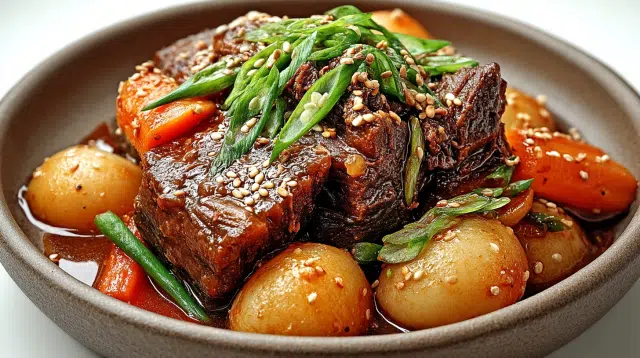
Korean style pot roast takes the American Sunday braise, chuck roast, Dutch oven, low oven, hours of patience and runs the braising liquid through a Korean pantry: gochujang for fermented depth and heat, soy sauce for salt and umami, Asian pear for natural sweetness and tenderising, ginger and garlic for warmth. After 3 hours, the meat pulls apart without effort. The braising liquid, reduced to a glossy sauce, is the best thing in the pot.
Two steps define this dish. First: sear the meat properly, deeply, on all sides, until a mahogany crust forms that smells of caramelised protein. The browned bits left in the pan go into every bite of the finished roast. Second: reduce the sauce at the end. The braising liquid after 3 hours is thin and pale. Ten minutes at a rolling boil transforms it into something glossy and concentrated that coats a spoon and clings to the meat.
Ingredients
- 1.5kg (3.5 lb) beef chuck roast, chuck is the only correct cut for this dish. The collagen and fat marbling convert to gelatin during the long braise, producing fall-apart meat and a rich, silky sauce. Brisket is an equally good alternative. Lean cuts, round, silverside, topside, dry out during a 3-hour braise and produce a thin, flavourless sauce. Do not substitute.
- 2 tablespoons neutral oil, for searing. High smoke point, vegetable, canola or grapeseed.
- Salt and black pepper, seasoned generously all over, patted completely dry with paper towels first. Wet meat does not sear, it steams.
For the braising liquid
- 1 large onion, roughly chopped
- 8 cloves garlic, smashed
- 2 tablespoons fresh ginger, finely grated
- 3 tablespoons gochujang, the flavour backbone of the entire braise. Cooked into the sauce from the beginning, it penetrates the meat over 3 hours. Adjust to heat preference, 2 tablespoons for mild, 4 for properly spicy.
- 3 tablespoons soy sauce, Japanese soy sauce for a cleaner flavour; dark soy sauce adds depth of colour
- 2 tablespoons brown sugar, balances the gochujang heat and helps the sauce caramelise during reduction
- 1 tablespoon rice vinegar, brightens the sauce and cuts through the richness of the beef fat
- 1 small Asian pear, peeled and grated, or 1 medium apple, grated. Contains natural proteolytic enzymes that tenderise the meat during the braise. Adds a clean, light sweetness distinct from sugar. Grated raw directly into the braising liquid, not cooked separately.
- 250ml (1 cup) beef stock, low-sodium so you control the salt through the soy sauce
- 2 tablespoons toasted sesame oil, added at the very end, off the heat. Sesame oil loses its fragrance if cooked for long.
Vegetables (added halfway through)
- 3 medium carrots, cut into 5cm chunks, added at the halfway point, not the beginning. Added from the start, they disintegrate over 3 hours of braising.
- 400g (14oz) baby potatoes, halved, optional. Same rule, add halfway through, not from the start.
To finish
- Sesame seeds and sliced green onion
- Steamed white rice and kimchi to serve
Step by step
- Preheat and prepare. Preheat oven to 150°C / 300°F. Pat the chuck roast completely dry with paper towels, every surface. Season generously on all sides with salt and black pepper. Dry meat sears; wet meat steams. This single prep step determines whether you get a crust or a grey, flavourless exterior.
- Sear deeply, all sides. Heat the oil in a large Dutch oven over high heat until shimmering and just beginning to smoke. Add the roast. Do not move it. Sear for 4 minutes until a deep mahogany crust has formed on the bottom. Turn and repeat on all four sides and both ends, 4 minutes per surface. Remove the meat and set aside. The pot should have a dark layer of browned fond across the bottom. The sear is not optional and it is not quick. Four minutes per side, high heat, no moving. The Maillard reaction creates hundreds of flavour compounds that the braising liquid then absorbs over the next 3 hours. A pale, lightly browned roast produces a thin, one-dimensional sauce. A deeply caramelised crust produces a rich, complex one.
- Build the braising liquid. Reduce heat to medium. Add the onion to the same pot. Cook 3–4 minutes, stirring, until softened and beginning to colour. Add the smashed garlic and grated ginger, stir 1–2 minutes until fragrant. Add the gochujang and brown sugar, stir constantly for 2 minutes until the paste darkens slightly and becomes very fragrant. Add the soy sauce, rice vinegar and grated pear. Stir to combine. Pour in the beef stock. Scrape up every browned bit from the bottom of the pot with a wooden spoon, those bits are the concentrated flavour from the sear stage and must go into the braise. Deglazing and scraping the fond into the liquid is arguably more important than the sear itself. If the fond burns during the sear, discard it and start fresh, burnt fond makes the entire braise bitter. But properly caramelised fond dissolved into the liquid is pure concentrated beef flavour.
- Braise low and slow. Return the seared roast to the pot, nestling it into the liquid. The liquid should come at least halfway up the sides of the meat. If not, add more stock or water. Bring to a gentle simmer on the stovetop. Cover the Dutch oven tightly and transfer to the preheated oven. Braise for 1.5 hours.
- Add the vegetables at the halfway point. After 1.5 hours, carefully remove the lid (steam will escape). Add the carrot chunks and halved potatoes around the roast, pressing them into the braising liquid. Replace the lid and return to the oven for a further 1.5 hours, 3 hours total. Vegetables added from the beginning of a 3-hour braise disintegrate completely, you’ll have mushy carrot purée rather than distinct pieces. Adding at the halfway point gives them exactly the right amount of time: fully cooked and infused with the braising liquid, but holding their shape.
- Test for doneness. After 3 hours, the meat should yield completely when pressed with tongs and pull apart easily with a fork. If it still resists, cover and return to the oven for a further 30 minutes. When done, transfer the roast and vegetables to a warm plate or tray and cover loosely with foil.
- Reduce the sauce, the most important final step. Place the Dutch oven on the stovetop over high heat. Bring the braising liquid to a rolling boil. Cook uncovered, stirring occasionally, for 8–12 minutes until the sauce has reduced by roughly half and is thick enough to coat the back of a spoon. It should look glossy and dark rather than thin and pale. Remove from heat. Stir in the toasted sesame oil. This reduction step transforms the dish. The braising liquid straight from the oven is thin, quite salty if tasted directly, and not yet a sauce. After 10 minutes at a rolling boil it becomes concentrated, glossy, and balanced, the flavours meld, the collagen from the meat thickens it naturally, and the gochujang deepens from spicy to complex. Do not skip it.
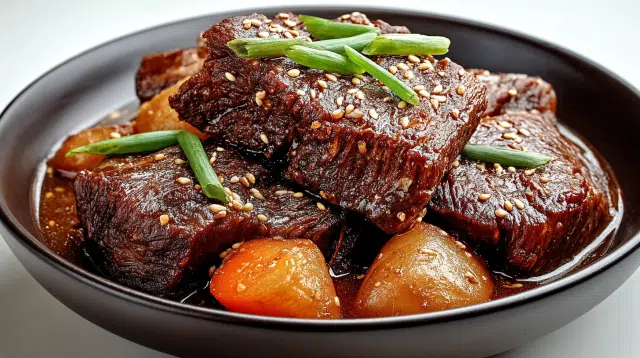
- Rest and serve. Return the meat and vegetables to the reduced sauce. Leave to rest for 15 minutes off the heat before serving, the meat absorbs the sauce and the juices redistribute. Use two forks to pull the meat into large chunks directly in the pot, or slice and arrange on a platter with the vegetables. Spoon the reduced sauce generously over the top. Scatter sesame seeds and sliced green onion. Serve with steamed white rice and kimchi.
Claire’s note
Make this the day before you plan to serve it. Every braise is better the next day, the meat continues absorbing the sauce overnight, the collagen that the heat released sets and enriches the sauce further as it cools, and the gochujang flavour settles from spicy-forward to something more layered and complex. Reheat gently on the stovetop over low heat with the lid on for 20 minutes, then serve. The difference between day-one Korean pot roast and day-two Korean pot roast is significant enough that I now specifically make it on Saturday for Sunday dinner.
The second thing: reduce the sauce properly. I have seen recipes that skip this and serve the braising liquid thin and pale straight from the pot. That is not the sauce this dish deserves. Ten minutes at a rolling boil, stirring occasionally, is what turns a braise into a glaze.
Serve with
Korean style pot roast is served over steamed white rice with kimchi alongside, the rice absorbs the reduced sauce, the kimchi cuts through the richness. For a full Korean spread: gochujang grilled chicken skewers for another slow-cooked Korean protein, gochujang meatballs for a quicker weeknight version of the same flavour profile, or Korean beef bowl for something faster. The complete Korean recipes collection and the Asian recipes hub.
Add Korean style pot roast to your weekly meal planner as a Saturday cook, braise it on Saturday, serve it Sunday, eat the leftovers on Monday. It keeps 4 days refrigerated and freezes well for 3 months.
And for more recipes, follow us on Pinterest.
Print
Korean Style Pot Roast
- Total Time: 200 minutes
- Yield: 6 servings 1x
- Diet: None
Description
A rich and flavorful Korean-American pot roast braised in a savory gochujang sauce that tenderizes the meat for a mouthwatering experience.
Ingredients
- 1.5kg (3.5 lb) beef chuck roast
- 2 tablespoons neutral oil
- Salt and black pepper, to taste
- 1 large onion, roughly chopped
- 8 cloves garlic, smashed
- 2 tablespoons fresh ginger, finely grated
- 3 tablespoons gochujang
- 3 tablespoons soy sauce
- 2 tablespoons brown sugar
- 1 tablespoon rice vinegar
- 1 small Asian pear, peeled and grated
- 250ml (1 cup) low-sodium beef stock
- 2 tablespoons toasted sesame oil
- 3 medium carrots, cut into 5cm chunks
- 400g (14oz) baby potatoes, halved (optional)
- Sesame seeds and sliced green onion, for garnish
- Steamed white rice and kimchi, for serving
Instructions
- Preheat oven to 150°C / 300°F and prepare the roast.
- Pat the chuck roast dry and season with salt and pepper.
- Heat oil in a large Dutch oven over high heat.
- Add the roast and sear for 4 minutes on each side.
- Remove the meat and set aside.
- Add onion to the pot and cook for 3–4 minutes until softened.
- Stir in garlic and ginger for 1–2 minutes.
- Add gochujang and brown sugar; stir for 2 minutes until fragrant.
- Incorporate soy sauce, rice vinegar, and grated pear, then stir to combine.
- Pour in beef stock and scrape up browned bits from the pot.
- Return the roast to the pot and bring to a gentle simmer.
- Braise in the oven for 1.5 hours.
- Add carrots and potatoes, cover, and return to the oven for another 1.5 hours.
- Check for doneness after 3 hours, adjust time if necessary.
- Reduce the sauce over high heat for 8–12 minutes until thickened.
- Rest the meat before slicing and serve with sauce, garnished with sesame seeds and green onion.
Notes
Make this a day before serving for enhanced flavors. Properly reduce the sauce for the best results.
- Prep Time: 20 minutes
- Cook Time: 180 minutes
- Category: Main Course
- Method: Braising
- Cuisine: Korean-American
Nutrition
- Serving Size: 1 serving
- Calories: 450
- Sugar: 7g
- Sodium: 600mg
- Fat: 18g
- Saturated Fat: 5g
- Unsaturated Fat: 10g
- Trans Fat: 0g
- Carbohydrates: 20g
- Fiber: 3g
- Protein: 40g
- Cholesterol: 100mg