⏱ Soak:6–8 hrs 🔥Fry: 30 min 👤Makes: 20–24 fritters 🌿Diet: Vegan, Gluten-free
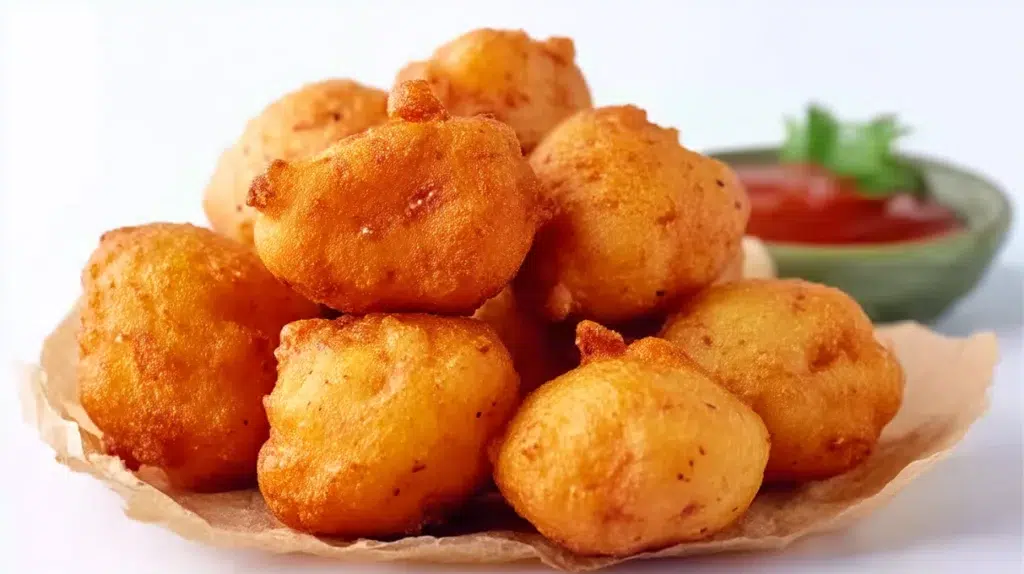
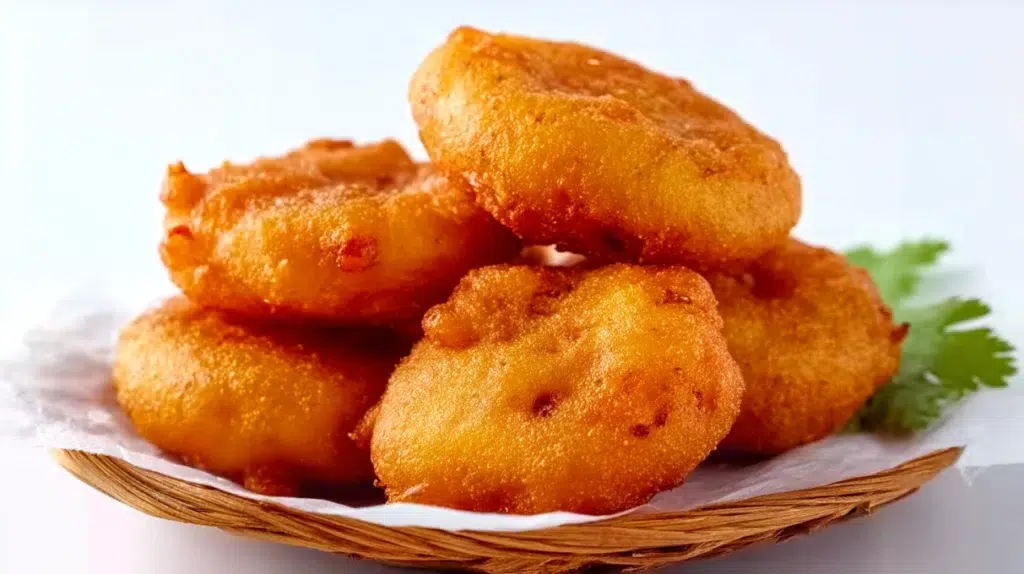
Akara recipe, Nigeria’s most beloved breakfast is the thing that makes you understand immediately why West African street food culture is built around early mornings. Dried black-eyed peas soaked overnight, peeled and blended with red bell pepper, habanero, onion and salt into a thick airy batter, then dropped by spoonfuls into hot oil until the outside turns shatteringly golden and the inside stays soft, fluffy and almost cloud-like. Eaten hot, always hot, with pap (fermented corn porridge), stuffed into agege bread or eaten with your hands straight from the paper towel.
Akara originated with the Yoruba people of Nigeria, known as kosai in Hausa, koose in Ghana and acarajé in Brazil, where it arrived with enslaved Africans and became a sacred street food in Bahia. The same fritter, the same beans, the same technique carried across an ocean and kept alive for four hundred years.
Ingredients
- 2 cups (365g) dried black-eyed peas, dried only, never canned. The skin must be removed before blending, see the method. Black-eyed peas produce the most authentic flavor and texture. Nigerian brown beans (honey beans) are the traditional alternative and produce a slightly sweeter result, available at African grocery stores.
- 1 medium red bell pepper, roughly chopped, red or orange only. Green bell pepper is too bitter for akara. The bell pepper gives the fritters their characteristic color and a subtle sweetness.
- 1–2 habanero peppers, or scotch bonnet. 1 for medium heat, 2 for hot. Do not omit, the pepper is part of the authentic flavor profile, not just heat. Deseed for milder heat.
- ½ medium red onion, roughly chopped, half blended into the batter, half finely diced and stirred in after blending for texture
- 1 teaspoon salt, added to the batter after blending, not during. Adding salt too early can prevent the akara from rising and floating in the oil.
- ¼ cup (60ml) water, minimum. Add only enough to allow the blender to move, too much water makes a thin batter that falls apart in the oil.
- Vegetable oil for deep frying, enough for 3 inches depth. Vegetable, sunflower or palm oil. Palm oil produces the most authentic Yoruba-style akara with a distinct golden-orange color.
Optional: 1 teaspoon crayfish powder, dried ground crayfish adds a deeply savory, slightly oceanic depth that is traditional in many Nigerian versions. Available at African grocery stores. Completely optional but worth adding.
Step by step
- Soak the beans. Place the dried black-eyed peas in a large bowl. Cover with cold water by at least 3 inches. Soak for 6–8 hours or overnight. After soaking the skins should be swollen and soft. Drain completely.Quick soak method if you forgot overnight: cover with boiling water and soak for 30–45 minutes. The skins will loosen faster but the overnight soak produces a better batter.
- Peel the beans, the most important step. This is the step most people want to skip and the step that cannot be skipped. Unpeeled beans produce dense, skin-flecked fritters with a bitter edge. Peeled beans produce the smooth, light, airy akara that defines the dish.Blender method (fastest):Add the soaked beans to a blender with 2 cups of cold water. Pulse 4–5 times, short bursts only, not blending. Pour into a large bowl. The skins will float to the surface. Pour off the water and floating skins carefully. Refill with fresh water and swirl more skins will float. Repeat 3–4 times until the water runs mostly clear and the beans are white and skinless.Hand method (traditional):Take a handful of soaked beans and rub firmly between both palms over a bowl of water. The skins slip off. Swirl and pour off the skins. Repeat until all beans are peeled.Perfect peeling is not required. A few remaining skin fragments in the batter will not ruin the akara. The goal is to remove the majority of the skins, 80–90% is enough.
- Blend the batter. Drain the peeled beans completely. Add to a blender with the chopped red bell pepper, habanero, half the chopped onion and the minimum amount of water needed to blend, start with 2 tablespoons and add more only if necessary. Blend on high until smooth and thick, slightly coarser than hummus but no visible bean chunks. The batter should be thick enough to hold a peak when you lift a spoon from it.Do not over-blend and do not add too much water. Too smooth = dense akara. Too much water = flat akara that falls apart in the oil. Both are the same problem: too much blending or liquid destroys the air pockets that make akara light.
- Whisk the batter, the secret step. Transfer the blended batter to a large bowl. Add salt. Now whisk vigorously with a wooden spoon or electric hand mixer for 5–7 minutes without stopping. This is the step that separates good akara from extraordinary akara. Whisking incorporates air into the bean batter, those air pockets expand in the hot oil and produce the fluffy, almost cloud-like interior that defines perfectly made akara.The batter should visibly lighten in color and increase slightly in volume as you whisk. After 5 minutes it should look slightly aerated and fall from the spoon in thick ribbons. Stir in the remaining finely diced onion after whisking.
- Heat the oil. Pour vegetable oil into a wide heavy pot to a depth of 3 inches. Heat over medium-high heat to 350°F (175°C). Test without a thermometer: drop a small spoonful of batter into the oil. It should rise to the surface within 2–3 seconds and begin sizzling actively. If it sinks and stays down the oil is not hot enough. If it browns within 30 seconds the oil is too hot.
- Fry in batches. Using a soup spoon or small ice cream scoop, carefully drop spoonfuls of batter into the hot oil, roughly 2 tablespoons per fritter. Fry 5–6 at a time, do not crowd the pot. The akara should float to the surface almost immediately and begin turning golden. Fry for 4–6 minutes total, turning once or twice, until deep golden brown on all sides. Remove with a slotted spoon and drain on paper towels.If the akara is not floating: the batter has too much water or was not whisked enough. If it is sinking and falling apart: same problem, too thin. Add 1–2 tablespoons of additional peeled blended beans to thicken and whisk again before continuing.
- Serve immediately. Akara is at its absolute best within 5 minutes of leaving the oil. Serve hot with pap (akamu), stuffed into agege bread, alongside Nigerian chicken stew or eaten plain with hot sauce. Do not let it sit, the exterior softens quickly as it cools.
The honest note
The whisking step is what most recipes mention briefly and what makes the largest difference in the finished akara. Five minutes of vigorous whisking, not stirring, not folding, but proper whisking, transforms a dense bean paste into an aerated batter that produces fritters with a genuinely light, almost cloud-like interior rather than the dense, stodgy result that gives bean fritters an undeserved bad reputation. Use a wooden spoon, a balloon whisk or a hand mixer.
Time it, five minutes feels longer than it is when you are doing it by hand.
The result is worth every second. Everything else in this recipe is straightforward. The whisking is where the akara is actually made.
Make it ahead
Claire’s note
Akara freezes perfectly and this is how Nigerian households manage a dish that requires soaking and peeling. Make a large batch, fry everything, cool completely on a wire rack then freeze in a single layer before transferring to a freezer bag. Keeps for up to 3 months. Reheat from frozen in an air fryer at 350°F (175°C) for 5–6 minutes until crispy again, or in a 375°F (190°C) oven for 10–12 minutes. Do not microwave, the exterior goes soft and rubbery. The batter itself can also be made ahead and refrigerated for up to 24 hours, whisk again before frying as it settles. Do not salt the batter until you are ready to fry, salt added too early can prevent the fritters from rising.
What to eat alongside
The classic Nigerian akara breakfast is akara with pap, akamu, a smooth fermented corn porridge that is mild, slightly sour and the perfect soft counterpoint to the crispy fritters. Akara stuffed into agege bread, a soft, slightly sweet Nigerian white bread, with a drizzle of pepper sauce is the street food version and is one of the greatest sandwiches on the African continent. For the full Nigerian table, the jollof rice, the egusi soup, the suya, the complete Nigerian recipes collection has everything.
Add akara to your weekly meal planner, soak the beans on Friday night, peel and blend Saturday morning, fry a large batch and freeze half for the week ahead. And for more recipes, follow us on Pinterest.
Print
Nigerian Akara Fritters
- Total Time: 60 minutes
- Yield: 20–24 fritters 1x
- Diet: Vegan, Gluten-free
Description
Delicious and fluffy Nigerian bean fritters made from soaked and peeled black-eyed peas, blended with peppers and fried to golden perfection.
Ingredients
- 2 cups (365g) dried black-eyed peas
- 1 medium red bell pepper, roughly chopped
- 1–2 habanero peppers, deseeded
- ½ medium red onion, roughly chopped
- 1 teaspoon salt
- ¼ cup (60ml) water
- Vegetable oil for deep frying
- Optional: 1 teaspoon crayfish powder
Instructions
- Soak the beans. Place the dried black-eyed peas in a large bowl, cover with cold water by 3 inches, and soak for 6–8 hours. Drain completely.
- Peel the beans. Use the blender method or hand method to remove the skins from the soaked beans.
- Blend the batter. Add peeled beans, red bell pepper, habanero, half the onion, and minimal water to a blender and blend until smooth.
- Whisk the batter vigorously for 5–7 minutes to incorporate air.
- Heat the oil in a pot to 350°F (175°C).
- Fry in batches, dropping spoonfuls of batter into the hot oil, and fry for 4–6 minutes until golden brown.
- Serve immediately while hot, enjoyed plain or with pap.
Notes
Whisking the batter properly is crucial for achieving a light and fluffy texture. Akara freezes well and can be reheated in an air fryer or oven.
- Prep Time: 30 minutes
- Cook Time: 30 minutes
- Category: Snack
- Method: Frying
- Cuisine: Nigerian
Nutrition
- Serving Size: 1 fritter
- Calories: 120
- Sugar: 1g
- Sodium: 200mg
- Fat: 6g
- Saturated Fat: 1g
- Unsaturated Fat: 5g
- Trans Fat: 0g
- Carbohydrates: 15g
- Fiber: 4g
- Protein: 5g
- Cholesterol: 0mg