
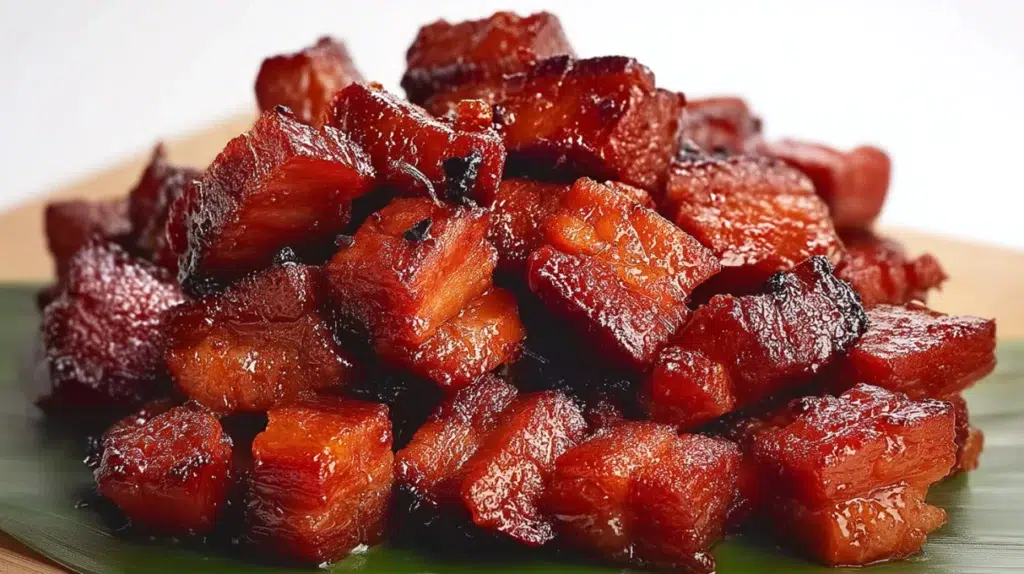
⏱ Cure: Overnight (24 hrs) 🔥Cook: 15 min 👤Serves: 4 🌏Origin: Philippines
Filipino pork tocino is the dish at the center of tocilog, tocino, sinangag (garlic fried rice) and itlog (fried egg), one of the most beloved breakfast combinations in the Philippines, served morning to midnight in everything from roadside canteens to home kitchens.
Thin slices of pork shoulder cured overnight in brown sugar, garlic, soy sauce and pineapple juice, then cooked in a pan until the water evaporates and the marinade caramelizes into a sticky, glossy glaze around every piece. Sweet, garlicky, tender at the center and lightly crisp at the edges, the kind of thing that makes a fried egg and garlic rice feel like a complete meal.
Ingredients
- 700g pork shoulder, sliced ¼-inch thin against the grain, pork shoulder has the right balance of meat and fat; pork belly is richer and fattier, which also works; avoid pork tenderloin, which dries out during curing
- ⅓ cup brown sugar, packed; this is the foundation of the glaze and the cure
- 3 tablespoons soy sauce
- ¼ cup pineapple juice, 100% juice, no added sugar; the natural enzymes tenderize the pork and the sweetness balances the soy
- 1 tablespoon rice vinegar, adds a gentle tang that cuts through the sweetness
- 5 cloves garlic, minced
- ½ teaspoon salt
- ¼ teaspoon black pepper
- 1 teaspoon annatto powder (achuete), optional; gives the tocino its characteristic reddish-orange color. Available at Filipino or Asian grocery stores and Latin markets. Red food coloring can be used as a substitute; or simply omit it, the flavor is unaffected.
Step by step
- Make the cure and coat the pork. Combine the brown sugar, soy sauce, pineapple juice, vinegar, garlic, salt, pepper and annatto powder if using in a large bowl. Stir until the sugar dissolves. Add the pork slices and mix thoroughly using your hands until every piece is evenly coated. Cover tightly and refrigerate for at least 24 hours, or up to 3 days, turning the pork once or twice during curing if you remember.The overnight cure is the whole first step. Less than 8 hours and the flavor stays mostly on the surface rather than penetrating through; 24 hours is where the sweetness and garlic become part of the meat itself. Don’t go beyond 3 days, the pineapple enzymes eventually start breaking down the texture too much.
- Cook the tocino. Arrange the cured pork in a single layer in a wide pan, work in batches if needed. Pour in just enough water to barely cover the meat. Bring to a boil over medium heat, then reduce to a steady simmer, turning the pork occasionally, until the water has fully evaporated, about 8–10 minutes.
- Caramelize. Once the water is gone, the marinade remaining in the pan will start to thicken and coat the pork. If the pork has enough fat, no extra oil is needed, it will fry in its own fat. If using a leaner cut, add a tablespoon of oil. Cook over medium heat, stirring and turning the pork constantly, until the sauce caramelizes to a sticky glaze and the meat develops lightly browned, slightly crispy edges.Don’t walk away at this stage. Sugar caramelizes fast and burns even faster, the difference between a perfect glaze and a bitter, burnt pan is about 30 seconds of inattention. Keep stirring and keep the heat at medium, not high.
- Serve immediately. Transfer to a plate and serve hot as part of a tocilog, alongside garlic fried rice (sinangag) and a fried egg, with sliced fresh tomatoes on the side.
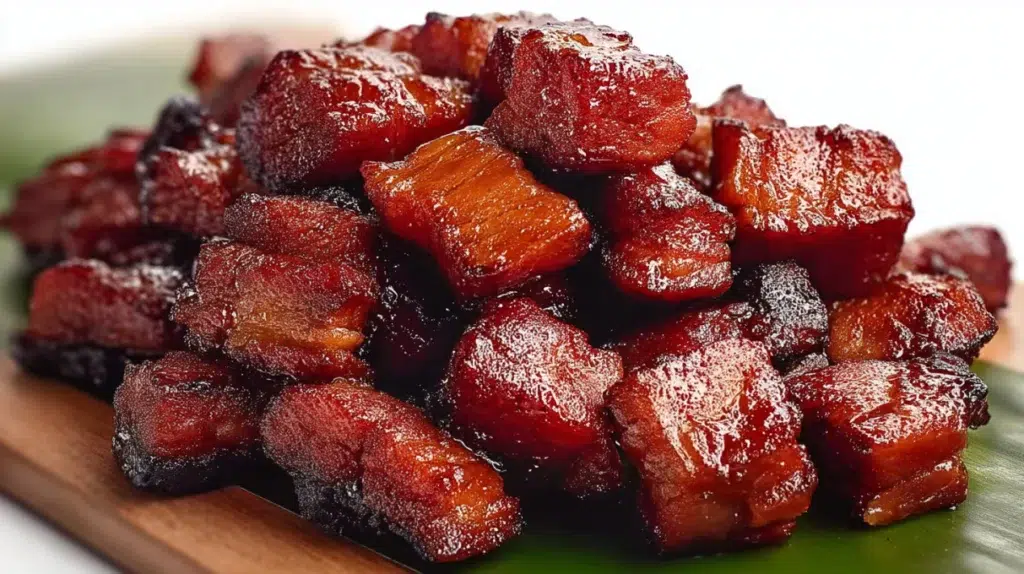
Why it simmers before it fries
Almost every other fried pork recipe goes straight from marinade to hot oil. Tocino doesn’t, it starts in water, which gently cooks the meat through before the caramelization happens. This two-step method solves a problem specific to tocino: the sugar content in the marinade is high enough that if you fry from raw, the outside caramelizes and potentially burns before the inside is cooked through.
Starting in water gives the meat time to cook fully at a lower temperature, then once the water evaporates the concentrated marinade caramelizes fast and evenly around already-cooked, already-tender pork.
Make it your own
Claire’s note
Marinate a double or triple batch and freeze portions in the marinade, tocino freezes beautifully uncooked for up to 3 months and goes straight from freezer to fridge the night before you want it. The Kapampangan region of the Philippines, considered the culinary capital of the country, is where tocino is most celebrated, their version traditionally leans slightly tangier and sometimes more garlicky than the standard sweet version. Chicken tocino follows the exact same method using boneless chicken thighs sliced thin; the cooking time is slightly shorter. Serve with fresh tomatoes alongside the garlic rice, their acidity cuts through the sweetness and makes the whole plate feel balanced.
Serve with
Filipino pork tocino is traditionally served as tocilog, alongside sinangag (garlic fried rice) and a fried egg. For more from the Filipino and Asian collections the complete Asian recipes guide has it all.
Add Filipino pork tocino to your weekly meal planner, cure a large batch on Sunday and have breakfast ready all week. And for more recipes, follow us on Pinterest.
Print
Filipino Pork Tocino
- Total Time: 1455 minutes
- Yield: 4 servings 1x
- Diet: Pork
Description
Delight in this sweet, garlicky Filipino pork tocino, perfect for breakfast served with garlic fried rice and a fried egg.
Ingredients
- 700g pork shoulder, sliced ¼-inch thin
- ⅓ cup brown sugar, packed
- 3 tablespoons soy sauce
- ¼ cup pineapple juice
- 1 tablespoon rice vinegar
- 5 cloves garlic, minced
- ½ teaspoon salt
- ¼ teaspoon black pepper
- 1 teaspoon annatto powder (achuete), optional
Instructions
- Make the cure and coat the pork. Combine the brown sugar, soy sauce, pineapple juice, vinegar, garlic, salt, pepper, and annatto powder if using in a large bowl. Stir until the sugar dissolves. Add the pork slices and mix thoroughly using your hands until every piece is evenly coated. Cover tightly and refrigerate for at least 24 hours, or up to 3 days.
- Cook the tocino. Arrange the cured pork in a single layer in a wide pan, work in batches if needed. Pour in just enough water to barely cover the meat. Bring to a boil over medium heat, then reduce to a steady simmer, turning the pork occasionally, until the water has fully evaporated, about 8–10 minutes.
- Caramelize. Once the water is gone, the marinade remaining in the pan will start to thicken and coat the pork. If the pork has enough fat, no extra oil is needed. Cook over medium heat, stirring and turning the pork constantly until the sauce caramelizes to a sticky glaze.
- Serve immediately. Transfer to a plate and serve hot as part of a tocilog, alongside garlic fried rice and a fried egg, with sliced fresh tomatoes on the side.
Notes
Tocino freezes beautifully uncooked for up to 3 months. Marinate a double or triple batch and freeze portions in the marinade for convenience.
- Prep Time: 1440 minutes
- Cook Time: 15 minutes
- Category: Main Course
- Method: Pan Frying
- Cuisine: Filipino
Nutrition
- Serving Size: 1 serving
- Calories: 350
- Sugar: 20g
- Sodium: 600mg
- Fat: 18g
- Saturated Fat: 6g
- Unsaturated Fat: 10g
- Trans Fat: 0g
- Carbohydrates: 12g
- Fiber: 0g
- Protein: 30g
- Cholesterol: 80mg