
⏱ Marinate:2 hrs, overnight 🔥Cook: 10 min 👤Serves: 4 🌡Heat: High
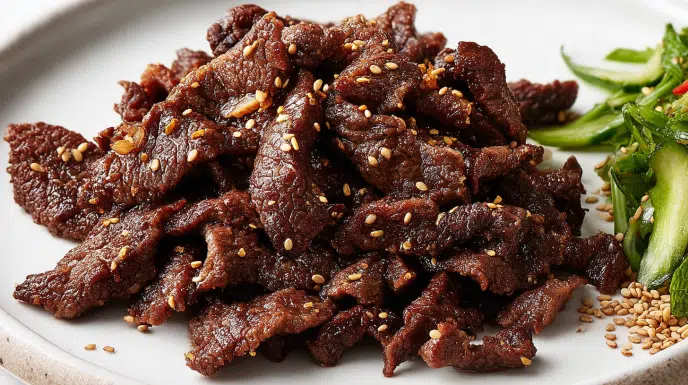
Korean bulgogi recipe, thinly sliced ribeye marinated in Asian pear, soy sauce, sesame oil, mirin, garlic and ginger, then cooked in a screaming hot pan until caramelized at the edges and impossibly tender. Bulgogi means “fire meat” in Korean. The name earns itself.
Ingredients
For the beef
- 1½ lbs (680g) ribeye steak, or top sirloin. Ribeye gives the most marbling and the best caramelization. Slice as thin as possible, 2–3mm against the grain. Freezing the steak for 30–45 minutes before slicing firms it up and makes thin slicing much easier. Or buy pre-sliced bulgogi beef from H Mart labeled “shabu shabu” or “hot pot” beef.
- 1 medium yellow onion, half blended into the marinade, half thinly sliced and added to the pan
- 4 scallions, cut into 2-inch pieces, added to the pan during cooking
- 4 oz (115g) shiitake mushrooms, optional but traditional. Sliced and cooked alongside the beef.
For the bulgogi marinade
- ½ Asian pear, grated or blended with its juice. The single most important ingredient in authentic bulgogi. The natural enzymes tenderize the beef from the outside in and the fruit sugar caramelizes in the hot pan. Available at H Mart and Asian grocery stores. Substitute: ½ regular Bosc pear, or ¼ cup unsweetened pineapple juice, or ½ kiwi.
- ¼ cup (60ml) low-sodium soy sauce
- 2 tablespoons brown sugar, or white sugar. Balances the soy and caramelizes in the pan.
- 2 tablespoons mirin, adds a specific sweet gloss that makes bulgogi taste Korean. Substitute: 1 tablespoon sake plus 1 teaspoon sugar.
- 1 tablespoon toasted sesame oil, the nutty backbone of every Korean marinade
- 5 cloves garlic, finely grated
- 1 teaspoon fresh ginger, finely grated
- ½ teaspoon black pepper
- 1 teaspoon gochugaru, optional for a gentle heat. Traditional in many versions.
- 1 tablespoon toasted sesame seeds
Step by step
- Slice the beef. Wrap the ribeye in plastic wrap and freeze for 30–45 minutes until slightly firm but not frozen solid. Slice across the grain as thinly as possible, aim for 2–3mm. Thin slices cook in 2 minutes and stay tender. Thick slices toughen before they caramelize.If buying pre-sliced beef: make sure it is fully thawed before marinating. Partially frozen beef crumbles when you try to massage in the marinade.
- Make the marinade. Grate the Asian pear and half the onion directly into a large bowl, keep all the juice. Add soy sauce, brown sugar, mirin, sesame oil, grated garlic, grated ginger, black pepper, gochugaru and sesame seeds. Stir until the sugar dissolves completely.Taste the marinade. It should be sweet, savory and fragrant. This is exactly what the finished bulgogi will taste like, adjust now rather than after cooking.
- Marinate. Add the sliced beef to the marinade. Use your hands to massage it through every slice, every surface should be coated. Thinly slice the remaining half onion and add it to the bowl too. Cover and refrigerate minimum 2 hours, overnight produces noticeably more tender, more flavored beef. Do not exceed 24 hours, the pear enzymes will start breaking down the proteins too aggressively.
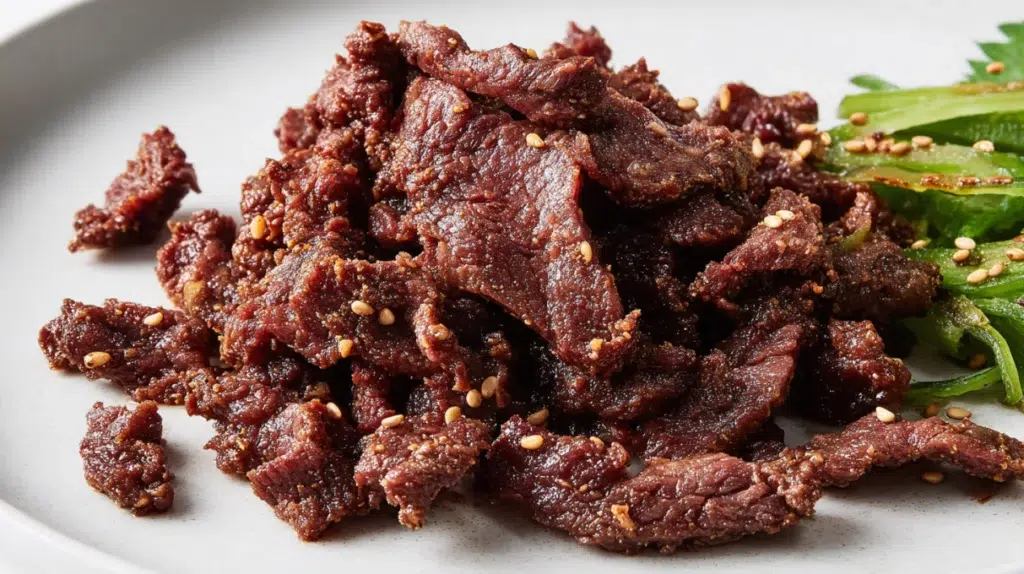
- Cook, the critical step. Remove the beef from the fridge 20 minutes before cooking. Heat a wide cast iron skillet or heavy pan over high heat until smoking hot at least 2 full minutes of preheating. Add a thin film of neutral oil. Add the beef and onion in a single layer work in batches. Do not crowd the pan. Cook for 2–3 minutes without stirring until the liquid evaporates and the edges begin to caramelize. Then stir and cook 1–2 more minutes. Add the scallion pieces and mushrooms in the final minute.Crowding is the single biggest mistake in bulgogi. Too much beef in the pan releases liquid and the beef steams instead of caramelizing. A crowded pan produces grey, cooked beef. A properly spaced pan produces dark, caramelized, deeply flavored bulgogi. Batch cook, it is worth the extra 5 minutes.
- Serve immediately. Bulgogi waits for no one, it is at its best the moment it leaves the pan. Serve over steamed short-grain rice with banchan alongside. Scatter extra sesame seeds and sliced scallion greens over the top.
The thing that makes it
Asian pear is the ingredient that separates authentic bulgogi from every imitation. It does three things: its enzymes tenderize the beef, its juice dilutes the soy so the marinade penetrates evenly, and its natural sugar caramelizes in the hot pan and creates the slightly charred, sweet edges that define great bulgogi.
The caramelization only happens if the pan is genuinely hot and the beef is not crowded. Heat the pan for 2 full minutes on high before anything goes in. This is non-negotiable.
Ways to eat Korean bulgogi
Claire’s note
The best bulgogi experience is the Korean BBQ wrap, a crisp perilla leaf or lettuce leaf, a spoonful of rice, a few slices of bulgogi, a smear of ssamjang and a sliver of raw garlic. Fold it closed and eat in one bite. Everything at once. This is the correct way to eat bulgogi and it will ruin you for eating it any other way. Bulgogi also works brilliantly over noodles, tucked into a kimbap roll, as a topping for bibimbap, or stuffed into a quesadilla with kimchi and mozzarella, the crossover version that sounds absurd and tastes extraordinary.
Serve with
Bulgogi belongs with steamed short-grain rice, kimchi, and a selection of banchan, small side dishes like pickled cucumber, spinach namul and bean sprouts. For the full Korean table the Korean recipes collection has the banchan, the kimchi, the samgyeopsal and everything else.
Add bulgogi to your weekly meal planner, marinate Sunday, cook Monday in 10 minutes. Leftovers go directly into fried rice Tuesday. And for more recipes, follow us on Pinterest.
Print
Korean Bulgogi
- Total Time: 135 minutes
- Yield: 4 servings 1x
- Diet: Gluten-Free
Description
Thinly sliced ribeye marinated in Asian pear, soy sauce, sesame oil, and cooked until caramelized and tender.
Ingredients
- 1½ lbs (680g) ribeye steak, or top sirloin
- 1 medium yellow onion (half blended into the marinade, half thinly sliced)
- 4 scallions, cut into 2-inch pieces
- 4 oz (115g) shiitake mushrooms, optional
- ½ Asian pear, grated or blended with juice
- ¼ cup (60ml) low-sodium soy sauce
- 2 tablespoons brown sugar
- 2 tablespoons mirin
- 1 tablespoon toasted sesame oil
- 5 cloves garlic, finely grated
- 1 teaspoon fresh ginger, finely grated
- ½ teaspoon black pepper
- 1 teaspoon gochugaru, optional
- 1 tablespoon toasted sesame seeds
Instructions
- Slice the beef. Wrap the ribeye in plastic wrap and freeze for 30–45 minutes until slightly firm but not frozen solid. Slice across the grain as thinly as possible, aiming for 2–3mm.
- Make the marinade. Grate the Asian pear and half the onion into a bowl, then add soy sauce, brown sugar, mirin, sesame oil, garlic, ginger, black pepper, gochugaru, and sesame seeds. Stir until the sugar dissolves.
- Marinate the beef. Add the sliced beef to the marinade, massaging it through every slice. Thinly slice the remaining half onion and add it to the bowl. Cover and refrigerate for a minimum of 2 hours or overnight.
- Cook the beef. Remove the beef from the fridge 20 minutes before cooking. Heat a skillet over high heat. Add oil, then the beef and onion in a single layer, working in batches. Cook for 2–3 minutes without stirring until caramelized. Add scallion and mushrooms in the last minute.
- Serve immediately over steamed rice with banchan. Scatter extra sesame seeds and sliced scallion greens on top.
Notes
For the best experience, serve bulgogi in a lettuce wrap with rice, ssamjang, and raw garlic.
- Prep Time: 15 minutes
- Cook Time: 10 minutes
- Category: Main Course
- Method: Stir-Frying
- Cuisine: Korean
Nutrition
- Serving Size: 1 serving
- Calories: 320
- Sugar: 6g
- Sodium: 600mg
- Fat: 16g
- Saturated Fat: 4g
- Unsaturated Fat: 10g
- Trans Fat: 0g
- Carbohydrates: 20g
- Fiber: 2g
- Protein: 25g
- Cholesterol: 60mg