⏱ Active: 1 hr 🔥Simmer: 4–6 hrs 👤Serves: 6 🌍Origin: Northern Vietnam
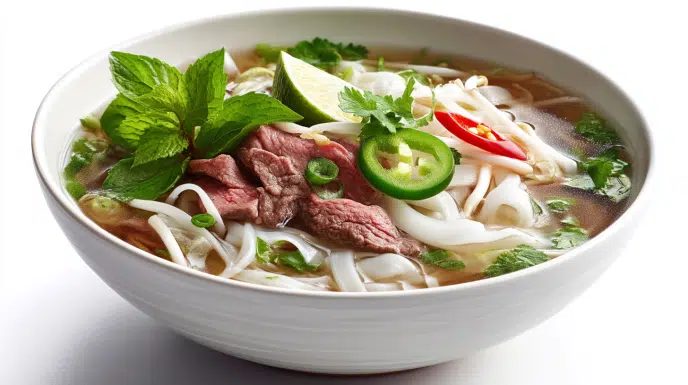
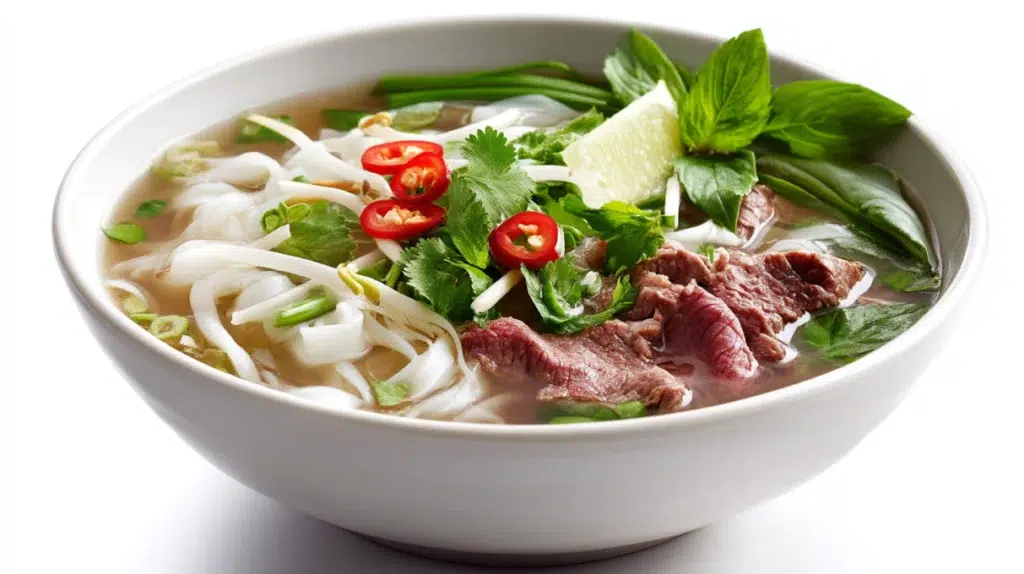
Pho bo recipe is the Vietnamese beef noodle soup that originated in northern Vietnam in the early 20th century and became over the following hundred years, one of the most beloved bowls of food on earth. Beef bones blanched and rinsed for clarity, simmered for hours with charred onion and ginger and a toasted spice bag of star anise, cinnamon, cloves, cardamom and coriander, seasoned with fish sauce and rock sugar into a broth that is simultaneously complex and clean ,ladled boiling hot over flat rice noodles, sliced cooked brisket and wafer-thin raw beef that cooks to pink perfection in the bowl. It takes a full day. There is no shortcut that produces the same result. It is worth every hour.
Ingredients
For the broth
- 3 lbs (1.4kg) beef bones, knuckle bones, leg bones or a combination. Marrow bones add richness; knuckle bones add collagen and body. Ask your butcher to cut them into manageable pieces. The bones are the entire structure of the broth, their collagen dissolves during the long simmer and produces the characteristic silky body that distinguishes great pho from thin soup.
- 1 lb (450g) beef brisket, tied with kitchen twine to hold its shape during cooking. Added to the pot with the bones and removed after 1.5–2 hours when tender. Sliced and served as the cooked beef topping. Beef shank is equally traditional and produces a fattier, more deeply flavoured topping.
- 1 large yellow onion, halved. Charred cut-side down over an open flame or under the broiler until deeply blackened. The char adds a smoky sweetness that is irreplaceable in pho broth.
- 3-inch piece fresh ginger, halved lengthwise. Charred on the cut side alongside the onion. Confirmed by My Viet Kitchen: the smoky sweetness from charred onions and ginger is irreplaceable, don’t skip this step, it’s what separates good pho from great pho.
- ½ lb (225g) white daikon radish, optional but traditional. Added to the broth and simmered throughout. Absorbs impurities and adds a very subtle sweetness. Remove and discard before serving.
- 3 tablespoons fish sauce, added in the final seasoning stage. The primary salt of pho broth, use Three Crabs, Tiparos or Mega Chef brand.
- 1 oz (30g) rock sugar, the traditional sweetener of pho available at Asian grocery stores. Substitute: 1 tablespoon granulated sugar. Balances the fish sauce and rounds the broth.
- 1 teaspoon salt, added with the initial water
- 12 cups (3 liters) cold water
For the pho spice bag
- 4 whole star anise, the defining spice of pho, its anise note is the most recognisable aroma in the bowl
- 2 cinnamon sticks, Saigon/Vietnamese cinnamon (cassia) if available, more intense and peppery than Ceylon. Break into pieces for better toasting.
- 6 whole cloves
- 3 black cardamom pods, lightly cracked. Black cardamom is smoky and camphoraceous, completely different from green cardamom. Available at Asian and Indian grocery stores. It is the spice most people cannot identify in pho but miss when it is absent.
- 1 teaspoon coriander seeds
- 1 teaspoon fennel seeds, optional but used in the Southern Vietnamese version and most restaurant pho
For the bowl
- 14 oz (400g) dried flat rice noodles (bánh phở), medium width, 3–5mm. Soaked in cold water for 30 minutes before cooking, then blanched in boiling water for 30–60 seconds. Do not overcook, pho noodles continue absorbing broth in the bowl.
- ½ lb (225g) beef eye of round or sirloin, frozen for 30 minutes before slicing paper-thin against the grain. This is the raw beef placed in the bowl, the boiling broth poured over cooks it to medium-rare in under 30 seconds. Freeze slightly for cleanest thin slices.
- The cooked brisket, sliced thin against the grain after resting
- ½ small white onion, sliced paper-thin and soaked in cold water to reduce sharpness
- 3 scallions, thinly sliced
The garnish tray (served at the table)
- Fresh Thai basil, on the stem. Diners tear leaves directly into the broth.
- Fresh bean sprouts
- Fresh cilantro and culantro (ngo gai / sawtooth herb), if available
- 2 limes, cut into wedges
- 2–3 red or green Thai chilies, thinly sliced
- Hoisin sauce, for dipping the beef, not stirring into the broth
- Sriracha, for heat
Step by step
- Blanch and rinse the bones, the clarity step. Place the beef bones in a large pot. Cover with cold water. Bring to a full boil over high heat. Boil vigorously for 10 minutes, the water will turn grey and foam will rise. Drain completely. Rinse every bone under cold running water. Scrub away any dark impurities. Clean the pot. Return the rinsed bones to the clean pot.This blanching step is non-negotiable for a clear, clean-tasting pho broth. The initial boil draws out blood, bone marrow particles and proteins that would otherwise cloud the broth and give it a murky, slightly gamy flavour. After blanching and rinsing, the finished broth will be golden, clear and beautifully clean.
- Char the aromatics. Place the halved onion and halved ginger cut-side down directly over a gas flame or under the oven broiler. Char for 10–15 minutes until the cut surfaces are deeply blackened with patches of charred colour, not lightly browned. Rinse briefly under cold water to remove any loose black bits.
- Toast and bag the spices. In a dry skillet over medium heat, toast the star anise, cinnamon sticks, cloves, cracked black cardamom pods, coriander seeds and fennel seeds for 2–3 minutes, stirring constantly, until very fragrant. Remove immediately, they burn in seconds. Place in a muslin spice bag, a large tea filter or wrapped in cheesecloth tied with kitchen twine.
- Build the broth. To the pot of rinsed bones, add the tied brisket, charred onion, charred ginger, daikon radish, spice bag, 1 teaspoon salt and 12 cups of cold water. Bring to a boil over high heat. Reduce immediately to the lowest simmer, the surface should barely ripple, not actively boil. Skim any foam that rises in the first 30 minutes.A gentle simmer, not a boil is what produces a clear, clean broth. An aggressive boil agitates the particles in the broth and emulsifies the fat, producing a cloudy, slightly greasy result. Keep the heat as low as possible once the simmer is established and resist the urge to increase it.
- Remove the brisket, continue simmering. After 1.5–2 hours, test the brisket, it should be just tender when pierced with a chopstick or skewer. Remove it, shock in ice water for 5 minutes (this prevents it turning grey), then refrigerate. Continue simmering the bones for 3–4 more hours total, or as long as you have. The longer the simmer, the more collagen and depth dissolve into the broth, 4 hours is the minimum, 6 hours produces a noticeably richer result.
- Strain and season. Strain the broth through a fine-mesh sieve lined with cheesecloth into a clean pot. Discard everything solid. The broth should be clear golden-amber. Skim any fat from the surface, leave a little for flavour, remove most. Season with fish sauce, rock sugar and salt. Taste and adjust , the broth should be deeply savoury, very slightly sweet and have a clear, clean finish. It should taste powerful rather than flat. Return to a rolling boil immediately before serving. Season in stages, add 2 tablespoons of fish sauce, stir, taste. Add more if needed. The broth seasoned too timidly will taste flat in the bowl, pho broth should taste almost too strong on its own because the noodles and raw beef dilute it in the bowl.
- Cook noodles and assemble bowls. Soak dried rice noodles in cold water for 30 minutes. Drain. Blanch in boiling water for 30–60 seconds, they should be tender but still have slight resistance. Drain and divide between warmed serving bowls. Slice the brisket thin against the grain. Slice the raw beef paper-thin. Arrange the brisket slices and raw beef slices over the noodles. Top with thin raw onion slices and scallion. Ladle the boiling broth directly over the beef, the raw beef should turn from red to pale pink within 30 seconds. Serve immediately with the full garnish tray alongside.
The four things that matter
Blanch the bones first, the grey water that comes out is what clouds lesser pho broths. Ten minutes of blanching and thorough rinsing produces the clear, golden broth that makes pho beautiful.
Char the onion and ginger until deeply black, not lightly browned. The char is where the smoky sweetness comes from. It is what separates good pho from great pho.
Simmer at the lowest possible heat, barely rippling, never boiling. A boiling broth is cloudy and greasy. A simmering broth is clear and clean.
Season the broth stronger than seems right, the noodles and raw beef dilute the broth in the bowl. Taste it from the pot and then add 10% more fish sauce than your instinct says.
The pressure cooker option
Claire’s note
A pressure cooker produces a very good pho bo in 90 minutes, about 80% of the result of the 6-hour version. Follow all the same preparation steps: blanch and rinse the bones, char the aromatics, toast the spices. Then pressure cook on high for 90 minutes. Natural release for 20 minutes. Strain, season and serve as above. The broth will not be as deeply layered as the slow-simmered version, it will lack some of the subtle background notes that develop over long simmering but it will still be a genuinely excellent bowl of pho. Make the slow version on a weekend. Make the pressure cooker version on a weeknight when the craving hits but the time does not exist.
Serve with
Pho bo is its own complete world, the broth, the noodles, the beef and the garnish tray together are the meal. Serve with a full garnish tray at the table so each person can build their bowl, basil and bean sprouts stirred in, lime squeezed over, hoisin on the side for dipping the beef. For more from the Vietnamese and broader Asian collection the complete Asian recipes guide have everything.
Add pho bo to your weekly meal planner, make the broth Saturday, refrigerate overnight for the fat to solidify and skim easily, serve Sunday. The broth freezes for 6 months. And for more recipes, follow us on Pinterest.
Print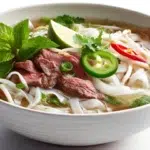
Pho Bo (Vietnamese Beef Noodle Soup)
- Total Time: 300 minutes
- Yield: 6 servings 1x
- Diet: Paleo
Description
A beloved Vietnamese beef noodle soup, Pho Bo features a rich broth made from beef bones, charred onion, and ginger, with tender noodles and fresh herbs.
Ingredients
- 3 lbs (1.4kg) beef bones (knuckle bones, leg bones, marrow bones)
- 1 lb (450g) beef brisket
- 1 large yellow onion, halved
- 3-inch piece fresh ginger, halved
- ½ lb (225g) white daikon radish (optional)
- 3 tablespoons fish sauce
- 1 oz (30g) rock sugar
- 1 teaspoon salt
- 12 cups (3 liters) cold water
- 4 whole star anise
- 2 cinnamon sticks
- 6 whole cloves
- 3 black cardamom pods
- 1 teaspoon coriander seeds
- 1 teaspoon fennel seeds (optional)
- 14 oz (400g) dried flat rice noodles (bánh phở)
- ½ lb (225g) beef eye of round or sirloin
- ½ small white onion, sliced
- 3 scallions, thinly sliced
- Fresh Thai basil
- Fresh bean sprouts
- Fresh cilantro and culantro (if available)
- 2 limes, cut into wedges
- 2–3 red or green Thai chilies, thinly sliced
- Hoisin sauce for dipping
- Sriracha for heat
Instructions
- Blanch the bones: Place the beef bones in a large pot. Cover with cold water. Bring to a full boil over high heat. Boil for 10 minutes. Drain and rinse the bones under cold water to remove impurities.
- Char the aromatics: Char the halved onion and ginger cut-side down over an open flame or under a broiler until deeply blackened.
- Toast the spices: In a dry skillet, toast star anise, cinnamon sticks, cloves, cracked black cardamom, coriander seeds, and fennel seeds over medium heat for 2–3 minutes until fragrant. Place in a spice bag.
- Add the rinsed bones to a pot with the tied brisket, charred onion, charred ginger, daikon radish, spice bag, salt, and cold water. Bring to a boil, then reduce to a low simmer.
- Remove the brisket after 1.5–2 hours when tender, shock in ice water, then refrigerate. Simmer the broth for an additional 3–4 hours.
- Strain the broth through a fine-mesh sieve lined with cheesecloth. Dress with fish sauce, rock sugar, and salt to taste.
- Cook the noodles and assemble bowls: Soak noodles in cold water, then blanch in boiling water briefly. Divide between bowls and layer with brisket, raw beef, and garnishes.
- Ladle the hot broth over the noodles and beef, serve immediately with garnishes on the side.
Notes
For a quicker version, use a pressure cooker to simmer for 90 minutes. Skim fat from cooling broth for clarity.
- Prep Time: 60 minutes
- Cook Time: 240 minutes
- Category: Soup
- Method: Simmering
- Cuisine: Vietnamese
Nutrition
- Serving Size: 1 bowl
- Calories: 450
- Sugar: 6g
- Sodium: 770mg
- Fat: 18g
- Saturated Fat: 6g
- Unsaturated Fat: 10g
- Trans Fat: 0g
- Carbohydrates: 40g
- Fiber: 2g
- Protein: 30g
- Cholesterol: 80mg