⏱ Prep: 15 min 🕐Rise :1 hour 🔥Cook: 20 min 👤Makes: 4 flatbreads
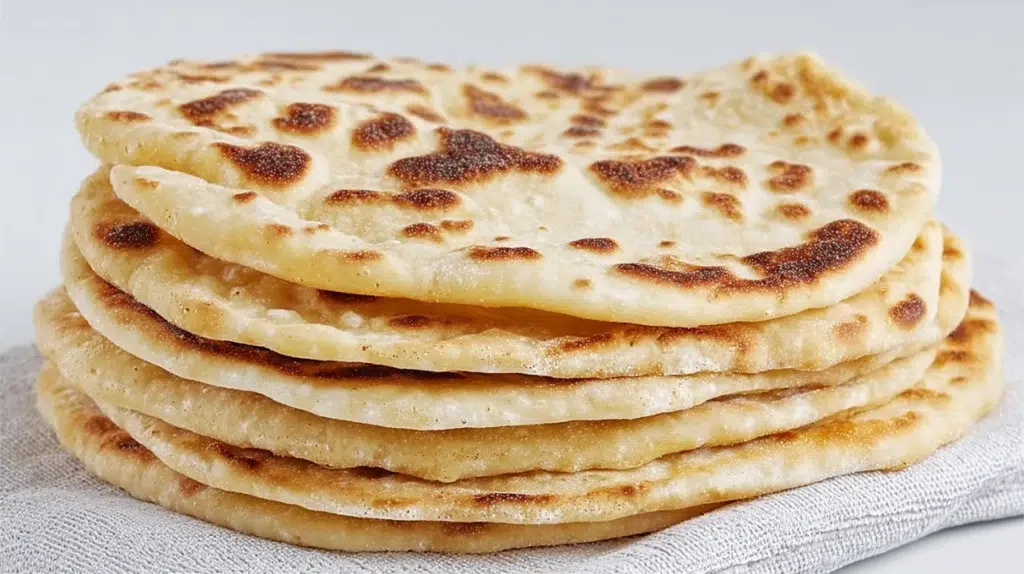
Turkish flatBread recipe, specifically bazlama, the thick, pillowy flatbread cooked on a stovetop skillet that is thicker than pita, softer than naan and better than both for tearing, dipping and wrapping. Six ingredients. One hour of rise time. Five minutes per flatbread in the pan. The result is bread that puffs dramatically, leaves golden spots on both sides and stays impossibly soft even after it cools.
I made this for the first time in an apartment in Istanbul with a cast iron pan and no rolling pin. I used a wine bottle. It still worked perfectly. Turkish village bread is forgiving like that.
Ingredients
- 2½ cups (315g) all-purpose flour, plus extra for dusting. Bread flour works too, slightly chewier result.
- 1 teaspoon instant yeast, or active dry yeast, proofed first in warm water for 10 minutes until foamy
- 1 teaspoon sugar, feeds the yeast and adds a subtle sweetness
- 1 teaspoon salt
- ½ cup (120g) plain full-fat Greek yogurt, room temperature. The yogurt is what makes bazlama distinctly softer and more tender than other flatbreads. Do not skip it.
- ½ cup (120ml) warm water, 105°F–115°F (40°C–46°C). Warm enough to activate the yeast, not hot enough to kill it.
- 2 tablespoons olive oil, plus extra for brushing the finished bread
Optional finish: melted butter brushed over the hot bread immediately after cooking. Traditional and highly recommended.
How to make Turkish flatBread
- Activate the yeast. Combine the warm water, sugar and yeast in a small bowl. Stir and leave for 5–10 minutes until foamy on the surface. If it does not foam, the yeast is dead or the water was too hot, start again.Even with instant yeast, this activation step is worth doing, it confirms the yeast is alive before you commit to the full dough.
- Make the dough. Add the flour and salt to a large mixing bowl. Make a well in the center. Pour in the yeast mixture, yogurt and olive oil. Mix with a wooden spoon until a shaggy dough forms. Turn out onto a lightly floured surface and knead for 8–10 minutes until the dough is smooth, soft and slightly tacky but not sticky. It should feel like an earlobe, soft, pliable, yielding.Stand mixer option: use the dough hook on medium speed for 6–8 minutes.
- First rise. Place the dough in a lightly oiled bowl and cover with a damp kitchen towel or plastic wrap. Leave in a warm, draft-free spot for 1 hour until doubled in size. The inside of an off oven is perfect.
- Divide and shape. Punch the dough down gently. Turn out onto a lightly floured surface. Divide into 4 equal pieces, roughly 4 oz (115g) each. Roll each piece into a ball. Cover with a clean towel and rest 10 minutes. This rest relaxes the gluten and makes rolling significantly easier.
- Roll out. Working one piece at a time, use a rolling pin to roll each ball into a round about 8 inches (20cm) in diameter and ¼ inch (6mm) thick. Keep the thickness consistent, uneven thickness means some parts will be overcooked before others puff.The second rise happens naturally as you roll and rest the dough circles before cooking. Leave them covered on the counter for 10 minutes before the pan goes on.
- Cook. Heat a heavy skillet, cast iron pan or griddle over medium heat. No oil in the pan. When the pan is hot, place one dough round in the skillet. Cook for 3–4 minutes until bubbles appear all over the surface and the underside is golden brown with darker spots. Flip and cook 2–3 minutes more. The bread should puff significantly, sometimes dramatically, which means the steam inside is doing its job.Resist pressing the bread down. The puff is the point, it creates the characteristic soft, airy interior. Let it happen.
- Finish. Remove from the pan. Immediately brush with melted butter or olive oil while still hot. Stack the finished flatbreads under a clean kitchen towel as you work, keeping them covered traps steam and keeps them soft as they cool. Repeat with remaining dough rounds.
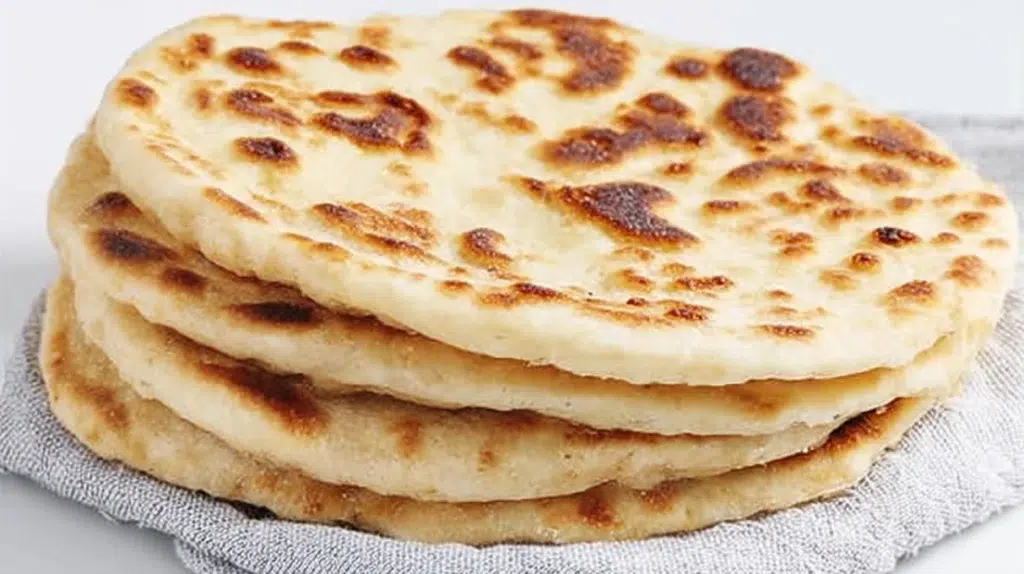
Why this Turkish flatBread is different
The yogurt is the answer to everything that makes bazlama different from any other flatbread. It adds a slight tang, yes, but more importantly the lactic acid in the yogurt interacts with the gluten in the flour to produce a more tender, more extensible dough that puffs higher in the pan and stays softer longer after cooking. This is why bazlama is better the next day than pita is, the yogurt keeps the interior moist in a way a water-only dough cannot. Use full-fat Greek yogurt. The fat content matters. Low-fat produces a noticeably drier result.
A shortcut that works
Claire’s note
If you are short on time, skip the first rise and go straight to dividing and shaping after kneading. The bread will be slightly less airy and lighter in texture but still excellent, particularly if you are making it to serve alongside a soup or stew where the bread is a vehicle rather than the star. The yogurt compensates for much of what the long rise provides. The full 1-hour rise is worth it when you have the time. The shortcut is worth knowing when you do not.
Serve with
Bazlama is the natural companion to anything in the Turkish recipes collection, alongside mezze spreads, scooped into muhammara, torn into bowls of soup, or eaten plain while still warm from the pan with nothing but butter. In a Turkish breakfast spread, olives, cheese, tomato, cucumber, honey and tea, it is the centerpiece everything else orbits around.
Add it to your weekly meal planner, make a double batch and freeze half for the week. And for more recipes, follow us on Pinterest.
Print
Turkish flatBread Recipe: Soft and Fluffy Bazlama Flatbread
- Total Time: 1 hour 35 minutes
- Yield: 4 flatbreads 1x
Description
This Turkish flatBread recipe makes bazlama, the thick pillowy flatbread that puts pita to shame. Soft, slightly tangy from yogurt, cooked in a skillet in 5 minutes and impossibly good straight from the pan with butter.
Ingredients
- 2½ cups (315g) all-purpose flour, plus extra for dusting
- 1 teaspoon instant yeast
- 1 teaspoon sugar
- 1 teaspoon salt
- ½ cup (120g) plain full-fat Greek yogurt, room temperature
- ½ cup (120ml) warm water, 105°F–115°F
- 2 tablespoons olive oil, plus extra for brushing
Optional finish:
- 2 tablespoons melted butter for brushing immediately after cooking
Instructions
- Combine warm water, sugar and yeast in a small bowl. Stir and leave 5–10 minutes until foamy on the surface. If it does not foam the yeast is dead, start again.
- Add flour and salt to a large bowl. Make a well in the center. Add the yeast mixture, yogurt and olive oil. Mix until a shaggy dough forms. Turn out onto a lightly floured surface and knead for 8–10 minutes until smooth, soft and slightly tacky but not sticky.
- Place in a lightly oiled bowl and cover with a damp kitchen towel. Leave in a warm draft-free spot for 1 hour until doubled in size.
- Punch the dough down. Divide into 4 equal pieces, roughly 4 oz (115g) each. Roll each piece into a ball. Cover with a clean towel and rest 10 minutes.
- Roll each ball into a round approximately 8 inches (20cm) in diameter and ¼ inch (6mm) thick. Cover and rest 10 more minutes before cooking.
- Heat a heavy skillet or cast iron pan over medium heat, no oil. When hot, place one dough round in the skillet. Cook 3–4 minutes until bubbles cover the surface and the underside is golden brown with darker spots. Flip and cook 2–3 minutes more. Do not press down, the puff is the point.
- Remove from pan. Immediately brush with melted butter while still hot. Stack under a clean kitchen towel to keep soft. Repeat with remaining dough rounds.
Notes
Use full-fat Greek yogurt, not low-fat. The fat content keeps the bread tender and moist long after it cools.
Shortcut: skip the first rise and go straight from kneading to dividing. Less airy but still excellent for serving alongside soups and stews.
Store at room temperature in a sealed bag for 2 days. Reheat in a dry skillet 1 minute per side.
Freeze for up to 3 months. Reheat from frozen in a 350°F (175°C) oven for 8–10 minutes wrapped in foil.
- Prep Time: 15 minutes
- Rise Time: 1 hour
- Cook Time: 20 minutes
- Category: Bread / Flatbread / Side
- Cuisine: Turkish, Middle Eastern
Nutrition
- Serving Size: per flatbread
- Calories: 320 kcal
- Sugar: 2g
- Sodium: 590mg
- Fat: 8g
- Saturated Fat: 1g
- Carbohydrates: 52g
- Fiber: 2g
- Protein: 9g