Okay. We need to talk about this upfront because I know what most people think of when they hear “couscous”, the box you pour boiling water over, wait five minutes, fluff with a fork, and serve. I’ve done it. You’ve done it. It’s fine. It’s quick. It works in a pinch.
But it is not this.
Real Moroccan couscous, the kind Fatima made that Friday, the kind that’s been cooked the same way for centuries, is steamed. Twice. Over the broth of the stew cooking beneath it. This process transforms the tiny semolina grains from something that’s merely convenient into something extraordinary, light, fluffy, each grain separate and delicate, with a depth of flavor from the steam that you simply cannot get from boiling water.
The difference in texture is significant. The difference in flavor is even more so.
Do you need a couscoussier, the traditional two-part Moroccan steaming pot, to make this? No. A regular pot with a steamer basket or colander that fits snugly on top works perfectly. I’ll explain exactly how in the method below.
Does it take longer than the box kind? Yes. About two hours total, though the active cooking time is maybe 35 minutes. The rest is the pot doing its work while you do yours.
Is it worth it? Ask Fatima.
Ingredients
Serves 6-8 | Prep time: 25 minutes | Cook time: 1 hour 45 minutes | Total: ~2 hours 15 minutes
For the couscous:
- 500g (about 3 cups) medium-grain couscous, not instant, not fine grain
- 3 tablespoons olive oil
- 1 teaspoon salt
- 1 teaspoon ground cinnamon
- 2 tablespoons unsalted butter
For the broth and vegetables:
- 3 tablespoons olive oil
- 2 large onions, roughly chopped
- 4 cloves garlic, minced
- 500g (about 1 lb) lamb shoulder or bone-in chicken thighs, optional, omit for vegetarian version
- 1 teaspoon ground ginger
- 1 teaspoon ground turmeric
- 1 teaspoon ground cumin
- 1 teaspoon sweet paprika
- ½ teaspoon ground cinnamon
- ½ teaspoon black pepper
- 1½ teaspoons salt
- 8-10 saffron threads, bloomed in 2 tablespoons warm water
- 1.5 liters (6 cups) water or chicken/vegetable stock
- 400g (14 oz) canned chickpeas, drained and rinsed
- 2 medium turnips, peeled and quartered
- 3 medium carrots, peeled and cut into large chunks
- 2 medium zucchini, cut into large chunks
- ¼ head of cabbage, cut into wedges
- 300g (about 10 oz) butternut squash or pumpkin, cut into large chunks
- 1 large tomato, quartered
- Small bunch fresh cilantro, tied together
- Small bunch flat-leaf parsley, tied together
For the caramelized onion topping (tfaya):
- 3 large onions, thinly sliced
- 3 tablespoons olive oil
- 1 tablespoon unsalted butter
- ½ cup (75g) golden raisins
- ¼ cup (35g) toasted almonds
- 1 tablespoon honey
- 1 teaspoon ground cinnamon
- ½ teaspoon ground ginger
- Pinch of salt
Couscous holds such deep cultural significance in North Africa that UNESCO added it to its list of Intangible Cultural Heritage of Humanity in 2020
How to Make Authentic Moroccan Couscous
Step 1: Start the Broth (15 minutes active)
Heat 3 tablespoons of olive oil in the bottom pot of your couscoussier, or your largest heavy pot, over medium-high heat. If you’re using meat, add it now and brown on all sides, about 8 minutes. Remove and set aside. If you’re making this vegetarian, skip straight to the onions.
Add the chopped onions and cook for 10 minutes, stirring occasionally, until soft and golden. Add the garlic and all the dry spices, ginger, turmeric, cumin, paprika, cinnamon, black pepper, salt, and stir for 2 minutes until fragrant. Add the saffron water, the stock, and the browned meat if using. Bring to a boil, then reduce to a strong simmer.
Add the chickpeas, the fresh herb bundles tied with kitchen string (you’ll fish these out later), and the firmest vegetables, turnips and carrots. These need the longest cook time so they go in first.
Step 2: First Couscous Steam (25 minutes)
While the broth is getting started, prepare your couscous for the first steam. Put the dry couscous in a large bowl. Drizzle with 3 tablespoons of olive oil and toss to coat every grain. Add 1 teaspoon of salt and ½ teaspoon of cinnamon. Rub the couscous between your palms to break up any clumps and make sure everything is evenly coated.
Now, this is important, don’t add any water. The couscous is going to steam, not boil. Trust the process.
Place your steamer basket or colander over the simmering broth pot. The bottom of the basket should not touch the liquid, you want steam, not submersion. Add the couscous to the steamer in a loose mound, don’t pack it down, you want the steam to circulate through it freely.
Steam uncovered for 20-25 minutes, until the couscous has softened and swelled noticeably.
Step 3: First Couscous Rest and Fluff
Remove the steamer basket from the pot. Tip the couscous into your large bowl. It will be clumped together, this is normal and exactly what’s supposed to happen at this stage.
Pour about ½ cup (120ml) of cold water over the couscous, a splash at a time, tossing and separating the grains with a fork (or your hands, I use my hands, it’s faster and more effective). The cold water stops the cooking and helps separate the grains. Keep working it until every grain is separate and there are no lumps.
Let it rest for 10 minutes. Meanwhile, add the remaining vegetables to the broth, zucchini, cabbage, squash, and tomato. These softer vegetables need less time.
Step 4: Second Steam (20 minutes)
Return the couscous to the steamer basket, again in a loose mound, not packed, and steam for another 20 minutes over the still-simmering broth. This second steam is what gives the couscous its final silky, light texture.
This step. This is what makes the difference. Don’t skip it. Don’t be tempted to just add boiling water and call it done after the first steam. The second steam is the whole point.
Step 5: Make the Caramelized Onion Topping (Tfaya)
While the couscous is on its second steam, make the tfaya, the caramelized onion and raisin topping that goes over the finished dish. This is the detail that takes the whole thing from very good to unforgettable.
Heat the olive oil and butter in a skillet over medium heat. Add the sliced onions and cook, stirring occasionally, for 20-25 minutes until they are deeply golden and caramelized, genuinely caramelized, not just softened. Add the raisins, honey, cinnamon, ginger, and salt. Cook for another 5 minutes, stirring, until the raisins have plumped and the whole thing is glossy and fragrant.
Add the toasted almonds just before serving so they stay crunchy.
This tfaya, I can’t stress this enough. The sweetness of the caramelized onions and raisins against the savory, spiced couscous and broth is one of those combinations that sounds odd and tastes absolutely otherworldly. Fatima put a very large amount of tfaya on my portion. She was right to do so.
Step 6: Final Fluff and Assemble
Remove the couscous from the steamer. Tip into your large bowl. Add the butter and toss through until it melts and every grain is glossy. Taste, adjust salt if needed.
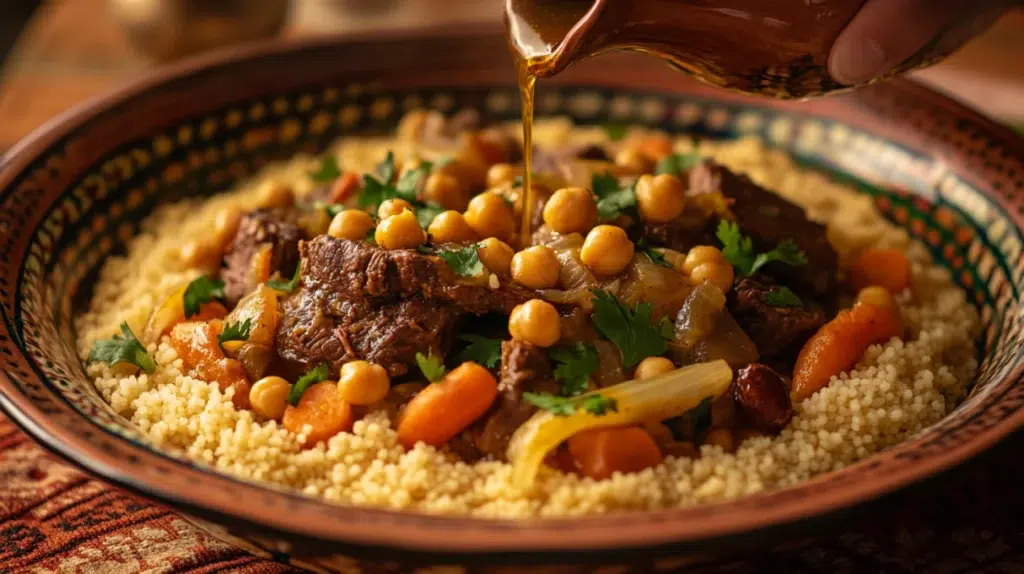
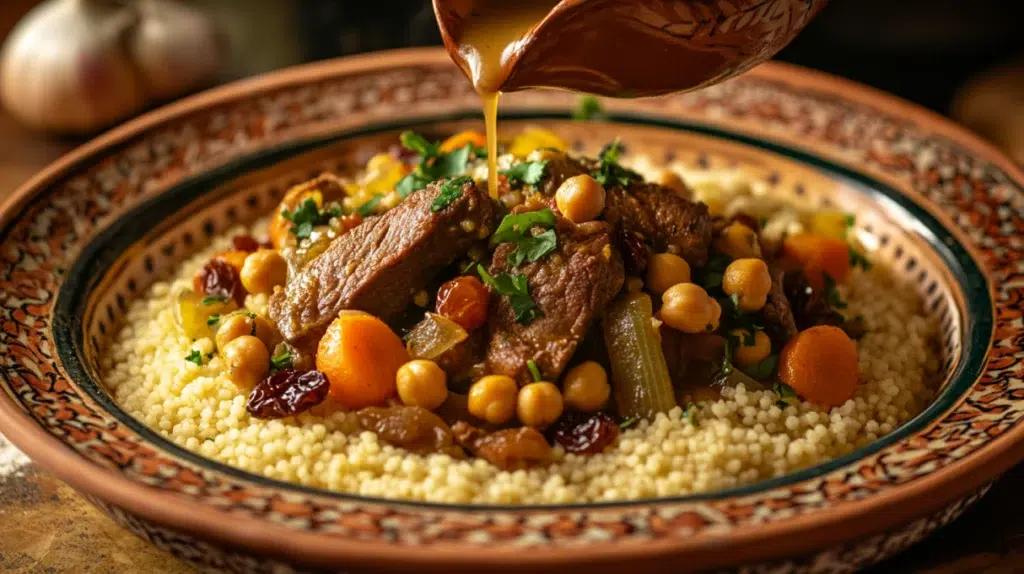
Mound the couscous onto a large round serving platter or into a wide, deep bowl. Make a well in the center. Use a slotted spoon to remove the vegetables from the broth and arrange them around and over the couscous. If using meat, place it in the center. Ladle enough broth over everything to moisten, not drown, the couscous. You want it fragrant and flavorful, not swimming.
Top generously with the tfaya, the caramelized onions, raisins, and almonds. Scatter with fresh cilantro. Bring the remaining broth to the table in a small pitcher so people can add more as they eat.
Step 7: How to Serve It the Moroccan Way
Traditionally, couscous is served in the communal pot or platter in the center of the table. Everyone eats from the section directly in front of them, using a spoon or, in more traditional settings, their right hand, rolling small amounts of couscous into a ball and lifting it to their mouth. The Friday couscous is a slow meal. A conversation meal. Nobody is rushing anywhere.
In my Nashville kitchen, I serve it in the platter and give everyone their own bowl to scoop into. The spirit is the same, communal, generous, unhurried. Which, on a Friday afternoon, is exactly how dinner should be.
Claire’s Notes: What I Learned the Hard Way
On the couscous grain size: Use medium-grain couscous. Fine grain cooks too fast and turns mushy. Coarse grain takes longer and can end up gummy if you’re not careful. Medium is the sweet spot for this method.
On the water in Step 3: Don’t add too much. A little cold water at a time, tossing constantly, until the grains are separate. Add too much and the couscous gets heavy and wet before the second steam.
On the vegetables: Cut everything big, larger than you think. The vegetables cook for a long time in the broth and smaller pieces will fall apart. Big rustic chunks are correct and traditional.
On making it ahead: The couscous is best made and served immediately. However the broth, vegetables, and tfaya can all be made a day ahead and reheated gently. Then do both steams on the day you’re serving.
On the vegetarian version: Simply omit the meat and use vegetable stock instead of chicken stock. This dish is extraordinary as a vegetarian main, the chickpeas provide plenty of protein and heft. See my full Moroccan vegetarian recipes guide for more meat-free options from this cuisine.
On leftovers: Store the couscous separately from the broth and vegetables. Reheat the couscous with a splash of water in a covered pot over low heat, or in the microwave with a damp paper towel over the top. It reheats well and makes excellent leftovers for lunch the next day.
Frequently Asked Questions
Do I need a couscoussier?
No. A regular large pot with a steamer basket or colander that fits snugly over the top works perfectly. The key is that the bottom of the steamer doesn’t touch the liquid and the steam can circulate freely through the couscous. If your colander has large holes, line it with cheesecloth or a clean kitchen towel.
Can I use instant couscous for this recipe?
Technically yes but you lose most of what makes this dish special. The double-steaming process is what gives traditional Moroccan couscous its extraordinary texture. If you use instant couscous, you’re essentially making a different, simpler, dish. It’ll still taste good. But it won’t be this.
What’s the difference between Moroccan couscous and regular couscous?
In Morocco, couscous refers specifically to hand-rolled semolina that is steamed, often multiple times, over a fragrant broth. “Regular” couscous sold in most Western grocery stores is pre-cooked and dried, designed to be reconstituted with boiling water. Same base ingredient, completely different product and cooking method.
Can I make this without the tfaya topping?
You can. But please don’t. The tfaya, the caramelized onions with raisins and almonds, is what takes this from a very good dish to an extraordinary one. It takes 25 minutes and transforms the whole thing.
How spicy is this?
Not spicy at all in the hot sense. Moroccan couscous is warmly spiced, cinnamon, ginger, cumin, turmeric, but none of those are hot spices. This is accessible for the whole family including kids.
More From the Moroccan Recipes Collection
This couscous is the Friday centerpiece, but Moroccan cuisine has so much more to explore. Head back to the complete Moroccan recipes guide for everything, or start with these:
- Moroccan Chicken Tagine with Preserved Lemon and Olives: the weeknight flagship
- Complete Moroccan Spice Guide: Ras el Hanout and Everything You Need
- The Best Moroccan Vegetarian Recipes
- Moroccan Breakfast Recipes: Msemen, Baghrir & Mint Tea