Korean recipes are having a moment in American home kitchens, and if you have landed here, you already know why.
Maybe it was the kimchi you tasted at a friend’s house that tasted like nothing you’d ever experienced. Maybe it was Korean fried chicken that made you question every other fried chicken you’d ever eaten. Maybe it was a bowl of bibimbap at a Korean restaurant that made you want to understand how something so simple could taste so completely alive. Whatever brought you here, welcome. You are in the right place.
Korea’s culinary tradition stretches back thousands of years, a sophisticated, deeply intentional food culture built on fermentation, balance, bold flavors, and a philosophy of eating that treats food as both nourishment and medicine. It is one of the most distinctive cuisines in the world. And it is despite what a lot of people assume, very achievable in an American home kitchen once you understand the logic behind it.
I am Claire Bennett, a Nashville home cook who spent four years learning to cook across twelve countries and came home with one mission: make the world’s most extraordinary food accessible to American home cooks who shop at Kroger and cook on weeknights. Korean cuisine is one of the cuisines I have studied most deeply, because once you fall into it, it is very hard to climb back out.
This is the complete guide. Let’s start from the beginning.
What Makes Korean Cuisine Unlike Anything Else
Here is what I want you to understand before you cook a single recipe from this collection.
Korean food is built on a philosophy that most Western cuisines don’t share, the idea that food should create balance between five flavors: sweet, sour, salty, bitter, and spicy. Not one dominant flavor with supporting notes. All five present and working together. This philosophy, called obangsaek in Korean color tradition, runs through the entire cuisine and explains why Korean food tastes the way it does. Complex. Layered. Deeply satisfying in a way you can’t quite explain.
The second thing that makes Korean cuisine extraordinary is fermentation. Koreans have been fermenting vegetables, soybean pastes, and fish sauces for thousands of years, developing a vocabulary of fermented flavors that adds depth and complexity to dishes in a way that fresh ingredients simply cannot replicate. Kimchi, doenjang (fermented soybean paste), ganjang (soy sauce), and gochujang (fermented chile paste) are not just condiments. They are the flavor architecture of the entire cuisine.
UNESCO recognized Kimjang the tradition of making and sharing kimchi, as Intangible Cultural Heritage of Humanity in 2013. That recognition was not just for the food itself, it was for the communal practice of making kimchi together, the knowledge passed between generations, the social bonds created around the fermentation jar. This is a cuisine with profound cultural depth. Cooking it well means understanding that depth, not just following instructions.
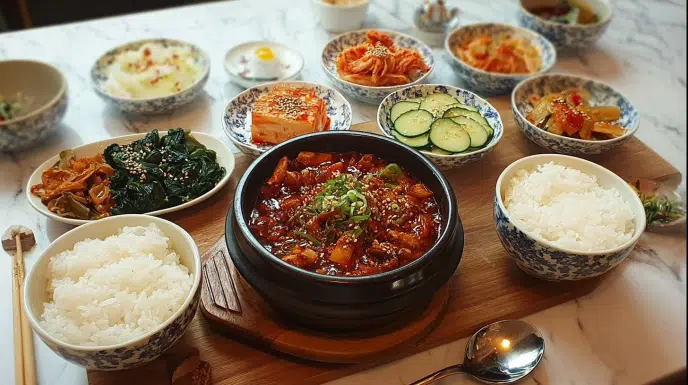
The third pillar of Korean cooking is banchan, the small side dishes that accompany every Korean meal. A Korean dinner table is not one dish. It is a landscape of small bowls, pickled vegetables, seasoned spinach, braised tofu, fish cake, arranged around a central dish and a bowl of rice. Eating Korean food means eating many things simultaneously, combining flavors and textures from different bowls in each bite. It is fundamentally communal, fundamentally generous, and fundamentally different from the Western model of one plate per person.
The Korean Pantry: What You Need to Start
Before we get into recipes, let’s stock the pantry. Korean cooking has a specific set of essential ingredients, and once you have them, you can make essentially everything in this collection without a special trip to the store.
The fermented essentials: the heart of everything:
Gochujang: fermented red chile paste, sweet and spicy and deeply savory all at once. Goes into marinades, sauces, stews, dipping sauces, and essentially everything. This is the most important single ingredient in the Korean pantry. Available at most major grocery stores now in the Asian foods aisle, look for the red tub. See the dedicated gochujang guide for everything you need to know about buying, using and substituting it.
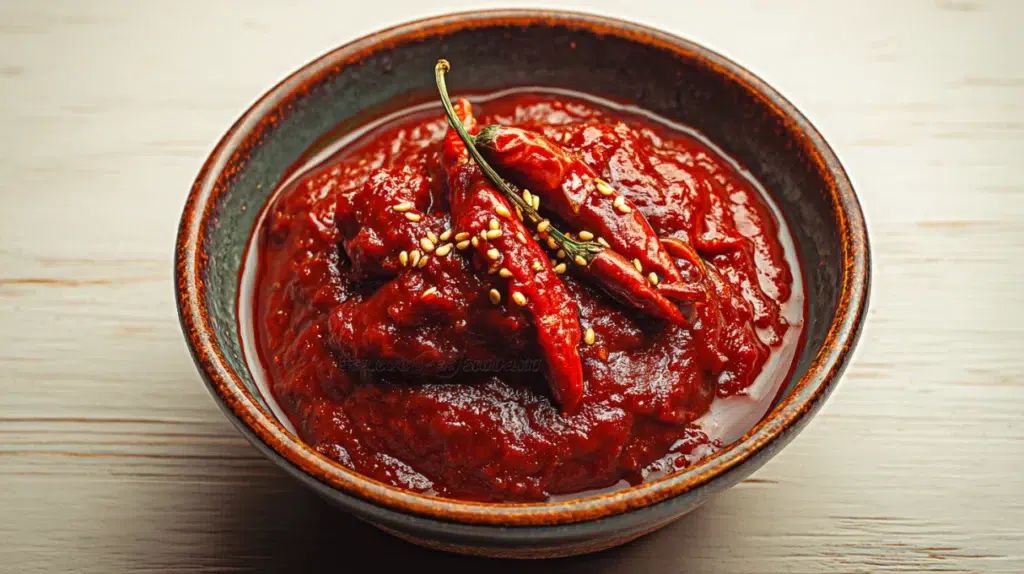
Doenjang: fermented soybean paste, similar in concept to Japanese miso but with a stronger, more pungent flavor. Goes into soups, stews, and dipping sauces. The backbone of Korean home cooking in a way that most non-Koreans never realize. Available at Korean grocery stores and Asian supermarkets. Japanese miso is a reasonable substitute at a pinch, but the flavor is genuinely different.
Ganjang (Korean soy sauce): lighter and less salty than Chinese soy sauce, with a cleaner, slightly sweeter flavor. Two types are used: regular soy sauce for marinades and cooking, and soup soy sauce (guk-ganjang) which is lighter in color and specifically for seasoning soups. Japanese soy sauce is the best substitute if you can’t find Korean.
Gochugaru: Korean red pepper flakes, a bright red, mildly spicy, slightly sweet chile powder that is used in kimchi, marinades, soups, and banchan. This is not the same as generic red pepper flakes, gochugaru has a completely different flavor profile that is specific to Korean cooking. Available at Korean grocery stores, some Asian supermarkets, and online.
Sesame oil: toasted sesame oil, used as a finishing element in almost everything. A small drizzle at the end of cooking, not used for high-heat cooking. The smell alone tells you this is a key ingredient.
Sesame seeds: toasted, scattered over almost every finished dish. Small detail, significant flavor.
The fresh non-negotiables:
Garlic: Korean cooking uses extraordinary quantities of garlic. More than you think. Minced fine and raw, going into kimchi and marinades. Do not substitute garlic powder.
Ginger: fresh ginger, used in kimchi, marinades, and some soups. Again, not powder, fresh only in most applications.
Green onions: used constantly as both a cooking ingredient and a garnish. Keep a bunch in your fridge if you’re cooking Korean food regularly.
Where to find everything:
Korean grocery stores (H Mart if you have one nearby) carry everything at good prices. Most major Asian supermarkets carry the essentials. Gochujang is now at many regular Kroger and Whole Foods locations. Gochugaru, doenjang, and Korean soy sauce are best sourced at Asian specialty stores or online.
See the complete Korean pantry essentials guide for the full breakdown of every ingredient, where to buy it, and what to substitute when you can’t find the real thing.
The Recipes You Need to Make First
Here is where to start, organized by what you’ll learn, not just what you’ll eat.
Homemade Kimchi: The Foundation of Everything
If you cook one Korean recipe from this entire collection, make kimchi.
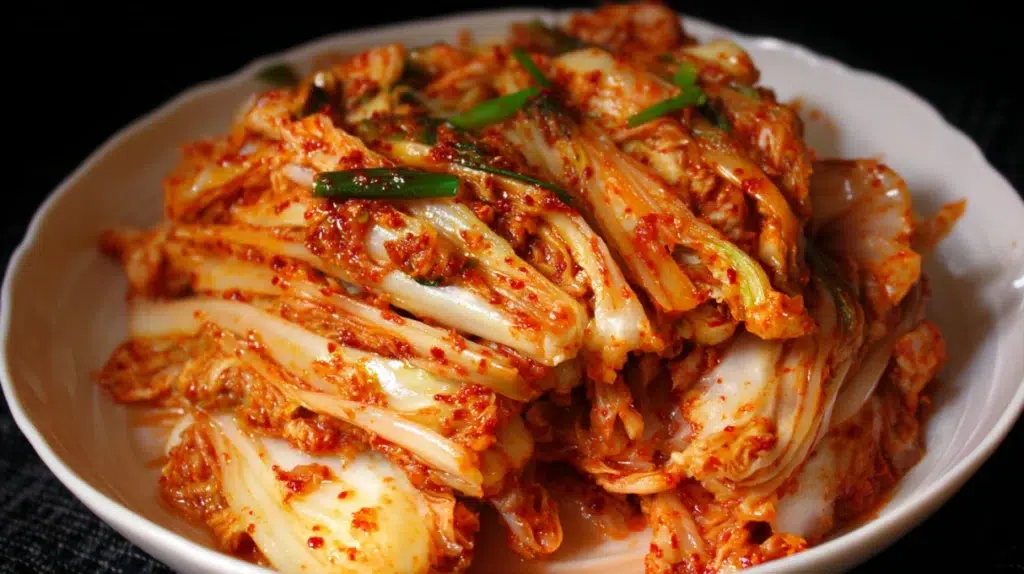
Not because it is the most impressive or the most dramatic dish, though watching a jar of cabbage transform over days into something alive and complex and deeply flavored is genuinely one of the more remarkable things you can do in a kitchen. Make it because understanding kimchi unlocks the logic of Korean cooking. The salt. The gochugaru. The fermentation. The way time transforms ingredients in ways that heat cannot. Once you understand kimchi you understand something fundamental about how Korean food thinks.
Homemade kimchi is not difficult. It takes about 45 minutes of active work, a day of resting, and then a week or more of patient waiting while it ferments at room temperature. The result tastes nothing, nothing, like the packaged kimchi from a grocery store. It is alive in a way that processed kimchi is not.
→ Get the complete Homemade Kimchi Recipe
Korean BBQ at Home: The Social Feast
Korean BBQ, gogigui, is not just a cooking method. It is a social ritual. Meat marinated in sweet-salty-garlicky sauces, cooked on a grill in the center of the table, eaten wrapped in lettuce leaves with rice and banchan and ssamjang sauce. It is interactive, communal, endlessly fun, and produces some of the most addictively good food you will ever eat.
The most famous cut is bulgogi, thin slices of beef marinated in soy sauce, pear, garlic, sesame oil, and sugar that caramelize beautifully over high heat. The other essential is galbi, short ribs marinated in a similar sauce, cooked slightly longer. Both are extraordinary and both are achievable at home with a cast iron grill pan if you don’t have an outdoor grill.
→ Get the Korean BBQ at Home complete guide
Korean Fried Chicken: Better Than Any Takeout
Korean fried chicken is double-fried, cooked once to set the crust, rested, then fried again at higher temperature to make the skin impossibly crispy and light. The result is a fried chicken with a completely different texture from American fried chicken, thinner, crispier, more glass-like, that stays crunchy for significantly longer.
Then comes the sauce. Either a sticky, spicy-sweet gochujang glaze that coats every piece in crimson deliciousness. Or a soy-garlic sauce that is more savory and equally addictive. Or both, one half of the chicken in each sauce, which is the Korean way.
This recipe genuinely changed how I think about fried chicken. And I am from Nashville, which means I have opinions about fried chicken. Strong ones.
→ Get the Korean Fried Chicken recipe
Korean Noodle Recipes: Japchae, Jajangmyeon and More
Korean noodles are their own universe, each variety with its own type of noodle, its own sauce logic, its own cultural context.
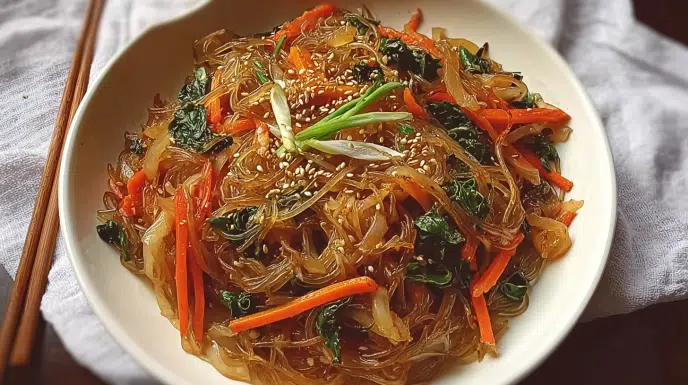
Japchae, glass noodles (made from sweet potato starch) stir-fried with vegetables and beef in a sweet soy sauce, is the dish that appears at every Korean celebration and special occasion. It is silky, sweet-savory, visually stunning, and one of the more technically interesting dishes in the cuisine.
Jajangmyeon, thick wheat noodles in a black soybean paste sauce with pork and vegetables is Korean comfort food at its most deeply satisfying. Originally brought to Korea by Chinese immigrants and transformed into something entirely Korean over decades, it is now one of the most beloved dishes in the country.
→ See all Korean Noodle Recipes
The Gochujang Guide: Understanding Korea’s Essential Ingredient
Gochujang deserves its own dedicated guide because it is the single most important ingredient in Korean cooking and the one most likely to confuse or intimidate someone new to the cuisine. What exactly is it, what does it taste like, how do you use it, what can you substitute, all of that answered in one place.
→ Read the complete Gochujang Guide
Korean Food Culture: Things Worth Knowing Before You Cook
Understanding the culture behind Korean food makes you a significantly better cook of it. Here are the things I wish I had known at the beginning.
Jeong: the concept of connection through food
Korean food culture has a concept called jeong, an untranslatable word that describes the deep emotional bond created between people who share food, time, and care. Cooking Korean food for someone is an act of jeong. The elaborate banchan spread, the communal grill, the kimchi that takes days to make, these are all expressions of care and connection. Understanding jeong changes how you approach Korean cooking. You’re not just making dinner. You’re making something that carries emotional weight.
Rice is not a side dish
In Korean food, rice (bap) is not a side dish. It is the center of the meal around which everything else is organized. The perfect steamed short-grain rice, slightly sticky, fragrant, each grain distinct but the whole cohesive, is a skill worth developing. An electric rice cooker makes this effortless and is one of the best $30-40 kitchen investments you can make if you cook Asian food regularly.
Short-grain rice specifically
Korean cooking uses short-grain rice, the same variety as Japanese sushi rice. Not long-grain, not basmati, not jasmine. Short-grain rice has a specific stickiness and texture that is essential to the eating experience of Korean food. Nishiki and Kokuho Rose are both excellent brands widely available in US grocery stores.
Eating Korean food correctly
In traditional Korean dining, you do not pick up your bowl to eat from it, that is considered rude. The bowl stays on the table. You use a long metal spoon for rice and soup, and metal chopsticks for everything else. Koreans are the only culture that uses metal chopsticks rather than wooden or bamboo, historically because royalty used silver chopsticks that would change color if food was poisoned, and the tradition of metal chopsticks spread from there.
The fermentation timeline
Korean cooking requires patience in a specific way. Kimchi needs days or weeks to ferment properly. Doenjang needs months, sometimes years, to develop its depth. This patience is built into the culture and into the cooking. You cannot rush fermentation. You can only plan for it. Once you accept this, Korean cooking becomes deeply satisfying rather than frustrating.
How I Test Every Korean Recipe
The same rigorous process as every other cuisine on this site, and I want to be honest about something specific to Korean cooking.
Korean recipes are some of the hardest to adapt for US home kitchens while preserving authenticity. The fermented ingredients, gochujang, doenjang, gochugaru have specific flavor profiles that substitutions can approximate but never quite match. Where I offer substitutions in these recipes I am always transparent about what you are trading.
My three-cook process: first cook follows the authentic traditional method as closely as possible. Second cook adapts for US ingredient availability and home kitchen equipment. Third cook stress-tests the adapted version under real weeknight conditions, tired, fast, no special equipment. If it passes all three, it goes on the site. If it doesn’t, it goes back to step two.
Every recipe here has cleared all three. No shortcuts. No exceptions.
Frequently Asked Questions About Korean Cooking
Is Korean food very spicy?
It can be, but it doesn’t have to be. Spicy dishes in Korean cooking get their heat from gochugaru and gochujang, both of which you can use in smaller quantities to dial back the heat without losing the flavor. Many Korean dishes are not spicy at all, japchae, doenjang jjigae (soybean paste stew), and most banchan are mild. Korean food is adjustable. Start mild and build from there.
What is the difference between Korean and Japanese food?
Both are built on rice and fermented ingredients and emphasize umami deeply, but the flavor profiles are quite different. Japanese cooking is generally subtler, more restrained, more focused on the pure flavor of individual ingredients. Korean cooking is bolder, spicier, more assertive, the fermented chile pastes and the heavy garlic and sesame oil create a flavor profile that is immediately, unmistakably Korean. Neither is better. They are different cuisines with different logic.
Do I need special equipment?
A rice cooker makes life significantly easier for Korean cooking, short-grain rice cooked on the stovetop requires attention and practice, while a rice cooker produces perfect results every time automatically. Beyond that, a large pot for soups and stews, a cast iron grill pan or skillet for Korean BBQ and fried chicken, a large bowl for kimchi. No specialist equipment that you don’t already have or can’t find for under $50.
Where do I start if I’ve never cooked Korean food before?
Start with kimchi. Make it once, understand fermentation, understand gochugaru, understand how salt transforms a vegetable over time. Then make Korean fried chicken, it will convince anyone in your household that Korean cooking is worth pursuing. Then Korean BBQ, because once you’ve done a Korean BBQ night at home you will do it every month for the rest of your life. I promise.
Is Korean food healthy?
Korean traditional food is widely considered one of the healthiest diets in the world, heavy on fermented vegetables (kimchi has significant probiotic benefits), lean proteins, and minimal processed ingredients. The banchan culture means you eat small amounts of many different things rather than large amounts of one thing. The fermented soybean products provide protein and gut-healthy bacteria. It is a genuinely nourishing cuisine.
All Korean Recipes on This Site
Fermented Classics
Grilled and Fried
Noodles
Guides and References
A Final Note
Korean food rewards patience and curiosity more than almost any other cuisine I have studied. The fermentation takes time. The banchan takes planning. The flavors take a few attempts to fully understand before you start tasting and adjusting instinctively rather than following instructions word for word.
But when it clicks, when you taste your own kimchi after two weeks of fermentation and it has that sharp, complex, alive quality, something shifts. You understand fermentation in a way you couldn’t before. You understand why Korean food has endured and evolved and spread across the world. You understand why people who grow up eating this food miss it with a physical ache when they’re away from it.
That understanding is worth every patient hour you put in.